
How to Grow and Care for Costmary
Tanacetum balsamita
Written by Emilio Marruso · last checked
Toxic to: Cats, Dogs, Horses · Why
At a glance
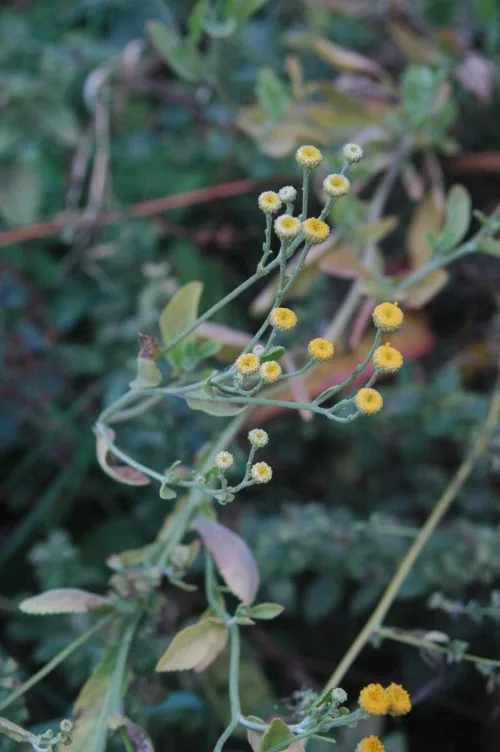
Costmary is an easygoing perennial herb that grows in full sun or partial shade, and it even does well in a container. Pick its leaves whenever you need them: fresh, they make a tea or add flavor to salads, and fresh or dried they season soups and meats. Even the flower petals can be used to make conserves.
- Sun
Full sun to partial shade
What the sources say (1)
Light: Full sun to partial shade
Costmary prefers full sun to partial shade.
— Tanacetum balsamita (Alecost, Balsam Weed, Bible Leaf, Bible Plant, Chrysanthemum, Costmary, Mint Geranium, Sweet Mary) | North Carolina Extension Gardener Plant Toolbox [1] - Water
Soil can stay moist or go fairly dry, as long as it drains well
What the sources say (1)
Watering notes: Well-drained soil, moist to dry
It has a shallow root system, prefers well-drained soil, moist to dry.
— Tanacetum balsamita (Alecost, Balsam Weed, Bible Leaf, Bible Plant, Chrysanthemum, Costmary, Mint Geranium, Sweet Mary) | North Carolina Extension Gardener Plant Toolbox [1] - Cold
Survives winters down to −20 °F (−28.9 °C)
Very hardy · USDA 5a · RHS H7 · Z5
What the sources say (2)
Hardiness, coldest zone: 5a [winter low −28.9 to −26.1 °C (−20 to −15 °F)]
USDA Plant Hardiness Zone: 5a, 5b, 6a, 6b, 7a, 7b
— Tanacetum balsamita (Alecost, Balsam Weed, Bible Leaf, Bible Plant, Chrysanthemum, Costmary, Mint Geranium, Sweet Mary) | North Carolina Extension Gardener Plant Toolbox [1] Hardiness, warmest zone: 7b [winter low −15 to −12.2 °C (5 to 10 °F)]
USDA Plant Hardiness Zone: 5a, 5b, 6a, 6b, 7a, 7b
— Tanacetum balsamita (Alecost, Balsam Weed, Bible Leaf, Bible Plant, Chrysanthemum, Costmary, Mint Geranium, Sweet Mary) | North Carolina Extension Gardener Plant Toolbox [1] - Soil
Well-drained soil
What the sources say (1)
Watering notes: Well-drained soil, moist to dry
It has a shallow root system, prefers well-drained soil, moist to dry.
— Tanacetum balsamita (Alecost, Balsam Weed, Bible Leaf, Bible Plant, Chrysanthemum, Costmary, Mint Geranium, Sweet Mary) | North Carolina Extension Gardener Plant Toolbox [1] - Harvest
Pick leaves as needed for tea, salads, soups and meats; petals make conserves
What the sources say (2)
Harvest: As needed
The leaves should be harvested as needed.
— Tanacetum balsamita (Alecost, Balsam Weed, Bible Leaf, Bible Plant, Chrysanthemum, Costmary, Mint Geranium, Sweet Mary) | North Carolina Extension Gardener Plant Toolbox [1] How to harvest: Harvest the leaves as needed
The fresh leaves may be used to make tea or add flavor to salads. The leaves should be harvested as needed.
— Tanacetum balsamita (Alecost, Balsam Weed, Bible Leaf, Bible Plant, Chrysanthemum, Costmary, Mint Geranium, Sweet Mary) | North Carolina Extension Gardener Plant Toolbox [1] - Size
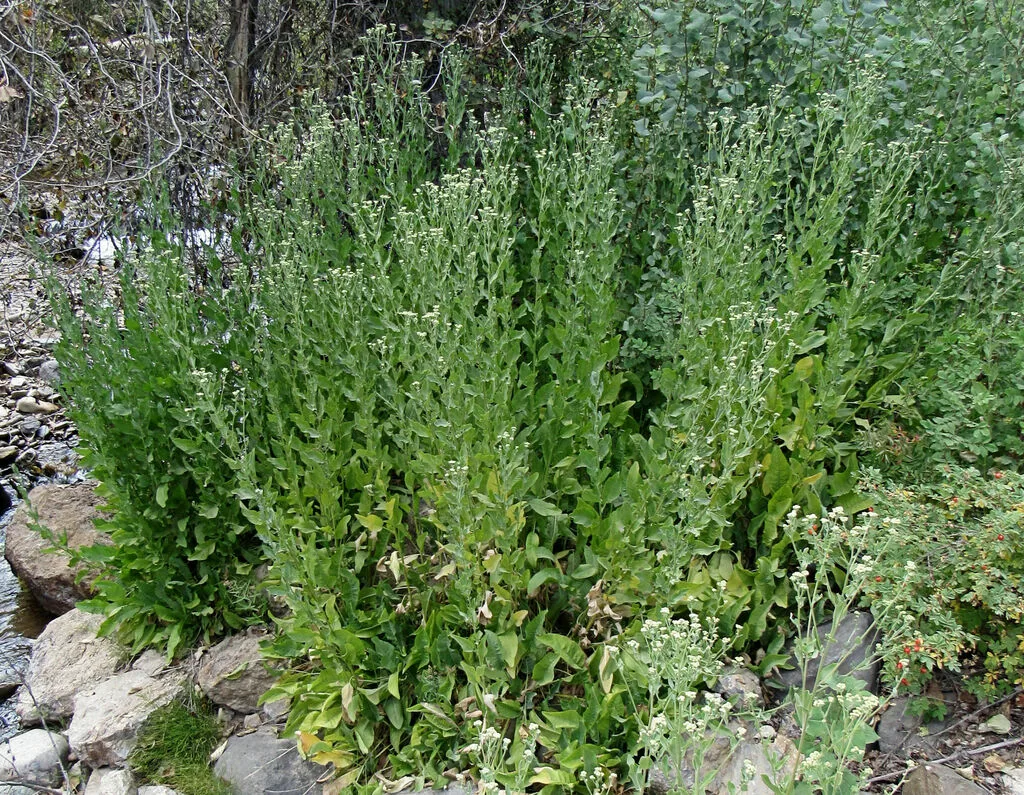
8 in to 6 ft tall and 16 in to 3.5 ft wide
What the sources say (2)
Mature height: 20-183 cm (0 ft 8 in-6 ft)
Height: 0 ft. 8 in. - 6 ft. 0 in. Width: 1 ft. 4 in. - 3 ft. 6 in.
— Tanacetum balsamita (Alecost, Balsam Weed, Bible Leaf, Bible Plant, Chrysanthemum, Costmary, Mint Geranium, Sweet Mary) | North Carolina Extension Gardener Plant Toolbox [1] Mature width: 41-107 cm (1 ft 4 in-3 ft 6 in)
Height: 0 ft. 8 in. - 6 ft. 0 in. Width: 1 ft. 4 in. - 3 ft. 6 in.
— Tanacetum balsamita (Alecost, Balsam Weed, Bible Leaf, Bible Plant, Chrysanthemum, Costmary, Mint Geranium, Sweet Mary) | North Carolina Extension Gardener Plant Toolbox [1] - Propagation
Grow new plants from root or stem cuttings or by division; seeds sprout poorly
What the sources say (1)
Propagation: Root cutting, stem cuttings, division; not typically grown from seed due to difficult germination
The plant may be propagated by root cutting, stem cuttings, or division. It is not typically grown from seeds due to difficulty with germination.
— Tanacetum balsamita (Alecost, Balsam Weed, Bible Leaf, Bible Plant, Chrysanthemum, Costmary, Mint Geranium, Sweet Mary) | North Carolina Extension Gardener Plant Toolbox [1] - Containers
Grows in containers too
What the sources say (1)
In containers: Yes
Costmary may be used as a fragrant hedge in an herb or perennial garden or a container.
— Tanacetum balsamita (Alecost, Balsam Weed, Bible Leaf, Bible Plant, Chrysanthemum, Costmary, Mint Geranium, Sweet Mary) | North Carolina Extension Gardener Plant Toolbox [1] - Safety
Keep it away from dogs, cats and horses: it can harm them
Overview
Costmary is an aromatic perennial herb used for medicinal and culinary purposes. [1] It prefers full sun to partial shade and well-drained soil. [1] It can be propagated by root cutting, stem cuttings or division. [1]
This record is incomplete: the sources we read do not cover every field yet.
Not yet covered by our sources: Watering, Sowing / Planting
Costmary care
How to water Costmary
Watering
Not stated in the sources we read.
Watering notes
Well-drained soil, moist to dry
What the sources say (1)
It has a shallow root system, prefers well-drained soil, moist to dry.How much light Costmary needs
Full sun to partial shade
What the sources say (1)
Costmary prefers full sun to partial shade.How much cold Costmary can take
Hardiness, coldest zone
5a [winter low −28.9 to −26.1 °C (−20 to −15 °F)]
What the sources say (1)
USDA Plant Hardiness Zone:
5a, 5b, 6a, 6b, 7a, 7bHardiness, warmest zone
7b [winter low −15 to −12.2 °C (5 to 10 °F)]
What the sources say (1)
USDA Plant Hardiness Zone:
5a, 5b, 6a, 6b, 7a, 7bWhere to grow Costmary
Yes
What the sources say (1)
Costmary may be used as a fragrant hedge in an herb or perennial garden or a container.How to propagate Costmary
Root cutting, stem cuttings, division; not typically grown from seed due to difficult germination
What the sources say (1)
The plant may be propagated by root cutting, stem cuttings, or division. It is not typically grown from seeds due to difficulty with germination.How to grow Costmary
The plant
Life cycle
perennial
What the sources say (1)
Costmary is an aromatic perennial herb with rhizomes and has been used for medicinal and culinary purposes.Family
Asteraceae
What the sources say (1)
Costmary is a member of the Asteraceae or Aster family.Mature height
20-183 cm (0 ft 8 in-6 ft)
What the sources say (1)
Height: 0 ft. 8 in. - 6 ft. 0 in.
Width: 1 ft. 4 in. - 3 ft. 6 in.Mature width
41-107 cm (1 ft 4 in-3 ft 6 in)
What the sources say (1)
Height: 0 ft. 8 in. - 6 ft. 0 in.
Width: 1 ft. 4 in. - 3 ft. 6 in.Harvest and storage
How to harvest
Harvest the leaves as needed
What the sources say (1)
The fresh leaves may be used to make tea or add flavor to salads. The leaves should be harvested as needed.Remedies
Each remedy shows what official sources say about it; traditional remedies without an official source are marked as such. Harmful ones are listed so you know to avoid them.
Treating the plant
aggressive spreading
buried root barrier Not verified
Traditional remedy, not verified by an official source.
How: set a bottomless solid-sided container in the ground around the plant, rim an inch above grade
grow in pots Not verified
Traditional remedy, not verified by an official source.
How: grow it in pots instead of a sunken bed
overwatering
ease off watering Not verified
Traditional remedy, not verified by an official source.
How: let the soil dry out a bit, then give it occasional sips until it perks back up
Is Costmary toxic to pets?
Reported by the source, quoted verbatim. This is not medical or veterinary advice: if a person or an animal may have eaten this plant, contact a poison control centre or a veterinarian.
Calendar
Sowing
Not stated in the sources we read.
Planting
Not stated in the sources we read.
Harvest
As needed
What the sources say (1)
The leaves should be harvested as needed.Months as given by the sources, which are mostly from the United States (northern hemisphere). In the southern hemisphere they shift by about six months.
Edibility
Reported by the source, quoted verbatim. Do not eat a plant on the basis of this page alone: identification mistakes can be dangerous.
Similar plants
- Feverfew Tanacetum parthenium
- Tansy Tanacetum vulgare
- Dalmatian chrysanthemum Tanacetum cinerariifolium
- African Marigold Tagetes erecta
- Aspen Fleabane Erigeron speciosus
- Big sagebrush Artemisia tridentata
- Blue Chalksticks Curio repens
- Boneset Eupatorium perfoliatum
Sources
Every value above is quoted from these documents. Links lead to the original publisher.
- Tanacetum balsamita (Alecost, Balsam Weed, Bible Leaf, Bible Plant, Chrysanthemum, Costmary, Mint Geranium, Sweet Mary) | North Carolina Extension Gardener Plant Toolbox · plants.ces.ncsu.edu, consulted
Written by Emilio Marruso · last checked