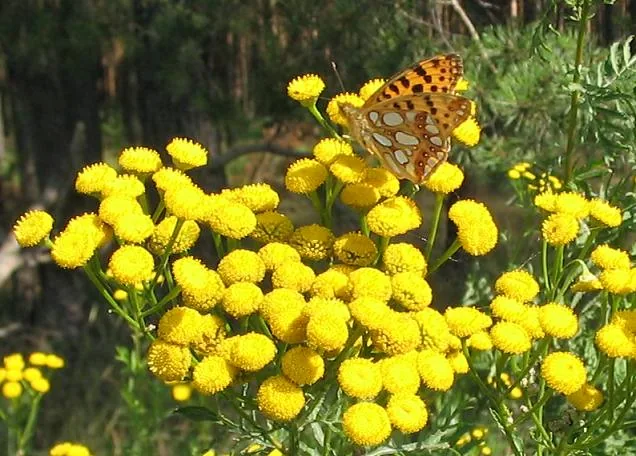


How to Grow and Care for Tansy
Tanacetum vulgare
Written by Emilio Marruso · last checked
Toxic to: Horses, Cattle, People · Why
At a glance
Tansy is a tough herbaceous perennial that comes back every year and handles dry spells well once it is established. Cut it back to the ground in early summer and it pushes out fresh growth from its spreading roots, reaching 1 to 5 feet tall. Just keep an eye on it: remove the flowers before they set seed so it stays where you want it.
- Water
Once settled in, it copes well with dry spells
What the sources say (1)
Watering: Quite drought tolerant once established
It is adaptable to a wide array of soil types and is quite drought tolerant once established.
— Tansy [2] - Cold
Survives winters down to −40 °F (−40 °C)
Very hardy · USDA 3a · RHS H7 · Z3
What the sources say (2)
Hardiness, coldest zone: 3a [winter low −40 to −37.2 °C (−40 to −35 °F)]
3a, 3b, 4a, 4b, 5a, 5b, 6a, 6b, 7a, 7b, 8a, 8b
— Tanacetum vulgare (Bitter Buttons, Common Tansy, Cow Bitter, Garden Tansy, Golden Buttons, Tansy) | North Carolina Extension Gardener Plant Toolbox [1] Hardiness, warmest zone: 8b [winter low −9.4 to −6.7 °C (15 to 20 °F)]
3a, 3b, 4a, 4b, 5a, 5b, 6a, 6b, 7a, 7b, 8a, 8b
— Tanacetum vulgare (Bitter Buttons, Common Tansy, Cow Bitter, Garden Tansy, Golden Buttons, Tansy) | North Carolina Extension Gardener Plant Toolbox [1] - Pruning
In early summer, cut it to the ground to get fresh new growth
What the sources say (1)
Pruning: Early summer (cut back to the ground to force new growth from the rhizomes)
Plant size can be maintained by cutting the plant back to the ground in early summer to force new growth from the rhizomes.
— Tansy [2] - Harvest
Dried leaves were once used for tea, but today it is hardly used as food
- Pests
Watch out for spider mites
What the sources say (1)
Pests: spider mites
Common Tansy has no serious pests or disease problems. Spider mites can be a problem in some areas.
— Tanacetum vulgare (Bitter Buttons, Common Tansy, Cow Bitter, Garden Tansy, Golden Buttons, Tansy) | North Carolina Extension Gardener Plant Toolbox [1] - Watch out
It spreads fast and self-seeds: cut off the flowers before they set seed
- Size
1 to 5 ft tall
What the sources say (1)
Mature height: 30.5-152.4 cm (1 to 5 ft)
The plant grows erect and averages 1-5 feet tall.
— Tanacetum vulgare (Bitter Buttons, Common Tansy, Cow Bitter, Garden Tansy, Golden Buttons, Tansy) | North Carolina Extension Gardener Plant Toolbox [1] - Propagation
Divide the clumps or grow it from seed
What the sources say (1)
Propagation: Division, seed
Life Cycle: Perennial Recommended Propagation Strategy: Division Seed
— Tanacetum vulgare (Bitter Buttons, Common Tansy, Cow Bitter, Garden Tansy, Golden Buttons, Tansy) | North Carolina Extension Gardener Plant Toolbox [1] - Safety
Toxic to people, horses and cows if eaten; it can also irritate the skin
Overview
Common tansy is an aromatic herbaceous perennial with fern-like foliage and yellow button-like flowers. [1] It spreads aggressively by rhizomes and seed and has been listed as a noxious weed in many areas. [1]
Tansy care
How to water Tansy
Quite drought tolerant once established
What the sources say (1)
It is adaptable to a wide array of soil types and is quite drought tolerant once established.How much light Tansy needs
The sources give different values depending on region, zone or growing conditions.
What each source says
According to NC State Extension: Full sun to partial shade
According to University of Arkansas Extension: At least six hours of sunlight
What the sources say (4)
According to NC State Extension: Common Tansy prefers full sun to partial shade. It grows in well-drained soils.According to University of Arkansas Extension: Tansy is an easy to grow plant that needs at least six hours of sunlight to thrive.Common Tansy prefers full sun to partial shade. It grows in well-drained soils.Tansy is an easy to grow plant that needs at least six hours of sunlight to thrive.How much cold Tansy can take
Hardiness, coldest zone
3a [winter low −40 to −37.2 °C (−40 to −35 °F)]
What the sources say (1)
3a, 3b, 4a, 4b, 5a, 5b, 6a, 6b, 7a, 7b, 8a, 8bHardiness, warmest zone
8b [winter low −9.4 to −6.7 °C (15 to 20 °F)]
What the sources say (1)
3a, 3b, 4a, 4b, 5a, 5b, 6a, 6b, 7a, 7b, 8a, 8bHow to propagate Tansy
Division, seed
What the sources say (1)
Life Cycle:
Perennial
Recommended Propagation Strategy:
Division
SeedHow to grow Tansy
The plant
Life cycle
perennial (herbaceous)
What the sources say (1)
Common Tansy is an aromatic herbaceous perennial that has fern-like foliage and yellow button-like flowers.Family
Asteraceae
What the sources say (1)
Common Tansy is a member of the Asteraceae or Aster family.Mature height
30.5-152.4 cm (1 to 5 ft)
What the sources say (1)
The plant grows erect and averages 1-5 feet tall.Pests and diseases
Pests
spider mites
What the sources say (1)
Common Tansy has no serious pests or disease problems. Spider mites can be a problem in some areas.Tansy pests and problems
Aggressive spread and self-seeding
Symptom: Forms a dense cover, competes with native plants and degrades pasture land
What to do: Deadhead or shear off blooms to control self-seeding; hand pulling and mowing, if properly timed, may reduce seed production
What the sources say (2)
Common Tansy is problematic since it forms a dense cover, completes with native plants, and degrades pasture land.
— Tanacetum vulgare (Bitter Buttons, Common Tansy, Cow Bitter, Garden Tansy, Golden Buttons, Tansy) | North Carolina Extension Gardener Plant Toolbox [1] It is important to deadhead or shear off blooms to control self-seeding. Hand pulling and mowing may also help to reduce seed production if properly timed.
— Tanacetum vulgare (Bitter Buttons, Common Tansy, Cow Bitter, Garden Tansy, Golden Buttons, Tansy) | North Carolina Extension Gardener Plant Toolbox [1]
Remedies
Each remedy shows what official sources say about it; traditional remedies without an official source are marked as such. Harmful ones are listed so you know to avoid them.
Treating the plant
aphids
water blast from a garden hose Not verified
Traditional remedy, not verified by an official source.
How: a strong blast from the garden hose dislodges feeding aphids
insecticidal soap spray Works
spraying home remedies that contain dish detergent on plants on a sunny day can injure the plant, essentially burning it.
— extension.psu.edu [5] How: organic insecticidal soap sprays, as an alternative to companion planting
but aphids can also be controlled with companion planting or organic insecticidal soap sprays.
— almanac.com [3] What the evidence says insecticidal soap is a safe, effective organic insecticide with minimal environmental impact.
— extension.psu.edu [4]
powdery mildew
milk spray Not verified
Traditional remedy, not verified by an official source.
How: weekly applications of a spray made from 40% milk and 60% water
Getting rid of it
spreading by seed and rhizomes
hand pulling Partly works
When handling this plant, it is important to wear gloves and long sleeve shirts to avoid exposure.
— Tanacetum vulgare (Bitter Buttons, Common Tansy, Cow Bitter, Garden Tansy, Golden Buttons, Tansy) | North Carolina Extension Gardener Plant Toolbox [1] How: pull the plants as you would pull weeds, wearing gloves
Hand pulling the plants as you would pull weeds can prevent the plant from spreading. You should do this with gloves, as there have been some reports of contact toxicity.
— gardeningknowhow.com [6] What the evidence says It is important to deadhead or shear off blooms to control self-seeding. Hand pulling and mowing may also help to reduce seed production if properly timed.
— Tanacetum vulgare (Bitter Buttons, Common Tansy, Cow Bitter, Garden Tansy, Golden Buttons, Tansy) | North Carolina Extension Gardener Plant Toolbox [1] mowing at bud stage Partly works
When handling this plant, it is important to wear gloves and long sleeve shirts to avoid exposure.
— Tanacetum vulgare (Bitter Buttons, Common Tansy, Cow Bitter, Garden Tansy, Golden Buttons, Tansy) | North Carolina Extension Gardener Plant Toolbox [1] How: mow areas with the plant when they are in bud stage to minimize the spread
It is unlikely to be toxic to grazing animals, but minimize the spread by mowing areas with the plant when they are in bud stage.
— gardeningknowhow.com [6] What the evidence says It is important to deadhead or shear off blooms to control self-seeding. Hand pulling and mowing may also help to reduce seed production if properly timed.
— Tanacetum vulgare (Bitter Buttons, Common Tansy, Cow Bitter, Garden Tansy, Golden Buttons, Tansy) | North Carolina Extension Gardener Plant Toolbox [1] digging out clumps Not verified
Traditional remedy, not verified by an official source.
When handling this plant, it is important to wear gloves and long sleeve shirts to avoid exposure.
— Tanacetum vulgare (Bitter Buttons, Common Tansy, Cow Bitter, Garden Tansy, Golden Buttons, Tansy) | North Carolina Extension Gardener Plant Toolbox [1] How: dig out clumps where you do not want the plant and keep old plant matter cleaned up to prevent self-seeding
self-seeding
cutting off flower heads before seed Works
When handling this plant, it is important to wear gloves and long sleeve shirts to avoid exposure.
— Tanacetum vulgare (Bitter Buttons, Common Tansy, Cow Bitter, Garden Tansy, Golden Buttons, Tansy) | North Carolina Extension Gardener Plant Toolbox [1] How: cut off the flower heads before they turn into seeds, because the seed stays viable in the soil for quite some time
The seed is viable in soil for quite some time, so it is best to cut off the flower heads before they turn into seeds.
— gardeningknowhow.com [6] What the evidence says It is important to deadhead or shear off blooms to control self-seeding. Hand pulling and mowing may also help to reduce seed production if properly timed.
— Tanacetum vulgare (Bitter Buttons, Common Tansy, Cow Bitter, Garden Tansy, Golden Buttons, Tansy) | North Carolina Extension Gardener Plant Toolbox [1]
Is Tansy toxic to pets?
Reported by the source, quoted verbatim. This is not medical or veterinary advice: if a person or an animal may have eaten this plant, contact a poison control centre or a veterinarian.
Animals
Common Tansy can be toxic to horses, cows, and humans especially if eaten or used in excess.
[1]- Poisonous parts
Poison Toxic Principle: Thujone Causes Contact Dermatitis: Yes Poison Part: Leaves
[1]- Toxic principle
Poison Toxic Principle: Thujone Causes Contact Dermatitis: Yes Poison Part: Leaves
[1]- Toxic principle
Common Tansy contains an oil known as thujone , which may cause skin irritation or contact dermatitis.
[1]- Symptoms
Thujone is a potent chemical, and excess consumption may cause convulsions or death.
[1]- Severity
This plant has high severity poison characteristics. See below
[1]
People
Common Tansy contains an oil known as thujone , which may cause skin irritation or contact dermatitis.
[1]- Poisonous parts
Poison Toxic Principle: Thujone Causes Contact Dermatitis: Yes Poison Part: Leaves
[1]- Toxic principle
Poison Toxic Principle: Thujone Causes Contact Dermatitis: Yes Poison Part: Leaves
[1]- Symptoms
Common Tansy contains an oil known as thujone , which may cause skin irritation or contact dermatitis.
[1]
Thujone is a potent chemical, and excess consumption may cause convulsions or death.
[1]
Calendar
Pruning
Early summer (cut back to the ground to force new growth from the rhizomes)
What the sources say (1)
Plant size can be maintained by
cutting the plant back to the ground in early summer to force new growth from the
rhizomes.Months as given by the sources, which are mostly from the United States (northern hemisphere). In the southern hemisphere they shift by about six months.
Edibility
Reported by the source, quoted verbatim. Do not eat a plant on the basis of this page alone: identification mistakes can be dangerous.
Dried leaves have been used to make teas, but the current uses of this plant in teas, food, and medicine are almost non-existent.
[1]
Indicative values
Values from a secondary source, not checked word for word like the rest of this page. Use them as a starting point.
- Drought tolerant
- yesIndicative value, adapt it to your climate · Secondary source
- Soil
- Well-drainedIndicative value, adapt it to your climate · Secondary source
- Soil pH
- 6-7.5Indicative value, adapt it to your climate · Secondary source
- Care level
- MediumIndicative value, adapt it to your climate · Secondary source
- Growth rate
- HighIndicative value, adapt it to your climate · Secondary source
Similar plants
- Costmary Tanacetum balsamita
- Feverfew Tanacetum parthenium
- Dalmatian chrysanthemum Tanacetum cinerariifolium
- African Daisy Dimorphotheca pluvialis
- African Marigold Tagetes erecta
- Ageratum Ageratum houstonianum
- Alpine aster Aster alpinus
- American Burnweed Erechtites hieraciifolius
Sources
Every value above is quoted from these documents. Links lead to the original publisher.
- Tanacetum vulgare (Bitter Buttons, Common Tansy, Cow Bitter, Garden Tansy, Golden Buttons, Tansy) | North Carolina Extension Gardener Plant Toolbox · plants.ces.ncsu.edu, consulted
- Tansy · uaex.uada.edu, consulted
- almanac.com · almanac.com
- extension.psu.edu · extension.psu.edu
- extension.psu.edu · extension.psu.edu
- gardeningknowhow.com · gardeningknowhow.com
Written by Emilio Marruso · last checked