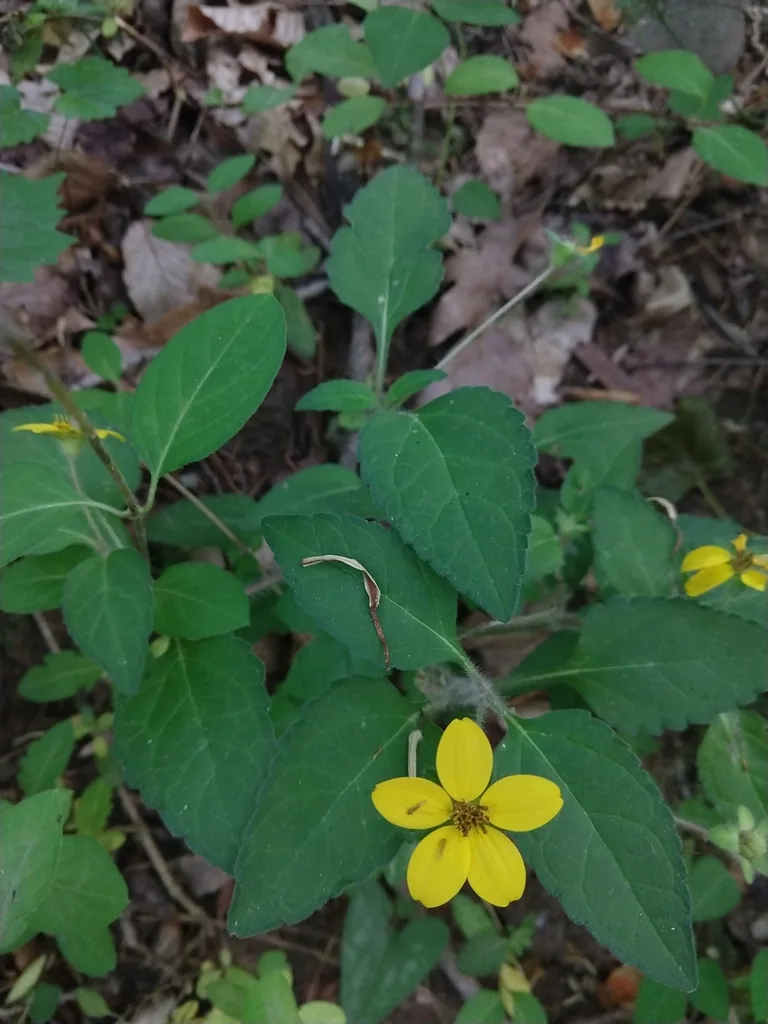
How to Grow and Care for Green-and-Gold
Chrysogonum virginianum
Written by Emilio Marruso · last checked
At a glance
This perennial is happy in the shady spots where many plants struggle, from part shade to full shade. Give it extra water during summer droughts and soil that drains well, and it asks for little else: a slow-release organic feed at planting is enough. It spreads into a patch 1–2 ft wide, and its runners and seedlings give you new plants every fall.
- Sun
Part shade to full shade; full sun only in soil that stays moist
What the sources say (2)
Light: Part shade to full shade; tolerates full sun only in consistently moist soils
well-drained soils in part shade to full shade.
— Chrysogonum virginianum (Green and Gold, Green-and-Gold) | North Carolina Extension Gardener Plant Toolbox [1] Sun: part sun to shade
— Green and Gold | University of Maryland Extension [3] - Water
Extra water during summer droughts or if it gets afternoon sun; don't overwater
What the sources say (4)
Watering: Supplemental water during periods of summer drought or if exposed to afternoon sun
Plants will need supplemental water during periods of summer drought or if exposed to afternoon sunlight.
— Green & Gold | Home & Garden Information Center [4] Don't overfertilize or water except during drought.
— Green and Gold | University of Maryland Extension [3] Watering notes: Tolerates full sun only if grown in consistently moist soils; root rot may occur with poor drainage or heavily mulched, excessively watered beds
It will tolerate full sun only if grown in consistently moist soils.
— Chrysogonum virginianum (Green and Gold, Green-and-Gold) | North Carolina Extension Gardener Plant Toolbox [1] Root rot may occur if the planting bed has poor drainage, or if the bed is heavily mulched and watered excessively.
— Green & Gold | Home & Garden Information Center [4] - Cold
Survives winters down to −20 °F (−28.9 °C)
Very hardy · USDA 5a · RHS H7 · Z5
What the sources say (2)
Hardiness, coldest zone: 5a [winter low −28.9 to −26.1 °C (−20 to −15 °F)]
USDA Plant Hardiness Zone: 5a, 5b, 6a, 6b, 7a, 7b, 8a, 8b, 9a, 9b
— Chrysogonum virginianum (Green and Gold, Green-and-Gold) | North Carolina Extension Gardener Plant Toolbox [1] Hardiness, warmest zone: 9b [winter low −3.9 to −1.1 °C (25 to 30 °F)]
USDA Plant Hardiness Zone: 5a, 5b, 6a, 6b, 7a, 7b, 8a, 8b, 9a, 9b
— Chrysogonum virginianum (Green and Gold, Green-and-Gold) | North Carolina Extension Gardener Plant Toolbox [1] - Soil
Needs good drainage; in heavy clay, mix in composted pine bark
What the sources say (2)
Watering notes: Tolerates full sun only if grown in consistently moist soils; root rot may occur with poor drainage or heavily mulched, excessively watered beds
It will tolerate full sun only if grown in consistently moist soils.
— Chrysogonum virginianum (Green and Gold, Green-and-Gold) | North Carolina Extension Gardener Plant Toolbox [1] Root rot may occur if the planting bed has poor drainage, or if the bed is heavily mulched and watered excessively.
— Green & Gold | Home & Garden Information Center [4] - Planting
Plant seedlings and rooted runners in fall
What the sources say (1)
Planting: Fall (transplanting seedlings and rooted stolons)
Seedlings may be found near the base of established plants and transplanted most successfully in the fall.
— Green & Gold | Home & Garden Information Center [4] - Feeding
Slow-release organic fertilizer mixed into the soil at planting; don't overfeed
What the sources say (4)
When: At planting, mixed into the planting soil
Plant establishment will be enhanced with the addition of a slow-release, organic fertilizer mixed into the planting soil.
— Green & Gold | Home & Garden Information Center [4] Plant establishment is enhanced with the addition of a slow-release, organic fertilizer mixed into the planting soil.
— Chrysogonum Virginianum (Green and Gold) - Brunswick County Center | N.C. Cooperative Extension [2] Natural fertilizers: Slow-release organic fertilizer mixed into the planting soil
Plant establishment will be enhanced with the addition of a slow-release, organic fertilizer mixed into the planting soil.
— Green & Gold | Home & Garden Information Center [4] Avoid: Over-fertilizing
Don't overfertilize or water except during drought. Seems to thrive when neglected.
— Green and Gold | University of Maryland Extension [3] - Pests
Slugs and snails chew holes in new leaves; mildew and root rot can appear
What the sources say (3)
Pests: snails, slugs
Snails and slugs may eat holes in the newer spring foliage, but damage is rarely significant.
— Green & Gold | Home & Garden Information Center [4] Diseases: mildew, root rot
There is some susceptibility to mildew, but it is rarely a serious problem.
— Chrysogonum virginianum (Green and Gold, Green-and-Gold) | North Carolina Extension Gardener Plant Toolbox [1] Root rot may occur if the planting bed has poor drainage, or if the bed is heavily mulched and watered excessively.
— Green & Gold | Home & Garden Information Center [4] - Size
Spreads 1–2 ft wide
What the sources say (1)
Mature width: 30.48-60.96 cm (1-2 ft)
Dimensions: Height: 0 ft. 1 in. - 0 ft. 2 in. Width: 1 ft. 0 in. - 2 ft. 0 in.
— Chrysogonum virginianum (Green and Gold, Green-and-Gold) | North Carolina Extension Gardener Plant Toolbox [1] - Propagation
Divide the clump in late spring, or dig rooted runners and seedlings in fall
What the sources say (4)
Propagation: Division of the crown (late spring); cutting and digging rooted stolons (fall); transplanting self-sown seedlings (fall); seed sown in fine potting mix
Propagate green & gold varieties that produce stolons by cutting and digging the stolons that have taken root where they touch the soil and transplant in the fall.
— Green & Gold | Home & Garden Information Center [4] Plants can also be propagated by division of the crown in late spring.
— Green & Gold | Home & Garden Information Center [4] Seeds may be collected and sown in a fine potting mix at 70 to 75 ºF. Germination will occur in about 3 weeks.
— Green & Gold | Home & Garden Information Center [4] Propagate by division in last spring every two to three years.
— Green and Gold | University of Maryland Extension [3] - Sowing
Sow in fine potting mix at 70–75 °F (21–24 °C); seeds sprout in 3 weeks
What the sources say (2)
Saving seeds: collect seeds and sow in fine potting mix at 70-75 F (21-24 C)
Seeds may be collected and sown in a fine potting mix at 70 to 75
— Green & Gold | Home & Garden Information Center [4] Days to germination: 3 weeks (21 days)
Seeds may be collected and sown in a fine potting mix at 70 to 75 ºF. Germination will occur in about 3 weeks.
— Green & Gold | Home & Garden Information Center [4]
Overview
Green-and-gold is a low-growing, semi-evergreen perennial that forms a foliage mat and spreads by rhizomes or stolons. [1] It is easily grown in medium-moisture, well-drained soil in part shade to full shade, and tolerates full sun only in consistently moist soil. [1] It can be propagated by division of the crown, rooted stolons, or seed. [4]
This record is incomplete: the sources we read do not cover every field yet.
Not yet covered by our sources: Pruning
Green-and-Gold care
How to water Green-and-Gold
Watering
Supplemental water during periods of summer drought or if exposed to afternoon sun
Watering notes
Tolerates full sun only if grown in consistently moist soils; root rot may occur with poor drainage or heavily mulched, excessively watered beds
What the sources say (2)
It will tolerate full sun only if grown in consistently moist soils.Root rot may occur if the planting bed has poor drainage, or if the bed is heavily mulched and watered excessively.How much light Green-and-Gold needs
Part shade to full shade; tolerates full sun only in consistently moist soils
How much cold Green-and-Gold can take
Hardiness, coldest zone
5a [winter low −28.9 to −26.1 °C (−20 to −15 °F)]
What the sources say (1)
USDA Plant Hardiness Zone:
5a, 5b, 6a, 6b, 7a, 7b, 8a, 8b, 9a, 9bHardiness, warmest zone
9b [winter low −3.9 to −1.1 °C (25 to 30 °F)]
What the sources say (1)
USDA Plant Hardiness Zone:
5a, 5b, 6a, 6b, 7a, 7b, 8a, 8b, 9a, 9bBest soil for Green-and-Gold
The sources give different values depending on region, zone or growing conditions.
What each source says
According to NC State Extension: 6.0
According to Clemson HGIC: 6.5
What the sources say (2)
According to NC State Extension: Soil pH:
Acid (<6.0)According to Clemson HGIC: raise the soil pH into the range of 6.0 to 6.5Where to grow Green-and-Gold
The sources give different values depending on region, zone or growing conditions.
What each source says
slower spreading plants: 20.3 cm (8 in)
more rapidly spreading plants: up to 45.7 cm (18 in)
How to propagate Green-and-Gold
Division of the crown (late spring); cutting and digging rooted stolons (fall); transplanting self-sown seedlings (fall); seed sown in fine potting mix
What the sources say (4)
Propagate green & gold varieties that produce stolons by cutting and digging the stolons that have taken root where they touch the soil and transplant in the fall.Plants can also be propagated by division of the crown in late spring.Seeds may be collected and sown in a fine potting mix at 70 to 75 ºF. Germination will occur in about 3 weeks.Propagate by division in last spring every two to three years.How to grow Green-and-Gold
The plant
Life cycle
perennial
What the sources say (1)
Genus: Chrysogonum Species: virginianum Family: Asteraceae Life Cycle: PerennialFamily
Asteraceae
What the sources say (1)
Genus: Chrysogonum Species: virginianum Family: Asteraceae Life Cycle: PerennialMature height
Mature width
30.48-60.96 cm (1-2 ft)
What the sources say (1)
Dimensions: Height: 0 ft. 1 in. - 0 ft. 2 in. Width: 1 ft. 0 in. - 2 ft. 0 in.Sowing and growth
Days to germination
3 weeks (21 days)
What the sources say (1)
Seeds may be collected and sown in a fine potting mix at 70 to 75 ºF. Germination will occur in about 3 weeks.Harvest and storage
Saving seeds
collect seeds and sow in fine potting mix at 70-75 F (21-24 C)
What the sources say (1)
Seeds may be collected and sown in a fine potting mix at 70 to 75Pests and diseases
Pests
snails, slugs
What the sources say (1)
Snails and slugs may eat holes in the newer spring foliage, but damage is rarely significant.Diseases
mildew, root rot
What the sources say (2)
There is some susceptibility to mildew, but it is rarely a serious problem.Root rot may occur if the planting bed has poor drainage, or if the bed is heavily mulched and watered excessively.Fertilizing
When
At planting, mixed into the planting soil
What the sources say (2)
Plant establishment will be enhanced with the addition of a slow-release, organic fertilizer mixed into the planting soil.Plant establishment is enhanced with the addition of a slow-release, organic fertilizer mixed into the planting soil.Natural fertilizers
Slow-release organic fertilizer mixed into the planting soil
What the sources say (1)
Plant establishment will be enhanced with the addition of a slow-release, organic fertilizer mixed into the planting soil.Avoid
Over-fertilizing
What the sources say (1)
Don't overfertilize or water except during drought. Seems to thrive when neglected.Green-and-Gold pests and problems
Mildew
Symptom: Some susceptibility to mildew, rarely a serious problem.
What the sources say (1)
There is some susceptibility to mildew, but it is rarely a serious problem.
— Chrysogonum virginianum (Green and Gold, Green-and-Gold) | North Carolina Extension Gardener Plant Toolbox [1] Snails and slugs
Symptom: Holes in the newer spring foliage; damage is rarely significant.
What to do: Iron phosphate slug baits give safe and effective control.
What the sources say (1)
Snails and slugs may eat holes in the newer spring foliage, but damage is rarely significant. Iron phosphate slug baits give safe and effective control.
— Green & Gold | Home & Garden Information Center [4] Root rot
Symptom: Root rot may occur if the planting bed has poor drainage or is heavily mulched and watered excessively.
What to do: Incorporate composted pine bark at 20% by volume into heavy clay soils.
What the sources say (1)
Root rot may occur if the planting bed has poor drainage, or if the bed is heavily mulched and watered excessively. Incorporation of composted pine bark at 20% by volume into heavy clay soils may reduce the chance of root rot.
— Green & Gold | Home & Garden Information Center [4]
Remedies
The sources we checked give no remedies for this plant.
Calendar
Planting
Fall (transplanting seedlings and rooted stolons)
What the sources say (1)
Seedlings may be found near the base of established plants and transplanted most successfully in the fall.Pruning
Not stated in the sources we read.
Months as given by the sources, which are mostly from the United States (northern hemisphere). In the southern hemisphere they shift by about six months.
Indicative values
Values from a secondary source, not checked word for word like the rest of this page. Use them as a starting point.
- Care level
- MediumIndicative value, adapt it to your climate · Secondary source
- Growth rate
- LowIndicative value, adapt it to your climate · Secondary source
- Pruning
- February, March, April, MayIndicative value, adapt it to your climate · Secondary source
Similar plants
- African Daisy Dimorphotheca pluvialis
- African Marigold Tagetes erecta
- Ageratum Ageratum houstonianum
- Alpine aster Aster alpinus
- Appalachian Blazing Star Liatris squarrulosa
- Appalachian Ironweed Vernonia glauca
- Appalachian Sunflower Helianthus atrorubens
- Aromatic Aster Symphyotrichum oblongifolium
Sources
Every value above is quoted from these documents. Links lead to the original publisher.
- Chrysogonum virginianum (Green and Gold, Green-and-Gold) | North Carolina Extension Gardener Plant Toolbox · plants.ces.ncsu.edu, consulted
- Chrysogonum Virginianum (Green and Gold) - Brunswick County Center | N.C. Cooperative Extension · brunswick.ces.ncsu.edu, consulted
- Green and Gold | University of Maryland Extension · extension.umd.edu, consulted
- Green & Gold | Home & Garden Information Center · hgic.clemson.edu, consulted
Written by Emilio Marruso · last checked