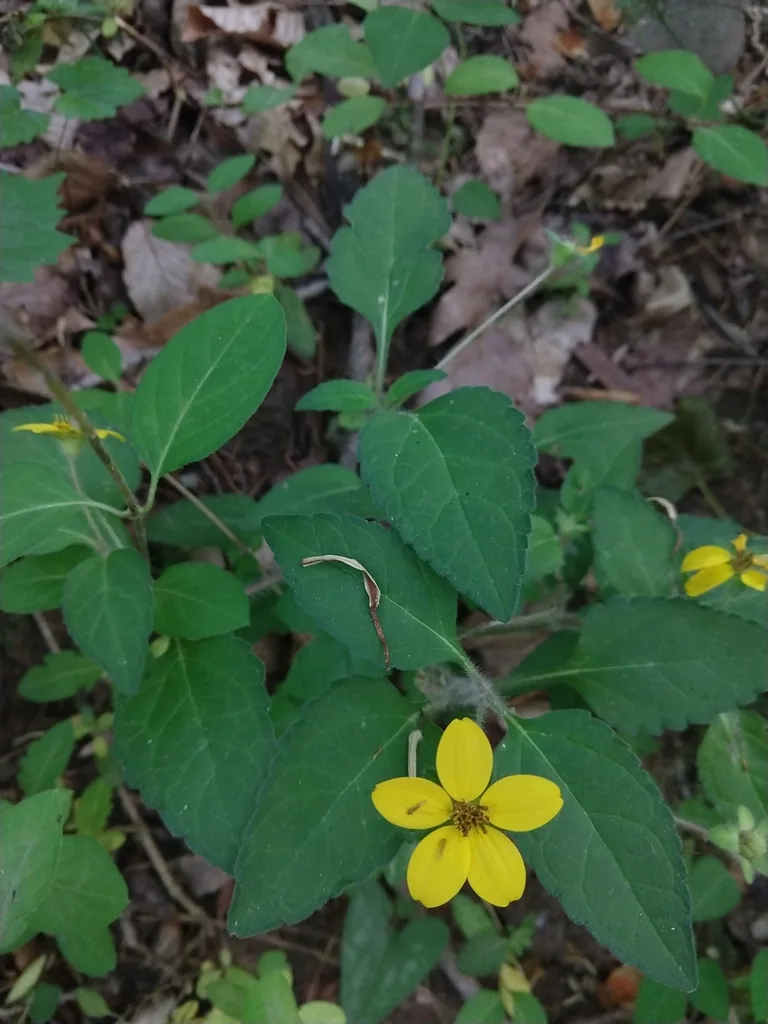
Cómo cultivar y cuidar Green-and-Gold
Chrysogonum virginianum
Escrito por Emilio Marruso · última revisión
De un vistazo
Esta vivaz es feliz en los rincones sombríos donde a otras plantas les cuesta, de semisombra a sombra total. Dale riego extra en las sequías de verano y un suelo que drene bien, y apenas te pedirá nada más: basta un abono orgánico de liberación lenta al plantar. Forma una mata de 30–61 cm de ancho, y sus estolones y plántulas te regalan nuevas plantas cada otoño.
- Sol
Semisombra o sombra total; a pleno sol solo si la tierra se mantiene húmeda
Qué dicen las fuentes (2)
Luz: Semisombra a sombra completa; tolera pleno sol solo en suelos constantemente húmedos
well-drained soils in part shade to full shade.
— Chrysogonum virginianum (Green and Gold, Green-and-Gold) | North Carolina Extension Gardener Plant Toolbox [1] Sun: part sun to shade
— Green and Gold | University of Maryland Extension [3] - Riego
Riego extra en las sequías de verano o si le da el sol de tarde; no te pases con el agua
Qué dicen las fuentes (4)
Riego: Riego suplementario durante períodos de sequía en verano o si se expone al sol de la tarde
Plants will need supplemental water during periods of summer drought or if exposed to afternoon sunlight.
— Green & Gold | Home & Garden Information Center [4] Don't overfertilize or water except during drought.
— Green and Gold | University of Maryland Extension [3] Notas sobre el riego: Tolera pleno sol solo si se cultiva en suelos constantemente húmedos; puede producirse pudrición de raíces con mal drenaje o en lechos con mucho mantillo y riego excesivo
It will tolerate full sun only if grown in consistently moist soils.
— Chrysogonum virginianum (Green and Gold, Green-and-Gold) | North Carolina Extension Gardener Plant Toolbox [1] Root rot may occur if the planting bed has poor drainage, or if the bed is heavily mulched and watered excessively.
— Green & Gold | Home & Garden Information Center [4] - Frío
Aguanta inviernos de hasta −28,9 °C (−20 °F)
Muy rústica · USDA 5a · RHS H7 · Z5
Qué dicen las fuentes (2)
Rusticidad, zona más fría: 5a [mínima invernal de −28,9 a −26,1 °C (de −20 a −15 °F)]
USDA Plant Hardiness Zone: 5a, 5b, 6a, 6b, 7a, 7b, 8a, 8b, 9a, 9b
— Chrysogonum virginianum (Green and Gold, Green-and-Gold) | North Carolina Extension Gardener Plant Toolbox [1] Rusticidad, zona más cálida: 9b [mínima invernal de −3,9 a −1,1 °C (de 25 a 30 °F)]
USDA Plant Hardiness Zone: 5a, 5b, 6a, 6b, 7a, 7b, 8a, 8b, 9a, 9b
— Chrysogonum virginianum (Green and Gold, Green-and-Gold) | North Carolina Extension Gardener Plant Toolbox [1] - Suelo
Necesita buen drenaje; en suelo arcilloso pesado, mezcla corteza de pino compostada
Qué dicen las fuentes (2)
Notas sobre el riego: Tolera pleno sol solo si se cultiva en suelos constantemente húmedos; puede producirse pudrición de raíces con mal drenaje o en lechos con mucho mantillo y riego excesivo
It will tolerate full sun only if grown in consistently moist soils.
— Chrysogonum virginianum (Green and Gold, Green-and-Gold) | North Carolina Extension Gardener Plant Toolbox [1] Root rot may occur if the planting bed has poor drainage, or if the bed is heavily mulched and watered excessively.
— Green & Gold | Home & Garden Information Center [4] - Plantación
Trasplanta plántulas y estolones enraizados en otoño
Qué dicen las fuentes (1)
Plantación: Otoño (trasplante de plántulas y estolones enraizados)
Seedlings may be found near the base of established plants and transplanted most successfully in the fall.
— Green & Gold | Home & Garden Information Center [4] - Abonado
Abono orgánico de liberación lenta mezclado con la tierra al plantar; sin excesos
Qué dicen las fuentes (4)
Cuándo: Al plantar, mezclado con la tierra de plantación
Plant establishment will be enhanced with the addition of a slow-release, organic fertilizer mixed into the planting soil.
— Green & Gold | Home & Garden Information Center [4] Plant establishment is enhanced with the addition of a slow-release, organic fertilizer mixed into the planting soil.
— Chrysogonum Virginianum (Green and Gold) - Brunswick County Center | N.C. Cooperative Extension [2] Abonos naturales: Fertilizante orgánico de liberación lenta mezclado con la tierra de plantación
Plant establishment will be enhanced with the addition of a slow-release, organic fertilizer mixed into the planting soil.
— Green & Gold | Home & Garden Information Center [4] Evitar: Exceso de fertilización
Don't overfertilize or water except during drought. Seems to thrive when neglected.
— Green and Gold | University of Maryland Extension [3] - Plagas
Babosas y caracoles agujerean las hojas nuevas; puede sufrir oídio y podredumbre de raíz
Qué dicen las fuentes (3)
Plagas: caracoles, babosas
Snails and slugs may eat holes in the newer spring foliage, but damage is rarely significant.
— Green & Gold | Home & Garden Information Center [4] Enfermedades: mildiu, podredumbre de raíces
There is some susceptibility to mildew, but it is rarely a serious problem.
— Chrysogonum virginianum (Green and Gold, Green-and-Gold) | North Carolina Extension Gardener Plant Toolbox [1] Root rot may occur if the planting bed has poor drainage, or if the bed is heavily mulched and watered excessively.
— Green & Gold | Home & Garden Information Center [4] - Tamaño
Se extiende de 30 a 61 cm de ancho
Qué dicen las fuentes (1)
Anchura adulta: 30.48-60.96 cm (1-2 pies)
Dimensions: Height: 0 ft. 1 in. - 0 ft. 2 in. Width: 1 ft. 0 in. - 2 ft. 0 in.
— Chrysogonum virginianum (Green and Gold, Green-and-Gold) | North Carolina Extension Gardener Plant Toolbox [1] - Multiplicación
Divide la mata a finales de primavera o saca estolones enraizados y plántulas en otoño
Qué dicen las fuentes (4)
Propagación: Divide la corona (finales de primavera); corta y excava estolones enraizados (otoño); trasplanta plántulas autosembradas (otoño); siembra semillas en mezcla fina para macetas
Propagate green & gold varieties that produce stolons by cutting and digging the stolons that have taken root where they touch the soil and transplant in the fall.
— Green & Gold | Home & Garden Information Center [4] Plants can also be propagated by division of the crown in late spring.
— Green & Gold | Home & Garden Information Center [4] Seeds may be collected and sown in a fine potting mix at 70 to 75 ºF. Germination will occur in about 3 weeks.
— Green & Gold | Home & Garden Information Center [4] Propagate by division in last spring every two to three years.
— Green and Gold | University of Maryland Extension [3] - Siembra
Siembra en sustrato fino a 21–24 °C; las semillas germinan en 3 semanas
Qué dicen las fuentes (2)
Guardar semillas: Recoge las semillas y siembra en una mezcla para macetas fina a 70-75 F (21-24 C).
Seeds may be collected and sown in a fine potting mix at 70 to 75
— Green & Gold | Home & Garden Information Center [4] Días de germinación: 3 semanas (21 días)
Seeds may be collected and sown in a fine potting mix at 70 to 75 ºF. Germination will occur in about 3 weeks.
— Green & Gold | Home & Garden Information Center [4]
Resumen
La verde-y-oro es una perenne de bajo crecimiento, semiperenne, que forma un tapiz de follaje y se extiende por rizomas o estolones. [1] Se cultiva fácilmente en suelo de humedad media y bien drenado en semisombra a sombra completa, y tolera pleno sol solo en suelo constantemente húmedo. [1] Se puede propagar por división de la corona, estolones enraizados o semilla. [4]
Citado en inglés, como en la fuente.
Esta ficha está incompleta: las fuentes consultadas aún no cubren todos los campos.
Aún no cubierto por nuestras fuentes: Poda
Cuidados
Riego
Riego
Riego suplementario durante períodos de sequía en verano o si se expone al sol de la tarde
Notas sobre el riego
Tolera pleno sol solo si se cultiva en suelos constantemente húmedos; puede producirse pudrición de raíces con mal drenaje o en lechos con mucho mantillo y riego excesivo
Qué dicen las fuentes (2)
It will tolerate full sun only if grown in consistently moist soils.Root rot may occur if the planting bed has poor drainage, or if the bed is heavily mulched and watered excessively.Luz
Semisombra a sombra completa; tolera pleno sol solo en suelos constantemente húmedos
Clima y frío
Rusticidad, zona más fría
5a [mínima invernal de −28,9 a −26,1 °C (de −20 a −15 °F)]
Qué dicen las fuentes (1)
USDA Plant Hardiness Zone:
5a, 5b, 6a, 6b, 7a, 7b, 8a, 8b, 9a, 9bRusticidad, zona más cálida
9b [mínima invernal de −3,9 a −1,1 °C (de 25 a 30 °F)]
Qué dicen las fuentes (1)
USDA Plant Hardiness Zone:
5a, 5b, 6a, 6b, 7a, 7b, 8a, 8b, 9a, 9bSuelo
Las fuentes dan valores distintos según la región, la zona o las condiciones de cultivo.
Lo que dice cada fuente
Según NC State Extension: 6.0
Según Clemson HGIC: 6.5
Qué dicen las fuentes (2)
Según NC State Extension: Soil pH:
Acid (<6.0)Según Clemson HGIC: raise the soil pH into the range of 6.0 to 6.5Dónde cultivarla
Las fuentes dan valores distintos según la región, la zona o las condiciones de cultivo.
Lo que dice cada fuente
plantas de propagación más lenta: 20.3 cm (8 in)
plantas de propagación más rápida: hasta 45.7 cm (18 pulgadas)
Qué dicen las fuentes (2)
plantas de propagación más lenta: space plants 8 inches apart for slower spreading plantsplantas de propagación más rápida: up to 18 inches apart for more rapidly spreading plantsPropagación
Divide la corona (finales de primavera); corta y excava estolones enraizados (otoño); trasplanta plántulas autosembradas (otoño); siembra semillas en mezcla fina para macetas
Qué dicen las fuentes (4)
Propagate green & gold varieties that produce stolons by cutting and digging the stolons that have taken root where they touch the soil and transplant in the fall.Plants can also be propagated by division of the crown in late spring.Seeds may be collected and sown in a fine potting mix at 70 to 75 ºF. Germination will occur in about 3 weeks.Propagate by division in last spring every two to three years.Cultivo
La planta
Ciclo de vida
perenne
Qué dicen las fuentes (1)
Genus: Chrysogonum Species: virginianum Family: Asteraceae Life Cycle: PerennialFamilia
Asteraceae
Qué dicen las fuentes (1)
Genus: Chrysogonum Species: virginianum Family: Asteraceae Life Cycle: PerennialAltura adulta
Anchura adulta
30.48-60.96 cm (1-2 pies)
Qué dicen las fuentes (1)
Dimensions: Height: 0 ft. 1 in. - 0 ft. 2 in. Width: 1 ft. 0 in. - 2 ft. 0 in.Siembra y crecimiento
Días de germinación
3 semanas (21 días)
Qué dicen las fuentes (1)
Seeds may be collected and sown in a fine potting mix at 70 to 75 ºF. Germination will occur in about 3 weeks.Cosecha y conservación
Guardar semillas
Recoge las semillas y siembra en una mezcla para macetas fina a 70-75 F (21-24 C).
Qué dicen las fuentes (1)
Seeds may be collected and sown in a fine potting mix at 70 to 75Plagas y enfermedades
Plagas
caracoles, babosas
Qué dicen las fuentes (1)
Snails and slugs may eat holes in the newer spring foliage, but damage is rarely significant.Enfermedades
mildiu, podredumbre de raíces
Qué dicen las fuentes (2)
There is some susceptibility to mildew, but it is rarely a serious problem.Root rot may occur if the planting bed has poor drainage, or if the bed is heavily mulched and watered excessively.Abonado
Cuándo
Al plantar, mezclado con la tierra de plantación
Qué dicen las fuentes (2)
Plant establishment will be enhanced with the addition of a slow-release, organic fertilizer mixed into the planting soil.Plant establishment is enhanced with the addition of a slow-release, organic fertilizer mixed into the planting soil.Abonos naturales
Fertilizante orgánico de liberación lenta mezclado con la tierra de plantación
Qué dicen las fuentes (1)
Plant establishment will be enhanced with the addition of a slow-release, organic fertilizer mixed into the planting soil.Evitar
Exceso de fertilización
Qué dicen las fuentes (1)
Don't overfertilize or water except during drought. Seems to thrive when neglected.Problemas
Mildiu
Síntoma: Alguna susceptibilidad al mildiu, rara vez un problema serio.
Qué dicen las fuentes (1)
There is some susceptibility to mildew, but it is rarely a serious problem.
— Chrysogonum virginianum (Green and Gold, Green-and-Gold) | North Carolina Extension Gardener Plant Toolbox [1] Caracoles y babosas
Síntoma: Agujeros en el follaje nuevo de primavera; el daño rara vez es significativo.
Qué hacer: Los cebos de babosas con fosfato de hierro brindan un control seguro y eficaz.
Qué dicen las fuentes (1)
Snails and slugs may eat holes in the newer spring foliage, but damage is rarely significant. Iron phosphate slug baits give safe and effective control.
— Green & Gold | Home & Garden Information Center [4] Podredumbre de la raíz
Síntoma: La pudrición de la raíz puede ocurrir si el lecho de plantación tiene mal drenaje o está muy cubierto con mantillo y se riega en exceso.
Qué hacer: Incorpora corteza de pino compostada al 20% en volumen en suelos de arcilla pesada.
Qué dicen las fuentes (1)
Root rot may occur if the planting bed has poor drainage, or if the bed is heavily mulched and watered excessively. Incorporation of composted pine bark at 20% by volume into heavy clay soils may reduce the chance of root rot.
— Green & Gold | Home & Garden Information Center [4]
Remedios
Las fuentes consultadas no dan remedios para esta planta.
Calendario
Plantación
Otoño (trasplante de plántulas y estolones enraizados)
Qué dicen las fuentes (1)
Seedlings may be found near the base of established plants and transplanted most successfully in the fall.Poda
No figura en las fuentes consultadas.
Meses tal como los dan las fuentes, en su mayoría de Estados Unidos (hemisferio norte). En el hemisferio sur se desplazan unos seis meses.
Valores orientativos
Valores de una fuente secundaria, no comprobados palabra por palabra como el resto de esta página. Úselos como punto de partida.
- Nivel de cuidado
- MedioValor orientativo, adáptalo a tu clima · Fuente secundaria
- Crecimiento
- BajoValor orientativo, adáptalo a tu clima · Fuente secundaria
- Poda
- Febrero, marzo, abril, mayoValor orientativo, adáptalo a tu clima · Fuente secundaria
Plantas similares
- African Daisy Dimorphotheca pluvialis
- Cempasúchil Tagetes erecta
- Ageratum Ageratum houstonianum
- Alpine aster Aster alpinus
- Appalachian Blazing Star Liatris squarrulosa
- Appalachian Ironweed Vernonia glauca
- Appalachian Sunflower Helianthus atrorubens
- Aromatic Aster Symphyotrichum oblongifolium
Fuentes
Cada valor anterior se cita de estos documentos. Los enlaces llevan al editor original.
- Chrysogonum virginianum (Green and Gold, Green-and-Gold) | North Carolina Extension Gardener Plant Toolbox · plants.ces.ncsu.edu, consultado
- Chrysogonum Virginianum (Green and Gold) - Brunswick County Center | N.C. Cooperative Extension · brunswick.ces.ncsu.edu, consultado
- Green and Gold | University of Maryland Extension · extension.umd.edu, consultado
- Green & Gold | Home & Garden Information Center · hgic.clemson.edu, consultado
Escrito por Emilio Marruso · última revisión