
How to Grow and Care for Japanese ginger
Zingiber mioga
Written by Emilio Marruso · last checked
At a glance
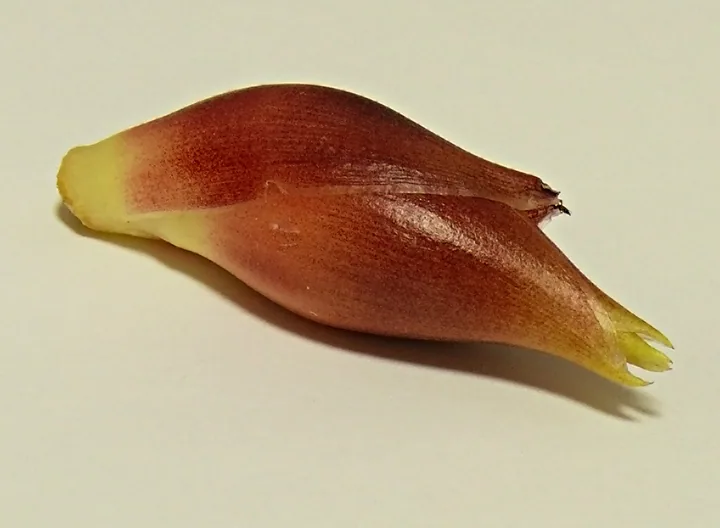
Myoga is a perennial from the ginger family, grown for its flower buds and new shoots, which are eaten in Japan. It is happy in full sun or partial shade, needs only a little feeding and grows in containers too. Give it a spot that doesn't stay soggy in winter, and it will come back year after year.
- Sun
Full sun to partial shade
What the sources say (2)
Light: Full sun to partial shade
The Myoga ginger prefers rich, organic, well-drained soil and part shade in a sheltered location not facing north.
— Zingiber mioga (Japanese Ginger, Myoga Ginger) | North Carolina Extension Gardener Plant Toolbox [1] Light: Full sun (6 or more hours of direct sunlight a day) Partial Shade (Direct sunlight only part of the day, 2-6 hours)
— Zingiber mioga (Japanese Ginger, Myoga Ginger) | North Carolina Extension Gardener Plant Toolbox [1] - Water
Keep it from staying too wet in winter
What the sources say (1)
Watering notes: Protect from excess winter moisture
The Myoga ginger prefers rich, organic, well-drained soil and part shade in a sheltered location not facing north. It should be protected from excess winter moisture.
— Zingiber mioga (Japanese Ginger, Myoga Ginger) | North Carolina Extension Gardener Plant Toolbox [1] - Cold
Survives winters down to −10 °F (−23.3 °C)
Very hardy · USDA 6a · RHS H7 · Z6
What the sources say (2)
Hardiness, coldest zone: 6a [winter low −23.3 to −20.6 °C (−10 to −5 °F)]
6a, 6b, 7a, 7b, 8a, 8b, 9a, 9b
— Zingiber mioga (Japanese Ginger, Myoga Ginger) | North Carolina Extension Gardener Plant Toolbox [1] Hardiness, warmest zone: 9b [winter low −3.9 to −1.1 °C (25 to 30 °F)]
6a, 6b, 7a, 7b, 8a, 8b, 9a, 9b
— Zingiber mioga (Japanese Ginger, Myoga Ginger) | North Carolina Extension Gardener Plant Toolbox [1] - Planting
Plant the root 1½ inches deep
What the sources say (1)
Sowing depth: 3.8 cm (1 1/2 in), planting depth of the main root (rhizome)
Plant the main root 1 ½ inches deep parallel to the ground with the smaller roots pointed downward.
— Zingiber mioga (Japanese Ginger, Myoga Ginger) | North Carolina Extension Gardener Plant Toolbox [1] - Feeding
Needs very little feeding
What the sources say (1)
How often: Minimal feeding
No pruning is required and only minimum fertilizer.
— Zingiber mioga (Japanese Ginger, Myoga Ginger) | North Carolina Extension Gardener Plant Toolbox [1] - Harvest
Eat the flower buds and new shoots, not the root
- Pests
Slugs and snails attack young plants; winter wet can cause root rot
What the sources say (2)
Pests: slugs, snails, scale insects, glasshouse red spider mites
Slugs and snails can attack the young plant. The older plant is susceptible to scale insects and glasshouse red spider mites.
— Zingiber mioga (Japanese Ginger, Myoga Ginger) | North Carolina Extension Gardener Plant Toolbox [1] Diseases: fungal root rots
The older plant is susceptible to scale insects and glasshouse red spider mites. It is also susceptible to fungal root rots.
— Zingiber mioga (Japanese Ginger, Myoga Ginger) | North Carolina Extension Gardener Plant Toolbox [1] - Size
19–39 inches tall and 19–36 inches wide
What the sources say (2)
Mature height: 48-99 cm (1 ft 7 in - 3 ft 3 in)
Dimensions: Height: 1 ft. 7 in. - 3 ft. 3 in. Width: 1 ft. 7 in. - 3 ft. 0 in.
— Zingiber mioga (Japanese Ginger, Myoga Ginger) | North Carolina Extension Gardener Plant Toolbox [1] Mature width: 48-91 cm (1 ft 7 in - 3 ft 0 in)
Dimensions: Height: 1 ft. 7 in. - 3 ft. 3 in. Width: 1 ft. 7 in. - 3 ft. 0 in.
— Zingiber mioga (Japanese Ginger, Myoga Ginger) | North Carolina Extension Gardener Plant Toolbox [1] - Propagation
Divide it in spring, or replant a 5-inch piece of root
What the sources say (1)
Propagation: Division in spring; replanting five inches [13 cm] of a rhizome cutting; seed (Chinese variant)
The Myoga ginger is propagated by division in spring or by replanting five inches of a rhizome cutting. The Chinese variant has more flowers and generates seeds for propagation.
— Zingiber mioga (Japanese Ginger, Myoga Ginger) | North Carolina Extension Gardener Plant Toolbox [1] - Containers
Grows in containers too
What the sources say (1)
In containers: Yes
The Myoga ginger can be grown in containers but should be brought inside in cold climates.
— Zingiber mioga (Japanese Ginger, Myoga Ginger) | North Carolina Extension Gardener Plant Toolbox [1]
Overview
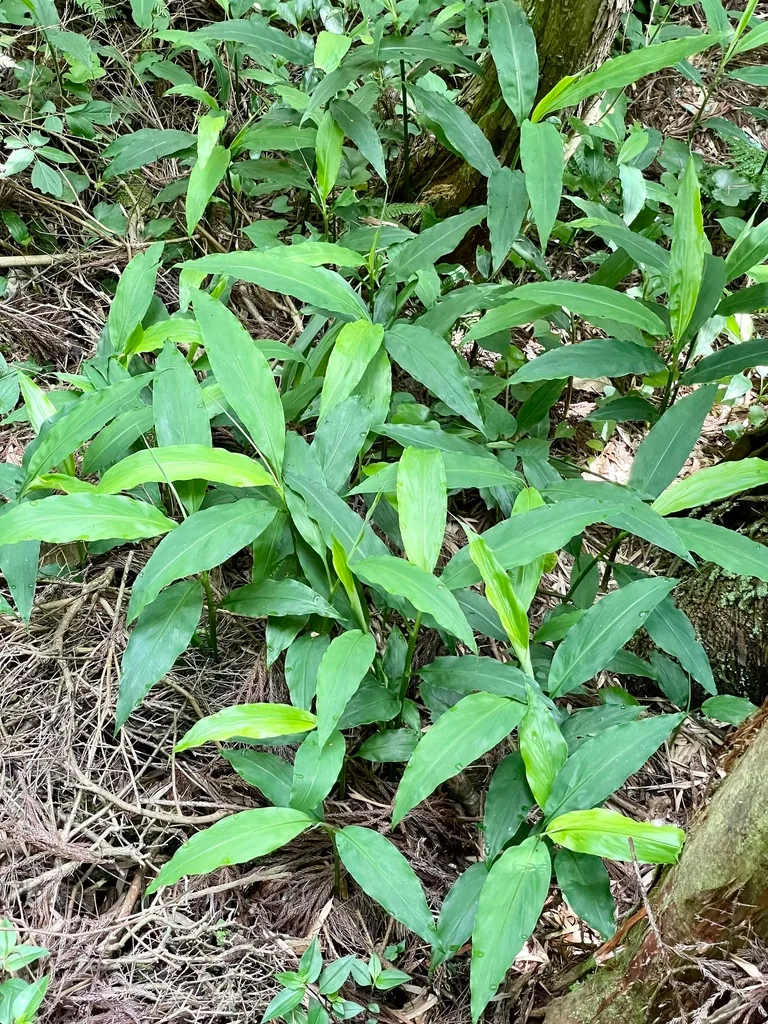
Myoga ginger is a rhizomatous perennial in the ginger family, found in China, Vietnam, South Korea and Japan. [1] It prefers rich, organic, well-drained soil and part shade, and can be grown in containers. [1] In Japan the flower buds and new shoots are eaten, while the rhizome is not. [1]
This record is incomplete: the sources we read do not cover every field yet.
Not yet covered by our sources: Watering, Sowing / Planting, Harvest, Spacing
Japanese ginger care
Measurements in square brackets are our conversion into the other unit system; the quoted text is unchanged.
How to water Japanese ginger
Watering
Not stated in the sources we read.
Watering notes
Protect from excess winter moisture
What the sources say (1)
The Myoga ginger prefers rich, organic, well-drained soil and part shade in a sheltered location not facing north. It should be protected from excess winter moisture.How much light Japanese ginger needs
Full sun to partial shade
What the sources say (2)
The Myoga ginger prefers rich, organic, well-drained soil and part shade in a sheltered location not facing north.Light:
Full sun (6 or more hours of direct sunlight a day)
Partial Shade (Direct sunlight only part of the day, 2-6 hours)How much cold Japanese ginger can take
Hardiness, coldest zone
6a [winter low −23.3 to −20.6 °C (−10 to −5 °F)]
What the sources say (1)
6a, 6b, 7a, 7b, 8a, 8b, 9a, 9bHardiness, warmest zone
9b [winter low −3.9 to −1.1 °C (25 to 30 °F)]
What the sources say (1)
6a, 6b, 7a, 7b, 8a, 8b, 9a, 9bWhere to grow Japanese ginger
In containers
Yes
What the sources say (1)
The Myoga ginger can be grown in containers but should be brought inside in cold climates.Spacing
Not stated in the sources we read.
How to propagate Japanese ginger
Division in spring; replanting five inches [13 cm] of a rhizome cutting; seed (Chinese variant)
What the sources say (1)
The Myoga ginger is propagated by division in spring or by replanting five inches of a rhizome cutting. The Chinese variant has more flowers and generates seeds for propagation.How to grow Japanese ginger
The plant
Life cycle
perennial
What the sources say (1)
Myoga ginger is a rhizomatous perennial in the ginger family (Zingiberaceae).Family
Zingiberaceae
What the sources say (1)
Myoga ginger is a rhizomatous perennial in the ginger family (Zingiberaceae).Mature height
48-99 cm (1 ft 7 in - 3 ft 3 in)
What the sources say (1)
Dimensions: Height: 1 ft. 7 in. - 3 ft. 3 in. Width: 1 ft. 7 in. - 3 ft. 0 in.Mature width
48-91 cm (1 ft 7 in - 3 ft 0 in)
What the sources say (1)
Dimensions: Height: 1 ft. 7 in. - 3 ft. 3 in. Width: 1 ft. 7 in. - 3 ft. 0 in.Sowing and growth
Sowing depth
3.8 cm (1 1/2 in), planting depth of the main root (rhizome)
What the sources say (1)
Plant the main root 1 ½ inches deep parallel to the ground with the smaller roots pointed downward.Pests and diseases
Pests
slugs, snails, scale insects, glasshouse red spider mites
What the sources say (1)
Slugs and snails can attack the young plant. The older plant is susceptible to scale insects and glasshouse red spider mites.Diseases
fungal root rots
What the sources say (1)
The older plant is susceptible to scale insects and glasshouse red spider mites. It is also susceptible to fungal root rots.Fertilizing
How often
Minimal feeding
What the sources say (1)
No pruning is required and only minimum fertilizer.Japanese ginger pests and problems
Slugs and snails
Symptom: Slugs and snails can attack the young plant.
What the sources say (1)
Slugs and snails can attack the young plant. The older plant is susceptible to scale insects and glasshouse red spider mites.
— Zingiber mioga (Japanese Ginger, Myoga Ginger) | North Carolina Extension Gardener Plant Toolbox [1] Fungal root rots
Symptom: The plant is susceptible to fungal root rots; it should be protected from excess winter moisture.
What to do: Protect from excess winter moisture.
What the sources say (1)
It is also susceptible to fungal root rots.
— Zingiber mioga (Japanese Ginger, Myoga Ginger) | North Carolina Extension Gardener Plant Toolbox [1]
Remedies
Each remedy shows what official sources say about it; traditional remedies without an official source are marked as such. Harmful ones are listed so you know to avoid them.
Treating the plant
slugs and snails
coffee grounds Not proven
How: Spread coffee grounds around the plants, or make a circle of coffee granules around the base of the plant.
To implement this method, you simply have to spread coffee grounds around your garden or specific plants.
— happysprout.com [2] What the evidence says Crushed egg shells or coffee grounds have not been shown to be effective deterrents.
— ipm.ucanr.edu [3] hand-picking at night Works
How: Pick slugs and snails off the plants at night, from plants and from their hiding places.
Handpick from plants at night or from fence ledges, undersides of decks, and meter boxes.
— ipm.ucanr.edu [3] What the evidence says Picking by hand or with tweezers, although not an enjoyable task, is a very effective method of immediate control and can last a reasonably long time if combined with other techniques.
— extension.umd.edu [4] table salt on slugs Harmful
How: Direct applications of table salt to a slug can kill it.
Salt also is toxic to slugs and direct applications of table salt to a slug can kill it.
— extension.colostate.edu [5] What the evidence says Do not use salt to destroy snails and slugs, as it will increase soil salinity.
— ipm.ucanr.edu [3]
Calendar
Sowing
Not stated in the sources we read.
Planting
Not stated in the sources we read.
Harvest
Not stated in the sources we read.
Months as given by the sources, which are mostly from the United States (northern hemisphere). In the southern hemisphere they shift by about six months.
Edibility
Reported by the source, quoted verbatim. Do not eat a plant on the basis of this page alone: identification mistakes can be dangerous.
Only the flower buds and new shoots are eaten in Japan. The rhizome is not eaten.
[1]
Similar plants
- Shampoo Ginger Zingiber zerumbet
- Ginger Zingiber officinale
- Butterfly Ginger Hedychium coronarium
- Cardamom Elettaria cardamomum
- Curcuma petiolata Curcuma petiolata
- Greater galangal Alpinia galanga
- Kahili Ginger Hedychium gardnerianum
- Pink porcelain lily Alpinia zerumbet
Sources
Every value above is quoted from these documents. Links lead to the original publisher.
- Zingiber mioga (Japanese Ginger, Myoga Ginger) | North Carolina Extension Gardener Plant Toolbox · plants.ces.ncsu.edu, consulted
- happysprout.com · happysprout.com
- ipm.ucanr.edu · ipm.ucanr.edu
- extension.umd.edu · extension.umd.edu
- extension.colostate.edu · extension.colostate.edu
Written by Emilio Marruso · last checked