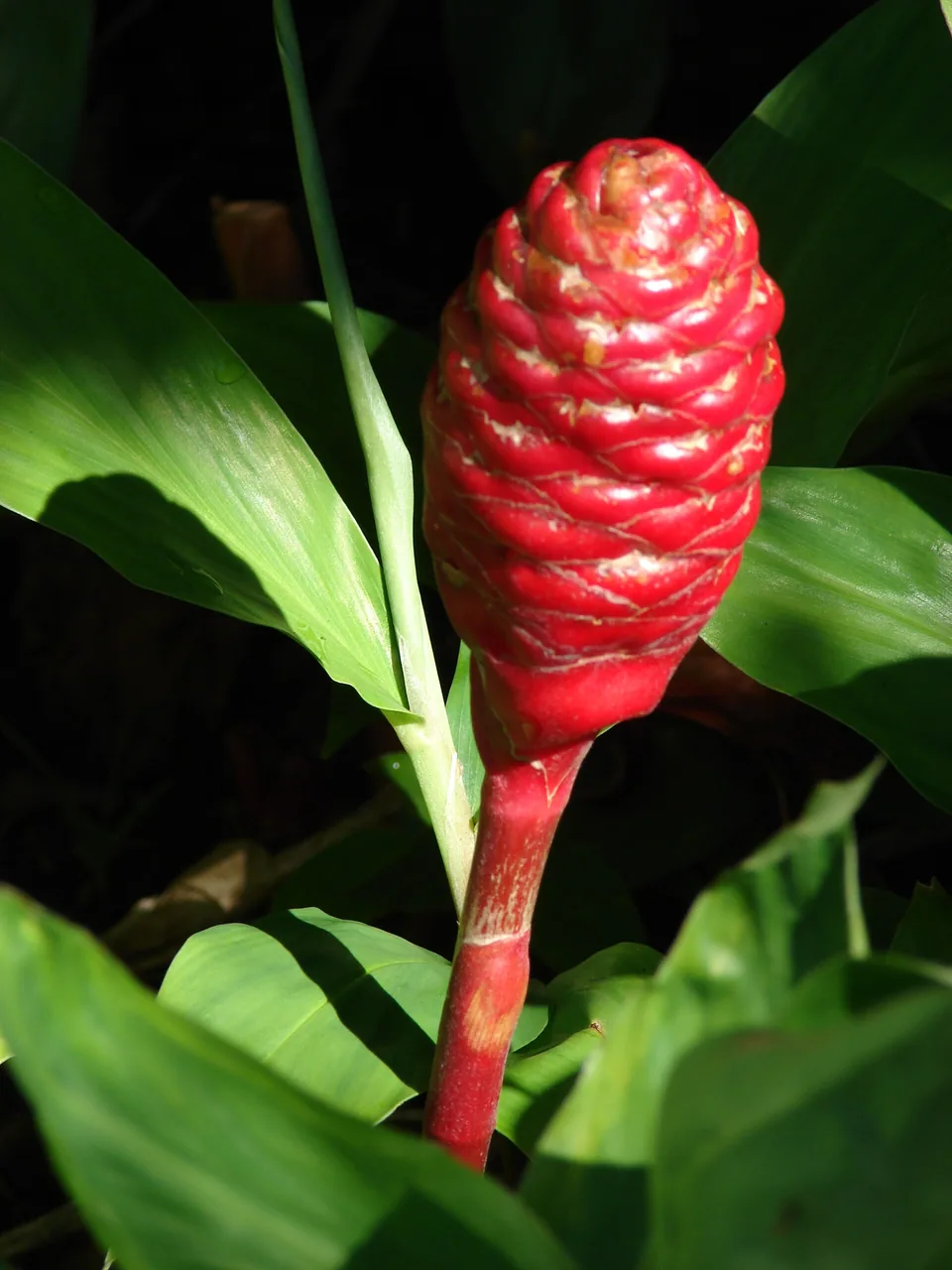


How to Grow and Care for Shampoo Ginger
Zingiber zerumbet
Written by Emilio Marruso · last checked
At a glance
Shampoo ginger is a perennial that loves partial shade and moist, fertile soil, and it grows happily in containers or even indoors. When its cones turn red, gently squeeze them over a container to collect the clear liquid, which you can freeze for later. It is also tasty: the rhizome flavors food, and the leaves, shoots and young flower spikes are edible.
- Sun
Partial shade to partial sun
What the sources say (2)
Light: Partial shade to partial sun
The ideal planting site is in partial shade to partial sun, with moist, fertile soil.
— Shampoo Ginger – Gardening Solutions [4] Light: Deep shade (Less than 2 hours to no direct sunlight) Partial Shade (Direct sunlight only part of the day, 2-6 hours)
— Zingiber zerumbet (Bitter Ginger, Pinecone Ginger, Pinecone Lily, Shampoo Ginger, Wild Ginger) | North Carolina Extension Gardener Plant Toolbox [1] - Water
Keep the soil moist; it handles some dryness; keep it dry while dormant in winter
What the sources say (2)
Watering: Moist, fertile soil; moderately drought tolerant
The ideal planting site is in partial shade to partial sun, with moist, fertile soil. Shampoo ginger is moderately salt and drought tolerant.
— Shampoo Ginger – Gardening Solutions [4] Watering notes: Keep dry while dormant in winter
Completely dormant in winter, it needs to be kept dry while dormant.
— Zingiber zerumbet (Bitter Ginger, Pinecone Ginger, Pinecone Lily, Shampoo Ginger, Wild Ginger) | North Carolina Extension Gardener Plant Toolbox [1] - Soil
Fertile soil, pH 6.0–8.0
What the sources say (3)
Watering: Moist, fertile soil; moderately drought tolerant
The ideal planting site is in partial shade to partial sun, with moist, fertile soil. Shampoo ginger is moderately salt and drought tolerant.
— Shampoo Ginger – Gardening Solutions [4] Soil pH, minimum: 6.0
Soil Texture: High Organic Matter Sand Soil pH: Neutral (6.0-8.0)
— Zingiber zerumbet (Bitter Ginger, Pinecone Ginger, Pinecone Lily, Shampoo Ginger, Wild Ginger) | North Carolina Extension Gardener Plant Toolbox [1] Soil pH, maximum: 8.0
Soil Texture: High Organic Matter Sand Soil pH: Neutral (6.0-8.0)
— Zingiber zerumbet (Bitter Ginger, Pinecone Ginger, Pinecone Lily, Shampoo Ginger, Wild Ginger) | North Carolina Extension Gardener Plant Toolbox [1] - Planting
You can plant it any time of year
What the sources say (1)
Planting: Year-round
Shampoo ginger can be planted year-round. It works as a specimen plant, border, or accent plant.
— Shampoo Ginger – Gardening Solutions [4] - Harvest
Pick red cones and squeeze out the clear liquid; you can freeze it for later
What the sources say (3)
Harvest: When the cones have turned red
Once your cones have turned red, they’re ready to harvest!
— Shampoo Ginger – Gardening Solutions [4] How to harvest: harvest the cones once they have turned red; gently squeeze them over a container to collect the clear liquid
Once your cones have turned red, they’re ready to harvest! To collect the “shampoo” liquid from the cones, gently squeeze them over a container.
— Shampoo Ginger – Gardening Solutions [4] Storage: the collected liquid can be frozen for later
If you’re harvesting in advance, you can freeze the shampoo liquid for later.
— Shampoo Ginger – Gardening Solutions [4] - Pests
Rarely troubled; watch for whiteflies, root grubs and mites
What the sources say (2)
Pests: whitefly, cardamom root grub, mites
Typically free from diseases and pests. Occasionally, whitefly and cardamom root grub can cause problems.
— Zingiber zerumbet (Bitter Ginger, Pinecone Ginger, Pinecone Lily, Shampoo Ginger, Wild Ginger) | North Carolina Extension Gardener Plant Toolbox [1] Pests and diseases are rarely an issue, but you may encounter mites.
— Shampoo Ginger – Gardening Solutions [4] - Watch out
It spreads by its rhizomes and can become weedy
- Propagation
Grow new plants from seed or by dividing the clump
What the sources say (2)
Propagation: Seed, division
Rhizome is used in tradional Asian cultures for food and medicine. Life Cycle: Perennial Recommended Propagation Strategy: Seed
— Zingiber zerumbet (Bitter Ginger, Pinecone Ginger, Pinecone Lily, Shampoo Ginger, Wild Ginger) | North Carolina Extension Gardener Plant Toolbox [1] Shampoo ginger makes an excellent passalong plant since it is propagated by division.
— Shampoo Ginger – Gardening Solutions [4] - Containers
Grows well in containers and indoors too
What the sources say (2)
In containers: Yes
You can also plant it in containers indoors or outdoors.
— Shampoo Ginger – Gardening Solutions [4] Indoors: Yes
It is commonly grown as a houseplant or it does well in a container that can be brought indoors over the winter as it is not very frost tolerant.
— Zingiber zerumbet (Bitter Ginger, Pinecone Ginger, Pinecone Lily, Shampoo Ginger, Wild Ginger) | North Carolina Extension Gardener Plant Toolbox [1]
Overview
Shampoo ginger is a clumping perennial with reed-like stems, native to tropical Asia. [1] Its red cone-like bracts release a clear liquid that can be bottled and used as shampoo. [4] It can be grown in containers, indoors or outdoors. [4]
Shampoo Ginger care
How to water Shampoo Ginger
Watering
Moist, fertile soil; moderately drought tolerant
What the sources say (1)
The ideal planting site is in partial shade to partial sun, with moist, fertile soil. Shampoo ginger is moderately salt and drought tolerant.Watering notes
Keep dry while dormant in winter
What the sources say (1)
Completely dormant in winter, it needs to be kept dry while dormant.How much light Shampoo Ginger needs
Partial shade to partial sun
What the sources say (2)
The ideal planting site is in partial shade to partial sun, with moist, fertile soil.Light:
Deep shade (Less than 2 hours to no direct sunlight)
Partial Shade (Direct sunlight only part of the day, 2-6 hours)How much cold Shampoo Ginger can take
Hardiness, coldest zone
The sources give different values depending on region, zone or growing conditions.
What each source says
According to NC State Extension: 8a [winter low −12.2 to −9.4 °C (10 to 15 °F)]
According to UF/IFAS Gardening Solutions: 9 [winter low −6.7 to −1.1 °C (20 to 30 °F)]
What the sources say (2)
According to NC State Extension: USDA Plant Hardiness Zone:
8a, 8b, 9a, 9b, 10a, 10bAccording to UF/IFAS Gardening Solutions: It thrives in zones 9 through 11 and will die back in the winter.Hardiness, warmest zone
The sources give different values depending on region, zone or growing conditions.
What each source says
According to NC State Extension: 10b [winter low 1.7 to 4.4 °C (35 to 40 °F)]
According to UF/IFAS Gardening Solutions: 11 [winter low 4.4 to 10 °C (40 to 50 °F)]
What the sources say (2)
According to NC State Extension: USDA Plant Hardiness Zone:
8a, 8b, 9a, 9b, 10a, 10bAccording to UF/IFAS Gardening Solutions: It thrives in zones 9 through 11 and will die back in the winter.Best soil for Shampoo Ginger
Soil pH, minimum
6.0
What the sources say (1)
Soil Texture:
High Organic Matter
Sand
Soil pH:
Neutral (6.0-8.0)Soil pH, maximum
8.0
What the sources say (1)
Soil Texture:
High Organic Matter
Sand
Soil pH:
Neutral (6.0-8.0)Where to grow Shampoo Ginger
Indoors
Yes
What the sources say (1)
It is commonly grown as a houseplant or it does well in a container that can be brought indoors over the winter as it is not very frost tolerant.In containers
Yes
What the sources say (1)
You can also plant it in containers indoors or outdoors.How to propagate Shampoo Ginger
Seed, division
What the sources say (2)
Rhizome is used in tradional Asian cultures for food and medicine.
Life Cycle:
Perennial
Recommended Propagation Strategy:
SeedShampoo ginger makes an excellent passalong plant since it is propagated by division.How to grow Shampoo Ginger
The plant
Life cycle
perennial
What the sources say (1)
Wild Ginger is a clumping perennial that has reed-like stems and is native to tropical Asia.Family
Zingiberaceae
What the sources say (1)
Genus:
Zingiber
Species:
zerumbet
Family:
Zingiberaceae
Uses (Ethnobotany):
Rhizome is used in tradional Asian cultures for food and medicine.Mature height
Harvest and storage
How to harvest
harvest the cones once they have turned red; gently squeeze them over a container to collect the clear liquid
What the sources say (1)
Once your cones have turned red, they’re ready to harvest! To collect the “shampoo” liquid from the cones, gently squeeze them over a container.Storage
the collected liquid can be frozen for later
What the sources say (1)
If you’re harvesting in advance, you can freeze the shampoo liquid for later.Pests and diseases
Pests
whitefly, cardamom root grub, mites
What the sources say (2)
Typically free from diseases and pests. Occasionally, whitefly and cardamom root grub can cause problems.Pests and diseases are rarely an issue, but you may encounter mites.Shampoo Ginger pests and problems
Whitefly and cardamom root grub
Symptom: Occasionally cause problems
What to do: Not specified in the sources
What the sources say (1)
Typically free from diseases and pests. Occasionally, whitefly and cardamom root grub can cause problems.
— Zingiber zerumbet (Bitter Ginger, Pinecone Ginger, Pinecone Lily, Shampoo Ginger, Wild Ginger) | North Carolina Extension Gardener Plant Toolbox [1] Weedy spread
Symptom: Spreading by rhizomes, the plant can become weedy
What to do: Not specified in the sources
What the sources say (1)
Spreading by rhizomes, this plant can become weedy.
— Zingiber zerumbet (Bitter Ginger, Pinecone Ginger, Pinecone Lily, Shampoo Ginger, Wild Ginger) | North Carolina Extension Gardener Plant Toolbox [1] Mites
Symptom: Pests and diseases are rarely an issue, but mites may be encountered
What to do: Not specified in the sources
What the sources say (1)
Pests and diseases are rarely an issue, but you may encounter mites.
— Shampoo Ginger – Gardening Solutions [4]
Remedies
Each remedy shows what official sources say about it; traditional remedies without an official source are marked as such. Harmful ones are listed so you know to avoid them.
Treating the plant
mites
insecticidal soap spray Works
certain plants might be sensitive to the soap and can suffer leaf burn.
— foodgardening.mequoda.com [6] spraying home remedies that contain dish detergent on plants on a sunny day can injure the plant, essentially burning it.
— extension.psu.edu [8] How: mix the soap with water to create the solution and apply directly to the insects; particularly effective on smaller pests such as aphids, psyllids and spider mites
Insecticidal soap is organic. The potassium salts in insecticidal soap help remove an insect’s protective waxes, causing destruction of insect membranes and killing them. Insecticidal soaps are particularly effective on smaller pests such as aphids, psyllids, and spider mites.
— foodgardening.mequoda.com [6] What the evidence says insecticidal soap is a safe, effective organic insecticide with minimal environmental impact.
— extension.psu.edu [7]
Calendar
Planting
Year-round
What the sources say (1)
Shampoo ginger can be planted year-round. It works as a specimen plant, border, or accent plant.Harvest
When the cones have turned red
What the sources say (1)
Once your cones have turned red, they’re ready to harvest!Months as given by the sources, which are mostly from the United States (northern hemisphere). In the southern hemisphere they shift by about six months.
Edibility
Reported by the source, quoted verbatim. Do not eat a plant on the basis of this page alone: identification mistakes can be dangerous.
Indicative values
Values from a secondary source, not checked word for word like the rest of this page. Use them as a starting point.
- Hours of sun
- 6-8 hoursIndicative value, adapt it to your climate · Secondary source
- Care level
- MediumIndicative value, adapt it to your climate · Secondary source
- Growth rate
- LowIndicative value, adapt it to your climate · Secondary source
- Pruning
- February, March, AprilIndicative value, adapt it to your climate · Secondary source
Similar plants
- Ginger Zingiber officinale
- Japanese ginger Zingiber mioga
- Black cardamom Amomum subulatum
- Butterfly Ginger Hedychium coronarium
- Cardamom Elettaria cardamomum
- Curcuma petiolata Curcuma petiolata
- Greater galangal Alpinia galanga
- Kahili Ginger Hedychium gardnerianum
Sources
Every value above is quoted from these documents. Links lead to the original publisher.
- Zingiber zerumbet (Bitter Ginger, Pinecone Ginger, Pinecone Lily, Shampoo Ginger, Wild Ginger) | North Carolina Extension Gardener Plant Toolbox · plants.ces.ncsu.edu, consulted
- Bitter Ginger - Zingiber zerumbet | North Carolina Extension Gardener Plant Toolbox · plants.ces.ncsu.edu, consulted
- Pinecone Ginger - Zingiber zerumbet | North Carolina Extension Gardener Plant Toolbox · plants.ces.ncsu.edu, consulted
- Shampoo Ginger – Gardening Solutions · gardeningsolutions.ifas.ufl.edu, consulted
- Wild Ginger - Zingiber zerumbet | North Carolina Extension Gardener Plant Toolbox · plants.ces.ncsu.edu, consulted
- foodgardening.mequoda.com · foodgardening.mequoda.com
- extension.psu.edu · extension.psu.edu
- extension.psu.edu · extension.psu.edu
Written by Emilio Marruso · last checked