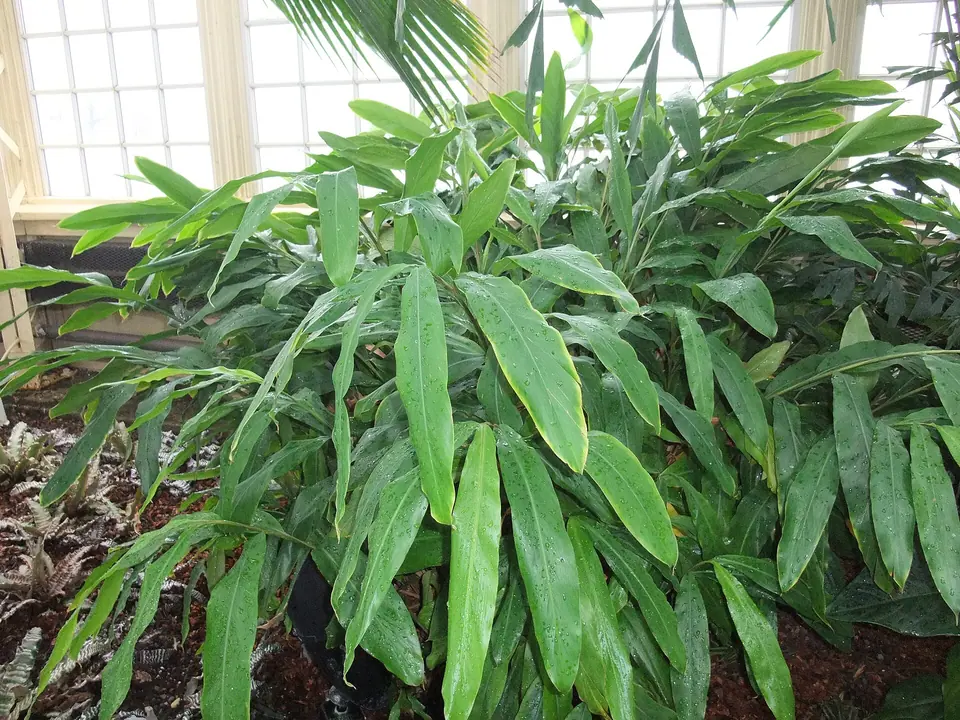


How to Grow and Care for Cardamom
Elettaria cardamomum
Written by Emilio Marruso · last checked
At a glance
Cardamom is a lush, leafy perennial that's happy in shade and grows well indoors or in a container. Keep its soil constantly moist and mist the leaves several times a week for extra humidity. Where it fruits, its seeds and pods flavor sweet and savory dishes, coffee and baked goods; indoors, enjoy it for its showy foliage.
- Sun
Dappled light to deep shade; keep it out of direct sun
What the sources say (1)
Light: Dappled sunlight to deep shade; avoid direct sunlight
Direct sunlight and sudden changes in environmental conditions must be avoided. Outside a natural tropical environment, cardamom can be grown in heated greenhouses or warm bathrooms.
— Elettaria cardamomum (Cardamom, Cardamon, Cardamum, Green Cardamom, True Cardamom) | North Carolina Extension Gardener Plant Toolbox [1] - Water
Keep the soil always moist, but don't leave water in the saucer; mist the leaves often
What the sources say (2)
Watering: Keep soil constantly moist, never letting the pot sit in saucer water
Keep the plant soil constantly moist, but never let the pot sit in the saucer water.
— Elettaria cardamomum (Cardamom, Cardamon, Cardamum, Green Cardamom, True Cardamom) | North Carolina Extension Gardener Plant Toolbox [1] Watering notes: Provide humidity by misting the leaves several times per week and standing the pot on a saucer of pebbles sprayed with water
Place the pot on a large saucer of pebbles and spray pebbles with water to provide humidity as well as misting the leaves several times per week.
— Elettaria cardamomum (Cardamom, Cardamon, Cardamum, Green Cardamom, True Cardamom) | North Carolina Extension Gardener Plant Toolbox [1] - Cold
Survives winters down to 30 °F (−1.1 °C)
Half hardy: mild winters or an unheated greenhouse · USDA 10a · RHS H3 · Z10
What the sources say (2)
Hardiness, coldest zone: 10a [winter low −1.1 to 1.7 °C (30 to 35 °F)]
10a, 10b, 11a, 11b, 12a, 12b, 13a, 13b
— Elettaria cardamomum (Cardamom, Cardamon, Cardamum, Green Cardamom, True Cardamom) | North Carolina Extension Gardener Plant Toolbox [1] Hardiness, warmest zone: 13b [winter low 18.3 to 21.1 °C (65 to 70 °F)]
10a, 10b, 11a, 11b, 12a, 12b, 13a, 13b
— Elettaria cardamomum (Cardamom, Cardamon, Cardamum, Green Cardamom, True Cardamom) | North Carolina Extension Gardener Plant Toolbox [1] - Soil
Slightly acidic soil, pH 5.5–6.8
What the sources say (2)
Soil pH, minimum: 5.5
The soil required is loamy, well-drained, and consistently moist, with PH levels between 5.5 and 6.8.
— Elettaria cardamomum (Cardamom, Cardamon, Cardamum, Green Cardamom, True Cardamom) | North Carolina Extension Gardener Plant Toolbox [1] Soil pH, maximum: 6.8
The soil required is loamy, well-drained, and consistently moist, with PH levels between 5.5 and 6.8.
— Elettaria cardamomum (Cardamom, Cardamon, Cardamum, Green Cardamom, True Cardamom) | North Carolina Extension Gardener Plant Toolbox [1] - Feeding
Twice a month, with a houseplant food high in nitrogen and low in potassium; add rotted manure
What the sources say (3)
How often: Twice a month
never let the pot sit in the saucer water. Feed with a high nitrogen and low potassium fertilizer for houseplants twice a month.
— Elettaria cardamomum (Cardamom, Cardamon, Cardamum, Green Cardamom, True Cardamom) | North Carolina Extension Gardener Plant Toolbox [1] Mineral fertilizers: A high-nitrogen, low-potassium houseplant fertilizer
never let the pot sit in the saucer water. Feed with a high nitrogen and low potassium fertilizer for houseplants twice a month.
— Elettaria cardamomum (Cardamom, Cardamon, Cardamum, Green Cardamom, True Cardamom) | North Carolina Extension Gardener Plant Toolbox [1] Natural fertilizers: Organic matter and well-rotted manure mixed into the potting soil
fill it with well-draining, moisture-retaining soil that is sandy-loamy and amended with organic matter and well-rotted manure.
— Elettaria cardamomum (Cardamom, Cardamon, Cardamum, Green Cardamom, True Cardamom) | North Carolina Extension Gardener Plant Toolbox [1] - Harvest
Pick pods by hand before they ripen, so they don't split; seeds and pods flavor food and drinks
What the sources say (2)
Harvest: Fruit is handpicked before it is ripe so the capsule does not split
To prevent losing the valuable seed, the fruit is handpicked before it is ripe so the capsule does not split.
— Elettaria cardamomum (Cardamom, Cardamon, Cardamum, Green Cardamom, True Cardamom) | North Carolina Extension Gardener Plant Toolbox [1] How to harvest: Handpick the fruits before they are ripe so the capsule does not split and the valuable seed is not lost
To prevent losing the valuable seed, the fruit is handpicked before it is ripe so the capsule does not split.
— Elettaria cardamomum (Cardamom, Cardamon, Cardamum, Green Cardamom, True Cardamom) | North Carolina Extension Gardener Plant Toolbox [1] - Watch out
It won't flower indoors or in a greenhouse: grow it there for its showy leaves
- Size
6 to 15 ft tall and 4 to 10 ft wide
What the sources say (2)
Mature height: 183-457 cm (6-15 ft)
Height: 6 ft. 0 in. - 15 ft. 0 in.
— Elettaria cardamomum (Cardamom, Cardamon, Cardamum, Green Cardamom, True Cardamom) | North Carolina Extension Gardener Plant Toolbox [1] Mature width: 122-305 cm (4-10 ft)
Width: 4 ft. 0 in. - 10 ft. 0 in.
— Elettaria cardamomum (Cardamom, Cardamon, Cardamum, Green Cardamom, True Cardamom) | North Carolina Extension Gardener Plant Toolbox [1] - Propagation
Divide the underground stems to get new plants
What the sources say (1)
Propagation: Division of the rhizomes
Propagate cardamom by dividing the fleshy, knobby rhizomes.
— Elettaria cardamomum (Cardamom, Cardamon, Cardamum, Green Cardamom, True Cardamom) | North Carolina Extension Gardener Plant Toolbox [1] - Containers
Grows well in containers and indoors
What the sources say (2)
In containers: Yes
Place the pot on a large saucer of pebbles and spray pebbles with water to provide humidity as well as misting the leaves several times per week.
— Elettaria cardamomum (Cardamom, Cardamon, Cardamum, Green Cardamom, True Cardamom) | North Carolina Extension Gardener Plant Toolbox [1] Indoors: Yes
Growing indoors or in a greenhouse will not produce flowers, however, it is often grown just for the showy foliage.
— Elettaria cardamomum (Cardamom, Cardamon, Cardamum, Green Cardamom, True Cardamom) | North Carolina Extension Gardener Plant Toolbox [1]
Overview
Cardamom is an aromatic evergreen member of the ginger family whose seeds and pods are used as a spice. [1] It needs consistently moist, well-drained loamy soil, high humidity and protection from direct sunlight and temperatures below 50 degrees F [10 °C]. [1] Outside tropical conditions it does not flower and is often grown for its foliage. [1]
This record is incomplete: the sources we read do not cover every field yet.
Not yet covered by our sources: Sowing / Planting
Cardamom care
Measurements in square brackets are our conversion into the other unit system; the quoted text is unchanged.
How to water Cardamom
Watering
Keep soil constantly moist, never letting the pot sit in saucer water
What the sources say (1)
Keep the plant soil constantly moist, but never let the pot sit in the saucer water.Watering notes
Provide humidity by misting the leaves several times per week and standing the pot on a saucer of pebbles sprayed with water
What the sources say (1)
Place the pot on a large saucer of pebbles and spray pebbles with water to provide humidity as well as misting the leaves several times per week.How much light Cardamom needs
Dappled sunlight to deep shade; avoid direct sunlight
What the sources say (1)
Direct sunlight and sudden changes in environmental conditions must be avoided. Outside a natural tropical environment, cardamom can be grown in heated greenhouses or warm bathrooms.How much cold Cardamom can take
Hardiness, coldest zone
10a [winter low −1.1 to 1.7 °C (30 to 35 °F)]
What the sources say (1)
10a, 10b, 11a, 11b, 12a, 12b, 13a, 13bHardiness, warmest zone
13b [winter low 18.3 to 21.1 °C (65 to 70 °F)]
What the sources say (1)
10a, 10b, 11a, 11b, 12a, 12b, 13a, 13bBest soil for Cardamom
Soil pH, minimum
5.5
What the sources say (1)
The soil required is loamy, well-drained, and consistently moist, with PH levels between 5.5 and 6.8.Soil pH, maximum
6.8
What the sources say (1)
The soil required is loamy, well-drained, and consistently moist, with PH levels between 5.5 and 6.8.Where to grow Cardamom
Indoors
Yes
What the sources say (1)
Growing indoors or in a greenhouse will not produce flowers, however, it is often grown just for the showy foliage.In containers
Yes
What the sources say (1)
Place the pot on a large saucer of pebbles and spray pebbles with water to provide humidity as well as misting the leaves several times per week.How to propagate Cardamom
Division of the rhizomes
What the sources say (1)
Propagate cardamom by dividing the fleshy, knobby rhizomes.How to grow Cardamom
The plant
Life cycle
perennial
What the sources say (1)
Life Cycle: PerennialFamily
Zingiberaceae
What the sources say (1)
Family: ZingiberaceaeMature height
183-457 cm (6-15 ft)
What the sources say (1)
Height: 6 ft. 0 in. - 15 ft. 0 in.Mature width
122-305 cm (4-10 ft)
What the sources say (1)
Width: 4 ft. 0 in. - 10 ft. 0 in.Harvest and storage
How to harvest
Handpick the fruits before they are ripe so the capsule does not split and the valuable seed is not lost
What the sources say (1)
To prevent losing the valuable seed, the fruit is handpicked before it is ripe so the capsule does not split.Fertilizing
How often
Twice a month
What the sources say (1)
never let the pot sit in the saucer water. Feed with a high nitrogen and low potassium fertilizer for houseplants twice a month.Natural fertilizers
Organic matter and well-rotted manure mixed into the potting soil
What the sources say (1)
fill it with well-draining, moisture-retaining soil that is sandy-loamy and amended with organic matter and well-rotted manure.Mineral fertilizers
A high-nitrogen, low-potassium houseplant fertilizer
What the sources say (1)
never let the pot sit in the saucer water. Feed with a high nitrogen and low potassium fertilizer for houseplants twice a month.Cardamom pests and problems
Cold damage
Symptom: Plants suffer damage below 50 degrees F.
What to do: Keep within the stated temperature range of 65-95 degrees; sudden changes in conditions must be avoided.
What the sources say (1)
Cardamom thrives in non-fluctuating tropical rain forest conditions, with temperatures between 65-95 degrees and humidity levels of 75%.
— Elettaria cardamomum (Cardamom, Cardamon, Cardamum, Green Cardamom, True Cardamom) | North Carolina Extension Gardener Plant Toolbox [1] No flowering outside the tropics
Symptom: Plant will not flower when grown indoors or in a greenhouse.
What to do: Grown for the showy foliage instead.
What the sources say (1)
Growing indoors or in a greenhouse will not produce flowers, however, it is often grown just for the showy foliage.
— Elettaria cardamomum (Cardamom, Cardamon, Cardamum, Green Cardamom, True Cardamom) | North Carolina Extension Gardener Plant Toolbox [1]
Remedies
Each remedy shows what official sources say about it; traditional remedies without an official source are marked as such. Harmful ones are listed so you know to avoid them.
Treating the plant
thrips
traps Not verified
Traditional remedy, not verified by an official source.
How: Treat thrips on the plants with traps.
rhizome rot
removing infected clumps Official source, not independently tested
How: Remove and destroy all infected clumps, including the rhizomes.
all infected clumps, including rhizomes must be removed and destroyed
— plantvillage.psu.edu [3]
Calendar
Sowing
Not stated in the sources we read.
Planting
Not stated in the sources we read.
Harvest
Fruit is handpicked before it is ripe so the capsule does not split
What the sources say (1)
To prevent losing the valuable seed, the fruit is handpicked before it is ripe so the capsule does not split.Months as given by the sources, which are mostly from the United States (northern hemisphere). In the southern hemisphere they shift by about six months.
Edibility
Reported by the source, quoted verbatim. Do not eat a plant on the basis of this page alone: identification mistakes can be dangerous.
Indicative values
Values from a secondary source, not checked word for word like the rest of this page. Use them as a starting point.
- Hours of sun
- 6-8 hoursIndicative value, adapt it to your climate · Secondary source
- Care level
- MediumIndicative value, adapt it to your climate · Secondary source
- Growth rate
- HighIndicative value, adapt it to your climate · Secondary source
- Pruning
- March, April, May, MayIndicative value, adapt it to your climate · Secondary source
Similar plants
- Black cardamom Amomum subulatum
- Butterfly Ginger Hedychium coronarium
- Curcuma petiolata Curcuma petiolata
- Ginger Zingiber officinale
- Greater galangal Alpinia galanga
- Japanese ginger Zingiber mioga
- Kahili Ginger Hedychium gardnerianum
- Shampoo Ginger Zingiber zerumbet
Sources
Every value above is quoted from these documents. Links lead to the original publisher.
- Elettaria cardamomum (Cardamom, Cardamon, Cardamum, Green Cardamom, True Cardamom) | North Carolina Extension Gardener Plant Toolbox · plants.ces.ncsu.edu, consulted
- True Cardamom - Elettaria cardamomum | North Carolina Extension Gardener Plant Toolbox · plants.ces.ncsu.edu, consulted
- plantvillage.psu.edu · plantvillage.psu.edu
Written by Emilio Marruso · last checked