
How to Grow and Care for Paterson's Curse
Echium plantagineum
Written by Emilio Marruso · last checked
Toxic to: Horses, Livestock, People · Why
At a glance
This easygoing plant lives one or two years and grows happily in full sun or partial shade, starting simply from seed. It is tough, too, coping with cold winters as well as mild ones. Just keep it in check: it makes plenty of seeds that can quickly take over nearby ground, and handling it can irritate the skin, so treat it with care.
- Sun
Full sun to partial shade
What the sources say (2)
Light: Full sun to partial shade
Full sun (6 or more hours of direct sunlight a day)
— Echium plantagineum (Blue echium, Blueweed, Blue Weed, Lady Campbell Weed, Paterson's Curse, Patterson's Curse, Plantain-leaf viper's bugloss, Purple bugloss, Purple echium, Purple Plague, Purple Viper's-Bugloss, Riverina bluebell, Salvation Jane, Viper's Bugloss) | North Carolina Extension Gardener Plant Toolbox [1] Partial Shade (Direct sunlight only part of the day, 2-6 hours)
— Echium plantagineum (Blue echium, Blueweed, Blue Weed, Lady Campbell Weed, Paterson's Curse, Patterson's Curse, Plantain-leaf viper's bugloss, Purple bugloss, Purple echium, Purple Plague, Purple Viper's-Bugloss, Riverina bluebell, Salvation Jane, Viper's Bugloss) | North Carolina Extension Gardener Plant Toolbox [1] - Cold
Survives winters down to −35 °F (−37.2 °C)
Very hardy · USDA 3b · RHS H7 · Z3
What the sources say (2)
Hardiness, coldest zone: 3b [winter low −37.2 to −34.4 °C (−35 to −30 °F)]
3b, 4a, 4b, 5a, 5b, 6a, 6b, 7a, 7b, 8a, 8b
— Echium plantagineum (Blue echium, Blueweed, Blue Weed, Lady Campbell Weed, Paterson's Curse, Patterson's Curse, Plantain-leaf viper's bugloss, Purple bugloss, Purple echium, Purple Plague, Purple Viper's-Bugloss, Riverina bluebell, Salvation Jane, Viper's Bugloss) | North Carolina Extension Gardener Plant Toolbox [1] Hardiness, warmest zone: 8b [winter low −9.4 to −6.7 °C (15 to 20 °F)]
3b, 4a, 4b, 5a, 5b, 6a, 6b, 7a, 7b, 8a, 8b
— Echium plantagineum (Blue echium, Blueweed, Blue Weed, Lady Campbell Weed, Paterson's Curse, Patterson's Curse, Plantain-leaf viper's bugloss, Purple bugloss, Purple echium, Purple Plague, Purple Viper's-Bugloss, Riverina bluebell, Salvation Jane, Viper's Bugloss) | North Carolina Extension Gardener Plant Toolbox [1] - Watch out
Invasive: it makes lots of seeds that quickly spread and crowd out other plants
- Propagation
Grows from seed; each plant lives one or two years
What the sources say (2)
Propagation: Seed
Its threat to natural areas is a cause for concern as it produces an abundance of seeds that can quickly take over pastures and ranges
— Echium plantagineum (Blue echium, Blueweed, Blue Weed, Lady Campbell Weed, Paterson's Curse, Patterson's Curse, Plantain-leaf viper's bugloss, Purple bugloss, Purple echium, Purple Plague, Purple Viper's-Bugloss, Riverina bluebell, Salvation Jane, Viper's Bugloss) | North Carolina Extension Gardener Plant Toolbox [1] Life cycle: annual to biennial
Purple Viper's-Bugloss is an annual to biennial native to Europe and the Mediterranean.
— Echium plantagineum (Blue echium, Blueweed, Blue Weed, Lady Campbell Weed, Paterson's Curse, Patterson's Curse, Plantain-leaf viper's bugloss, Purple bugloss, Purple echium, Purple Plague, Purple Viper's-Bugloss, Riverina bluebell, Salvation Jane, Viper's Bugloss) | North Carolina Extension Gardener Plant Toolbox [1] - Safety
Poisonous to horses and grazing animals; touching it can irritate the skin and cause hay fever
Overview
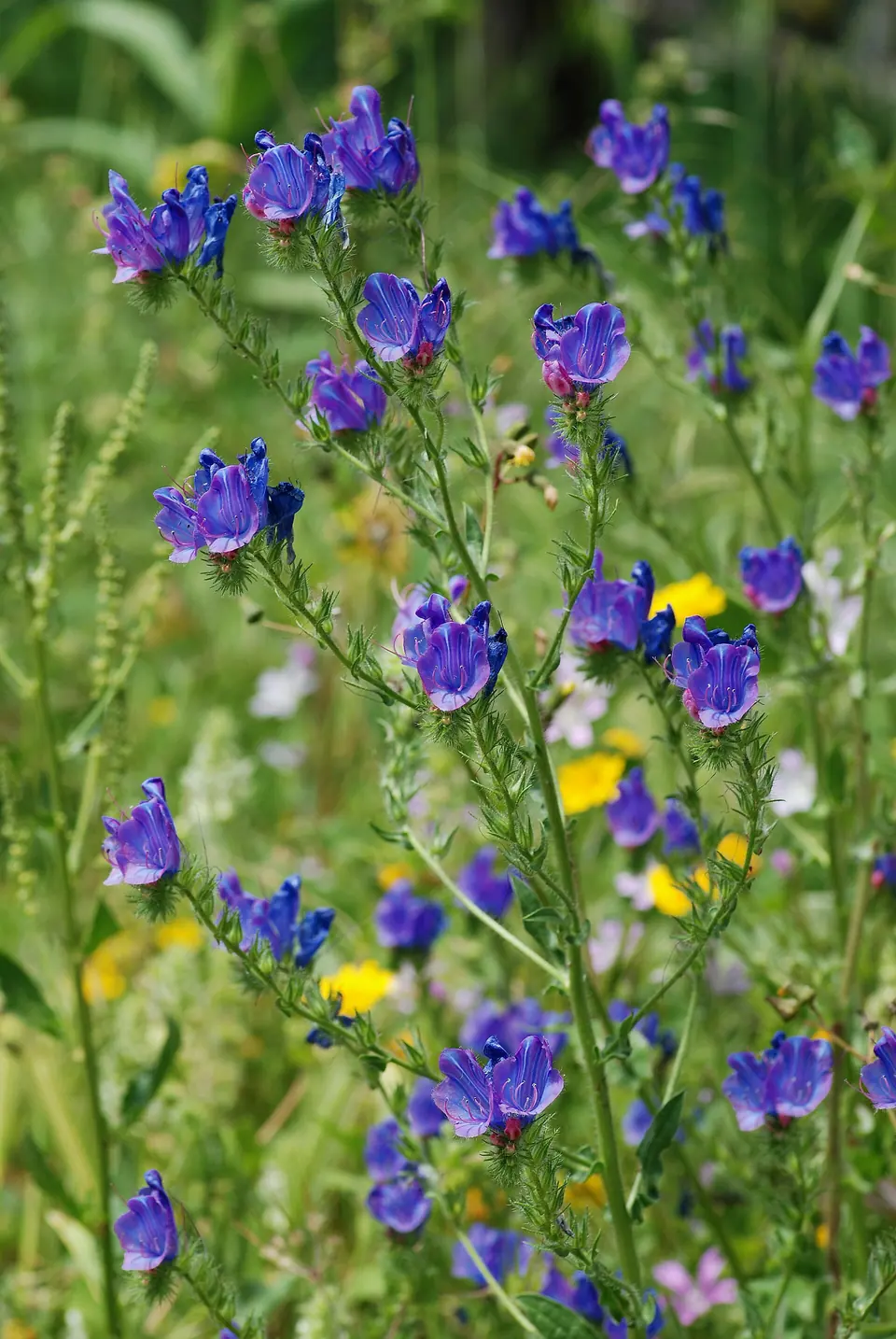
Echium plantagineum is an erect annual to biennial native to Europe and the Mediterranean, introduced as an ornamental and now weedy and invasive in some Pacific coast states. [1] It is poisonous to grazing animals because of pyrrolizidine alkaloids, and handling it can irritate human skin. [1]
Paterson's Curse care
How much light Paterson's Curse needs
Full sun to partial shade
What the sources say (2)
Full sun (6 or more hours of direct sunlight a day)Partial Shade (Direct sunlight only part of the day, 2-6 hours)How much cold Paterson's Curse can take
Hardiness, coldest zone
3b [winter low −37.2 to −34.4 °C (−35 to −30 °F)]
What the sources say (1)
3b, 4a, 4b, 5a, 5b, 6a, 6b, 7a, 7b, 8a, 8bHardiness, warmest zone
8b [winter low −9.4 to −6.7 °C (15 to 20 °F)]
What the sources say (1)
3b, 4a, 4b, 5a, 5b, 6a, 6b, 7a, 7b, 8a, 8bHow to propagate Paterson's Curse
Seed
What the sources say (1)
Its threat to natural areas is a cause for concern as it produces an abundance of seeds that can quickly take over pastures and rangesHow to grow Paterson's Curse
The plant
Life cycle
annual to biennial
What the sources say (1)
Purple Viper's-Bugloss is an annual to biennial native to Europe and the Mediterranean.Family
Boraginaceae
What the sources say (1)
Genus: Echium Species: plantagineum Family: Boraginaceae Life Cycle: Annual Biennial Recommended Propagation Strategy: SeedFertilizing
When
The sources give different values depending on region, zone or growing conditions.
What each source says
in containers: During the growing season
What the sources say (1)
in containers: If you are growing an Echium in a pot, liquid feeding according to the instructions on the pack will be beneficial in the growing seasonHow often
The sources give different values depending on region, zone or growing conditions.
What each source says
in containers: Regular liquid feeding during the growing season
Echium in general (garden plants): Little or no regular feeding in the ground
What the sources say (2)
in containers: If you are growing an Echium in a pot, liquid feeding according to the instructions on the pack will be beneficial in the growing seasonEchium in general (garden plants): Echium need little or no regular feeding on most average garden soils.Natural fertilizers
The sources give different values depending on region, zone or growing conditions.
What each source says
Echium in general (garden plants): Well-rotted organic matter such as leaf mould or manure, dug in before planting
What the sources say (1)
Echium in general (garden plants): To improve drainage, dig in plenty of well-rotted organic matter , like leaf mould or manure, before planting.Mineral fertilizers
The sources give different values depending on region, zone or growing conditions.
What each source says
in containers: Liquid fertilizer at label rate
What the sources say (1)
in containers: If you are growing an Echium in a pot, liquid feeding according to the instructions on the pack will be beneficial in the growing seasonPaterson's Curse pests and problems
Weediness and seed contamination
Symptom: Produces an abundance of seeds that quickly take over pastures and ranges, crowding out other plants; sometimes found as a contaminant in wildflower and commercial farm seed
What to do: Not stated in the documents
What the sources say (1)
Unfortunately it is sometimes found as a contaminant in wildflower and commercial farm seed.
— Echium plantagineum (Blue echium, Blueweed, Blue Weed, Lady Campbell Weed, Paterson's Curse, Patterson's Curse, Plantain-leaf viper's bugloss, Purple bugloss, Purple echium, Purple Plague, Purple Viper's-Bugloss, Riverina bluebell, Salvation Jane, Viper's Bugloss) | North Carolina Extension Gardener Plant Toolbox [1]
Remedies
Each remedy shows what official sources say about it; traditional remedies without an official source are marked as such. Harmful ones are listed so you know to avoid them.
Getting rid of it
invasive weed
manual removal of the taproot Not verified
Traditional remedy, not verified by an official source.
In addition to being poisonous to grazing animals, humans handling the plant can result in mild to severe skin irritation and hay fever.
— Echium plantagineum (Blue echium, Blueweed, Blue Weed, Lady Campbell Weed, Paterson's Curse, Patterson's Curse, Plantain-leaf viper's bugloss, Purple bugloss, Purple echium, Purple Plague, Purple Viper's-Bugloss, Riverina bluebell, Salvation Jane, Viper's Bugloss) | North Carolina Extension Gardener Plant Toolbox [1] How: isolated plants can be removed by hand if most of the taproot is extracted, and burnt if flowering or seeding
mowing before seed set Not verified
Traditional remedy, not verified by an official source.
How: an early mow at the bud stage and a late mow to control regrowth
Is Paterson's Curse toxic to pets?
Reported by the source, quoted verbatim. This is not medical or veterinary advice: if a person or an animal may have eaten this plant, contact a poison control centre or a veterinarian.
Animals
Considered weedy, this invasive plant is poisonous to grazing animals and called a threat to natural areas.
[1]- Toxic principle
It contains pyrrolizidine alkaloids that can cause chronic liver damage and death in animals that consume
[1]
The simple digestive system of a horse makes it especially hazardous to them.
[1]- Toxic principle
It contains pyrrolizidine alkaloids that can cause chronic liver damage and death in animals that consume
[1]
It contains pyrrolizidine alkaloids that can cause chronic liver damage and death in animals that consume it.
[1]
People
In addition to being poisonous to grazing animals, humans handling the plant can result in mild to severe skin irritation and hay fever.
[1]- Poisonous parts
Poison Part: Leaves Stems Download Print-Friendly QR Code
[1]- Toxic principle
Poison Toxic Principle: Alkaloids Causes Contact Dermatitis: Yes Poison Part:
[1]- Symptoms
Poison Symptoms: Skin irritation and fever. Poison Toxic Principle: Alkaloids
[1]- Severity
Poison Severity: Low Poison Symptoms: Skin irritation and fever. Poison Toxic Principle:
[1]
Similar plants
- Blueweed Echium vulgare
- Echium wildpretii Echium wildpretii
- Italian viper's bugloss Echium italicum
- Pride of Madeira Echium candicans
- Abraham Trachystemon orientalis
- Alkanet Anchusa azurea
- Blue Showers Cynoglossum amabile
- Borage Borago officinalis
Sources
Every value above is quoted from these documents. Links lead to the original publisher.
- Echium plantagineum (Blue echium, Blueweed, Blue Weed, Lady Campbell Weed, Paterson's Curse, Patterson's Curse, Plantain-leaf viper's bugloss, Purple bugloss, Purple echium, Purple Plague, Purple Viper's-Bugloss, Riverina bluebell, Salvation Jane, Viper's Bugloss) | North Carolina Extension Gardener Plant Toolbox · plants.ces.ncsu.edu, consulted
- Purple echium - Echium plantagineum | North Carolina Extension Gardener Plant Toolbox · plants.ces.ncsu.edu, consulted
- Paterson’s Curse (Echium plantagineum) in the Pacific Northwest | WSU Extension Publications | Washington State University · pubs.extension.wsu.edu, consulted
- Plantain-leaf viper's bugloss - Echium plantagineum | North Carolina Extension Gardener Plant Toolbox · plants.ces.ncsu.edu, consulted
- Purple Plague - Echium plantagineum | North Carolina Extension Gardener Plant Toolbox · plants.ces.ncsu.edu, consulted
- rhs.org.uk · rhs.org.uk
Written by Emilio Marruso · last checked