
How to Grow and Care for Italian viper's bugloss
Echium italicum
Written by Emilio Marruso · last checked
At a glance
This biennial from the borage family takes two years to complete its life, so you get to enjoy it across more than one season. It's also a plant you can put to use in the kitchen: in Tunisia, its young leaves are mixed with sorrel and cooked into a simple, homely soup. Give it a spot and grow a little piece of tradition.
- Harvest
Young leaves are edible: cook them in soup, mixed with sorrel
Overview
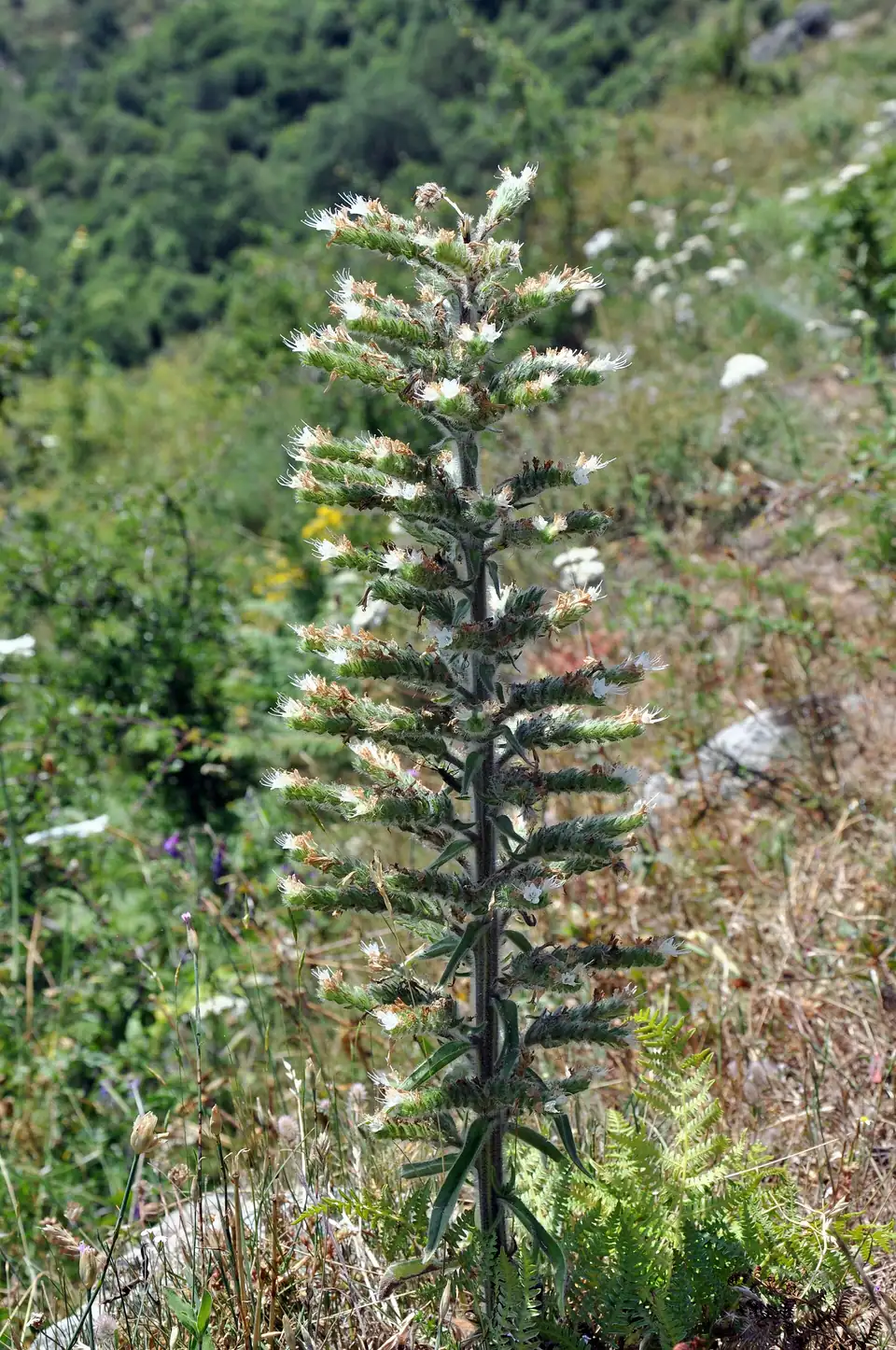
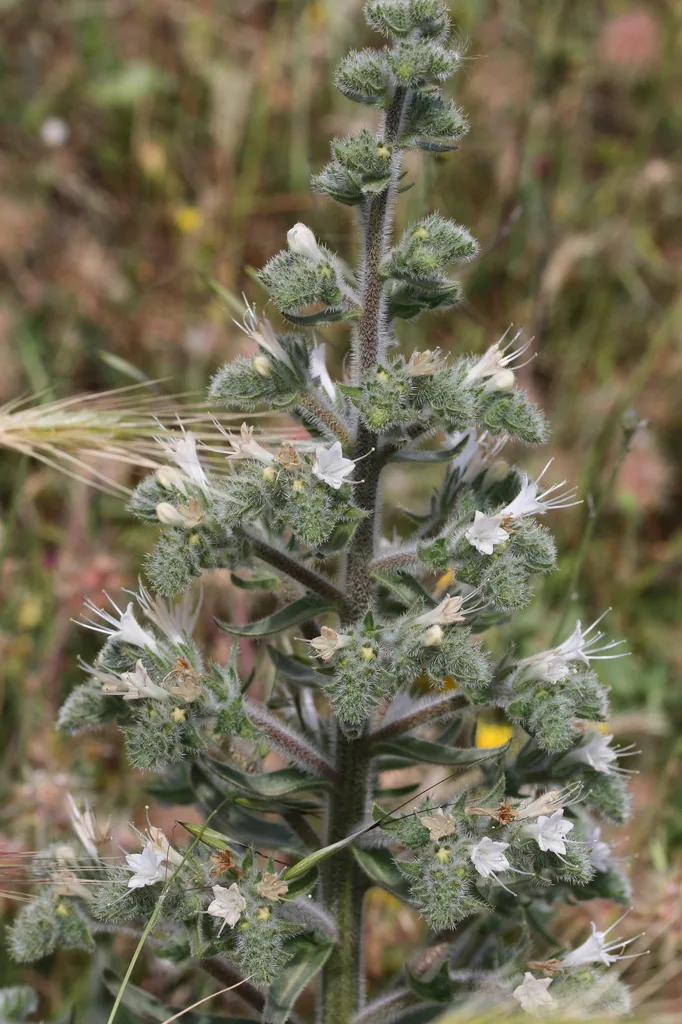
Echium italicum is a biennial herbaceous species of the borage family with a rosette of large rough leaves and a tall, straight, cylindrical inflorescence. [1] It is found in rocky and grassy habitats, abandoned farmland, pastures, roadsides and waste ground. [3] In Tunisia its young leaves are eaten in soup, mixed with wild sorrel. [5]
This record is incomplete: the sources we read do not cover every field yet.
Not yet covered by our sources: Watering, Light, Hardiness, coldest zone, Hardiness, warmest zone, Pruning, Propagation
Italian viper's bugloss care
How to water Italian viper's bugloss
Not stated in the sources we read.
How much light Italian viper's bugloss needs
Not stated in the sources we read.
How much cold Italian viper's bugloss can take
Hardiness, coldest zone
Not stated in the sources we read.
Hardiness, warmest zone
Not stated in the sources we read.
How to propagate Italian viper's bugloss
Not stated in the sources we read.
How to grow Italian viper's bugloss
The plant
Life cycle
biennial
What the sources say (2)
A biennial herbaceous species has a rosette of fairly large, lanceolate leaves, almost 40 cm in length, scratchy to the touch.The native range of this species is E. Central & E. Europe to Medit. and Afghanistan. It is a biennial and grows primarily in the temperate biome.Family
Boraginaceae
What the sources say (1)
Family:
BORAGINACEAE
Genus:
Echium
Province distribution:
Alacant. Balearic Islands. Barcelona. Girona.Fertilizing
When
The sources give different values depending on region, zone or growing conditions.
What each source says
in containers: During the growing season
What the sources say (1)
in containers: If you are growing an Echium in a pot, liquid feeding according to the instructions on the pack will be beneficial in the growing seasonHow often
The sources give different values depending on region, zone or growing conditions.
What each source says
in containers: Regular liquid feeding during the growing season
Echium in general (garden plants): Little or no regular feeding in the ground
What the sources say (2)
in containers: If you are growing an Echium in a pot, liquid feeding according to the instructions on the pack will be beneficial in the growing seasonEchium in general (garden plants): Echium need little or no regular feeding on most average garden soils.Natural fertilizers
The sources give different values depending on region, zone or growing conditions.
What each source says
Echium in general (garden plants): Well-rotted organic matter such as leaf mould or manure, dug in before planting
What the sources say (1)
Echium in general (garden plants): To improve drainage, dig in plenty of well-rotted organic matter , like leaf mould or manure, before planting.Mineral fertilizers
The sources give different values depending on region, zone or growing conditions.
What each source says
in containers: Liquid fertilizer at label rate
What the sources say (1)
in containers: If you are growing an Echium in a pot, liquid feeding according to the instructions on the pack will be beneficial in the growing seasonRemedies
Each remedy shows what official sources say about it; traditional remedies without an official source are marked as such. Harmful ones are listed so you know to avoid them.
Getting rid of it
unwanted plants
hand removal of whole plants Not verified
Traditional remedy, not verified by an official source.
How: Small infestations and single plants can be controlled by hand removal, taking care to remove all roots.
Calendar
Pruning
Not stated in the sources we read.
Months as given by the sources, which are mostly from the United States (northern hemisphere). In the southern hemisphere they shift by about six months.
Edibility
Reported by the source, quoted verbatim. Do not eat a plant on the basis of this page alone: identification mistakes can be dangerous.
Tunisia: young leaves mixed with those of wild sorrel (Rumex sp.), and eaten in soup.
[5]
Similar plants
- Blueweed Echium vulgare
- Echium wildpretii Echium wildpretii
- Paterson's Curse Echium plantagineum
- Pride of Madeira Echium candicans
- Abraham Trachystemon orientalis
- Alkanet Anchusa azurea
- Alpine Forget-me-not Myosotis alpestris
- Blue Showers Cynoglossum amabile
Sources
Every value above is quoted from these documents. Links lead to the original publisher.
- Echium italicum L. subsp. italicum - Herbari Virtual del Mediterrani Occidental · herbarivirtual.uib.cat, consulted
- Echium italicum L. | Plants of the World Online | Kew Science · powo.science.kew.org, consulted
- Echium italicum - Pale bugloss · first-nature.com, consulted
- · cretanflora.com, consulted
- Echium italicum | Purdue University Famine Foods · purdue.edu, consulted
- Echium italicum - wild in Provence · wildflowersprovence.fr, consulted
- Günther's Site - Photos of European Plants - Echium italicum · guenther-blaich.de, consulted
- Echium italicum | Euro+Med-Plantbase · europlusmed.org, consulted
- rhs.org.uk · rhs.org.uk
Written by Emilio Marruso · last checked