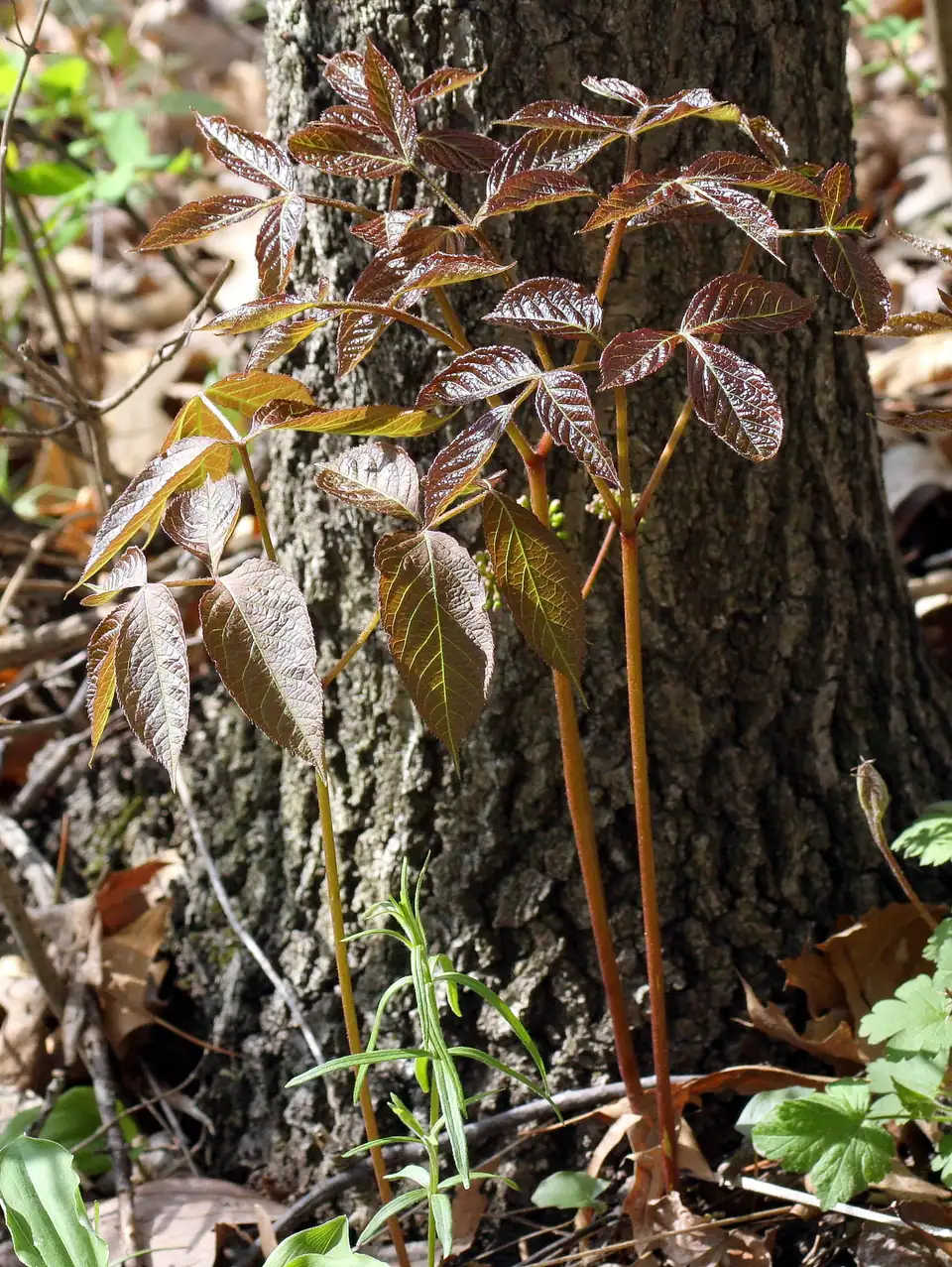
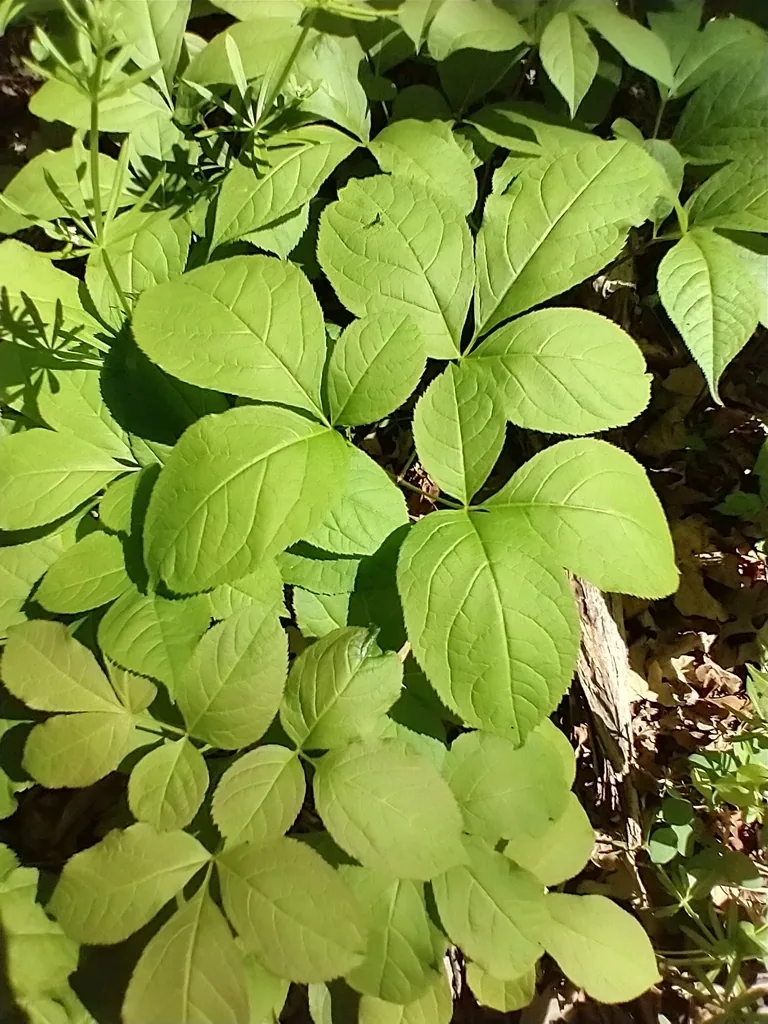

How to Grow and Care for Wild sarsaparilla
Aralia nudicaulis
Written by Emilio Marruso · last checked
Toxic to: People · Why
At a glance
This perennial gives you two treats: its root flavors homemade root beer and can stand in for sarsaparilla, while its fruit makes a jelly. Dig the roots in late summer and fall. Start new plants from seed, by dividing the roots or from root cuttings, and plant the divisions in fall or spring.
- Cold
Survives winters down to −30 °F (−34.4 °C)
Very hardy · USDA 4 · RHS H7 · Z4
What the sources say (1)
Hardiness, coldest zone: 4 [winter low −34.4 to −28.9 °C (−30 to −20 °F)]
Hardiness Zone 4+
— Wild Sarsaparilla (Aralia nudicaulis) — Practical Plants [3] - Planting
Plant divisions in fall or spring; seedlings in late spring or early summer, once 10 in tall
What the sources say (2)
Planting: Fall or spring (divisions); late spring or early summer (seedlings 25 cm [9.8 in] or taller)
Rhizomes can be divided and transplanted in fall or
— "Araliaceae : Aralia nudicaulis" by R Neil Reese [7] Once the plants are 25cm or more tall, they can be planted out into their permanent positions, late spring or early summer being the best time to do this. Root
— Wild Sarsaparilla (Aralia nudicaulis) — Practical Plants [3] - Harvest
Dig the root in late summer and fall to flavor root beer; the fruit makes jelly
What the sources say (1)
Harvest: Root collected in late summer and autumn
The root is collected in late summer and the autumn and dried for later use
— Wild Sarsaparilla (Aralia nudicaulis) — Practical Plants [3] - Propagation
From seed, by dividing the roots, or from root cuttings
What the sources say (3)
Propagation: Seed; division of rhizomes; root cuttings
Rhizomes can be divided and transplanted in fall or
— "Araliaceae : Aralia nudicaulis" by R Neil Reese [7] Sarsaparilla can be grown from seed sown when ripe, but seedlings mature
— Lady Bird Johnson Wildflower Center - The University of Texas at Austin [4] Root cuttings 8cm long, December in a cold frame
— Wild Sarsaparilla (Aralia nudicaulis) — Practical Plants [3] - Sowing
Sow seed from dark, ripe fruits right away in fall, in a cold frame
What the sources say (3)
Sowing: Seed sown as soon as ripe (cold frame); fall planting of seed
Seed - best sown as soon as ripe in a
— Aralia nudicaulis - Useful Temperate Plants [2] Planting them in the fall is usually successful.
— "Araliaceae : Aralia nudicaulis" by R Neil Reese [7] Saving seeds: Collect fruits when dark colored and recover the seeds from gently macerated pulp.
Seed Collection: fruits can be collected when dark colored and seeds recovered from gently macerated pulp.
— "Araliaceae : Aralia nudicaulis" by R Neil Reese [7] - Safety
No known hazards to people
Overview
It is propagated by seed or by dividing the rhizomes. [7][4] The rootstock is used as a flavouring and as a substitute for sarsaparilla. [3][4]
This record is incomplete: the sources we read do not cover every field yet.
Not yet covered by our sources: Light, Hardiness, warmest zone, Pruning
Wild sarsaparilla care
Measurements in square brackets are our conversion into the other unit system; the quoted text is unchanged.
How to water Wild sarsaparilla
The sources disagree:
plants do best in moist soils but can tolerate relatively dry
[7]
How much light Wild sarsaparilla needs
Not stated in the sources we read.
How much cold Wild sarsaparilla can take
Hardiness, coldest zone
4 [winter low −34.4 to −28.9 °C (−30 to −20 °F)]
What the sources say (1)
Hardiness
Zone 4+Hardiness, warmest zone
Not stated in the sources we read.
How to propagate Wild sarsaparilla
Seed; division of rhizomes; root cuttings
What the sources say (3)
Rhizomes can be divided and transplanted in fall orSarsaparilla can be grown from seed sown when ripe, but seedlings matureRoot cuttings 8cm long, December in a cold frameHow to grow Wild sarsaparilla
The plant
Life cycle
perennial
What the sources say (1)
Aralia nudicaulis is an aromatic acaulescent perennial herb With leaves and peduncles arising from long rhizomes.Family
Araliaceae
What the sources say (1)
## Family Name
Araliaceae
## Common Name
Wild sarsaparilla
## Description
Aralia nudicaulis is an aromatic acaulescent perennial herbHarvest and storage
Saving seeds
Collect fruits when dark colored and recover the seeds from gently macerated pulp.
What the sources say (1)
Seed Collection: fruits can be collected when dark colored and seeds recovered from gently macerated pulp.Remedies
The sources we checked give no remedies for this plant.
Is Wild sarsaparilla poisonous?
Reported by the source, quoted verbatim. This is not medical or veterinary advice: if a person or an animal may have eaten this plant, contact a poison control centre or a veterinarian.
Known Hazards None known
[2]
Calendar
Planting
Fall or spring (divisions); late spring or early summer (seedlings 25 cm [9.8 in] or taller)
What the sources say (2)
Rhizomes can be divided and transplanted in fall orOnce the plants are 25cm or more tall, they can be planted out into their permanent positions, late spring or early summer being the best time to do this.
RootHarvest
Root collected in late summer and autumn
What the sources say (1)
The root is collected in late summer and the autumn and dried for later usePruning
Not stated in the sources we read.
Months as given by the sources, which are mostly from the United States (northern hemisphere). In the southern hemisphere they shift by about six months.
Edibility
Reported by the source, quoted verbatim. Do not eat a plant on the basis of this page alone: identification mistakes can be dangerous.
Indicative values
Values from a secondary source, not checked word for word like the rest of this page. Use them as a starting point.
- Mature height
- 30-90 cm [12–35 in]Indicative value, adapt it to your climate · Secondary source
- Light
- Shade, Deciduous Shade (Spring Sun)Indicative value, adapt it to your climate · Secondary source
- Drought tolerant
- yesIndicative value, adapt it to your climate · Secondary source
- Soil
- LoamIndicative value, adapt it to your climate · Secondary source
- Soil pH
- 5.5-6.5Indicative value, adapt it to your climate · Secondary source
- Care level
- MediumIndicative value, adapt it to your climate · Secondary source
- Growth rate
- LowIndicative value, adapt it to your climate · Secondary source
- Pruning
- December, January, February, December, January, FebruaryIndicative value, adapt it to your climate · Secondary source
Similar plants
- Angelica Tree Aralia elata
- Devil's Walking Stick Aralia spinosa
- American spikenard Aralia racemosa
- Udo Aralia cordata
- American ginseng Panax quinquefolius
- American Water-Pennywort Hydrocotyle americana
- Atlantic Ivy Hedera hibernica
- Balfour Aralia Polyscias balfouriana
Sources
Every value above is quoted from these documents. Links lead to the original publisher.
- Aralia nudicaulis (Wild Sarsaparilla): Minnesota Wildflowers · minnesotawildflowers.info, consulted
- Aralia nudicaulis - Useful Temperate Plants · temperate.theferns.info, consulted
- Wild Sarsaparilla (Aralia nudicaulis) — Practical Plants · practicalplants.org, consulted
- Lady Bird Johnson Wildflower Center - The University of Texas at Austin · wildflower.org, consulted
- Province of Manitoba | agriculture - Wild Sarsaparilla · gov.mb.ca, consulted
- Plant Propagation Protocol for Aralia nudicaulis L. · courses.washington.edu, consulted
- "Araliaceae : Aralia nudicaulis" by R Neil Reese · openprairie.sdstate.edu, consulted
- Aralia nudicaulis | Encyclopedia of Puget Sound · eopugetsound.org, consulted
Written by Emilio Marruso · last checked