
How to Grow and Care for Atlantic Ivy
Hedera hibernica
Written by Emilio Marruso · last checked
Toxic to: Cattle, Livestock, People · Why
At a glance
Irish ivy is a climber with dense foliage, and new plants are easy to start: take semi-ripe cuttings from its climbing shoots in late summer. Its strength calls for a watchful eye, though: keep it off trees, clearing 3 to 6 feet of ground around each trunk, so it never crowds out native plants. Handle it with care, as the sap can irritate sensitive skin.
- Watch out
Invasive: crowds out native plants; cut vines on tree trunks and clear 3–6 ft of ground around them
- Propagation
Take semi-ripe cuttings of climbing shoots in late summer
What the sources say (1)
Cuttings: Semi-ripe cuttings of climbing shoots in late summer (genus Hedera)
Ivies are easy to propagate from semi-ripe cuttings of climbing shoots in late summer.
— [9] - Safety
Sap can irritate sensitive skin; eating lots of leaves or berries is toxic to people and cattle
Overview
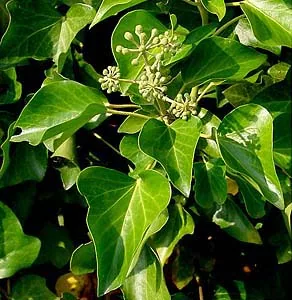
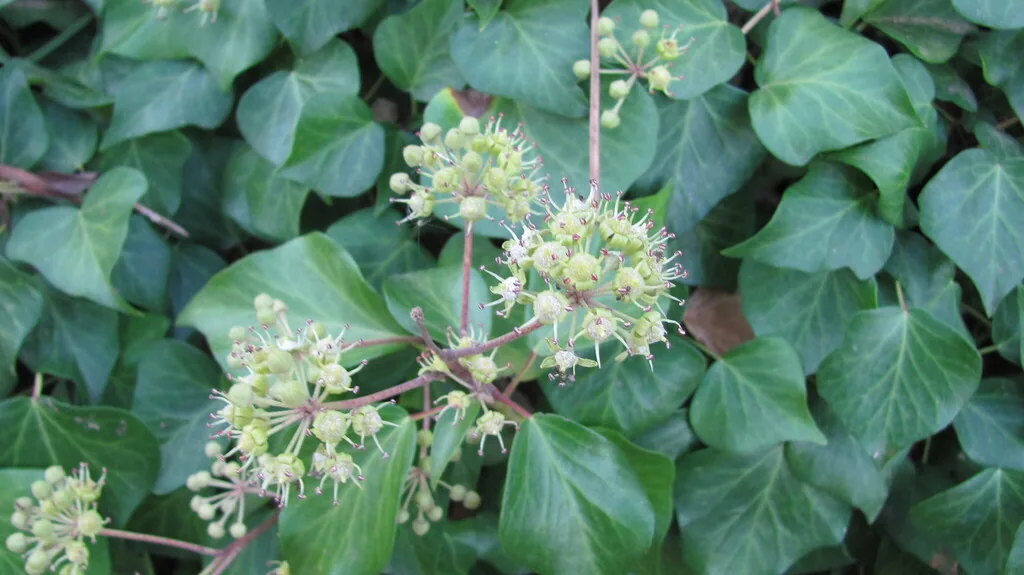
Hedera hibernica (Atlantic ivy) is a woody climber or creeper reaching 20 m [65.6 ft] or more, with aerial roots along the stems and dark blue to black fruit. [1] It is native to Atlantic Europe and was long confused with Hedera helix. [2] Outside its native range it is a serious environmental weed that can overtop native vegetation and trees. [3] It flowers in autumn, giving late nectar to bees and hoverflies, and its black berries ripen in late winter as food for birds. [5]
This record is incomplete: the sources we read do not cover every field yet.
Not yet covered by our sources: Watering, Light, Hardiness, coldest zone, Hardiness, warmest zone, Pruning, Propagation
Atlantic Ivy care
Measurements in square brackets are our conversion into the other unit system; the quoted text is unchanged.
How to water Atlantic Ivy
Not stated in the sources we read.
How much light Atlantic Ivy needs
Not stated in the sources we read.
How much cold Atlantic Ivy can take
Hardiness, coldest zone
Not stated in the sources we read.
Hardiness, warmest zone
Not stated in the sources we read.
How to propagate Atlantic Ivy
Not stated in the sources we read.
How to grow Atlantic Ivy
The plant
Family
Araliaceae
What the sources say (1)
Order Apiales ( 1APIO ) Family Araliaceae ( 1ARLF ) Genus Hedera ( 1HEEG )Roots
Root system
The sources give different values depending on region, zone or growing conditions.
What each source says
genus Hedera (RHS page on common ivy, Hedera helix): Self-clinging climber producing aerial roots along its stems
What the sources say (1)
genus Hedera (RHS page on common ivy, Hedera helix): Ivy is a self-clinging climber, producing aerial roots along its stemsRoots and buildings
The sources give different values depending on region, zone or growing conditions.
What each source says
genus Hedera (RHS page on common ivy, Hedera helix): Aerial roots cannot bore into sound masonry; damage often occurs only when they are removed with force
genus Hedera (RHS page on common ivy, Hedera helix): Aerial roots can penetrate existing cracks and joints and enlarge them as they grow
What the sources say (2)
genus Hedera (RHS page on common ivy, Hedera helix): Its aerial roots are unable to bore into sound masonry, and they often only cause damage when they are removed with force.genus Hedera (RHS page on common ivy, Hedera helix): Ivy’s aerial roots can penetrate existing cracks and joints, enlarging them as the roots grow and expandPropagation
Cuttings
Semi-ripe cuttings of climbing shoots in late summer (genus Hedera)
What the sources say (1)
Ivies are easy to propagate from semi-ripe cuttings of climbing shoots in late summer.Atlantic Ivy pests and problems
Invasive spread
Symptom: Outcompetes native plants on the forest floor, in the shrub layer and in the canopy
What to do: Cut vines around trees from waist or chest height down and clear 3 to 6 feet of ground around the trunk
What the sources say (3)
Common and Atlantic ivy can outcompete native plants in all 3 zones of a plant community: the forest floor, the shrub layer, and the canopy.
— Common ivy identification and control - King County, Washington [4] Use the “tree ring” method: cut and remove all vines around the tree from waist/chest height down. This will kill the upper vines.
— Common ivy identification and control - King County, Washington [4] In Washington, Irish ivy is more invasive than English ivy and much more invasive than Algerian ivy.
— English Ivy, Irish Ivy & Algerian Ivy | Hedera spp. | Pest Rating Proposals and Final Ratings [6] Tree damage in storms
Symptom: Heavy vines and dense foliage add weight and a sail effect in tree crowns
What the sources say (1)
Ivy can increase the risk of trees falling in storms. Ivy vines are heavy and add a lot of extra weight to the tree.
— Common ivy identification and control - King County, Washington [4]
Remedies
Each remedy shows what official sources say about it; traditional remedies without an official source are marked as such. Harmful ones are listed so you know to avoid them.
First aid
First aid: not a substitute for a doctor
skin contact with sap
washing with running water Official source, not independently tested
Swallowed a possibly poisonous plant? Use the web POISON CONTROL online tool to get help, or call your poison center at 1-800-222-1222 .
— poison.org [10] How: If sap is on the skin, wash quickly with plenty of running water.
If you know you have plant material, juices, or sap on your skin, wash quickly with plenty of running water.
— poison.org [10]
Getting rid of it
invasive spread
physical removal by pulling or digging up Works
Always wear gloves and sleeves to protect your skin from sap, which is irritating to some people.
— Common ivy identification and control - King County, Washington [4] How: For ivy on the ground, pull or dig up the plants, taking as much root as possible; fall through spring is usually best because the soil is less hard.
For ivy growing on the ground: Pull or dig up plants. Try to get as much root as possible. Fall through spring is usually the best time for this because the soil is less hard.
— Common ivy identification and control - King County, Washington [4] What the evidence says Method | Does it work? | Is it safe? | Recommendation | A Physically Remove Plants | Effective | Low risk | Recommended
— solvepestproblems.oregonstate.edu [11] tree ring cutting Works
Always wear gloves and sleeves to protect your skin from sap, which is irritating to some people.
— Common ivy identification and control - King County, Washington [4] How: Cut and remove all vines around the tree from waist/chest height down, pry the lower vines off without damaging the bark, then clear 3 to 6 feet of ground around the tree and mulch it.
Pry the lower vines off the tree, being careful not to damage bark. Then clear at least 3 to 6 feet of ground around the tree to keep the vines from growing back up, and then mulch the area afterward.
— Common ivy identification and control - King County, Washington [4] What the evidence says Use the “tree ring” method: cut and remove all vines around the tree from waist/chest height down. This will kill the upper vines.
— Common ivy identification and control - King County, Washington [4] smothering with cardboard and mulch Official source, not independently tested
How: Apply at least 8 inches of mulch over cardboard or paper and leave it for at least 2 years before replanting; it does not work on steep slopes.
Smothering: Apply at least 8 inches (deep) of mulch to the area, layer the ground first with cardboard or paper to increase effectiveness (does not work on steep slopes). Leave for at least 2 years before attempting to replant.
— Common ivy identification and control - King County, Washington [4] rolling up the ivy mat Official source, not independently tested
How: For large infestations, cut through the ivy mat, peel back the vines along the cut edge and roll the mat into a manageable mass.
For large infestations, cut through the ivy mat. Peel back the vines along the cut edge. Roll the mat into a manageable mass as shown in the photo.
— solvepestproblems.oregonstate.edu [11] regular mowing to stop berries Partly works
How: Mow or trim regularly to limit flowering and prevent berries, and keep the ivy from climbing fences and trees.
Regular mowing limits flowering and prevents berries. Keep it from climbing vertical structures such as fences and trees.
— solvepestproblems.oregonstate.edu [11] What the evidence says Regular mowing limits flowering and prevents berries. Keep it from climbing vertical structures such as fences and trees.
— solvepestproblems.oregonstate.edu [11] drying removed vines off the ground Official source, not independently tested
Composting ivy is not advised. Root and stem fragments lying on the soil surface will make new plants.
— solvepestproblems.oregonstate.edu [11] How: Roll the removed vines into balls or carpets and leave them high and dry on a tarp or wooden raft, so they cannot touch the ground and re-root.
Dry out ivy by rolling vines into balls or carpets and leave them “high and dry” on a tarp or raft made of wood (idea is to make sure it cannot touch the ground).
— Common ivy identification and control - King County, Washington [4]
Is Atlantic Ivy toxic to pets?
Reported by the source, quoted verbatim. This is not medical or veterinary advice: if a person or an animal may have eaten this plant, contact a poison control centre or a veterinarian.
Animals
Consuming large amounts of leaves and fruits can be toxic to people and cattle.
[4]- Poisonous parts
Consuming large amounts of leaves and fruits can be toxic to people and cattle.
[4]
Native to: horticultural cultivars. Hedera helix - parts of Europe, Asia and North Africa; Hedera hibernica - parts of western Europe. Is this Weed Toxic?: humans, livestock
[7]- Poisonous parts
Consuming large amounts of leaves and fruits can be toxic to people and cattle.
[7]
People
The sap of ivy stems can cause skin irritations and rashes to sensitive individuals. Consuming large amounts of leaves and fruits can be toxic to people and cattle.
[4]
Calendar
Pruning
Not stated in the sources we read.
Months as given by the sources, which are mostly from the United States (northern hemisphere). In the southern hemisphere they shift by about six months.
Similar plants
- English Ivy Hedera helix
- Persian Ivy Hedera colchica
- American ginseng Panax quinquefolius
- American Water-Pennywort Hydrocotyle americana
- Angelica Tree Aralia elata
- Balfour Aralia Polyscias balfouriana
- Castor aralia Kalopanax pictus
- Devil's club Oplopanax horridus
Sources
Every value above is quoted from these documents. Links lead to the original publisher.
- VicFlora: Hedera hibernica · vicflora.rbg.vic.gov.au, consulted
- Hedera hibernica (HEEHI)[Overview]| EPPO Global Database · gd.eppo.int, consulted
- English ivy - Hedera helix · oregon.gov, consulted
- Common ivy identification and control - King County, Washington · kingcounty.gov, consulted
- SPECIES OF THE WEEK · iwt.ie, consulted
- English Ivy, Irish Ivy & Algerian Ivy | Hedera spp. | Pest Rating Proposals and Final Ratings · blogs.cdfa.ca.gov, consulted
- Washington State Noxious Weed Control Board · nwcb.wa.gov, consulted
- rhs.org.uk · rhs.org.uk
- rhs.org.uk · rhs.org.uk
- poison.org · poison.org
- solvepestproblems.oregonstate.edu · solvepestproblems.oregonstate.edu
Written by Emilio Marruso · last checked