
How to Grow and Care for Devil's club
Oplopanax horridus
Written by Emilio Marruso · last checked
Toxic to: People · Why
At a glance
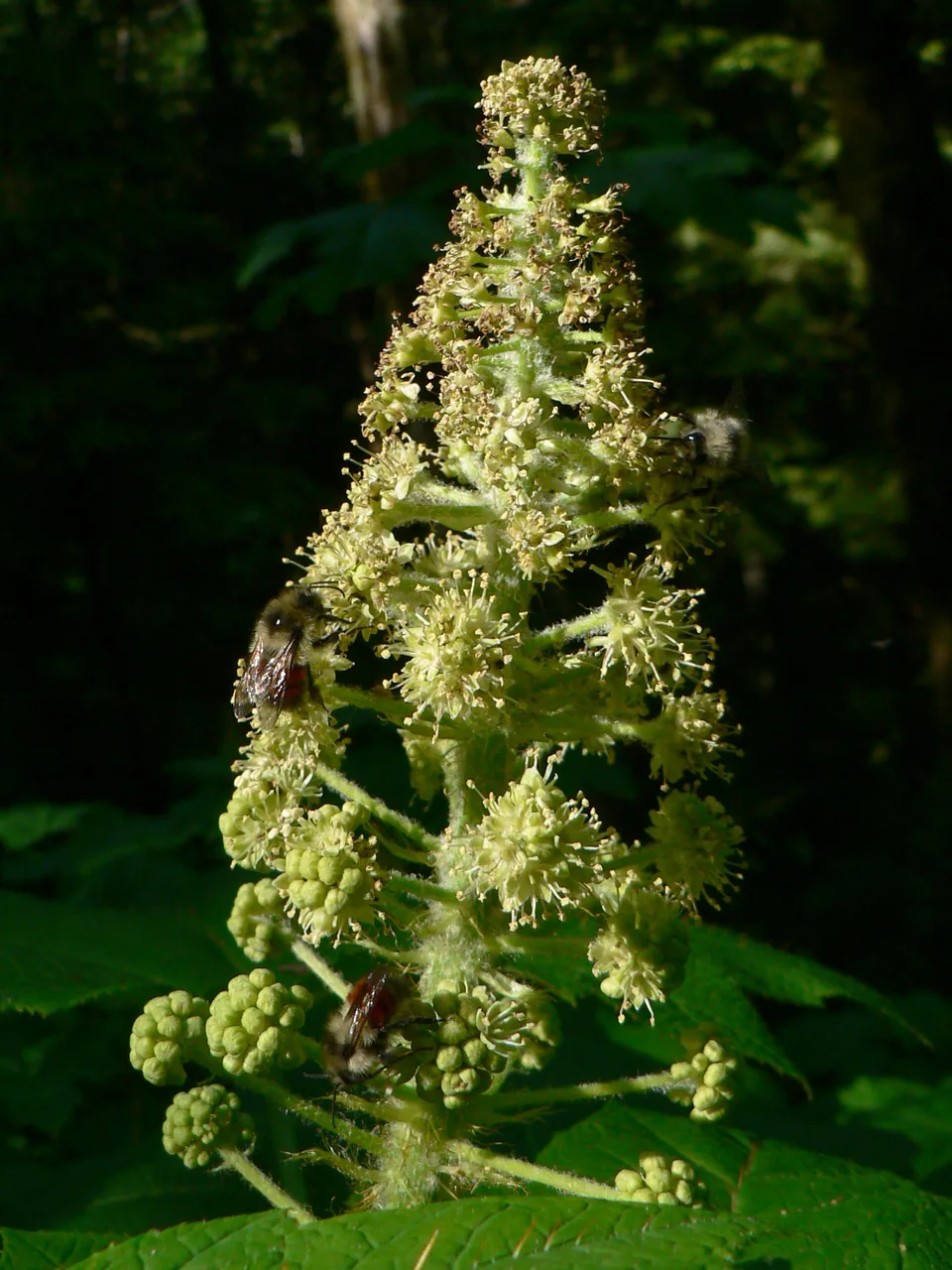
Devil's club is a bold, dramatic plant that grows 3 to 12 feet tall and loves moist soil. After it flowers, it forms clusters of berries that feed bears, though people should never eat them. Give it a spot where nobody brushes past: its leaves and stems are covered in fine, irritating prickles.
- Water
Thirsty plant: keep the soil moist and water often in dry spells and in summer
What the sources say (3)
Watering: High water use; keep the soil moist and water frequently in dry spells
Water Use: High
— devil's club - KPU Plant DB [4] In the garden, carefully site the plants in areas that are moist. If not, you will need to water them frequently during our annual dry spell.
— Oplopanax horridus - DEVIL'S CLUB [6] Watering notes: Regular watering that ensures moist soil in summer
which indicates that it will appreciate regular watering that ensures moist soil in the summer.
— growing and caring for Devil’s club – Elisabeth C. Miller Library [1] - Cold
Survives winters down to −30 °F (−34.4 °C)
Very hardy · USDA 4 · RHS H7 · Z4
What the sources say (3)
Hardiness, coldest zone: 4 [winter low −34.4 to −28.9 °C (−30 to −20 °F)]
Zone 4: (-34 to -29 °C)
— devil's club - KPU Plant DB [4] USDA zones: 4-9.
— Oplopanax horridus - DEVIL'S CLUB [6] Hardiness, warmest zone: 9 [winter low −6.7 to −1.1 °C (20 to 30 °F)]
USDA zones: 4-9.
— Oplopanax horridus - DEVIL'S CLUB [6] - Harvest
The berries are not for people to eat; bears feed on them
- Watch out
Leaves and stems are covered in fine, irritating prickles: wear gloves
- Size
3 to 12 ft tall
What the sources say (1)
Mature height: 91.44-365.76 cm (3-12 ft)
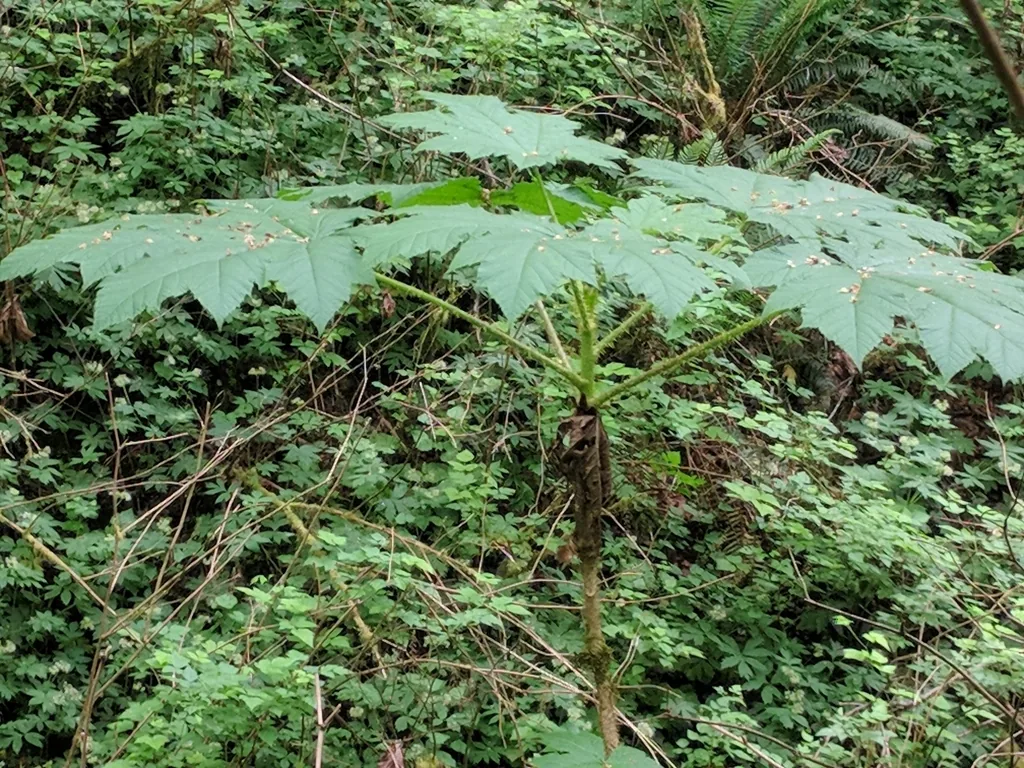
Form: A semi-prostrate or erect shrub growing 3 to 12 feet tall. Each plant has only 1 to several upright stems.
— Virginia Tech Dendrology Fact Sheet [5] - Propagation
From seed, stem tip cuttings in early June as buds open, or layering
What the sources say (2)
Propagation: Seed; stem tip cuttings (early June, at bud break); layering
Devil’s club can be propagated by seeds or vegetatively from stem tip cuttings.
— You’re Growing that Nasty Plant? [3] Stem cuttings from horizontal branches in late spring to early summer. Layering.
— Oplopanax horridus - DEVIL'S CLUB [6] - Sowing
Sow the seed as soon as it is ripe
What the sources say (1)
Sowing: When the seed is ripe
Sow seed when ripe. Seed may take up to 18 months to germinate.
— Oplopanax horridus - DEVIL'S CLUB [6] - Safety
Poisonous to people: do not eat it
Overview
Deciduous, very spiny shrub of Pacific Northwest forests, up to 3 m [9.8 ft] tall, with large palmately lobed leaves. [3]
This record is incomplete: the sources we read do not cover every field yet.
Not yet covered by our sources: Pruning
Devil's club care
Measurements in square brackets are our conversion into the other unit system; the quoted text is unchanged.
How to water Devil's club
Watering
High water use; keep the soil moist and water frequently in dry spells
Watering notes
Regular watering that ensures moist soil in summer
What the sources say (1)
which indicates that it will appreciate regular watering that ensures moist soil in the summer.How much light Devil's club needs
The sources give different values depending on region, zone or growing conditions.
What each source says
According to KPU Plant DB: Part sun/part shade to filtered shade; full sun only if soil kept moist
According to Miller Library (RHS Dictionary of Gardening): Sun or part shade
What the sources say (3)
According to KPU Plant DB: Exposure:
Full sun only if soil kept moist, Part sun/part shade, Filtered shadeAccording to Miller Library (RHS Dictionary of Gardening): Plant in sun or part-shade.Exposure:
Full sun only if soil kept moist, Part sun/part shade, Filtered shadeHow much cold Devil's club can take
Hardiness, coldest zone
4 [winter low −34.4 to −28.9 °C (−30 to −20 °F)]
Hardiness, warmest zone
9 [winter low −6.7 to −1.1 °C (20 to 30 °F)]
What the sources say (1)
USDA zones: 4-9.How to propagate Devil's club
Seed; stem tip cuttings (early June, at bud break); layering
How to grow Devil's club
The plant
Family
Araliaceae
What the sources say (1)
Devilsclub Araliaceae Oplopanax horridus (Sm.) Miq. symbol: OPHO Leaf: Simple, alternate, deciduous.Mature height
91.44-365.76 cm (3-12 ft)
What the sources say (1)
Form: A semi-prostrate or erect shrub growing 3 to 12 feet tall. Each plant has only 1 to several upright stems.Remedies
Each remedy shows what official sources say about it; traditional remedies without an official source are marked as such. Harmful ones are listed so you know to avoid them.
First aid
First aid: not a substitute for a doctor
prickle contact
removing prickles and washing the skin Official source, not independently tested
If prickles become stuck in the eyes, flush with plenty of water and seek emergency first aid.
— worksafebc.com [7] How: After skin contact, remove the prickles with tweezers and wash the skin carefully with soap and water.
After skin contact, immediately remove the prickles with tweezers and wash the skin carefully with soap and water.
— worksafebc.com [7]
Is Devil's club poisonous?
Reported by the source, quoted verbatim. This is not medical or veterinary advice: if a person or an animal may have eaten this plant, contact a poison control centre or a veterinarian.
Calendar
Sowing
When the seed is ripe
What the sources say (1)
Sow seed when ripe. Seed may take up to 18 months to germinate.Pruning
Not stated in the sources we read.
Months as given by the sources, which are mostly from the United States (northern hemisphere). In the southern hemisphere they shift by about six months.
Edibility
Reported by the source, quoted verbatim. Do not eat a plant on the basis of this page alone: identification mistakes can be dangerous.
After it flowers, it forms clusters of berries that are inedible by humans, but is a food source for bears.
[6]
Indicative values
Values from a secondary source, not checked word for word like the rest of this page. Use them as a starting point.
- Life cycle
- PerennialIndicative value, adapt it to your climate · Secondary source
- Hours of sun
- 4-6 hoursIndicative value, adapt it to your climate · Secondary source
- Drought tolerant
- yesIndicative value, adapt it to your climate · Secondary source
- Soil
- Sandy, LoamyIndicative value, adapt it to your climate · Secondary source
- Soil pH
- 5-6.5Indicative value, adapt it to your climate · Secondary source
- Care level
- HighIndicative value, adapt it to your climate · Secondary source
- Growth rate
- LowIndicative value, adapt it to your climate · Secondary source
- Pruning
- March, AprilIndicative value, adapt it to your climate · Secondary source
- Pests
- Pest resistant, Disease resistant, Deer resistant, Rabbit resistantIndicative value, adapt it to your climate · Secondary source
Similar plants
- American ginseng Panax quinquefolius
- American Water-Pennywort Hydrocotyle americana
- Angelica Tree Aralia elata
- Atlantic Ivy Hedera hibernica
- Balfour Aralia Polyscias balfouriana
- Castor aralia Kalopanax pictus
- Devil's Walking Stick Aralia spinosa
- Dollarweed Hydrocotyle umbellata
Sources
Every value above is quoted from these documents. Links lead to the original publisher.
- growing and caring for Devil’s club – Elisabeth C. Miller Library · depts.washington.edu, consulted
- Devil's Club · fs.usda.gov, consulted
- You’re Growing that Nasty Plant? · rngr.net, consulted
- devil's club - KPU Plant DB · plantdatabase.kpu.ca, consulted
- Virginia Tech Dendrology Fact Sheet · dendro.cnre.vt.edu, consulted
- Oplopanax horridus - DEVIL'S CLUB · rainyside.com, consulted
- worksafebc.com · worksafebc.com
Written by Emilio Marruso · last checked