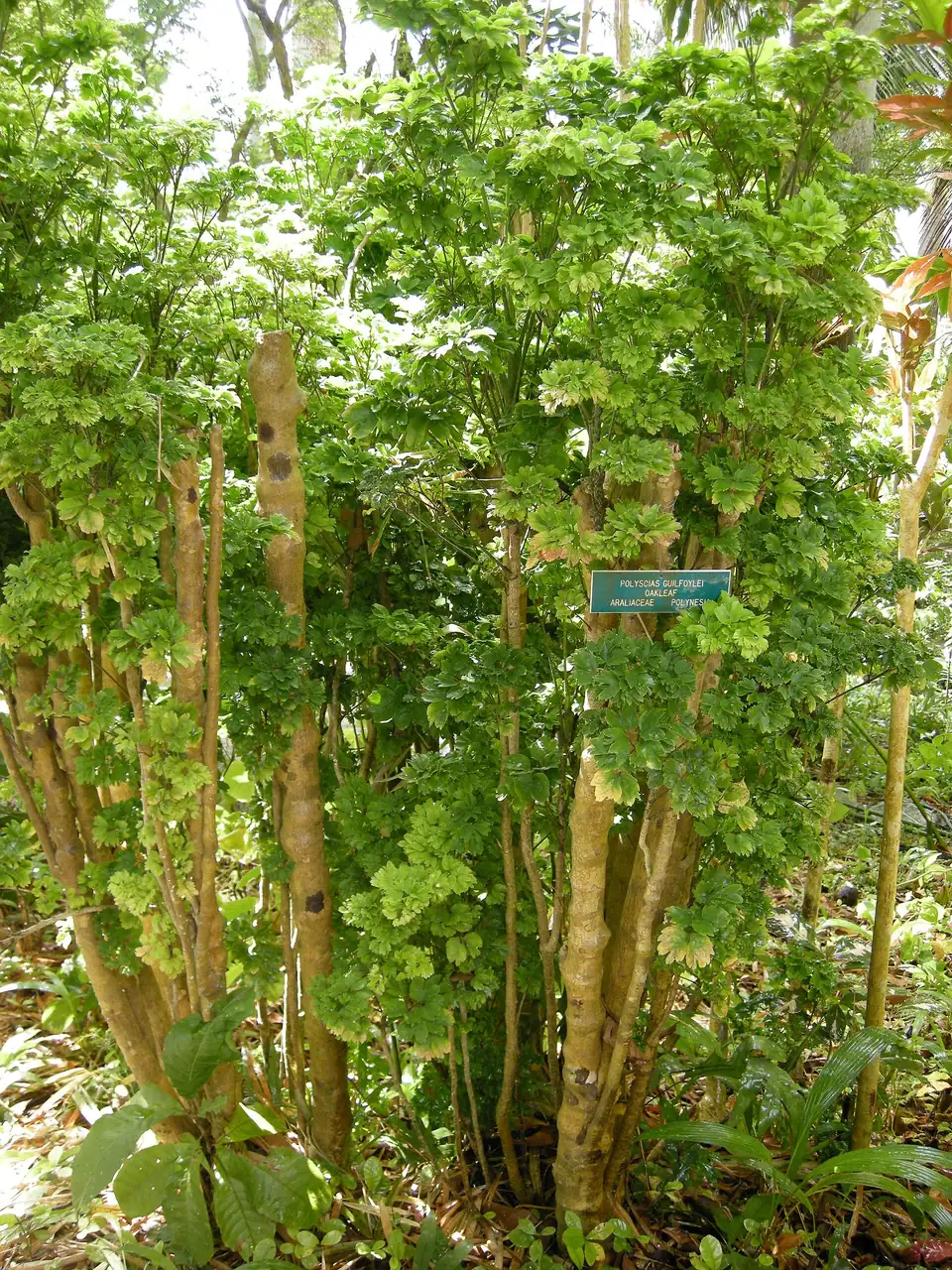


How to Grow and Care for Geranium Aralia
Polyscias guilfoylei
Written by Emilio Marruso · last checked
Toxic to: Cats, Dogs, Horses, People · Why
At a glance
This aralia is a perennial that is happy indoors and in containers, so you can enjoy it right at home. Give it bright indirect light or a little morning sun, and let the soil dry partly before each deep, thorough watering. It is easy to share, too: new plants grow from stem cuttings.
- Sun
Bright indirect light; morning sun is fine
What the sources say (1)
Light: Bright indirect light; tolerates morning sun
Grow in moist well-drained loamy acidic potting soil and place in bright indirect lighting. They can tolerate the morning sun.
— Polyscias guilfoylei (Coffee Tree, Geranium Aralia, Geranium-Leaf Aralia, Wild Coffee) | North Carolina Extension Gardener Plant Toolbox [1] - Water
Let the soil dry partly, then water deeply; too much water rots the roots
What the sources say (3)
Watering: Allow the soil to partially dry between waterings, then water deeply and thoroughly
Allow the soil to partially dry between waterings, then water deeply and thoroughly.
— Polyscias guilfoylei (Coffee Tree, Geranium Aralia, Geranium-Leaf Aralia, Wild Coffee) | North Carolina Extension Gardener Plant Toolbox [1] Watering notes: Root rot can occur from overwatering; grow in moist, well-drained potting soil
Insects, Diseases, and Other Plant Problems: Root rot can occur from overwatering.
— Polyscias guilfoylei (Coffee Tree, Geranium Aralia, Geranium-Leaf Aralia, Wild Coffee) | North Carolina Extension Gardener Plant Toolbox [1] Grow in moist well-drained loamy acidic potting soil and place in bright indirect lighting. They can tolerate the morning sun.
— Polyscias guilfoylei (Coffee Tree, Geranium Aralia, Geranium-Leaf Aralia, Wild Coffee) | North Carolina Extension Gardener Plant Toolbox [1] - Cold
Survives winters down to 40 °F (4.4 °C)
Tender: needs a frost-free greenhouse · USDA 11a · RHS H2 · Z11
What the sources say (2)
Hardiness, coldest zone: 11a [winter low 4.4 to 7.2 °C (40 to 45 °F)]
USDA Plant Hardiness Zone: 11a, 11b, 12a, 12b
— Polyscias guilfoylei (Coffee Tree, Geranium Aralia, Geranium-Leaf Aralia, Wild Coffee) | North Carolina Extension Gardener Plant Toolbox [1] Hardiness, warmest zone: 12b [winter low 12.8 to 15.6 °C (55 to 60 °F)]
USDA Plant Hardiness Zone: 11a, 11b, 12a, 12b
— Polyscias guilfoylei (Coffee Tree, Geranium Aralia, Geranium-Leaf Aralia, Wild Coffee) | North Carolina Extension Gardener Plant Toolbox [1] - Soil
Moist, well-drained potting soil, pH up to 6.0
What the sources say (3)
Watering notes: Root rot can occur from overwatering; grow in moist, well-drained potting soil
Insects, Diseases, and Other Plant Problems: Root rot can occur from overwatering.
— Polyscias guilfoylei (Coffee Tree, Geranium Aralia, Geranium-Leaf Aralia, Wild Coffee) | North Carolina Extension Gardener Plant Toolbox [1] Grow in moist well-drained loamy acidic potting soil and place in bright indirect lighting. They can tolerate the morning sun.
— Polyscias guilfoylei (Coffee Tree, Geranium Aralia, Geranium-Leaf Aralia, Wild Coffee) | North Carolina Extension Gardener Plant Toolbox [1] Soil pH, maximum: 6.0
Soil pH: Acid (<6.0) Soil Drainage: Good Drainage
— Polyscias guilfoylei (Coffee Tree, Geranium Aralia, Geranium-Leaf Aralia, Wild Coffee) | North Carolina Extension Gardener Plant Toolbox [1] - Pests
Root rot from overwatering: let the soil dry partly between waterings
What the sources say (1)
Diseases: root rot
Insects, Diseases, and Other Plant Problems: Root rot can occur from overwatering.
— Polyscias guilfoylei (Coffee Tree, Geranium Aralia, Geranium-Leaf Aralia, Wild Coffee) | North Carolina Extension Gardener Plant Toolbox [1] - Propagation
Make new plants from stem cuttings
What the sources say (1)
Propagation: Stem cuttings
Life Cycle: Perennial Woody Recommended Propagation Strategy: Stem Cutting
— Polyscias guilfoylei (Coffee Tree, Geranium Aralia, Geranium-Leaf Aralia, Wild Coffee) | North Carolina Extension Gardener Plant Toolbox [1] - Containers
Grows well in containers and indoors
What the sources say (2)
Indoors: Yes
Geranium Aralia is a tropical shrub native to Southeast Asia and is commonly used as a houseplant.
— Polyscias guilfoylei (Coffee Tree, Geranium Aralia, Geranium-Leaf Aralia, Wild Coffee) | North Carolina Extension Gardener Plant Toolbox [1] In containers: Yes
#problem for cats #houseplant #problem for dogs #slow growing #evergreen #problem for horses #tropical feel #container plant
— Polyscias guilfoylei (Coffee Tree, Geranium Aralia, Geranium-Leaf Aralia, Wild Coffee) | North Carolina Extension Gardener Plant Toolbox [1] - Safety
Poisonous to people, cats, dogs and horses: keep it away from children and pets
Overview
Geranium aralia is a slow-growing tropical shrub commonly used as a houseplant. [1] It prefers bright indirect light and soil that partially dries between deep waterings. [1] The plant is listed as poisonous with low severity poison characteristics. [1]
Geranium Aralia care
How to water Geranium Aralia
Watering
Allow the soil to partially dry between waterings, then water deeply and thoroughly
What the sources say (1)
Allow the soil to partially dry between waterings, then water deeply and thoroughly.Watering notes
Root rot can occur from overwatering; grow in moist, well-drained potting soil
What the sources say (2)
Insects, Diseases, and Other Plant Problems: Root rot can occur from overwatering.Grow in moist well-drained loamy acidic potting soil and place in bright indirect lighting. They can tolerate the morning sun.How much light Geranium Aralia needs
Bright indirect light; tolerates morning sun
What the sources say (1)
Grow in moist well-drained loamy acidic potting soil and place in bright indirect lighting. They can tolerate the morning sun.How much cold Geranium Aralia can take
Hardiness, coldest zone
11a [winter low 4.4 to 7.2 °C (40 to 45 °F)]
What the sources say (1)
USDA Plant Hardiness Zone:
11a, 11b, 12a, 12bHardiness, warmest zone
12b [winter low 12.8 to 15.6 °C (55 to 60 °F)]
What the sources say (1)
USDA Plant Hardiness Zone:
11a, 11b, 12a, 12bBest soil for Geranium Aralia
6.0
What the sources say (1)
Soil pH:
Acid (<6.0)
Soil Drainage:
Good DrainageWhere to grow Geranium Aralia
Indoors
Yes
What the sources say (1)
Geranium Aralia is a tropical shrub native to Southeast Asia and is commonly used as a houseplant.In containers
Yes
What the sources say (1)
#problem for cats #houseplant #problem for dogs #slow growing #evergreen #problem for horses #tropical feel #container plantHow to propagate Geranium Aralia
Stem cuttings
What the sources say (1)
Life Cycle:
Perennial
Woody
Recommended Propagation Strategy:
Stem CuttingHow to grow Geranium Aralia
The plant
Life cycle
perennial
What the sources say (1)
Family:
Araliaceae
Life Cycle:
Perennial
Woody
Recommended Propagation Strategy:Family
Araliaceae
What the sources say (1)
Family:
Araliaceae
Life Cycle:
Perennial
Woody
Recommended Propagation Strategy:Pests and diseases
Diseases
root rot
What the sources say (1)
Insects, Diseases, and Other Plant Problems: Root rot can occur from overwatering.Geranium Aralia pests and problems
Root rot
Symptom: Root rot from overwatering
What to do: Allow the soil to partially dry between waterings
What the sources say (2)
Insects, Diseases, and Other Plant Problems: Root rot can occur from overwatering.
— Polyscias guilfoylei (Coffee Tree, Geranium Aralia, Geranium-Leaf Aralia, Wild Coffee) | North Carolina Extension Gardener Plant Toolbox [1] Allow the soil to partially dry between waterings, then water deeply and thoroughly.
— Polyscias guilfoylei (Coffee Tree, Geranium Aralia, Geranium-Leaf Aralia, Wild Coffee) | North Carolina Extension Gardener Plant Toolbox [1]
Remedies
Each remedy shows what official sources say about it; traditional remedies without an official source are marked as such. Harmful ones are listed so you know to avoid them.
First aid
First aid: not a substitute for a doctor
skin irritation from sap
washing with running water and soap Official source, not independently tested
Observe the area for such signs of infection as red streaks around the area, swelling, pus, or a lot of discharge. If this happens, see your health care provider.
— poison.org [4] Swallowed a possibly poisonous plant? Use the web POISON CONTROL online tool to get help, or call your poison center at 1-800-222-1222
— poison.org [4] How: Wash the area thoroughly with plenty of running water and soap.
Wash the area thoroughly with plenty of running water and soap.
— poison.org [4]
sap on skin
washing quickly with plenty of running water Official source, not independently tested
Observe the area for such signs of infection as red streaks around the area, swelling, pus, or a lot of discharge. If this happens, see your health care provider.
— poison.org [4] How: If you know you have plant material, juices, or sap on your skin, wash quickly with plenty of running water.
If you know you have plant material, juices, or sap on your skin, wash quickly with plenty of running water.
— poison.org [4]
Treating the plant
spider mites
soapy water wash with soft brush Works
Certain chemicals, including oils and insecticidal soaps, may cause plant injury if used at the wrong stage of plant development or when temperatures are too high.
— extension.missouri.edu [5] How: Wash plants with soapy water (2 teaspoons mild detergent per gallon of water) and a soft brush, making sure to wash the undersides of leaves.
Wash plants with soapy water (2 teaspoons mild detergent per gallon of water) and a soft brush, making sure to wash the undersides of leaves.
— extension.missouri.edu [5] What the evidence says Wash plants with soapy water (2 teaspoons mild detergent per gallon of water) and a soft brush, making sure to wash the undersides of leaves.
— extension.missouri.edu [5] forceful spray of water Works
How: Hosing tough plants with a forceful spray of water knocks off mites and destroys their webs.
Hosing tough plants with a forceful spray of water knocks off mites and destroys their webs.
— extension.missouri.edu [5] What the evidence says Hosing tough plants with a forceful spray of water knocks off mites and destroys their webs.
— extension.missouri.edu [5]
aphids
soapy water wash with soft brush Works
Certain chemicals, including oils and insecticidal soaps, may cause plant injury if used at the wrong stage of plant development or when temperatures are too high.
— extension.missouri.edu [5] How: Wash plants with soapy water (2 teaspoons mild detergent per gallon of water) and a soft brush, making sure to wash the undersides of leaves.
Wash plants with soapy water (2 teaspoons mild detergent per gallon of water) and a soft brush, making sure to wash the undersides of leaves.
— extension.missouri.edu [5] What the evidence says Wash plants with soapy water (2 teaspoons mild detergent per gallon of water) and a soft brush, making sure to wash the undersides of leaves.
— extension.missouri.edu [5] squashing with fingers Works
How: Control small populations of aphids by squashing the soft-bodied insects with your fingers.
Control small populations of aphids by squashing the soft-bodied insects with your fingers.
— extension.missouri.edu [5] What the evidence says Control small populations of aphids by squashing the soft-bodied insects with your fingers.
— extension.missouri.edu [5]
scale
soapy water wash with soft brush Works
Certain chemicals, including oils and insecticidal soaps, may cause plant injury if used at the wrong stage of plant development or when temperatures are too high.
— extension.missouri.edu [5] How: Wash plants with soapy water (2 teaspoons mild detergent per gallon of water) and a soft brush, making sure to wash the undersides of leaves.
Wash plants with soapy water (2 teaspoons mild detergent per gallon of water) and a soft brush, making sure to wash the undersides of leaves.
— extension.missouri.edu [5] What the evidence says Wash plants with soapy water (2 teaspoons mild detergent per gallon of water) and a soft brush, making sure to wash the undersides of leaves.
— extension.missouri.edu [5] rubbing off by hand or with an alcohol-dipped swab Partly works
How: Scales can be rubbed off plants by hand using garden gloves, a toothbrush or a dry or alcohol-dipped cotton swab. However, this treatment may not be adequate when scale are present in large numbers.
Scales can be rubbed off plants by hand using garden gloves, a toothbrush or a dry or alcohol-dipped cotton swab. However, this treatment may not be adequate when scale are present in large numbers.
— extension.missouri.edu [5] What the evidence says Scales can be rubbed off plants by hand using garden gloves, a toothbrush or a dry or alcohol-dipped cotton swab. However, this treatment may not be adequate when scale are present in large numbers.
— extension.missouri.edu [5]
mealybugs
dabbing with alcohol on a cotton swab Partly works
How: A few mealybugs found on a plant can be killed by dabbing the visible insects with alcohol on a cotton swab
A few mealybugs found on a plant can be killed by dabbing the visible insects with alcohol on a cotton swab
— extension.missouri.edu [5] What the evidence says (alcohol dissolves the wax around the insect and its egg masses and kills them). This strategy is not adequate when mealybugs are present in large numbers.
— extension.missouri.edu [5]
Is Geranium Aralia toxic to pets?
Reported by the source, quoted verbatim. This is not medical or veterinary advice: if a person or an animal may have eaten this plant, contact a poison control centre or a veterinarian.
Problems: Poisonous to Humans Problem for Cats Problem for Children Problem for Dogs Problem for Horses
[1]- Poisonous parts
Poison Part: Flowers Fruits Leaves Roots Sap/Juice Stems
[1]- Toxic principle
Poison Toxic Principle: Saponin Causes Contact Dermatitis: Yes
[1]- Symptoms
If ingested, mouth irritation, nausea, vomiting, and gastrointestinal issues. Skin irritation with contact.
[1]- Symptoms
In dogs and cats, anorexia and depression can also occur. Poison Toxic Principle:
[1]- Severity
Poison Severity: Low Poison Symptoms: If ingested, mouth irritation, nausea, vomiting, and gastrointestinal issues.
[1]
Similar plants
- Balfour Aralia Polyscias balfouriana
- Ming Aralia Polyscias fruticosa
- Devil's Walking Stick Aralia spinosa
- Dwarf Umbrella Tree Heptapleurum arboricola
- English Ivy Hedera helix
- False Aralia Plerandra elegantissima
- Fatsia Fatsia japonica
- Umbrella Tree Heptapleurum actinophyllum
Sources
Every value above is quoted from these documents. Links lead to the original publisher.
- Polyscias guilfoylei (Coffee Tree, Geranium Aralia, Geranium-Leaf Aralia, Wild Coffee) | North Carolina Extension Gardener Plant Toolbox · plants.ces.ncsu.edu, consulted
- Ming aralia - Polyscias | North Carolina Extension Gardener Plant Toolbox · plants.ces.ncsu.edu, consulted
- Polyscias (Aralia, Ming aralia) | North Carolina Extension Gardener Plant Toolbox · plants.ces.ncsu.edu, consulted
- poison.org · poison.org
- extension.missouri.edu · extension.missouri.edu
Written by Emilio Marruso · last checked