

Cómo cultivar y cuidar Balfour Aralia
Polyscias balfouriana
Escrito por Emilio Marruso · última revisión
Tóxica para: Personas · Por qué
De un vistazo
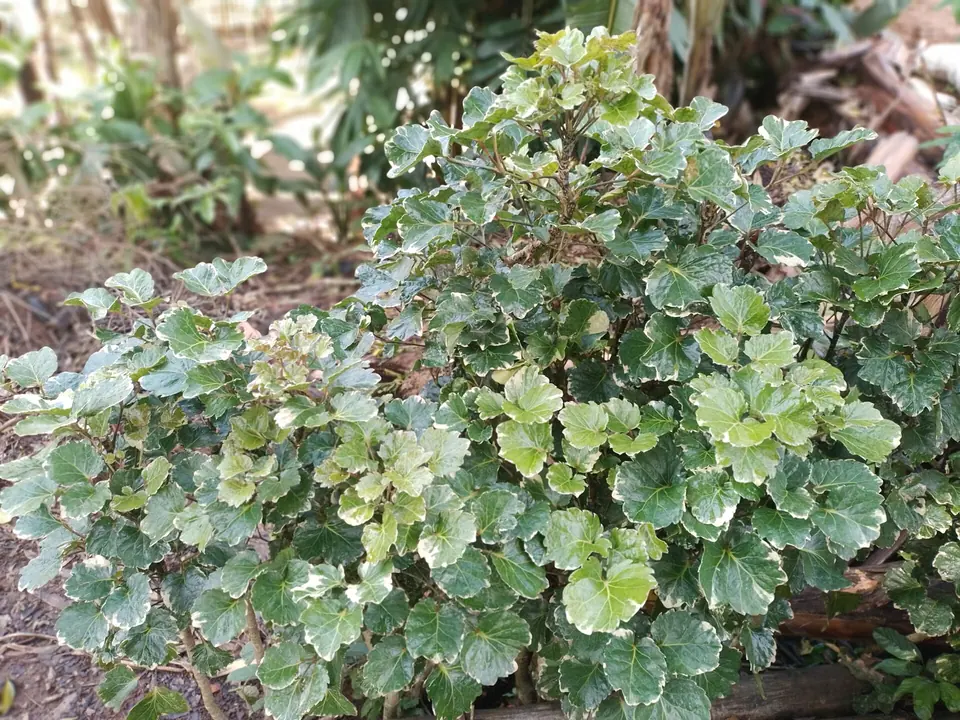
Esta planta perenne crece a gusto en maceta e incluso dentro de casa, y alcanza de 60 cm a 1,8 m de altura. Dale sol pleno o semisombra, mantén la tierra ligeramente húmeda y el ambiente húmedo, y crecerá en su mejor forma. Además, puedes sacar plantas nuevas con esquejes de tallo o semillas, así que una sola puede convertirse en muchas.
- Sol
Sol pleno; también tolera la semisombra
Qué dicen las fuentes (1)
Luz: Pleno sol; tolera semisombra
Aralia Balfour prefers full sunlight but is tolerant of partial shade.
— Polyscias balfouriana (Aralia Balfour, Balfour Aralia, Balfour Polyscias, Dinner Plate Aralia, Plate Aralia) | North Carolina Extension Gardener Plant Toolbox [1] - Riego
Mantén la tierra ligeramente húmeda y el ambiente húmedo; sus raíces pueden pudrirse
Qué dicen las fuentes (3)
Riego: Mantén ligeramente húmedo
It grows best when kept slightly damp with good humidity as in a tropical climate
— Polyscias balfouriana (Aralia Balfour, Balfour Aralia, Balfour Polyscias, Dinner Plate Aralia, Plate Aralia) | North Carolina Extension Gardener Plant Toolbox [1] Notas sobre el riego: Crece mejor con buena humedad; susceptible a la pudrición de raíces
It grows best when kept slightly damp with good humidity as in a tropical climate
— Polyscias balfouriana (Aralia Balfour, Balfour Aralia, Balfour Polyscias, Dinner Plate Aralia, Plate Aralia) | North Carolina Extension Gardener Plant Toolbox [1] Shoot blight and fusarium wilt may occur. Susceptible to root rot.
— Polyscias balfouriana (Aralia Balfour, Balfour Aralia, Balfour Polyscias, Dinner Plate Aralia, Plate Aralia) | North Carolina Extension Gardener Plant Toolbox [1] - Frío
Aguanta inviernos de hasta −1,1 °C (30 °F)
Semirrústica: inviernos suaves o invernadero sin calefacción · USDA 10a · RHS H3 · Z10
Qué dicen las fuentes (2)
Rusticidad, zona más fría: 10a [mínima invernal de −1,1 a 1,7 °C (de 30 a 35 °F)]
Available Space To Plant: 3 feet-6 feet USDA Plant Hardiness Zone: 10a, 10b, 11a
— Polyscias balfouriana (Aralia Balfour, Balfour Aralia, Balfour Polyscias, Dinner Plate Aralia, Plate Aralia) | North Carolina Extension Gardener Plant Toolbox [1] Rusticidad, zona más cálida: 11a [mínima invernal de 4,4 a 7,2 °C (de 40 a 45 °F)]
Available Space To Plant: 3 feet-6 feet USDA Plant Hardiness Zone: 10a, 10b, 11a
— Polyscias balfouriana (Aralia Balfour, Balfour Aralia, Balfour Polyscias, Dinner Plate Aralia, Plate Aralia) | North Carolina Extension Gardener Plant Toolbox [1] - Plagas
Vigila el tizón de los brotes, la fusariosis y la podredumbre de raíz
Qué dicen las fuentes (1)
Enfermedades: tizón de los brotes, marchitez por fusarium, pudrición de raíces
Shoot blight and fusarium wilt may occur. Susceptible to root rot.
— Polyscias balfouriana (Aralia Balfour, Balfour Aralia, Balfour Polyscias, Dinner Plate Aralia, Plate Aralia) | North Carolina Extension Gardener Plant Toolbox [1] - Tamaño
De 60 cm a 1,8 m de alto
Qué dicen las fuentes (1)
Altura adulta: 60.96-182.88 cm (2-6 pies)
This plant grows from 2 to 6 feet tall.
— Polyscias balfouriana (Aralia Balfour, Balfour Aralia, Balfour Polyscias, Dinner Plate Aralia, Plate Aralia) | North Carolina Extension Gardener Plant Toolbox [1] - Multiplicación
Saca plantas nuevas con semillas o esquejes de tallo
Qué dicen las fuentes (1)
Propagación: Semilla, esquejes de tallo
Life Cycle: Perennial Woody Recommended Propagation Strategy: Seed Stem Cutting
— Polyscias balfouriana (Aralia Balfour, Balfour Aralia, Balfour Polyscias, Dinner Plate Aralia, Plate Aralia) | North Carolina Extension Gardener Plant Toolbox [1] - Maceta
Crece bien en maceta y dentro de casa
Qué dicen las fuentes (2)
En maceta: Sí
#heat tolerant #houseplant #poisonous #tropical feel #container plant
— Polyscias balfouriana (Aralia Balfour, Balfour Aralia, Balfour Polyscias, Dinner Plate Aralia, Plate Aralia) | North Carolina Extension Gardener Plant Toolbox [1] En interior: Sí
Aralia Balfour is a shrub or small tree that is cultivated as an ornamental in the landscape or as an indoor houseplant.
— Polyscias balfouriana (Aralia Balfour, Balfour Aralia, Balfour Polyscias, Dinner Plate Aralia, Plate Aralia) | North Carolina Extension Gardener Plant Toolbox [1] - Seguridad
Es ligeramente tóxica para las personas: no la comas
Resumen
La aralia de Balfour es un arbusto o árbol pequeño cultivado como ornamental en el paisaje o como planta de interior. [1] Prefiere pleno sol, tolera semisombra y crece mejor si se mantiene ligeramente húmeda con buena humedad. [1] La planta está catalogada como de características de veneno de baja severidad. [1]
Citado en inglés, como en la fuente.
Cuidados
Riego
Riego
Mantén ligeramente húmedo
Qué dicen las fuentes (1)
It grows best when kept slightly damp with good humidity as in a tropical climateNotas sobre el riego
Crece mejor con buena humedad; susceptible a la pudrición de raíces
Qué dicen las fuentes (2)
It grows best when kept slightly damp with good humidity as in a tropical climateShoot blight and fusarium wilt may occur. Susceptible to root rot.Luz
Pleno sol; tolera semisombra
Qué dicen las fuentes (1)
Aralia Balfour prefers full sunlight but is tolerant of partial shade.Clima y frío
Rusticidad, zona más fría
10a [mínima invernal de −1,1 a 1,7 °C (de 30 a 35 °F)]
Qué dicen las fuentes (1)
Available Space To Plant:
3 feet-6 feet
USDA Plant Hardiness Zone:
10a, 10b, 11aRusticidad, zona más cálida
11a [mínima invernal de 4,4 a 7,2 °C (de 40 a 45 °F)]
Qué dicen las fuentes (1)
Available Space To Plant:
3 feet-6 feet
USDA Plant Hardiness Zone:
10a, 10b, 11aDónde cultivarla
En interior
Sí
Qué dicen las fuentes (1)
Aralia Balfour is a shrub or small tree that is cultivated as an ornamental in the landscape or as an indoor houseplant.En maceta
Sí
Qué dicen las fuentes (1)
#heat tolerant #houseplant #poisonous #tropical feel #container plantPropagación
Semilla, esquejes de tallo
Qué dicen las fuentes (1)
Life Cycle:
Perennial
Woody
Recommended Propagation Strategy:
Seed
Stem CuttingCultivo
La planta
Ciclo de vida
perenne
Qué dicen las fuentes (1)
Family: Araliaceae Life Cycle: Perennial Woody Recommended Propagation Strategy: Seed Stem CuttingFamilia
Araliáceas
Qué dicen las fuentes (1)
Family: Araliaceae Life Cycle: Perennial Woody Recommended Propagation Strategy: Seed Stem CuttingAltura adulta
60.96-182.88 cm (2-6 pies)
Qué dicen las fuentes (1)
This plant grows from 2 to 6 feet tall.Plagas y enfermedades
Enfermedades
tizón de los brotes, marchitez por fusarium, pudrición de raíces
Qué dicen las fuentes (1)
Shoot blight and fusarium wilt may occur. Susceptible to root rot.Problemas
Tizón de brotes, fusarium y pudrición de raíces
Qué dicen las fuentes (1)
Shoot blight and fusarium wilt may occur. Susceptible to root rot.
— Polyscias balfouriana (Aralia Balfour, Balfour Aralia, Balfour Polyscias, Dinner Plate Aralia, Plate Aralia) | North Carolina Extension Gardener Plant Toolbox [1]
Remedios
Cada remedio indica qué dicen las fuentes oficiales; los remedios tradicionales sin fuente oficial aparecen marcados. Los perjudiciales están para que sepas evitarlos.
Primeros auxilios
Primeros auxilios: no sustituyen al médico
irritación de la piel por contacto
Lava la piel con abundante agua Fuente oficial, sin prueba independiente
Cómo: Lava la zona con mucha agua para eliminar cualquier rastro del irritante que aún quede en la piel.
Often, treatment includes washing the area with a lot of water to get rid of any traces of the irritant that are still on the skin.
— medlineplus.gov [4]
Cuidar la planta
cochinillas harinosas
hisopo con alcohol isopropílico Funciona
I advise that you test this on a few leaves to see if the plant is sensitive to this mix. You could do as much damage as the insects.
— extension.sdstate.edu [5] Cómo: Moja un hisopo de algodón en alcohol isopropílico y toca o limpia las cochinillas harinosas de la planta; prueba primero en unas pocas hojas.
the classic treatment is to use a cotton swab dipped in rubbing alcohol and dab or wipe the mealybugs off the plant.
— extension.sdstate.edu [5] Qué dicen las pruebas The alcohol is able to dissolve the waxy, protective coating from the insects and then causes their bodies to dry out and die.
— extension.sdstate.edu [5] jabón insecticida Funciona en parte
Make sure to test the soap and alcohol mixtures on a small portion of the plant prior to full application because some plants may be sensitive to soap or alcohol.
— planttalk.colostate.edu [6] Cómo: Controla las cochinillas harinosas con jabón insecticida; prueba primero el jabón en una pequeña parte de la planta.
These pests may also be controlled with insecticidal soap.
— planttalk.colostate.edu [6] Qué dicen las pruebas These pests may also be controlled with insecticidal soap.
— planttalk.colostate.edu [6]
ácaros araña
chorro de agua a presión Funciona en parte
Cómo: Pon la planta en el fregadero de la cocina o en la ducha y rocíala con agua tibia, llegando a todas las partes de la planta.
a forceful jet of water will blast away lots of mites. Put the plant in your kitchen sink or shower and spray it down.
— extension.sdstate.edu [5] Qué dicen las pruebas a forceful jet of water will blast away lots of mites. Put the plant in your kitchen sink or shower and spray it down.
— extension.sdstate.edu [5] jabón insecticida Funciona
Cómo: Usa jabón insecticida para los ácaros y repite cada cinco a siete días.
Insecticidal soap and horticultural oils can work well. The nice thing about these products is that they are very safe so they can be used inside the home
— extension.sdstate.edu [5] Qué dicen las pruebas Insecticidal soap and horticultural oils can work well. The nice thing about these products is that they are very safe so they can be used inside the home
— extension.sdstate.edu [5]
cochinilla
cepillo de dientes suave Fuente oficial, sin prueba independiente
Cómo: Desaloja suavemente las cochinillas adultas con un cepillo de dientes viejo y suave.
Some people will use an old, soft toothbrush to gently dislodge the adult scale insects from the plant.
— extension.sdstate.edu [5]
Toxicidad
Según la fuente, citada textualmente. No es un consejo médico ni veterinario: si una persona o un animal pudo haber ingerido esta planta, contacta con un centro de toxicología o con un veterinario.
This plant has low severity poison characteristics. See below
[1]- Partes venenosas
Poison Part: Flowers Leaves Roots Sap/Juice Seeds Stems
[1]- Principio tóxico
Poison Toxic Principle: Saponins Causes Contact Dermatitis: Yes
[1]- Síntomas
Poison Symptoms: Mouth irritation, nausea, vomiting, gastrointestinal issues with ingestion. Skin irritation with contact.
[1]- Gravedad
Poisonous to Humans: Poison Severity: Low Poison Symptoms: Mouth irritation,
[1]
Valores orientativos
Valores de una fuente secundaria, no comprobados palabra por palabra como el resto de esta página. Úselos como punto de partida.
- pH del suelo
- 6-6.5Valor orientativo, adáptalo a tu clima · Fuente secundaria
- Nivel de cuidado
- MedioValor orientativo, adáptalo a tu clima · Fuente secundaria
- Crecimiento
- BajoValor orientativo, adáptalo a tu clima · Fuente secundaria
- Poda
- Marzo, Abril, Mayo, Junio, Julio, AgostoValor orientativo, adáptalo a tu clima · Fuente secundaria
- Plagas
- Ácaros, NematodosValor orientativo, adáptalo a tu clima · Fuente secundaria
Plantas similares
- Geranium Aralia Polyscias guilfoylei
- Ming Aralia Polyscias fruticosa
- Ginseng americano Panax quinquefolius
- American Water-Pennywort Hydrocotyle americana
- Angelica Tree Aralia elata
- Castor aralia Kalopanax pictus
- Devil's Walking Stick Aralia spinosa
- Dollarweed Hydrocotyle umbellata
Fuentes
Cada valor anterior se cita de estos documentos. Los enlaces llevan al editor original.
- Polyscias balfouriana (Aralia Balfour, Balfour Aralia, Balfour Polyscias, Dinner Plate Aralia, Plate Aralia) | North Carolina Extension Gardener Plant Toolbox · plants.ces.ncsu.edu, consultado
- Aralia Balfour - Polyscias balfouriana | North Carolina Extension Gardener Plant Toolbox · plants.ces.ncsu.edu, consultado
- Dinner Plate Aralia - Polyscias balfouriana | North Carolina Extension Gardener Plant Toolbox · plants.ces.ncsu.edu, consultado
- medlineplus.gov · medlineplus.gov
- extension.sdstate.edu · extension.sdstate.edu
- planttalk.colostate.edu · planttalk.colostate.edu
Escrito por Emilio Marruso · última revisión