
How to Grow and Care for Sentry Palm
Howea belmoreana
Written by Emilio Marruso · last checked
Not toxic to cats and dogs, according to the sources · Sources
At a glance
This elegant palm is happy indoors, where it can reach 10 ft tall. Give it bright, indirect light, let it dry out between waterings, use chlorine-free water and keep it away from cold drafts. It is safe around cats, dogs and even horses, making it a calm, green companion for the whole family.
- Sun
Bright, indirect light; full sun can damage the leaves
What the sources say (1)
Light: Bright, indirect light
It grows at its best with bright, indirect lighting. Too much light can cause the plant to yellow.
— Howea belmoreana (Belmore Sentry Palm, Curly Palm, Kentia Palm, Paradise Palm, Sentry Palm) | North Carolina Extension Gardener Plant Toolbox [1] - Water
Let it dry out between waterings; use only chlorine-free water
What the sources say (2)
Watering: Allow the plant to dry out between watering
Allow the plant to dry out between watering and use only chlorine-free water, as it is sensitive to chlorine.
— Howea belmoreana (Belmore Sentry Palm, Curly Palm, Kentia Palm, Paradise Palm, Sentry Palm) | North Carolina Extension Gardener Plant Toolbox [1] Watering notes: Use only chlorine-free water, as the plant is sensitive to chlorine; soggy potting mix can cause root rot
Allow the plant to dry out between watering and use only chlorine-free water, as it is sensitive to chlorine.
— Howea belmoreana (Belmore Sentry Palm, Curly Palm, Kentia Palm, Paradise Palm, Sentry Palm) | North Carolina Extension Gardener Plant Toolbox [1] - Cold
Below 28 °F (-2 °C) the leaves burn; keep it away from cold drafts
- Soil
Fast-draining potting mix, pH 6.0–8.0
What the sources say (2)
Soil pH, minimum: 6.0
Soil pH: Neutral (6.0-8.0)
— Howea belmoreana (Belmore Sentry Palm, Curly Palm, Kentia Palm, Paradise Palm, Sentry Palm) | North Carolina Extension Gardener Plant Toolbox [1] Soil pH, maximum: 8.0
Soil pH: Neutral (6.0-8.0)
— Howea belmoreana (Belmore Sentry Palm, Curly Palm, Kentia Palm, Paradise Palm, Sentry Palm) | North Carolina Extension Gardener Plant Toolbox [1] - Pests
Mealybugs, scale and spider mites; soggy soil causes root rot
What the sources say (4)
Pests: mealy bugs, scale, spider mites
Monitor for mealy bugs, scale, and spider mites when grown indoors.
— Howea belmoreana (Belmore Sentry Palm, Curly Palm, Kentia Palm, Paradise Palm, Sentry Palm) | North Carolina Extension Gardener Plant Toolbox [1] Diseases: root rot, leaf spot
Root rot can occur when the potting mix is allowed to remain soggy.
— Howea belmoreana (Belmore Sentry Palm, Curly Palm, Kentia Palm, Paradise Palm, Sentry Palm) | North Carolina Extension Gardener Plant Toolbox [1] Other issues include brown leaf tips, which are caused by dry air or under watering. Leaf spot can occur when overwatering and with a sudden temperature change.
— Howea belmoreana (Belmore Sentry Palm, Curly Palm, Kentia Palm, Paradise Palm, Sentry Palm) | North Carolina Extension Gardener Plant Toolbox [1] Watering notes: Use only chlorine-free water, as the plant is sensitive to chlorine; soggy potting mix can cause root rot
Allow the plant to dry out between watering and use only chlorine-free water, as it is sensitive to chlorine.
— Howea belmoreana (Belmore Sentry Palm, Curly Palm, Kentia Palm, Paradise Palm, Sentry Palm) | North Carolina Extension Gardener Plant Toolbox [1] - Watch out
Brown leaf tips mean dry air or too little water
- Size
Up to 10 ft tall indoors, 40 ft in the wild
What the sources say (1)
Mature height: 304.8 cm (10 ft) when grown indoors; 1219.2 (40 ft) in the wild
When grown indoors, a height of 10 feet can be expected after many years, while in the wild heights can reach 40 feet.
— Howea belmoreana (Belmore Sentry Palm, Curly Palm, Kentia Palm, Paradise Palm, Sentry Palm) | North Carolina Extension Gardener Plant Toolbox [1] - Propagation
Grows from seed
What the sources say (1)
Propagation: Seed
It must be propagated from seed.
— Howea belmoreana (Belmore Sentry Palm, Curly Palm, Kentia Palm, Paradise Palm, Sentry Palm) | North Carolina Extension Gardener Plant Toolbox [1] - Containers
Grows well in pots and indoors
What the sources say (2)
In containers: Yes
Landscape Location: Container
— Howea belmoreana (Belmore Sentry Palm, Curly Palm, Kentia Palm, Paradise Palm, Sentry Palm) | North Carolina Extension Gardener Plant Toolbox [1] Indoors: Yes
This palm is suitable as a houseplant or greenhouse subject.
— Howea belmoreana (Belmore Sentry Palm, Curly Palm, Kentia Palm, Paradise Palm, Sentry Palm) | North Carolina Extension Gardener Plant Toolbox [1] - Safety
Safe for cats, dogs and horses
Overview
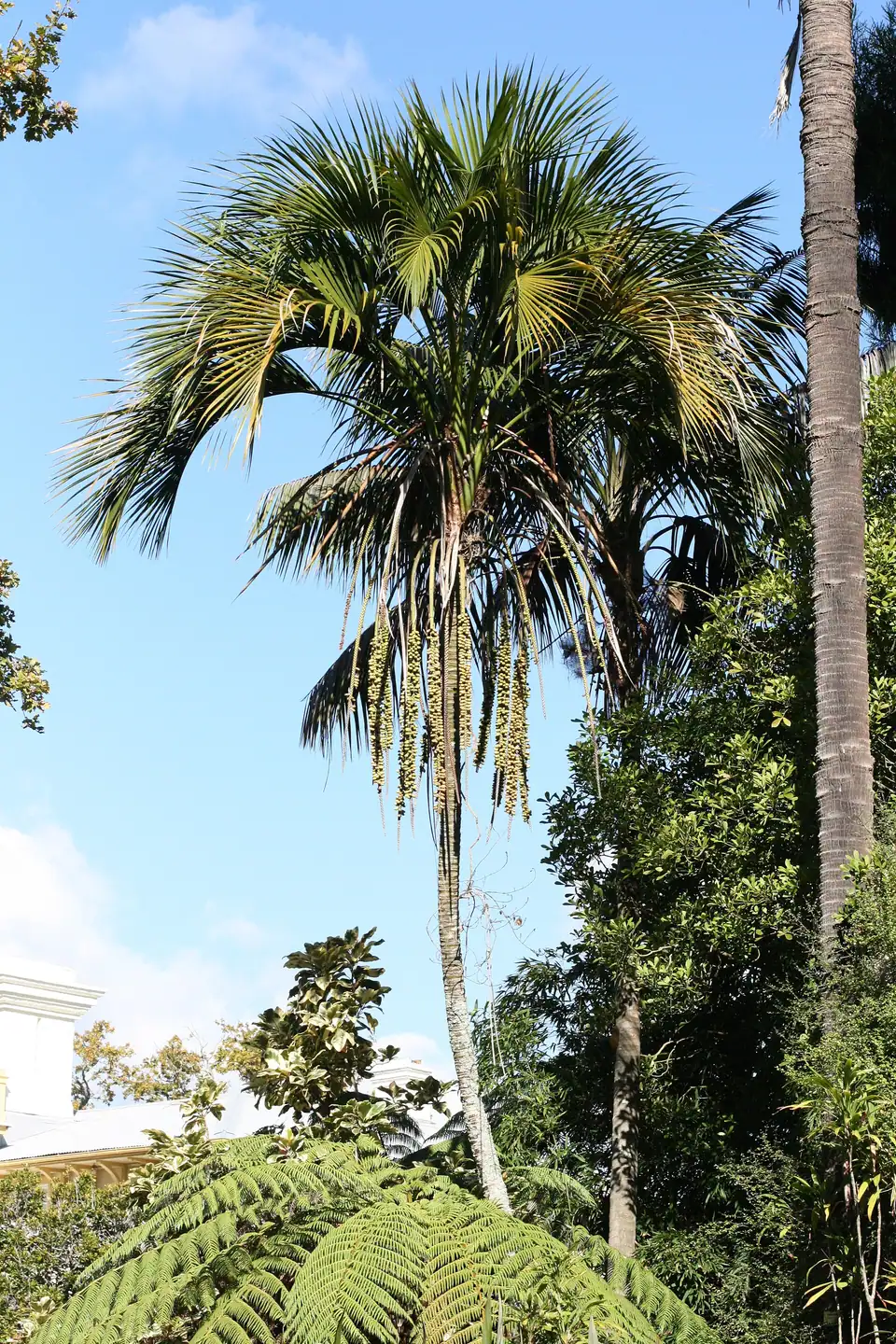
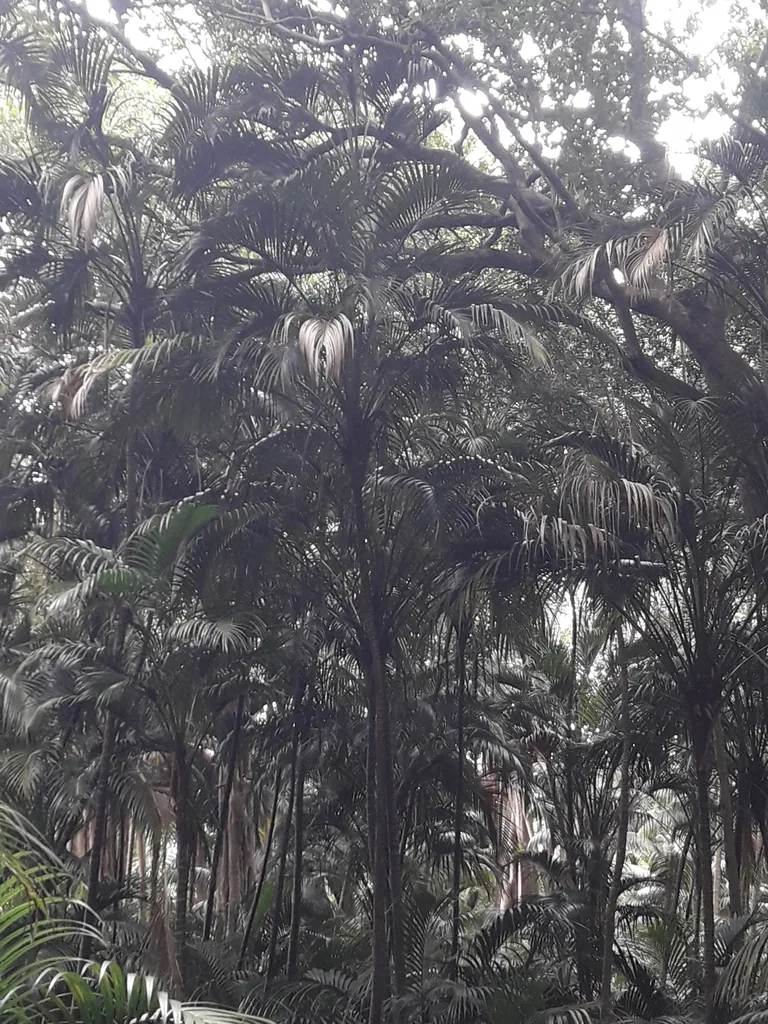
Belmore sentry palm is a slow-growing single-stemmed palm native to Lord Howe Island that is suitable as a houseplant. [1] It grows best in bright, indirect light and should be allowed to dry out between waterings. [1]
Sentry Palm care
How to water Sentry Palm
Watering
Allow the plant to dry out between watering
What the sources say (1)
Allow the plant to dry out between watering and use only chlorine-free water, as it is sensitive to chlorine.Watering notes
Use only chlorine-free water, as the plant is sensitive to chlorine; soggy potting mix can cause root rot
What the sources say (1)
Allow the plant to dry out between watering and use only chlorine-free water, as it is sensitive to chlorine.How much light Sentry Palm needs
Bright, indirect light
What the sources say (1)
It grows at its best with bright, indirect lighting. Too much light can cause the plant to yellow.Best soil for Sentry Palm
Soil pH, minimum
6.0
What the sources say (1)
Soil pH:
Neutral (6.0-8.0)Soil pH, maximum
8.0
What the sources say (1)
Soil pH:
Neutral (6.0-8.0)Where to grow Sentry Palm
Indoors
Yes
What the sources say (1)
This palm is suitable as a houseplant or greenhouse subject.In containers
Yes
What the sources say (1)
Landscape Location:
ContainerHow to propagate Sentry Palm
Seed
What the sources say (1)
It must be propagated from seed.How to grow Sentry Palm
The plant
Life cycle
perennial
What the sources say (1)
Belmore sentry palm is a single-stemmed, pinnate-leaved, evergreen perennial native to Lord Howe Island, Australia. It is a member of the palm family (Arecaceae).Family
Arecaceae
What the sources say (1)
Belmore sentry palm is a single-stemmed, pinnate-leaved, evergreen perennial native to Lord Howe Island, Australia. It is a member of the palm family (Arecaceae).Mature height
304.8 cm (10 ft) when grown indoors; 1219.2 (40 ft) in the wild
What the sources say (1)
When grown indoors, a height of 10 feet can be expected after many years, while in the wild heights can reach 40 feet.Pests and diseases
Pests
mealy bugs, scale, spider mites
What the sources say (1)
Monitor for mealy bugs, scale, and spider mites when grown indoors.Diseases
root rot, leaf spot
What the sources say (2)
Root rot can occur when the potting mix is allowed to remain soggy.Other issues include brown leaf tips, which are caused by dry air or under watering. Leaf spot can occur when overwatering and with a sudden temperature change.Sentry Palm pests and problems
Root rot and leaf spot
Symptom: Root rot occurs when the potting mix stays soggy; leaf spot occurs with overwatering and sudden temperature change; brown leaf tips come from dry air or under watering.
What to do: Provide fast draining potting mix; monitor for mealy bugs, scale, and spider mites when grown indoors.
What the sources say (1)
Root rot can occur when the potting mix is allowed to remain soggy.
— Howea belmoreana (Belmore Sentry Palm, Curly Palm, Kentia Palm, Paradise Palm, Sentry Palm) | North Carolina Extension Gardener Plant Toolbox [1] Cold and light damage
Symptom: Temperatures below 28 degrees F can cause leaf burn; full sun can damage the foliage; cold drafts can cause the leaves to drop.
What to do: Keep out of cold drafts and full sun.
What the sources say (1)
Temperatures below 28 degrees F can cause leaf burn. Full sun can damage the foliage.
— Howea belmoreana (Belmore Sentry Palm, Curly Palm, Kentia Palm, Paradise Palm, Sentry Palm) | North Carolina Extension Gardener Plant Toolbox [1]
Remedies
The sources we checked give no remedies for this plant.
Is Sentry Palm poisonous?
Reported by the source, quoted verbatim. This is not medical or veterinary advice: if a person or an animal may have eaten this plant, contact a poison control centre or a veterinarian.
Similar plants
- Kentia Palm Howea forsteriana
- Areca Palm Chrysalidocarpus lutescens
- Bamboo Palm Chamaedorea seifrizii
- Bismark Palm Bismarckia nobilis
- California fan palm Washingtonia filifera
- Canary Island Date Palm Phoenix canariensis
- Christmas Palm Adonidia merrillii
- Cyrtostachys renda Cyrtostachys renda
Sources
Every value above is quoted from these documents. Links lead to the original publisher.
- Howea belmoreana (Belmore Sentry Palm, Curly Palm, Kentia Palm, Paradise Palm, Sentry Palm) | North Carolina Extension Gardener Plant Toolbox · plants.ces.ncsu.edu, consulted
- Paradise Palm - Howea belmoreana | North Carolina Extension Gardener Plant Toolbox · plants.ces.ncsu.edu, consulted
- Sentry Palm - Howea belmoreana | North Carolina Extension Gardener Plant Toolbox · plants.ces.ncsu.edu, consulted
Written by Emilio Marruso · last checked