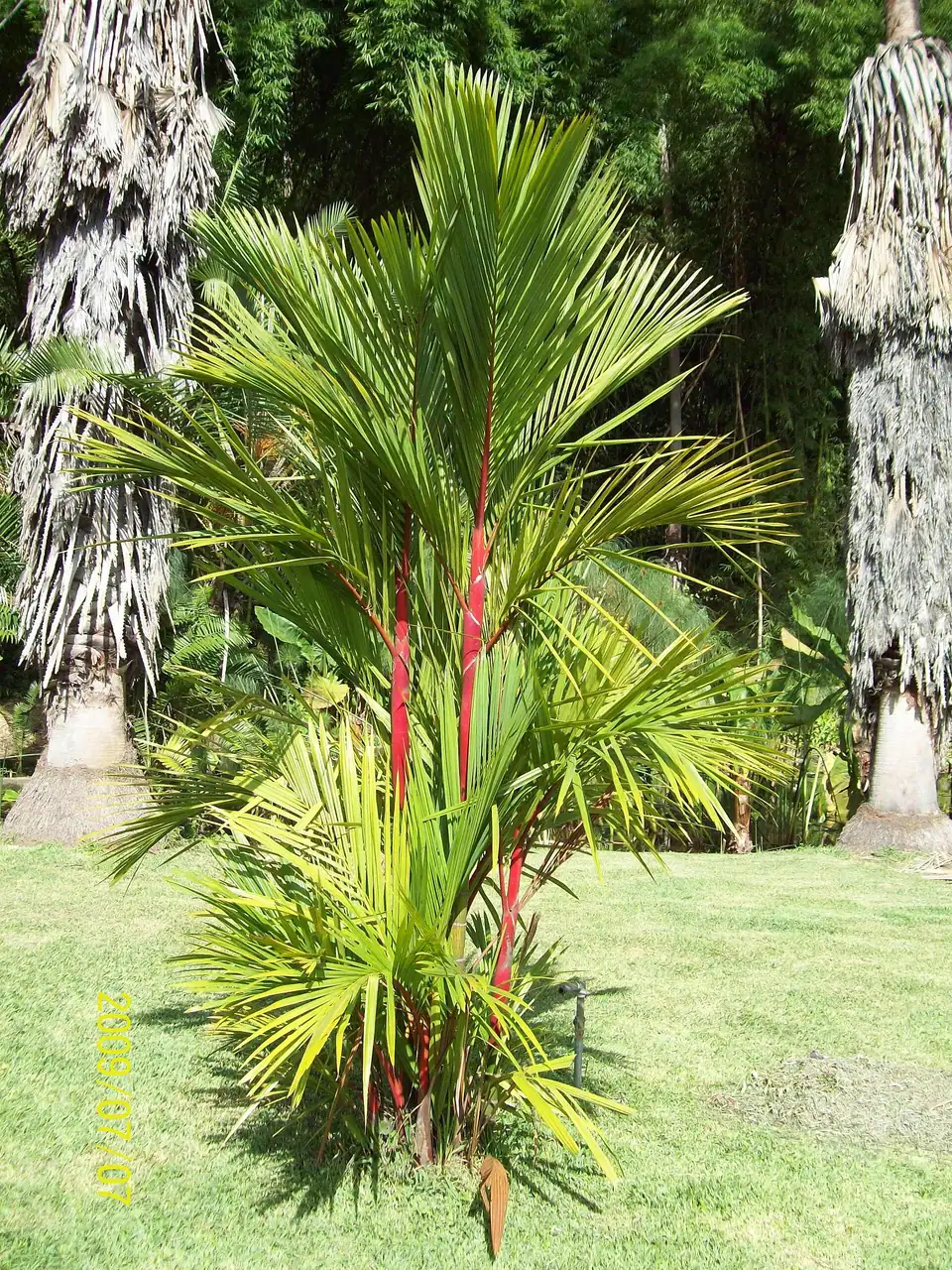
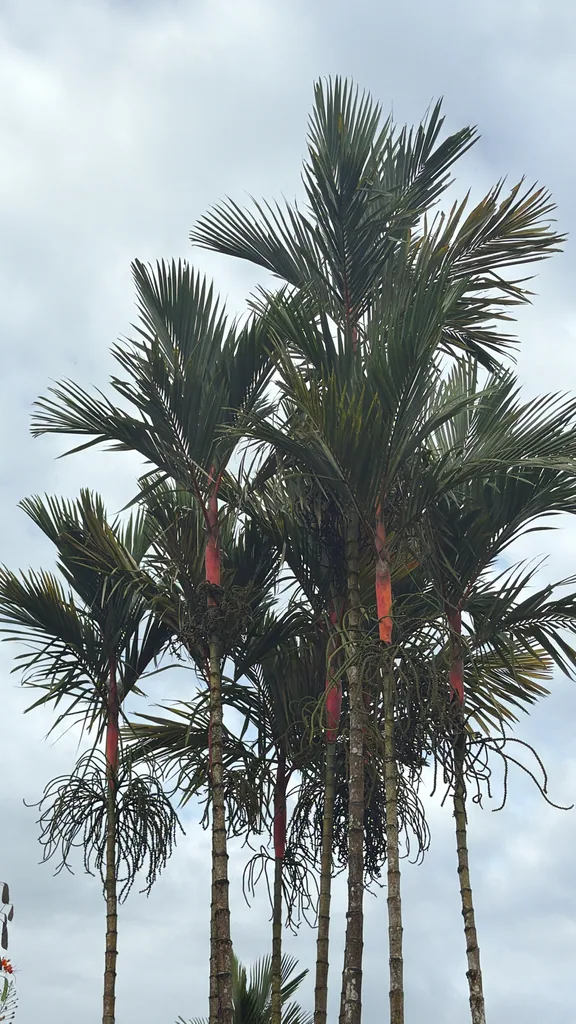

How to Grow and Care for Cyrtostachys renda
Cyrtostachys renda
Written by Emilio Marruso · last checked
At a glance
This palm loves water: it handles soggy ground, so you can even grow it right at the edge of a pond. Give it partial shade while young and full sun once mature, and keep the soil moist, because it wilts quickly when thirsty. It grows in containers too, and you can start new plants from seed or from suckers.
- Sun
Partial shade while young, full sun once mature
What the sources say (3)
Light: Partial shade while young; mature trees thrive in full sunlight
According to NParks: Full Sun Semi Shade Lots of Water Moderate Water
— NParks | Cyrtostachys renda [2] According to Desert Tropicals: Water Requirements: Regular water Sun Requirements: Light shade
— Acoelorrhaphe wrightii (Paurotis Palm, Silver Saw Palmetto) [6] Lipstick palm growing conditions includes partial shade while the plant is young. Otherwise, mature trees thrive in full sunlight.
— Lipstick Palm Information - How To Grow Lipstick Palms In The Garden | Gardening Know How [3] - Water
Keep the soil moist; it wilts fast when dry but handles soggy ground, even by a pond
What the sources say (2)
Watering: Keep soil moist; not drought-tolerant, quickly withering with water stress
Preferring rich loamy soil, that has to be kept moist as this palm is not drought-tolerant, quickly withering with water stress.
— NParks | Cyrtostachys renda [2] Watering notes: Tolerant of water-logged conditions; can be grown at the edges of ponds or reservoirs
Also can be grown at the edges of ponds or reservoirs as it is tolerant of water-logged conditions.
— NParks | Cyrtostachys renda [2] - Cold
Survives winters down to 35 °F (1.7 °C)
Tender: needs a frost-free greenhouse · USDA 10b · RHS H2 · Z10
What the sources say (1)
Hardiness, coldest zone: 10b [winter low 1.7 to 4.4 °C (35 to 40 °F)]
If you live in USDA plant hardiness zone 10b or above
— Lipstick Palm Information - How To Grow Lipstick Palms In The Garden | Gardening Know How [3] - Propagation
From seed, or by removing suckers from an established plant and replanting them
What the sources say (1)
Propagation: Seed; suckers removed and replanted from an established plant
Although lipstick palm can be started by seed, it’s much easier and faster to remove and replant suckers from the side of an established tree.
— Lipstick Palm Information - How To Grow Lipstick Palms In The Garden | Gardening Know How [3] - Containers
Grows in containers too
What the sources say (1)
In containers: Yes
In most areas, it will mean growing it in a container.
— Acoelorrhaphe wrightii (Paurotis Palm, Silver Saw Palmetto) [6]
Overview
Cyrtostachys renda is a clustering palm native to Thailand, Peninsular Malaysia, Singapore, Sumatra and Borneo, cultivated as an ornamental for its bright red stems and leaf stalks. [2] It prefers rich loamy soil kept moist and is not drought-tolerant. [2]
This record is incomplete: the sources we read do not cover every field yet.
Not yet covered by our sources: Hardiness, warmest zone, Pruning
Cyrtostachys renda care
How to water Cyrtostachys renda
Watering
Keep soil moist; not drought-tolerant, quickly withering with water stress
What the sources say (1)
Preferring rich loamy soil, that has to be kept moist as this palm is not drought-tolerant, quickly withering with water stress.Watering notes
Tolerant of water-logged conditions; can be grown at the edges of ponds or reservoirs
What the sources say (1)
Also can be grown at the edges of ponds or reservoirs as it is tolerant of water-logged conditions.How much light Cyrtostachys renda needs
Partial shade while young; mature trees thrive in full sunlight
What each source says
According to NParks: Full sun to semi shade
According to Desert Tropicals: Light shade
What the sources say (3)
According to NParks: Full Sun
Semi Shade
Lots of Water
Moderate WaterAccording to Desert Tropicals: Water Requirements: Regular water
Sun Requirements: Light shadeLipstick palm growing conditions includes partial shade while the plant is young. Otherwise, mature trees thrive in full sunlight.How much cold Cyrtostachys renda can take
Hardiness, coldest zone
10b [winter low 1.7 to 4.4 °C (35 to 40 °F)]
What the sources say (1)
If you live in USDA plant hardiness zone 10b or aboveHardiness, warmest zone
Not stated in the sources we read.
Where to grow Cyrtostachys renda
Yes
What the sources say (1)
In most areas, it will mean growing it in a container.How to propagate Cyrtostachys renda
Seed; suckers removed and replanted from an established plant
What the sources say (1)
Although lipstick palm can be started by seed, it’s much easier and faster to remove and replant suckers from the side of an established tree.How to grow Cyrtostachys renda
The plant
Family
Arecaceae
What the sources say (1)
Order Arecales ( 1AREO ) Family Arecaceae ( 1PALF ) SubfamilyRemedies
Each remedy shows what official sources say about it; traditional remedies without an official source are marked as such. Harmful ones are listed so you know to avoid them.
Treating the plant
mealybugs
insecticidal soap or horticultural oil Partly works
Read and follow all label directions for any insecticide used.
— portal.ct.gov [7] How: spray insecticidal soap or ultra-fine horticultural oil; the spray needs to contact the insect, so direct it downward into growing tips and leaf axils; multiple applications are needed
Sprays of insecticidal soap, ultra-fine horticultural oil or resmethrin, which are among the compounds registered for control of this pest in Connecticut, are most effective against crawlers.
— portal.ct.gov [7] What the evidence says Sprays of insecticidal soap, ultra-fine horticultural oil or resmethrin, which are among the compounds registered for control of this pest in Connecticut, are most effective against crawlers.
— portal.ct.gov [7]
scale insects
ultrafine horticultural oil Works
How: palms (except coconut palms) can be sprayed with ultrafine horticultural oil to suffocate scales
Except for coconut palms, palms can be sprayed with ultrafine horticultural oil to suffocate scales.
— portal.ct.gov [7] What the evidence says Except for coconut palms, palms can be sprayed with ultrafine horticultural oil to suffocate scales.
— portal.ct.gov [7] insecticidal soap Partly works
How: repeated application of insecticidal soap may be necessary to control crawlers
Otherwise, repeated application of insecticidal soap may be necessary to control crawlers.
— portal.ct.gov [7] What the evidence says Otherwise, repeated application of insecticidal soap may be necessary to control crawlers.
— portal.ct.gov [7]
leaf tip burn
trimming affected portions Partly works
How: remove affected portions with clean, sharp scissors
The appearance of the plant can be improved when affected portions are removed with clean, sharp scissors.
— portal.ct.gov [7] What the evidence says The appearance of the plant can be improved when affected portions are removed with clean, sharp scissors.
— portal.ct.gov [7]
Calendar
Pruning
Not stated in the sources we read.
Months as given by the sources, which are mostly from the United States (northern hemisphere). In the southern hemisphere they shift by about six months.
Indicative values
Values from a secondary source, not checked word for word like the rest of this page. Use them as a starting point.
- Life cycle
- PerennialIndicative value, adapt it to your climate · Secondary source
- Mature height
- 243.8-457.2 cm (8-15 ft)Indicative value, adapt it to your climate · Secondary source
- Hours of sun
- 4-6 hoursIndicative value, adapt it to your climate · Secondary source
- Drought tolerant
- yesIndicative value, adapt it to your climate · Secondary source
- Soil pH
- 5.5-6.5Indicative value, adapt it to your climate · Secondary source
- Care level
- MediumIndicative value, adapt it to your climate · Secondary source
- Growth rate
- LowIndicative value, adapt it to your climate · Secondary source
- Pruning
- May, NovemberIndicative value, adapt it to your climate · Secondary source
Similar plants
- Areca Palm Chrysalidocarpus lutescens
- Bamboo Palm Chamaedorea seifrizii
- California fan palm Washingtonia filifera
- Christmas Palm Adonidia merrillii
- Dwarf Date Palm Phoenix acaulis
- Kentia Palm Howea forsteriana
- Majesty Palm Ravenea rivularis
- Mexican Fan Palm Washingtonia robusta
Sources
Every value above is quoted from these documents. Links lead to the original publisher.
- Cyrtostachys renda (CZYRE)[Overview]| EPPO Global Database · gd.eppo.int, consulted
- NParks | Cyrtostachys renda · nparks.gov.sg, consulted
- Lipstick Palm Information - How To Grow Lipstick Palms In The Garden | Gardening Know How · gardeningknowhow.com, consulted
- Bentinckia renda · llifle.com, consulted
- Cyrtostachys renda Blume | Newsletter | Malaysia Biodiversity Information System (MyBIS) · mybis.gov.my, consulted
- Acoelorrhaphe wrightii (Paurotis Palm, Silver Saw Palmetto) · desert-tropicals.com, consulted
- portal.ct.gov · portal.ct.gov
Written by Emilio Marruso · last checked