
How to Grow and Care for Majesty Palm
Ravenea rivularis
Written by Emilio Marruso · last checked
Not toxic to cats and dogs, according to the sources · Sources
At a glance
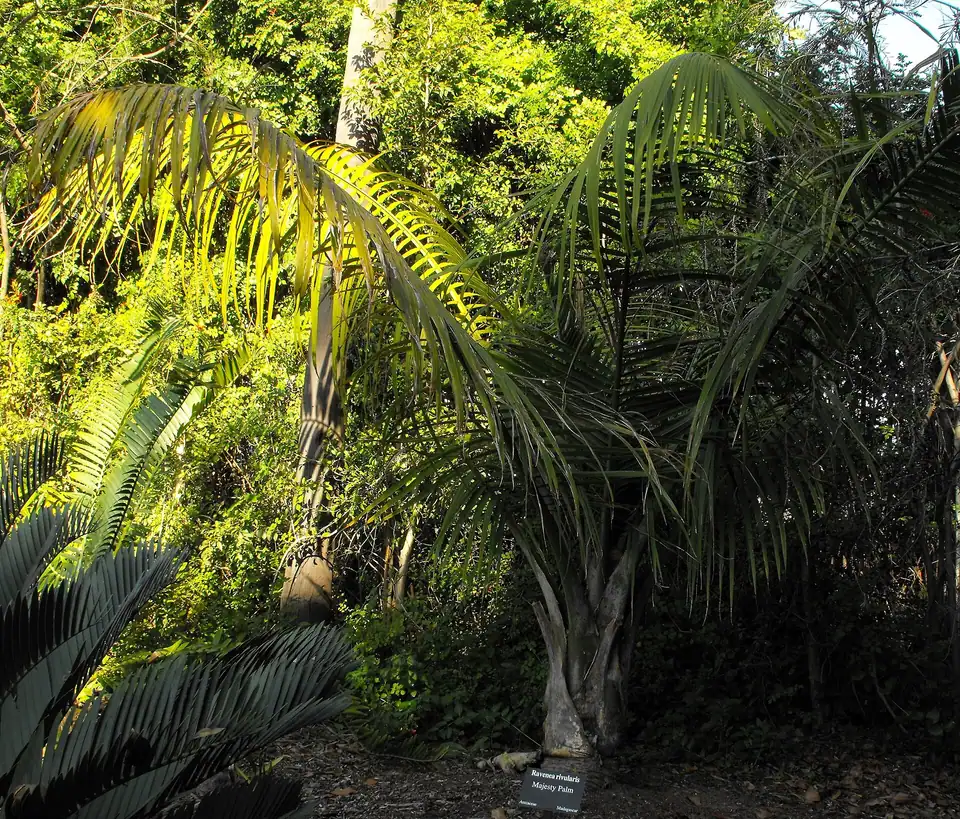
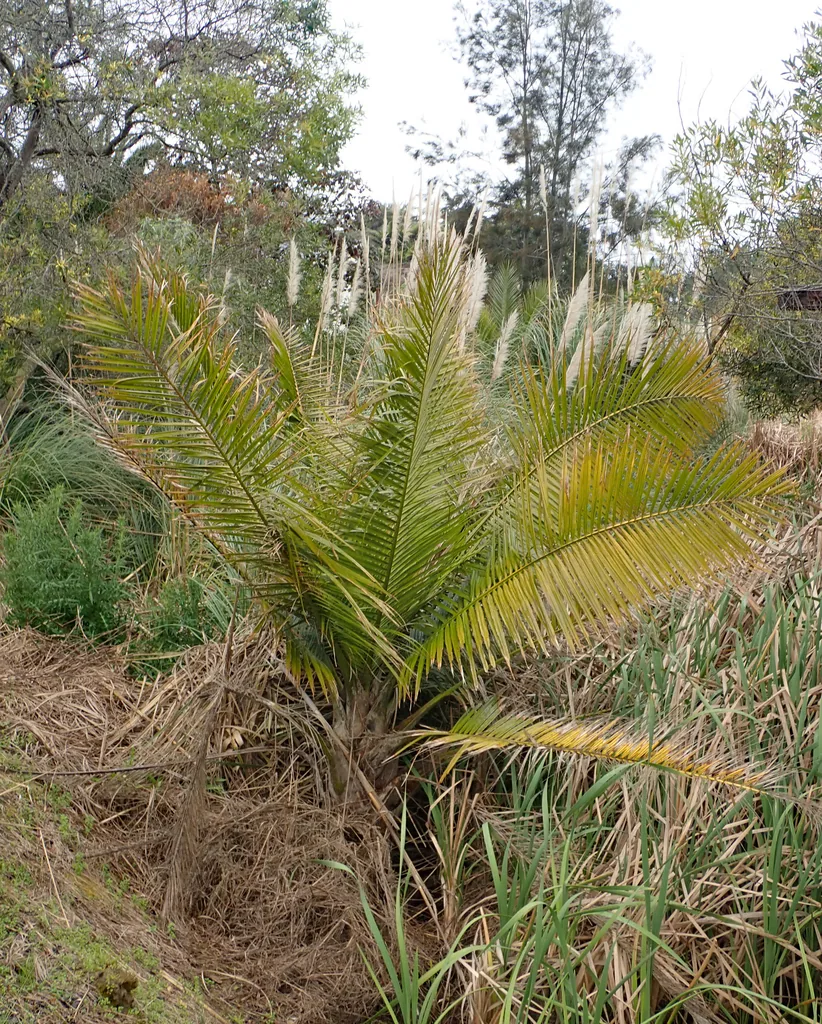
The majesty palm brings a graceful, tropical feel indoors, where it grows 5 to 10 feet tall. Give it bright, indirect light, steady moisture and high humidity, but never soggy soil, since overwatering rots the roots. It's non-toxic to cats, dogs and horses, so it can share your home with your pets without worry.
- Sun
Bright, indirect light or partial shade; strong direct sun scorches the leaves
What the sources say (2)
Light: Partial shade (direct sunlight only part of the day, 2-6 hours); bright, indirect light; avoid direct sunlight that can scorch the leaves
Partial Shade (Direct sunlight only part of the day, 2-6 hours)
— Ravenea rivularis (Majestic Palm, Majesty Palm) | North Carolina Extension Gardener Plant Toolbox [1] Avoid direct sunlight that can scorch the leaves. The palm prefers moist soil of loam or clay. Avoid cold drafts or direct heat.
— Ravenea rivularis (Majestic Palm, Majesty Palm) | North Carolina Extension Gardener Plant Toolbox [1] - Water
Keep the soil evenly moist and the air humid, but don't overwater: roots rot
What the sources say (4)
Watering: Consistent moisture; prefers moist soil
Majesty palm requires high humidity, bright, indirect light, and consistent moisture and may be difficult to grow indoors.
— Ravenea rivularis (Majestic Palm, Majesty Palm) | North Carolina Extension Gardener Plant Toolbox [1] The palm prefers moist soil of loam or clay. Avoid cold drafts or direct heat.
— Ravenea rivularis (Majestic Palm, Majesty Palm) | North Carolina Extension Gardener Plant Toolbox [1] Watering notes: Overwatering can cause root rot; high humidity is needed
Overwatering can cause root rot. Low humidity levels can bring unwanted insect pests.
— Ravenea rivularis (Majestic Palm, Majesty Palm) | North Carolina Extension Gardener Plant Toolbox [1] Majesty palm requires high humidity, bright, indirect light, and consistent moisture
— Ravenea rivularis (Majestic Palm, Majesty Palm) | North Carolina Extension Gardener Plant Toolbox [1] - Cold
Survives winters down to 30 °F (−1.1 °C)
Half hardy: mild winters or an unheated greenhouse · USDA 10a · RHS H3 · Z10
What the sources say (2)
Hardiness, coldest zone: 10a [winter low −1.1 to 1.7 °C (30 to 35 °F)]
USDA Plant Hardiness Zone: 10a, 10b, 11a, 11b
— Ravenea rivularis (Majestic Palm, Majesty Palm) | North Carolina Extension Gardener Plant Toolbox [1] Hardiness, warmest zone: 11b [winter low 7.2 to 10 °C (45 to 50 °F)]
USDA Plant Hardiness Zone: 10a, 10b, 11a, 11b
— Ravenea rivularis (Majestic Palm, Majesty Palm) | North Carolina Extension Gardener Plant Toolbox [1] - Soil
Soil from slightly acidic to alkaline, pH 6.0–8.0
What the sources say (2)
Soil pH, minimum: 6.0
Soil Texture: Clay High Organic Matter Loam (Silt) Soil pH: Neutral (6.0-8.0)
— Ravenea rivularis (Majestic Palm, Majesty Palm) | North Carolina Extension Gardener Plant Toolbox [1] Soil pH, maximum: 8.0
Soil Texture: Clay High Organic Matter Loam (Silt) Soil pH: Neutral (6.0-8.0)
— Ravenea rivularis (Majestic Palm, Majesty Palm) | North Carolina Extension Gardener Plant Toolbox [1] - Feeding
Often lacks nitrogen: pale, yellowing leaves starting with the oldest ones
What the sources say (3)
Signs of deficiency: Yellowing leaves (also caused by poor light, watering or humidity problems); prone to nitrogen deficiency even when planted in the ground
palms in general: Nitrogen deficiency begins as a uniform light-green dis- coloration of the oldest leaves (Figure 1). As the deficiency progresses, younger leaves will also become discolored.
— [2] Yellow leaves can be caused by inadequate light, insufficient water, overwatering, lack of humidity or nutritional deficiencies.
— Ravenea rivularis (Majestic Palm, Majesty Palm) | North Carolina Extension Gardener Plant Toolbox [1] However, in the field or landscape, N deficiency is common only in Ravenea rivularis and Dypsis lutescens.
— [2] - Harvest
Where it grows wild, people eat its palm heart
- Pests
Spider mites, aphids, whiteflies, mealybugs and scale; dry air invites them
What the sources say (2)
Pests: spider mites, aphids, whiteflies, mealybugs, scale
The majesty palm has no serious diseases or pests but monitor for spider mites, aphids, whiteflies, mealybugs, and scale.
— Ravenea rivularis (Majestic Palm, Majesty Palm) | North Carolina Extension Gardener Plant Toolbox [1] Diseases: root rot (from overwatering)
Overwatering can cause root rot. Low humidity levels can bring unwanted insect pests.
— Ravenea rivularis (Majestic Palm, Majesty Palm) | North Carolina Extension Gardener Plant Toolbox [1] - Size
Indoors 5–10 ft tall; 5–20 ft wide
What the sources say (3)
Mature height: up to 3048 cm (100 ft) in its native habitat
as an indoor plant: 152-305 cm (5 to 10 ft): As an indoor plant reaching 5 to 10 feet, this palm has an upright habit, full canopy, multiple stems and long arching, medium to dark green fronds.
— Ravenea rivularis (Majestic Palm, Majesty Palm) | North Carolina Extension Gardener Plant Toolbox [1] In its native habitat, this plant can grow up to 100 feet tall.
— Ravenea rivularis (Majestic Palm, Majesty Palm) | North Carolina Extension Gardener Plant Toolbox [1] Mature width: 152-610 cm (5 to 20 ft)
Dimensions: Height: 5 ft. 0 in. - 100 ft. 0 in. Width: 5 ft. 0 in. - 20 ft. 0 in.
— Ravenea rivularis (Majestic Palm, Majesty Palm) | North Carolina Extension Gardener Plant Toolbox [1] - Propagation
Multiply it by dividing the plant
What the sources say (1)
Propagation: Division
you can divide the cluster and give each plant its own pot, increasing your houseplant collection in one go.
— Ravenea rivularis (Majestic Palm, Majesty Palm) | North Carolina Extension Gardener Plant Toolbox [1] - Containers
Grows well in pots and indoors
What the sources say (2)
In containers: Yes
#houseplant #non-toxic for cats #non-toxic for horses #non-toxic for dogs #perennial #moist soil #patio #container plant
— Ravenea rivularis (Majestic Palm, Majesty Palm) | North Carolina Extension Gardener Plant Toolbox [1] Indoors: Yes
While it has a small native range, it is a popular houseplant all over the world.
— Ravenea rivularis (Majestic Palm, Majesty Palm) | North Carolina Extension Gardener Plant Toolbox [1] - Safety
Non-toxic to cats, dogs and horses
Overview
Majesty palm is a tropical evergreen perennial palm native to Madagascar and a popular houseplant. [1] It needs high humidity, bright indirect light and consistent moisture, and may be difficult to grow indoors. [1] Clustered plants can be divided into separate pots. [1]
Majesty Palm care
How to water Majesty Palm
Watering
Consistent moisture; prefers moist soil
What the sources say (2)
Majesty palm requires high humidity, bright, indirect light, and consistent moisture and may be difficult to grow indoors.The palm prefers moist soil of loam or clay. Avoid cold drafts or direct heat.Watering notes
Overwatering can cause root rot; high humidity is needed
What the sources say (2)
Overwatering can cause root rot. Low humidity levels can bring unwanted insect pests.Majesty palm requires high humidity, bright, indirect light, and consistent moistureHow much light Majesty Palm needs
Partial shade (direct sunlight only part of the day, 2-6 hours); bright, indirect light; avoid direct sunlight that can scorch the leaves
What the sources say (2)
Partial Shade (Direct sunlight only part of the day, 2-6 hours)Avoid direct sunlight that can scorch the leaves. The palm prefers moist soil of loam or clay. Avoid cold drafts or direct heat.How much cold Majesty Palm can take
Hardiness, coldest zone
10a [winter low −1.1 to 1.7 °C (30 to 35 °F)]
What the sources say (1)
USDA Plant Hardiness Zone:
10a, 10b, 11a, 11bHardiness, warmest zone
11b [winter low 7.2 to 10 °C (45 to 50 °F)]
What the sources say (1)
USDA Plant Hardiness Zone:
10a, 10b, 11a, 11bBest soil for Majesty Palm
Soil pH, minimum
6.0
What the sources say (1)
Soil Texture:
Clay
High Organic Matter
Loam (Silt)
Soil pH:
Neutral (6.0-8.0)Soil pH, maximum
8.0
What the sources say (1)
Soil Texture:
Clay
High Organic Matter
Loam (Silt)
Soil pH:
Neutral (6.0-8.0)Where to grow Majesty Palm
Indoors
Yes
What the sources say (1)
While it has a small native range, it is a popular houseplant all over the world.In containers
Yes
What the sources say (1)
#houseplant #non-toxic for cats #non-toxic for horses #non-toxic for dogs #perennial #moist soil #patio #container plantHow to propagate Majesty Palm
Division
What the sources say (1)
you can divide the cluster and give each plant its own pot, increasing your houseplant collection in one go.How to grow Majesty Palm
The plant
Life cycle
perennial
What the sources say (1)
The majesty palm is a tropical, evergreen perennial native to Madagascar and a member of the palm family (Arecaceae).Family
Arecaceae
What the sources say (1)
The majesty palm is a tropical, evergreen perennial native to Madagascar and a member of the palm family (Arecaceae).Mature height
up to 3048 cm (100 ft) in its native habitat
What each source says
as an indoor plant: 152-305 cm (5 to 10 ft):
What the sources say (2)
as an indoor plant: 152-305 cm (5 to 10 ft): As an indoor plant reaching 5 to 10 feet, this palm has an upright habit, full canopy, multiple stems and long arching, medium to dark green fronds.In its native habitat, this plant can grow up to 100 feet tall.Mature width
152-610 cm (5 to 20 ft)
What the sources say (1)
Dimensions:
Height: 5 ft. 0 in. - 100 ft. 0 in.
Width: 5 ft. 0 in. - 20 ft. 0 in.Pests and diseases
Pests
spider mites, aphids, whiteflies, mealybugs, scale
What the sources say (1)
The majesty palm has no serious diseases or pests but monitor for spider mites, aphids, whiteflies, mealybugs, and scale.Diseases
root rot (from overwatering)
What the sources say (1)
Overwatering can cause root rot. Low humidity levels can bring unwanted insect pests.Fertilizing
Mineral fertilizers
The sources give different values depending on region, zone or growing conditions.
What each source says
palms in general, in containers: Controlled-release fertilizer, analysis 18N-6P2O5-12K2O
palms in general, in the ground: 8N-2P2O5-12K2O+4Mg with micronutrients, all nitrogen in controlled-release form, broadcast under the canopy
What the sources say (2)
palms in general, in containers: However, a mixture of ammonium
or urea and nitrate is excellent for palms. For container
production, an analysis of approximately 18N-6P2O5-12K2O
is recommended.palms in general, in the ground: fertilizers used for palms in the landscape
or field nursery should have an analysis of about 8-2P2O5-
12K2O+4Mg with micronutrients. Because water-soluble N
is readily leached through most soils in Florida, 100% of the
N should be in controlled-release form.Micronutrients
The sources give different values depending on region, zone or growing conditions.
What each source says
palms in general, in the ground: Magnesium and micronutrients included in the palm fertilizer
What the sources say (1)
palms in general, in the ground: fertilizers used for palms in the landscape
or field nursery should have an analysis of about 8-2P2O5-
12K2O+4Mg with micronutrients.Avoid
The sources give different values depending on region, zone or growing conditions.
What each source says
palms in general, in the ground: High nitrogen rates that push rapid growth and upset the nutrient balance
What the sources say (1)
palms in general, in the ground: In field production or in the landscape, N deficiency is
rather uncommon and the rapid growth caused by high N
fertilization can upset the nutrient balance within the palm.Signs of deficiency
Yellowing leaves (also caused by poor light, watering or humidity problems); prone to nitrogen deficiency even when planted in the ground
What each source says
palms in general: Nitrogen deficiency: uniform light-green discoloration starting on the oldest leaves, then spreading to younger ones
What the sources say (3)
palms in general: Nitrogen deficiency begins as a uniform light-green dis-
coloration of the oldest leaves (Figure 1). As the deficiency
progresses, younger leaves will also become discolored.Yellow leaves can be caused by inadequate light, insufficient water, overwatering, lack of humidity or nutritional deficiencies.However,
in the field or landscape, N deficiency is common only in
Ravenea rivularis and Dypsis lutescens.Majesty Palm pests and problems
Root rot
Symptom: Root rot from overwatering
What to do: Avoid overwatering
What the sources say (1)
Overwatering can cause root rot. Low humidity levels can bring unwanted insect pests.
— Ravenea rivularis (Majestic Palm, Majesty Palm) | North Carolina Extension Gardener Plant Toolbox [1] Insect pests
Symptom: Spider mites, aphids, whiteflies, mealybugs and scale
What to do: Monitor the plant; low humidity can bring pests
What the sources say (1)
The majesty palm has no serious diseases or pests but monitor for spider mites, aphids, whiteflies, mealybugs, and scale.
— Ravenea rivularis (Majestic Palm, Majesty Palm) | North Carolina Extension Gardener Plant Toolbox [1] Yellow leaves
Symptom: Yellow leaves
What to do: Check light, water, humidity and nutrition, which can all cause it
What the sources say (1)
Yellow leaves can be caused by inadequate light, insufficient water, overwatering, lack of humidity or nutritional deficiencies.
— Ravenea rivularis (Majestic Palm, Majesty Palm) | North Carolina Extension Gardener Plant Toolbox [1]
Remedies
The sources we checked give no remedies for this plant.
Is Majesty Palm poisonous?
Reported by the source, quoted verbatim. This is not medical or veterinary advice: if a person or an animal may have eaten this plant, contact a poison control centre or a veterinarian.
#non-toxic for cats #non-toxic for horses #non-toxic for dogs
[1]The source flags the risk for this animal but does not explain why.
Edibility
Reported by the source, quoted verbatim. Do not eat a plant on the basis of this page alone: identification mistakes can be dangerous.
In Madagascar, the palm heart is eaten by local people.
[1]
Indicative values
Values from a secondary source, not checked word for word like the rest of this page. Use them as a starting point.
- Hours of sun
- 6-8 hoursIndicative value, adapt it to your climate · Secondary source
- Drought tolerant
- yesIndicative value, adapt it to your climate · Secondary source
- Soil
- Well-drainedIndicative value, adapt it to your climate · Secondary source
- Growth rate
- HighIndicative value, adapt it to your climate · Secondary source
- Pruning
- March, April, MayIndicative value, adapt it to your climate · Secondary source
Similar plants
- Areca Palm Chrysalidocarpus lutescens
- Bamboo Palm Chamaedorea seifrizii
- California fan palm Washingtonia filifera
- Christmas Palm Adonidia merrillii
- Cyrtostachys renda Cyrtostachys renda
- Dwarf Date Palm Phoenix acaulis
- Kentia Palm Howea forsteriana
- Mexican Fan Palm Washingtonia robusta
Sources
Every value above is quoted from these documents. Links lead to the original publisher.
- Ravenea rivularis (Majestic Palm, Majesty Palm) | North Carolina Extension Gardener Plant Toolbox · plants.ces.ncsu.edu, consulted
- edis.ifas.ufl.edu · edis.ifas.ufl.edu
Written by Emilio Marruso · last checked