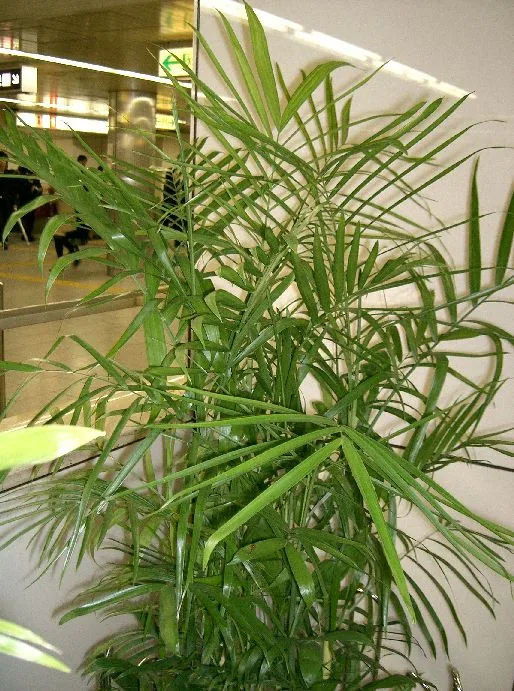


How to Grow and Care for Bamboo Palm
Chamaedorea seifrizii
Written by Emilio Marruso · last checked
Toxic to: People · Why
At a glance
This palm brings a soft tropical touch indoors: it is happy in medium or dappled light and even survives in low light. Keep the potting mix slightly moist and well drained, feed it two to three times a year in spring and summer, and it will spread 3–6 ft wide, a lush green companion that lives for years.
- Sun
Medium or dappled light; it even survives in low light
What the sources say (2)
Light: Medium light; dappled sunlight; survives in low light
Prefers medium light, slightly moist potting mix and medium relative humidity. This plant will survive in low light conditions.
— Chamaedorea seifrizii (Bamboo Palm, Parlor Palm, Reed Palm) | North Carolina Extension Gardener Plant Toolbox [1] Light: Dappled Sunlight (Shade through upper canopy all day)
— Chamaedorea seifrizii (Bamboo Palm, Parlor Palm, Reed Palm) | North Carolina Extension Gardener Plant Toolbox [1] - Water
Keep the potting mix slightly moist; too much water rots roots and stems
What the sources say (3)
Watering: Slightly moist potting mix
Prefers medium light, slightly moist potting mix and medium relative humidity. This plant will survive in low light conditions.
— Chamaedorea seifrizii (Bamboo Palm, Parlor Palm, Reed Palm) | North Carolina Extension Gardener Plant Toolbox [1] Watering notes: The potting medium must be well-drained; overwatering can cause root rot and stem rot
The potting medium must be well-drained. This plant has pest problems.
— Chamaedorea seifrizii (Bamboo Palm, Parlor Palm, Reed Palm) | North Carolina Extension Gardener Plant Toolbox [1] Insects, Diseases, and Other Plant Problems: Overwatering can cause root rot and stem rot. Monitor for mealy bugs, scale, and spider mites when grown indoors.
— Chamaedorea seifrizii (Bamboo Palm, Parlor Palm, Reed Palm) | North Carolina Extension Gardener Plant Toolbox [1] - Cold
Survives winters down to 30 °F (−1.1 °C)
Half hardy: mild winters or an unheated greenhouse · USDA 10a · RHS H3 · Z10
What the sources say (2)
Hardiness, coldest zone: 10a [winter low −1.1 to 1.7 °C (30 to 35 °F)]
Available Space To Plant: 3 feet-6 feet 6-feet-12 feet USDA Plant Hardiness Zone: 10a, 10b, 11a, 11b, 12a, 12b
— Chamaedorea seifrizii (Bamboo Palm, Parlor Palm, Reed Palm) | North Carolina Extension Gardener Plant Toolbox [1] Hardiness, warmest zone: 12b [winter low 12.8 to 15.6 °C (55 to 60 °F)]
Available Space To Plant: 3 feet-6 feet 6-feet-12 feet USDA Plant Hardiness Zone: 10a, 10b, 11a, 11b, 12a, 12b
— Chamaedorea seifrizii (Bamboo Palm, Parlor Palm, Reed Palm) | North Carolina Extension Gardener Plant Toolbox [1] - Soil
Use a well-drained potting mix
What the sources say (2)
Watering notes: The potting medium must be well-drained; overwatering can cause root rot and stem rot
The potting medium must be well-drained. This plant has pest problems.
— Chamaedorea seifrizii (Bamboo Palm, Parlor Palm, Reed Palm) | North Carolina Extension Gardener Plant Toolbox [1] Insects, Diseases, and Other Plant Problems: Overwatering can cause root rot and stem rot. Monitor for mealy bugs, scale, and spider mites when grown indoors.
— Chamaedorea seifrizii (Bamboo Palm, Parlor Palm, Reed Palm) | North Carolina Extension Gardener Plant Toolbox [1] - Feeding
Slow-release palm food 2–3 times a year in spring and summer; too much browns lower leaf tips
What the sources say (4)
When: Spring and summer, while the plant is actively growing
Fertilize only two to three times a year while the plant is actively growing during the spring and summer months. Excessive fertilizer can be harmful to palms.
— Indoor Palms | Home & Garden Information Center [2] How often: Two to three times a year
Fertilize only two to three times a year while the plant is actively growing during the spring and summer months. Excessive fertilizer can be harmful to palms.
— Indoor Palms | Home & Garden Information Center [2] Mineral fertilizers: Slow-release palm fertilizer with an analysis such as 12-4-12 or 8-2-12, containing micronutrients
Fertilize with a slow-release palm fertilizer with an analysis like 12-4-12 or 8-2-12. It should contain micronutrients, such as iron, manganese, zinc, boron and copper to maintain a healthy plant.
— Indoor Palms | Home & Garden Information Center [2] Signs of excess: Tips of lower leaves turning brown and dying; foliage spotting from excessive iron
Tips of lower leaves may turn brown and die from excessive fertilization. Excessive iron fertilization can cause foliage spotting.
— Indoor Palms | Home & Garden Information Center [2] - Pests
Watch for mealybugs, scale and spider mites; overwatering causes root and stem rot
What the sources say (2)
Pests: mealybugs, scale, spider mites
Insects, Diseases, and Other Plant Problems: Overwatering can cause root rot and stem rot. Monitor for mealy bugs, scale, and spider mites when grown indoors.
— Chamaedorea seifrizii (Bamboo Palm, Parlor Palm, Reed Palm) | North Carolina Extension Gardener Plant Toolbox [1] Diseases: root rot, stem rot
Insects, Diseases, and Other Plant Problems: Overwatering can cause root rot and stem rot. Monitor for mealy bugs, scale, and spider mites when grown indoors.
— Chamaedorea seifrizii (Bamboo Palm, Parlor Palm, Reed Palm) | North Carolina Extension Gardener Plant Toolbox [1] - Size
Grows 3–6 ft wide
What the sources say (1)
Mature width: 91-183 cm (3-6 ft)
Dimensions: Height: 3 ft. 0 in. - 7 ft. 6 in. Width: 3 ft. 0 in. - 6 ft. 0 in.
— Chamaedorea seifrizii (Bamboo Palm, Parlor Palm, Reed Palm) | North Carolina Extension Gardener Plant Toolbox [1] - Propagation
By division or from seed
What the sources say (1)
Propagation: Division, seed
Recommended Propagation Strategy: Division Seed Country Or Region Of Origin: Belize, Guatemala, Honduras, and Southeast Mexico
— Chamaedorea seifrizii (Bamboo Palm, Parlor Palm, Reed Palm) | North Carolina Extension Gardener Plant Toolbox [1] - Containers
Grows well in pots, indoors too
What the sources say (2)
In containers: Yes
#fronds #houseplant #interiorscape #lacy leaves #fantz #tropical palm #tropical feel #container plant
— Chamaedorea seifrizii (Bamboo Palm, Parlor Palm, Reed Palm) | North Carolina Extension Gardener Plant Toolbox [1] Indoors: Yes
This plant makes an excellent houseplant for low-light areas. This plant is also used in interior landscapes and as a specimen or accent plant.
— Chamaedorea seifrizii (Bamboo Palm, Parlor Palm, Reed Palm) | North Carolina Extension Gardener Plant Toolbox [1] - Safety
The flesh of the fruit can irritate sensitive skin
Overview
Bamboo palm is a clumping palm with cane-like stems that grows up to 7 feet [2.1 m] tall. [1] It prefers medium light and a slightly moist, well-drained potting mix, and will survive in low light. [1] It is used as a houseplant and, in tropical areas, can be grown outside as a hedge, accent or foundation plant. [1]
Bamboo Palm care
Measurements in square brackets are our conversion into the other unit system; the quoted text is unchanged.
How to water Bamboo Palm
Watering
Slightly moist potting mix
What the sources say (1)
Prefers medium light, slightly moist potting mix and medium relative humidity. This plant will survive in low light conditions.Watering notes
The potting medium must be well-drained; overwatering can cause root rot and stem rot
What the sources say (2)
The potting medium must be well-drained. This plant has pest problems.Insects, Diseases, and Other Plant Problems: Overwatering can cause root rot and stem rot. Monitor for mealy bugs, scale, and spider mites when grown indoors.How much light Bamboo Palm needs
Medium light; dappled sunlight; survives in low light
What the sources say (2)
Prefers medium light, slightly moist potting mix and medium relative humidity. This plant will survive in low light conditions.Light:
Dappled Sunlight (Shade through upper canopy all day)How much cold Bamboo Palm can take
Hardiness, coldest zone
10a [winter low −1.1 to 1.7 °C (30 to 35 °F)]
What the sources say (1)
Available Space To Plant:
3 feet-6 feet
6-feet-12 feet
USDA Plant Hardiness Zone:
10a, 10b, 11a, 11b, 12a, 12bHardiness, warmest zone
12b [winter low 12.8 to 15.6 °C (55 to 60 °F)]
What the sources say (1)
Available Space To Plant:
3 feet-6 feet
6-feet-12 feet
USDA Plant Hardiness Zone:
10a, 10b, 11a, 11b, 12a, 12bWhere to grow Bamboo Palm
Indoors
Yes
What the sources say (1)
This plant makes an excellent houseplant for low-light areas. This plant is also used in interior landscapes and as a specimen or accent plant.In containers
Yes
What the sources say (1)
#fronds #houseplant #interiorscape #lacy leaves #fantz #tropical palm #tropical feel #container plantHow to propagate Bamboo Palm
Division, seed
What the sources say (1)
Recommended Propagation Strategy:
Division
Seed
Country Or Region Of Origin:
Belize, Guatemala, Honduras, and Southeast MexicoHow to grow Bamboo Palm
The plant
Life cycle
perennial
What the sources say (1)
Whole Plant Traits:
Plant Type:
Houseplant
Perennial
ShrubFamily
Arecaceae
What the sources say (1)
It is a member of the palm family (Arecaceae) with clustering, narrow stems with prominent nodes like bamboo.Mature height
Mature width
91-183 cm (3-6 ft)
What the sources say (1)
Dimensions:
Height: 3 ft. 0 in. - 7 ft. 6 in.
Width: 3 ft. 0 in. - 6 ft. 0 in.Pests and diseases
Pests
mealybugs, scale, spider mites
What the sources say (1)
Insects, Diseases, and Other Plant Problems: Overwatering can cause root rot and stem rot. Monitor for mealy bugs, scale, and spider mites when grown indoors.Diseases
root rot, stem rot
What the sources say (1)
Insects, Diseases, and Other Plant Problems: Overwatering can cause root rot and stem rot. Monitor for mealy bugs, scale, and spider mites when grown indoors.Fertilizing
When
Spring and summer, while the plant is actively growing
What the sources say (1)
Fertilize only two to three times a year while the plant is actively growing during the spring and summer months. Excessive fertilizer can be harmful to palms.How often
Two to three times a year
What the sources say (1)
Fertilize only two to three times a year while the plant is actively growing during the spring and summer months. Excessive fertilizer can be harmful to palms.Mineral fertilizers
Slow-release palm fertilizer with an analysis such as 12-4-12 or 8-2-12, containing micronutrients
What the sources say (1)
Fertilize with a slow-release palm fertilizer with an analysis like 12-4-12 or 8-2-12. It should contain micronutrients, such as iron, manganese, zinc, boron and copper to maintain a healthy plant.Micronutrients
Iron, manganese, zinc, boron and copper, supplied in the palm fertilizer
What the sources say (1)
Fertilize with a slow-release palm fertilizer with an analysis like 12-4-12 or 8-2-12. It should contain micronutrients, such as iron, manganese, zinc, boron and copper to maintain a healthy plant.Avoid
Excessive fertilizer
What the sources say (1)
Fertilize only two to three times a year while the plant is actively growing during the spring and summer months. Excessive fertilizer can be harmful to palms.Signs of excess
Tips of lower leaves turning brown and dying; foliage spotting from excessive iron
What the sources say (1)
Tips of lower leaves may turn brown and die from excessive fertilization. Excessive iron fertilization can cause foliage spotting.Bamboo Palm pests and problems
Root and stem rot
Symptom: Overwatering causes root rot and stem rot
What to do: Avoid overwatering; use a well-drained potting medium
What the sources say (1)
Overwatering can cause root rot and stem rot. Monitor for mealy bugs, scale, and spider mites when grown indoors.
— Chamaedorea seifrizii (Bamboo Palm, Parlor Palm, Reed Palm) | North Carolina Extension Gardener Plant Toolbox [1] Indoor pests
Symptom: Mealy bugs, scale and spider mites when grown indoors
What to do: Monitor the plant
What the sources say (1)
Monitor for mealy bugs, scale, and spider mites when grown indoors.
— Chamaedorea seifrizii (Bamboo Palm, Parlor Palm, Reed Palm) | North Carolina Extension Gardener Plant Toolbox [1]
Remedies
Each remedy shows what official sources say about it; traditional remedies without an official source are marked as such. Harmful ones are listed so you know to avoid them.
Treating the plant
spider mites
soap solution leaf cleaning Not proven
They do not come with precise instructions on how to use; they may not be effective; they have the potential to harm humans, pets, and plants; and their use can violate federal law.
— extension.psu.edu [5] Most dish soaps are not naturally occurring substances nor are they biodegradable. They can contain detergents and degreasers that are harmful to groundwater and aquatic and soil organisms.
— ucanr.edu [6] How: regularly clean the green leaves with a soapy water solution
Regularly cleaning the green leaves with a soapy water solution will help reduce their attack from spider mites and mealybugs.
— plantcaretoday.com [3] What the evidence says Despite being made of common household materials like dish soap and vinegar and having seemingly fewer risks, these concoctions may have unforeseen consequences and cannot be relied upon to have the same effectiveness as a registered pesticide.
— extension.unh.edu [4] raising humidity with humidifier, pebble tray and misting Not verified
Traditional remedy, not verified by an official source.
How: keep humidity levels fairly high with a humidifier and/or pebble tray and mist the plants daily
mealybugs
neem oil solution Partly works
Despite these being biological pesticides, it is important to read the directions on the label and wear safety equipment.
— extension.illinois.edu [7] How: clean the area around the plant first; apply with a clean cloth or sponge soaked in the solution, wiping all the leaves, and use cotton swabs in cracks and crevices
If your plants are bothered by these pests, try eradicating them with a Neem oil or insecticidal soap solution.
— plantcaretoday.com [3] What the evidence says However, neem oil is not effective against every insect and disease, and often must be frequently reapplied to reach the desired outcome.
— extension.unh.edu [4] wiping leaves with a damp cloth Works
How: misting and cleaning with a damp cloth
Red spider mites and mealybugs are potential insects that can cause problems. Misting and cleaning with a damp cloth can prevent or remove these from the plant.
— plants.ces.ncsu.edu [8] What the evidence says Red spider mites and mealybugs are potential insects that can cause problems. Misting and cleaning with a damp cloth can prevent or remove these from the plant.
— plants.ces.ncsu.edu [8] shower with a strong stream of water Not verified
Traditional remedy, not verified by an official source.
How: give the plant a shower with a fairly strong stream of water to wash off any remaining pests
Is Bamboo Palm poisonous?
Reported by the source, quoted verbatim. This is not medical or veterinary advice: if a person or an animal may have eaten this plant, contact a poison control centre or a veterinarian.
Poisonous to Humans: Poison Severity: Low Poison Symptoms: The fruit's flesh is irritating to the skin if handled by sensitive people. Poison Toxic Principle: Oxalic acid Causes Contact Dermatitis: Yes Poison Part: Fruits
[1]- Poisonous parts
Poison Toxic Principle: Oxalic acid Causes Contact Dermatitis: Yes Poison Part: Fruits
[1]- Toxic principle
Poison Toxic Principle: Oxalic acid Causes Contact Dermatitis: Yes Poison Part: Fruits
[1]- Symptoms
Fruit Description: Round, bluish-black fruits. The flesh is irritating if touched
[1]- Severity
Poisonous to Humans: Poison Severity: Low Poison Symptoms: The fruit's flesh is irritating to the skin if handled by sensitive people. Poison Toxic Principle: Oxalic acid
[1]
Indicative values
Values from a secondary source, not checked word for word like the rest of this page. Use them as a starting point.
- Hours of sun
- 4-6 hoursIndicative value, adapt it to your climate · Secondary source
- Drought tolerant
- yesIndicative value, adapt it to your climate · Secondary source
- Soil pH
- 5.5-6.5Indicative value, adapt it to your climate · Secondary source
- Care level
- ModerateIndicative value, adapt it to your climate · Secondary source
- Growth rate
- LowIndicative value, adapt it to your climate · Secondary source
- Pruning
- May, June, JulyIndicative value, adapt it to your climate · Secondary source
Similar plants
- Parlor Palm Chamaedorea elegans
- Areca Palm Chrysalidocarpus lutescens
- California fan palm Washingtonia filifera
- Christmas Palm Adonidia merrillii
- Cyrtostachys renda Cyrtostachys renda
- Dwarf Date Palm Phoenix acaulis
- Kentia Palm Howea forsteriana
- Majesty Palm Ravenea rivularis
Sources
Every value above is quoted from these documents. Links lead to the original publisher.
- Chamaedorea seifrizii (Bamboo Palm, Parlor Palm, Reed Palm) | North Carolina Extension Gardener Plant Toolbox · plants.ces.ncsu.edu, consulted
- Indoor Palms | Home & Garden Information Center · hgic.clemson.edu, consulted
- plantcaretoday.com · plantcaretoday.com
- extension.unh.edu · extension.unh.edu
- extension.psu.edu · extension.psu.edu
- ucanr.edu · ucanr.edu
- extension.illinois.edu · extension.illinois.edu
- plants.ces.ncsu.edu · plants.ces.ncsu.edu
Written by Emilio Marruso · last checked