
Cómo cultivar y cuidar Palmera centinela
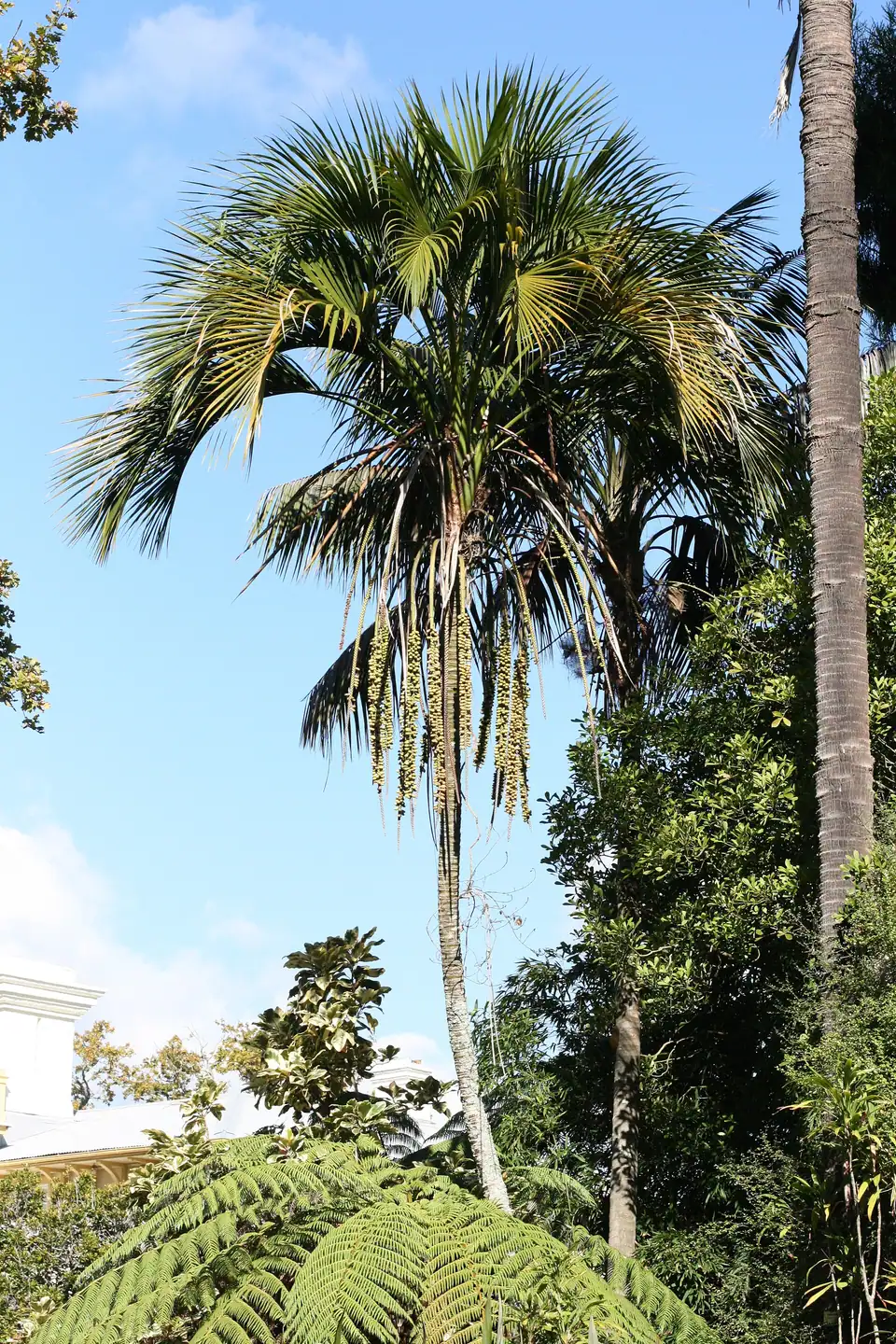
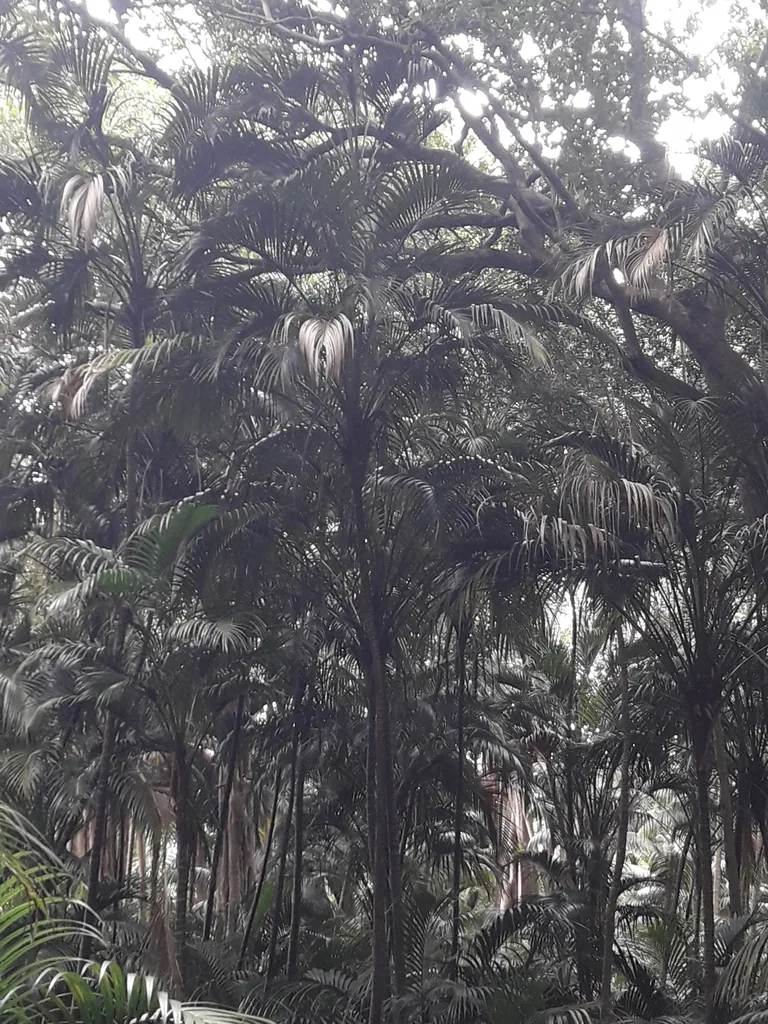
Howea belmoreana
Escrito por Emilio Marruso · última revisión
No tóxica para gatos y perros, según las fuentes · Fuentes
De un vistazo
Esta elegante palmera se siente a gusto en interior, donde puede alcanzar 3 m de alto. Dale luz intensa pero indirecta, deja que la tierra se seque entre riegos, usa agua sin cloro y apártala de las corrientes de aire frío. No es tóxica para gatos, perros ni caballos, así que es una compañera verde y tranquila para toda la familia.
- Sol
Luz intensa pero indirecta; el sol directo puede dañar las hojas
Qué dicen las fuentes (1)
Luz: Luz brillante e indirecta
It grows at its best with bright, indirect lighting. Too much light can cause the plant to yellow.
— Howea belmoreana (Belmore Sentry Palm, Curly Palm, Kentia Palm, Paradise Palm, Sentry Palm) | North Carolina Extension Gardener Plant Toolbox [1] - Riego
Deja que se seque entre riegos; usa solo agua sin cloro
Qué dicen las fuentes (2)
Riego: Deja que la planta se seque entre riegos
Allow the plant to dry out between watering and use only chlorine-free water, as it is sensitive to chlorine.
— Howea belmoreana (Belmore Sentry Palm, Curly Palm, Kentia Palm, Paradise Palm, Sentry Palm) | North Carolina Extension Gardener Plant Toolbox [1] Notas sobre el riego: Usa solo agua sin cloro, ya que la planta es sensible al cloro; una mezcla para macetas empapada puede causar pudrición de raíces.
Allow the plant to dry out between watering and use only chlorine-free water, as it is sensitive to chlorine.
— Howea belmoreana (Belmore Sentry Palm, Curly Palm, Kentia Palm, Paradise Palm, Sentry Palm) | North Carolina Extension Gardener Plant Toolbox [1] - Frío
Por debajo de -2 °C las hojas se queman; apártala de las corrientes de aire frío
- Suelo
Sustrato que drene rápido, pH 6,0–8,0
Qué dicen las fuentes (2)
pH del suelo, mínimo: 6.0
Soil pH: Neutral (6.0-8.0)
— Howea belmoreana (Belmore Sentry Palm, Curly Palm, Kentia Palm, Paradise Palm, Sentry Palm) | North Carolina Extension Gardener Plant Toolbox [1] pH del suelo, máximo: 8.0
Soil pH: Neutral (6.0-8.0)
— Howea belmoreana (Belmore Sentry Palm, Curly Palm, Kentia Palm, Paradise Palm, Sentry Palm) | North Carolina Extension Gardener Plant Toolbox [1] - Plagas
Cochinilla algodonosa, cochinilla y araña roja; el sustrato encharcado pudre las raíces
Qué dicen las fuentes (4)
Plagas: cochinillas harinosas, cochinillas, arañitas rojas
Monitor for mealy bugs, scale, and spider mites when grown indoors.
— Howea belmoreana (Belmore Sentry Palm, Curly Palm, Kentia Palm, Paradise Palm, Sentry Palm) | North Carolina Extension Gardener Plant Toolbox [1] Enfermedades: pudrición de la raíz, mancha foliar
Root rot can occur when the potting mix is allowed to remain soggy.
— Howea belmoreana (Belmore Sentry Palm, Curly Palm, Kentia Palm, Paradise Palm, Sentry Palm) | North Carolina Extension Gardener Plant Toolbox [1] Other issues include brown leaf tips, which are caused by dry air or under watering. Leaf spot can occur when overwatering and with a sudden temperature change.
— Howea belmoreana (Belmore Sentry Palm, Curly Palm, Kentia Palm, Paradise Palm, Sentry Palm) | North Carolina Extension Gardener Plant Toolbox [1] Notas sobre el riego: Usa solo agua sin cloro, ya que la planta es sensible al cloro; una mezcla para macetas empapada puede causar pudrición de raíces.
Allow the plant to dry out between watering and use only chlorine-free water, as it is sensitive to chlorine.
— Howea belmoreana (Belmore Sentry Palm, Curly Palm, Kentia Palm, Paradise Palm, Sentry Palm) | North Carolina Extension Gardener Plant Toolbox [1] - Atención
Las puntas marrones en las hojas indican aire seco o falta de riego
- Tamaño
Hasta 3 m de alto en interior, 12 m en la naturaleza
Qué dicen las fuentes (1)
Altura adulta: 304.8 cm (10 pies) cuando se cultiva en interiores; 1219.2 (40 pies) en la naturaleza
When grown indoors, a height of 10 feet can be expected after many years, while in the wild heights can reach 40 feet.
— Howea belmoreana (Belmore Sentry Palm, Curly Palm, Kentia Palm, Paradise Palm, Sentry Palm) | North Carolina Extension Gardener Plant Toolbox [1] - Multiplicación
Se multiplica por semilla
Qué dicen las fuentes (1)
Propagación: Semilla
It must be propagated from seed.
— Howea belmoreana (Belmore Sentry Palm, Curly Palm, Kentia Palm, Paradise Palm, Sentry Palm) | North Carolina Extension Gardener Plant Toolbox [1] - Maceta
Crece bien en maceta y en interior
Qué dicen las fuentes (2)
En maceta: Sí
Landscape Location: Container
— Howea belmoreana (Belmore Sentry Palm, Curly Palm, Kentia Palm, Paradise Palm, Sentry Palm) | North Carolina Extension Gardener Plant Toolbox [1] En interior: Sí
This palm is suitable as a houseplant or greenhouse subject.
— Howea belmoreana (Belmore Sentry Palm, Curly Palm, Kentia Palm, Paradise Palm, Sentry Palm) | North Carolina Extension Gardener Plant Toolbox [1] - Seguridad
No es tóxica para gatos, perros ni caballos
Resumen
La palma centinela de Belmore es una palma de crecimiento lento, de un solo tronco, originaria de la Isla Lord Howe, que es adecuada como planta de interior. [1] Crece mejor con luz brillante e indirecta y se debe dejar secar entre riegos. [1]
Citado en inglés, como en la fuente.
Cuidados
Riego
Riego
Deja que la planta se seque entre riegos
Qué dicen las fuentes (1)
Allow the plant to dry out between watering and use only chlorine-free water, as it is sensitive to chlorine.Notas sobre el riego
Usa solo agua sin cloro, ya que la planta es sensible al cloro; una mezcla para macetas empapada puede causar pudrición de raíces.
Qué dicen las fuentes (1)
Allow the plant to dry out between watering and use only chlorine-free water, as it is sensitive to chlorine.Luz
Luz brillante e indirecta
Qué dicen las fuentes (1)
It grows at its best with bright, indirect lighting. Too much light can cause the plant to yellow.Suelo
pH del suelo, mínimo
6.0
Qué dicen las fuentes (1)
Soil pH:
Neutral (6.0-8.0)pH del suelo, máximo
8.0
Qué dicen las fuentes (1)
Soil pH:
Neutral (6.0-8.0)Dónde cultivarla
En interior
Sí
Qué dicen las fuentes (1)
This palm is suitable as a houseplant or greenhouse subject.En maceta
Sí
Qué dicen las fuentes (1)
Landscape Location:
ContainerPropagación
Semilla
Qué dicen las fuentes (1)
It must be propagated from seed.Cultivo
La planta
Ciclo de vida
perenne
Qué dicen las fuentes (1)
Belmore sentry palm is a single-stemmed, pinnate-leaved, evergreen perennial native to Lord Howe Island, Australia. It is a member of the palm family (Arecaceae).Familia
Arecaceae
Qué dicen las fuentes (1)
Belmore sentry palm is a single-stemmed, pinnate-leaved, evergreen perennial native to Lord Howe Island, Australia. It is a member of the palm family (Arecaceae).Altura adulta
304.8 cm (10 pies) cuando se cultiva en interiores; 1219.2 (40 pies) en la naturaleza
Qué dicen las fuentes (1)
When grown indoors, a height of 10 feet can be expected after many years, while in the wild heights can reach 40 feet.Plagas y enfermedades
Plagas
cochinillas harinosas, cochinillas, arañitas rojas
Qué dicen las fuentes (1)
Monitor for mealy bugs, scale, and spider mites when grown indoors.Enfermedades
pudrición de la raíz, mancha foliar
Qué dicen las fuentes (2)
Root rot can occur when the potting mix is allowed to remain soggy.Other issues include brown leaf tips, which are caused by dry air or under watering. Leaf spot can occur when overwatering and with a sudden temperature change.Problemas
Pudrición de raíces y manchas en las hojas
Síntoma: La pudrición de la raíz ocurre cuando la mezcla para macetas permanece empapada; la mancha foliar ocurre con riego excesivo y cambios bruscos de temperatura; las puntas de las hojas marrones provienen de aire seco o riego insuficiente.
Qué hacer: Proporciona una mezcla para macetas de drenaje rápido; vigila la presencia de cochinillas harinosas, cochinillas y arañitas rojas cuando se cultiva en interiores.
Qué dicen las fuentes (1)
Root rot can occur when the potting mix is allowed to remain soggy.
— Howea belmoreana (Belmore Sentry Palm, Curly Palm, Kentia Palm, Paradise Palm, Sentry Palm) | North Carolina Extension Gardener Plant Toolbox [1] Daño por frío y luz
Síntoma: Temperaturas por debajo de 28 grados F pueden causar quemaduras en las hojas; el pleno sol puede dañar el follaje; las corrientes de aire frío pueden causar la caída de las hojas.
Qué hacer: Mantén la planta fuera de corrientes frías y del pleno sol.
Qué dicen las fuentes (1)
Temperatures below 28 degrees F can cause leaf burn. Full sun can damage the foliage.
— Howea belmoreana (Belmore Sentry Palm, Curly Palm, Kentia Palm, Paradise Palm, Sentry Palm) | North Carolina Extension Gardener Plant Toolbox [1]
Remedios
Las fuentes consultadas no dan remedios para esta planta.
Toxicidad
Según la fuente, citada textualmente. No es un consejo médico ni veterinario: si una persona o un animal pudo haber ingerido esta planta, contacta con un centro de toxicología o con un veterinario.
Plantas similares
- Kentia Howea forsteriana
- Areca Palm Chrysalidocarpus lutescens
- Bamboo Palm Chamaedorea seifrizii
- Bismark Palm Bismarckia nobilis
- California fan palm Washingtonia filifera
- Palma fénix Phoenix canariensis
- Palma de navidad Adonidia merrillii
- Palma roja Cyrtostachys renda
Fuentes
Cada valor anterior se cita de estos documentos. Los enlaces llevan al editor original.
- Howea belmoreana (Belmore Sentry Palm, Curly Palm, Kentia Palm, Paradise Palm, Sentry Palm) | North Carolina Extension Gardener Plant Toolbox · plants.ces.ncsu.edu, consultado
- Paradise Palm - Howea belmoreana | North Carolina Extension Gardener Plant Toolbox · plants.ces.ncsu.edu, consultado
- Sentry Palm - Howea belmoreana | North Carolina Extension Gardener Plant Toolbox · plants.ces.ncsu.edu, consultado
Escrito por Emilio Marruso · última revisión