
Cómo cultivar y cuidar Palma fénix
Phoenix canariensis
Escrito por Emilio Marruso · última revisión
No tóxica para gatos y perros, según las fuentes · Fuentes
De un vistazo
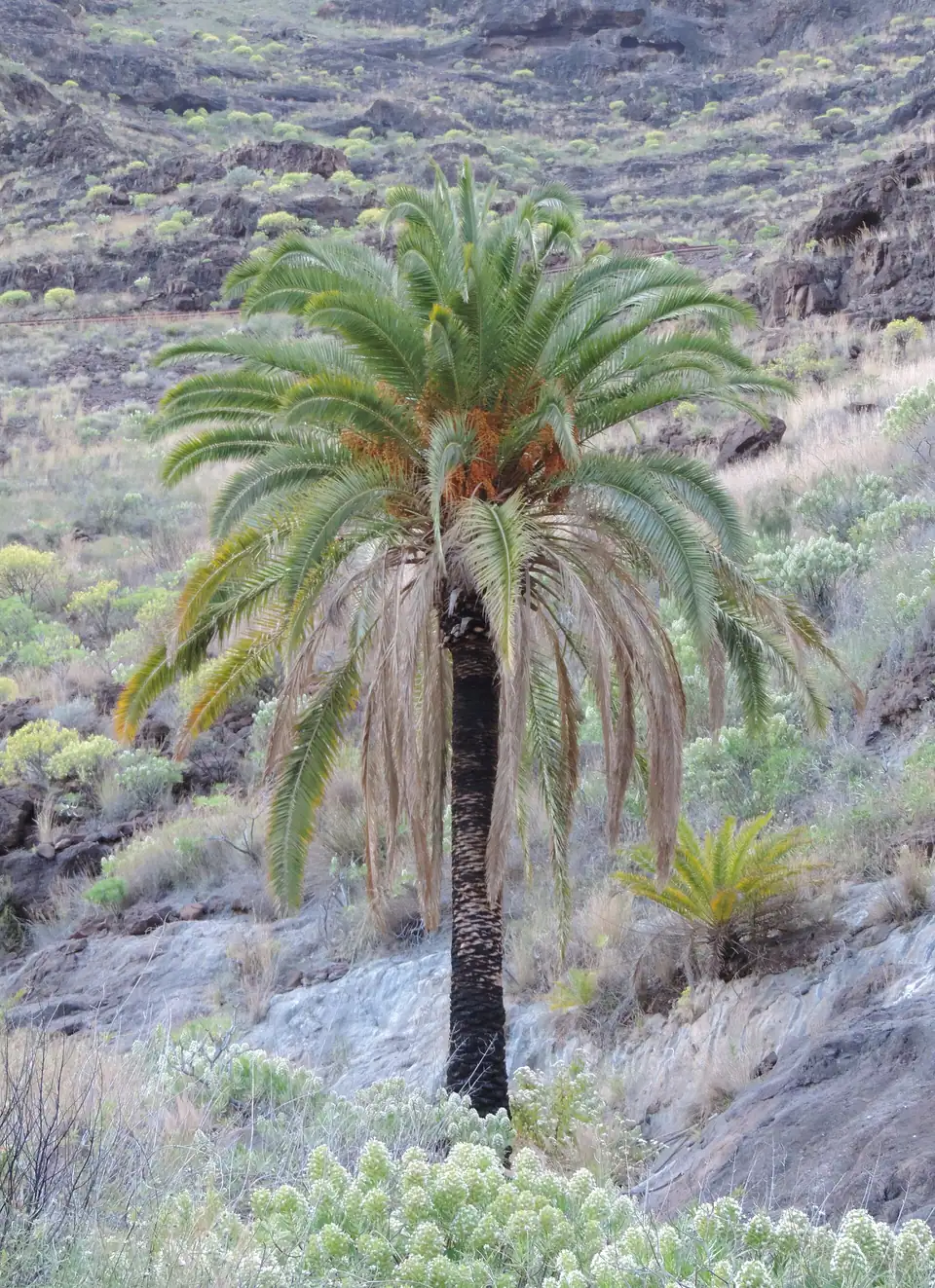
La palmera canaria trae un aire tropical: puede alcanzar 12–18 m de alto y abrirse 6–12 m de ancho. Dale sol pleno con algo de sombra por la tarde y un suelo bien drenado, y una vez asentada aguantará la sequía sin problemas. También crece en maceta y en interior, y no es tóxica para gatos, perros ni caballos.
- Sol
Sol pleno, con sombra por la tarde
Qué dicen las fuentes (1)
Luz: Pleno sol con semisombra
This plant prefers full sun with afternoon shade and moist, well-drained, rich loam soil or potting mix with a slightly acidic to neutral pH.
— Phoenix canariensis (Canary Date Palm, Canary Island Date Palm) | North Carolina Extension Gardener Plant Toolbox [1] - Riego
Aguanta la sequía una vez asentada; el exceso de riego ennegrece las puntas y la falta hace caer las hojas
Qué dicen las fuentes (2)
Riego: Tolerante a la sequía una vez establecida; suelo húmedo y bien drenado
This plant prefers full sun with afternoon shade and moist, well-drained, rich loam soil or potting mix with a slightly acidic to neutral pH. Once established it is drought tolerant.
— Phoenix canariensis (Canary Date Palm, Canary Island Date Palm) | North Carolina Extension Gardener Plant Toolbox [1] Notas sobre el riego: El exceso de riego ennegrece las puntas de las hojas; la falta de riego hace que las hojas se caigan
If the plant is overwatered, the leaf tips will blacken. If underwatered, the plant's leaves will droop.
— Phoenix canariensis (Canary Date Palm, Canary Island Date Palm) | North Carolina Extension Gardener Plant Toolbox [1] - Frío
Aguanta inviernos de hasta −6,7 °C (20 °F)
Rústica en inviernos normales · USDA 9 · RHS H4 · Z9
Qué dicen las fuentes (2)
Rusticidad, zona más fría: 9 [mínima invernal de −6,7 a −1,1 °C (de 20 a 30 °F)]
The tree is hardy to USDA Zones 9 to 11. It is intolerant of temperatures below 20 degrees Fahrenheit that can cause damage to the leaves or death of the tree.
— Phoenix canariensis (Canary Date Palm, Canary Island Date Palm) | North Carolina Extension Gardener Plant Toolbox [1] Rusticidad, zona más cálida: 11 [mínima invernal de 4,4 a 10 °C (de 40 a 50 °F)]
The tree is hardy to USDA Zones 9 to 11. It is intolerant of temperatures below 20 degrees Fahrenheit that can cause damage to the leaves or death of the tree.
— Phoenix canariensis (Canary Date Palm, Canary Island Date Palm) | North Carolina Extension Gardener Plant Toolbox [1] - Suelo
Suelo húmedo y bien drenado
Qué dicen las fuentes (1)
Riego: Tolerante a la sequía una vez establecida; suelo húmedo y bien drenado
This plant prefers full sun with afternoon shade and moist, well-drained, rich loam soil or potting mix with a slightly acidic to neutral pH. Once established it is drought tolerant.
— Phoenix canariensis (Canary Date Palm, Canary Island Date Palm) | North Carolina Extension Gardener Plant Toolbox [1] - Cosecha
Los frutos son comestibles, pero no tienen un sabor agradable
- Plagas
Cochinillas algodonosas, cochinillas, trips y araña roja; manchas foliares, podredumbres y amarilleo letal
Qué dicen las fuentes (2)
Plagas: cochinillas harinosas, cochinillas, trips, arañitas rojas
Monitor for mealybugs, scale, and thrips. Spider mites are problematic for container plants.
— Phoenix canariensis (Canary Date Palm, Canary Island Date Palm) | North Carolina Extension Gardener Plant Toolbox [1] Enfermedades: mancha foliar, pudriciones, amarillamiento letal
Leaf spot, rots, and lethal yellowing can occur.
— Phoenix canariensis (Canary Date Palm, Canary Island Date Palm) | North Carolina Extension Gardener Plant Toolbox [1] - Tamaño
De 12 a 18 m de alto y de 6 a 12 m de ancho
Qué dicen las fuentes (2)
Altura adulta: 1219-1829 cm (40 a 60 pies)
Dimensions: Height: 40 ft. 0 in. - 60 ft. 0 in. Width: 20 ft. 0 in. - 40 ft. 0 in.
— Phoenix canariensis (Canary Date Palm, Canary Island Date Palm) | North Carolina Extension Gardener Plant Toolbox [1] Anchura adulta: 610-1219 cm (20 a 40 pies)
Dimensions: Height: 40 ft. 0 in. - 60 ft. 0 in. Width: 20 ft. 0 in. - 40 ft. 0 in.
— Phoenix canariensis (Canary Date Palm, Canary Island Date Palm) | North Carolina Extension Gardener Plant Toolbox [1] - Multiplicación
Se multiplica por semilla
Qué dicen las fuentes (1)
Propagación: Semilla
The plant will naturalize where conditions are appropriate and is considered weedy in some areas of California and Australis. It is propagated by seed.
— Phoenix canariensis (Canary Date Palm, Canary Island Date Palm) | North Carolina Extension Gardener Plant Toolbox [1] - Maceta
Crece también en maceta y en interior
Qué dicen las fuentes (2)
En maceta: Sí
In colder climates, it is an excellent houseplant or container plant.
— Phoenix canariensis (Canary Date Palm, Canary Island Date Palm) | North Carolina Extension Gardener Plant Toolbox [1] En interior: Sí
In colder climates, it is an excellent houseplant or container plant.
— Phoenix canariensis (Canary Date Palm, Canary Island Date Palm) | North Carolina Extension Gardener Plant Toolbox [1] - Seguridad
No es tóxica para gatos, perros ni caballos
Resumen
La palmera datilera de las Islas Canarias es una palmera perenne de crecimiento lento originaria de las Islas Canarias, utilizada como árbol de calle, acento o espécimen. [1] Prefiere pleno sol con semisombra por la tarde y es tolerante a la sequía una vez establecida. [1] En climas más fríos se puede cultivar como planta de interior o de contenedor, donde permanece más compacta. [1]
Citado en inglés, como en la fuente.
Esta ficha está incompleta: las fuentes consultadas aún no cubren todos los campos.
Aún no cubierto por nuestras fuentes: Poda
Cuidados
Riego
Riego
Tolerante a la sequía una vez establecida; suelo húmedo y bien drenado
Qué dicen las fuentes (1)
This plant prefers full sun with afternoon shade and moist, well-drained, rich loam soil or potting mix with a slightly acidic to neutral pH. Once established it is drought tolerant.Notas sobre el riego
El exceso de riego ennegrece las puntas de las hojas; la falta de riego hace que las hojas se caigan
Qué dicen las fuentes (1)
If the plant is overwatered, the leaf tips will blacken. If underwatered, the plant's leaves will droop.Luz
Pleno sol con semisombra
Qué dicen las fuentes (1)
This plant prefers full sun with afternoon shade and moist, well-drained, rich loam soil or potting mix with a slightly acidic to neutral pH.Clima y frío
Rusticidad, zona más fría
9 [mínima invernal de −6,7 a −1,1 °C (de 20 a 30 °F)]
Qué dicen las fuentes (1)
The tree is hardy to USDA Zones 9 to 11. It is intolerant of temperatures below 20 degrees Fahrenheit that can cause damage to the leaves or death of the tree.Rusticidad, zona más cálida
11 [mínima invernal de 4,4 a 10 °C (de 40 a 50 °F)]
Qué dicen las fuentes (1)
The tree is hardy to USDA Zones 9 to 11. It is intolerant of temperatures below 20 degrees Fahrenheit that can cause damage to the leaves or death of the tree.Dónde cultivarla
En interior
Sí
Qué dicen las fuentes (1)
In colder climates, it is an excellent houseplant or container plant.En maceta
Sí
Qué dicen las fuentes (1)
In colder climates, it is an excellent houseplant or container plant.Propagación
Semilla
Qué dicen las fuentes (1)
The plant will naturalize where conditions are appropriate and is considered weedy in some areas of California and Australis. It is propagated by seed.Cultivo
La planta
Ciclo de vida
perenne
Qué dicen las fuentes (1)
Whole Plant Traits: Plant Type: Edible Houseplant Perennial Tree Woody Plant Leaf Characteristics: Broadleaf EvergreenFamilia
Arecaceae
Qué dicen las fuentes (1)
The Canary Island Date Palm is a slow-growing, evergreen tree in the palm family (Arecaceae) that is native to the Canary Islands.Altura adulta
1219-1829 cm (40 a 60 pies)
Qué dicen las fuentes (1)
Dimensions: Height: 40 ft. 0 in. - 60 ft. 0 in. Width: 20 ft. 0 in. - 40 ft. 0 in.Anchura adulta
610-1219 cm (20 a 40 pies)
Qué dicen las fuentes (1)
Dimensions: Height: 40 ft. 0 in. - 60 ft. 0 in. Width: 20 ft. 0 in. - 40 ft. 0 in.Plagas y enfermedades
Plagas
cochinillas harinosas, cochinillas, trips, arañitas rojas
Qué dicen las fuentes (1)
Monitor for mealybugs, scale, and thrips. Spider mites are problematic for container plants.Enfermedades
mancha foliar, pudriciones, amarillamiento letal
Qué dicen las fuentes (1)
Leaf spot, rots, and lethal yellowing can occur.Problemas
Puntas de hojas ennegrecidas o hojas caídas
Síntoma: Las puntas de las hojas se ennegrecen por exceso de riego; las hojas se caen por falta de riego
Qué hacer: Ajusta el riego
Qué dicen las fuentes (1)
If the plant is overwatered, the leaf tips will blacken. If underwatered, the plant's leaves will droop.
— Phoenix canariensis (Canary Date Palm, Canary Island Date Palm) | North Carolina Extension Gardener Plant Toolbox [1] Plagas de insectos y enfermedades
Síntoma: Cochinillas harinosas, cochinillas y trips; arañitas rojas en plantas de contenedor; mancha foliar, pudriciones y amarillamiento letal
Qué hacer: Vigila si hay plagas
Qué dicen las fuentes (1)
Monitor for mealybugs, scale, and thrips. Spider mites are problematic for container plants. Leaf spot, rots, and lethal yellowing can occur.
— Phoenix canariensis (Canary Date Palm, Canary Island Date Palm) | North Carolina Extension Gardener Plant Toolbox [1]
Remedios
Cada remedio indica qué dicen las fuentes oficiales; los remedios tradicionales sin fuente oficial aparecen marcados. Los perjudiciales están para que sepas evitarlos.
Cuidar la planta
cochinillas harinosas
Limpieza manual No verificado
Remedio tradicional, no verificado por una fuente oficial.
Cómo: Control físico (limpieza manual) de las hojas
ácaros araña
spray de aceite de neem Funciona
Cómo: Trata la planta con aceite de neem según lo recomendado por los fabricantes.
Treat it with neem oil or an insecticidal soap as recommended by the manufacturers.
— homeplantsguide.com [2] Qué dicen las pruebas Neem oil is found in the seeds of the neem tree. The active component found in this biological pesticide reduces insect feeding
— extension.illinois.edu [3] jabón insecticida Funciona
Cómo: Trata la planta con jabón insecticida según lo recomendado por los fabricantes.
Treat it with neem oil or an insecticidal soap as recommended by the manufacturers.
— homeplantsguide.com [2] Qué dicen las pruebas For example, insecticidal soap is a safe, effective organic insecticide with minimal environmental impact.
— extension.psu.edu [4]
plagas
chorro fuerte de agua sobre las hojas No verificado
Remedio tradicional, no verificado por una fuente oficial.
Cómo: Limpia ocasionalmente las hojas maduras rociándolas con un chorro fuerte de agua corriente para eliminar el polvo y desalentar las infestaciones de plagas
acumulación de sales
Enjuaga el suelo con agua. Funciona
Cómo: Enjuaga regularmente el suelo: haz pasar un chorro de agua a través del suelo hasta que el agua salga por el agujero de drenaje.
To prevent salts build up which is indicated by leaf burn and brown spots, regularly flush the soil. Run a stream of water through the soil until water comes out through the drainage hole.
— homeplantsguide.com [2] Qué dicen las pruebas One remedy to high salt levels in your garden bed is to leach the material out of the top layer of soil with repeated soakings of water.
— extension.illinois.edu [5]
Toxicidad
Según la fuente, citada textualmente. No es un consejo médico ni veterinario: si una persona o un animal pudo haber ingerido esta planta, contacta con un centro de toxicología o con un veterinario.
#non-toxic for cats #non-toxic for horses #non-toxic for dogs
[1]La fuente señala el riesgo para este animal pero no explica por qué.
Calendario
Poda
No figura en las fuentes consultadas.
Meses tal como los dan las fuentes, en su mayoría de Estados Unidos (hemisferio norte). En el hemisferio sur se desplazan unos seis meses.
Comestibilidad
Según la fuente, citada textualmente. No comas una planta basándote solo en esta página: los errores de identificación pueden ser peligrosos.
The ornamental fruits are edible, but they do not have a pleasant taste.
[1]
Valores orientativos
Valores de una fuente secundaria, no comprobados palabra por palabra como el resto de esta página. Úselos como punto de partida.
- Resiste la sequía
- SíValor orientativo, adáptalo a tu clima · Fuente secundaria
- pH del suelo
- 6-7.5Valor orientativo, adáptalo a tu clima · Fuente secundaria
- Nivel de cuidado
- AltaValor orientativo, adáptalo a tu clima · Fuente secundaria
- Crecimiento
- AltaValor orientativo, adáptalo a tu clima · Fuente secundaria
- Poda
- marzo, abril, mayoValor orientativo, adáptalo a tu clima · Fuente secundaria
Plantas similares
- Dwarf Date Palm Phoenix acaulis
- Pygmy Date Palm Phoenix roebelenii
- Areca Palm Chrysalidocarpus lutescens
- Bismark Palm Bismarckia nobilis
- California fan palm Washingtonia filifera
- Palma de navidad Adonidia merrillii
- Double coconut Lodoicea maldivica
- Amarilleo letal Caryota mitis
Fuentes
Cada valor anterior se cita de estos documentos. Los enlaces llevan al editor original.
- Phoenix canariensis (Canary Date Palm, Canary Island Date Palm) | North Carolina Extension Gardener Plant Toolbox · plants.ces.ncsu.edu, consultado
- homeplantsguide.com · homeplantsguide.com
- extension.illinois.edu · extension.illinois.edu
- extension.psu.edu · extension.psu.edu
- extension.illinois.edu · extension.illinois.edu
Escrito por Emilio Marruso · última revisión