
Cómo cultivar y cuidar Kentia
Howea forsteriana
Escrito por Emilio Marruso · última revisión
No tóxica para gatos y perros, según las fuentes · Fuentes
De un vistazo
Esta palmera vive feliz en interior y en maceta, con luz filtrada o semisombra. No dejes que el sustrato se seque, abónala solo de vez en cuando y no es tóxica para gatos, perros ni caballos. Además es una planta paciente: puede tardar 15 años en dar sus primeros frutos.
- Sol
Luz filtrada o semisombra
Qué dicen las fuentes (1)
Luz: Luz filtrada a semisombra
Light: Dappled Sunlight (Shade through upper canopy all day) Partial Shade (Direct sunlight only part of the day, 2-6 hours)
— Howea forsteriana (Forster Sentry Palm, Kentia Palm, Paradise Palm, Sentry Palm, Thatch Palm) | North Carolina Extension Gardener Plant Toolbox [1] - Riego
No dejes que el sustrato se seque; aguanta algo de sequía
Qué dicen las fuentes (2)
Riego: La mezcla para macetas no debe secarse.
it should have a well-drained, humus-rich potting mix that does not dry out.
— Howea forsteriana (Forster Sentry Palm, Kentia Palm, Paradise Palm, Sentry Palm, Thatch Palm) | North Carolina Extension Gardener Plant Toolbox [1] Notas sobre el riego: Moderadamente tolerante a la sequía y la salpicadura de sal; mezcla para macetas con buen drenaje
It is also moderately tolerant of salt spray and drought.
— Howea forsteriana (Forster Sentry Palm, Kentia Palm, Paradise Palm, Sentry Palm, Thatch Palm) | North Carolina Extension Gardener Plant Toolbox [1] - Frío
Aguanta inviernos de hasta −3,9 °C (25 °F)
Semirrústica: inviernos suaves o invernadero sin calefacción · USDA 9b · RHS H3 · Z9
Qué dicen las fuentes (2)
Rusticidad, zona más fría: 9b [mínima invernal de −3,9 a −1,1 °C (de 25 a 30 °F)]
Available Space To Plant: 12-24 feet USDA Plant Hardiness Zone: 9b, 10a, 10b, 11a, 11b
— Howea forsteriana (Forster Sentry Palm, Kentia Palm, Paradise Palm, Sentry Palm, Thatch Palm) | North Carolina Extension Gardener Plant Toolbox [1] Rusticidad, zona más cálida: 11b [mínima invernal de 7,2 a 10 °C (de 45 a 50 °F)]
Available Space To Plant: 12-24 feet USDA Plant Hardiness Zone: 9b, 10a, 10b, 11a, 11b
— Howea forsteriana (Forster Sentry Palm, Kentia Palm, Paradise Palm, Sentry Palm, Thatch Palm) | North Carolina Extension Gardener Plant Toolbox [1] - Suelo
Sustrato con buen drenaje
Qué dicen las fuentes (1)
Notas sobre el riego: Moderadamente tolerante a la sequía y la salpicadura de sal; mezcla para macetas con buen drenaje
It is also moderately tolerant of salt spray and drought.
— Howea forsteriana (Forster Sentry Palm, Kentia Palm, Paradise Palm, Sentry Palm, Thatch Palm) | North Carolina Extension Gardener Plant Toolbox [1] - Abonado
Abona poco, con abono para plantas de interior o de liberación lenta; puede faltarle potasio, manganeso y boro
Qué dicen las fuentes (3)
Frecuencia: Con poca frecuencia
Fertilize with houseplant fertilizer infrequently; encapsulated, slow-release fertilizer is ideal.
— Howea forsteriana (Forster Sentry Palm, Kentia Palm, Paradise Palm, Sentry Palm, Thatch Palm) | North Carolina Extension Gardener Plant Toolbox [1] Abonos minerales: Fertilizante para plantas de interior; el fertilizante encapsulado de liberación lenta es ideal
Fertilize with houseplant fertilizer infrequently; encapsulated, slow-release fertilizer is ideal.
— Howea forsteriana (Forster Sentry Palm, Kentia Palm, Paradise Palm, Sentry Palm, Thatch Palm) | North Carolina Extension Gardener Plant Toolbox [1] Microelementos: Manganeso y boro: en esta palmera se producen deficiencias de ambos, además de potasio
Younger leaves can suffer from manganese deficiency, which will manifest as leaflet tip necrosis on the basal leaflets. Boron deficiency can cause stunted or distorted new leaves.
— Howea forsteriana (Forster Sentry Palm, Kentia Palm, Paradise Palm, Sentry Palm, Thatch Palm) | North Carolina Extension Gardener Plant Toolbox [1] - Plagas
Araña roja, cochinilla algodonosa, cochinillas y manchas en las hojas por hongos
Qué dicen las fuentes (2)
Plagas: arañitas rojas, cochinillas harinosas, cochinillas
Fungal leaf spot, as well as spider mites, mealybugs and scale insects are common issues.
— Howea forsteriana (Forster Sentry Palm, Kentia Palm, Paradise Palm, Sentry Palm, Thatch Palm) | North Carolina Extension Gardener Plant Toolbox [1] Enfermedades: mancha foliar fúngica
Fungal leaf spot, as well as spider mites, mealybugs and scale insects are common issues.
— Howea forsteriana (Forster Sentry Palm, Kentia Palm, Paradise Palm, Sentry Palm, Thatch Palm) | North Carolina Extension Gardener Plant Toolbox [1] - Multiplicación
Se multiplica por semilla
Qué dicen las fuentes (1)
Propagación: Semilla
Life Cycle: Perennial Woody Recommended Propagation Strategy: Seed
— Howea forsteriana (Forster Sentry Palm, Kentia Palm, Paradise Palm, Sentry Palm, Thatch Palm) | North Carolina Extension Gardener Plant Toolbox [1] - Maceta
Crece en interior y en maceta
Qué dicen las fuentes (2)
En interior: Sí
Kentia palm is a popular houseplant in temperate climates that requires little light
— Howea forsteriana (Forster Sentry Palm, Kentia Palm, Paradise Palm, Sentry Palm, Thatch Palm) | North Carolina Extension Gardener Plant Toolbox [1] En maceta: Sí
These palms are well suited to containers and have a track record for surviving low light
— Howea forsteriana (Forster Sentry Palm, Kentia Palm, Paradise Palm, Sentry Palm, Thatch Palm) | North Carolina Extension Gardener Plant Toolbox [1] - Seguridad
No es tóxica para gatos, perros ni caballos
Resumen
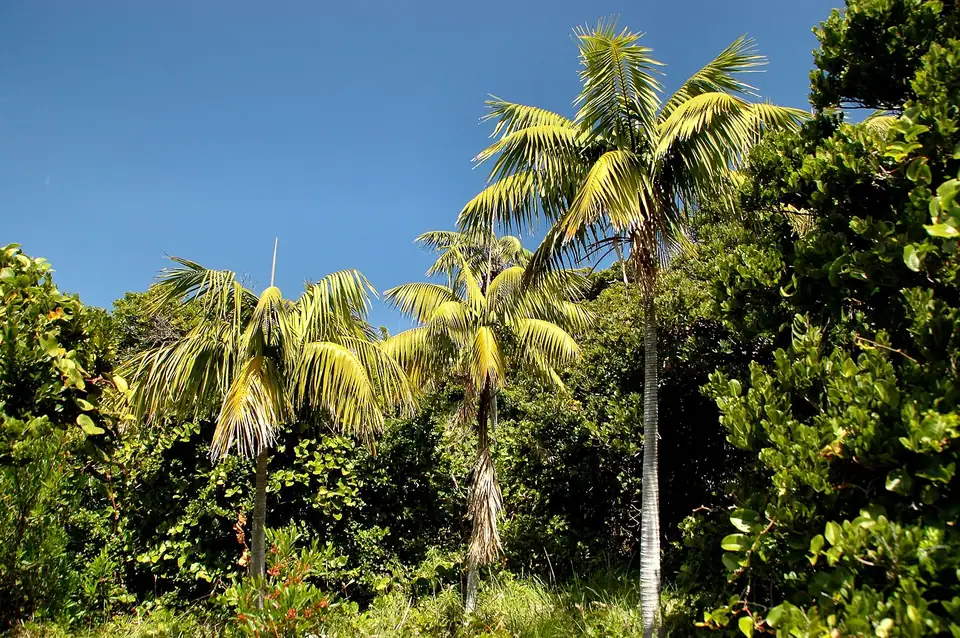
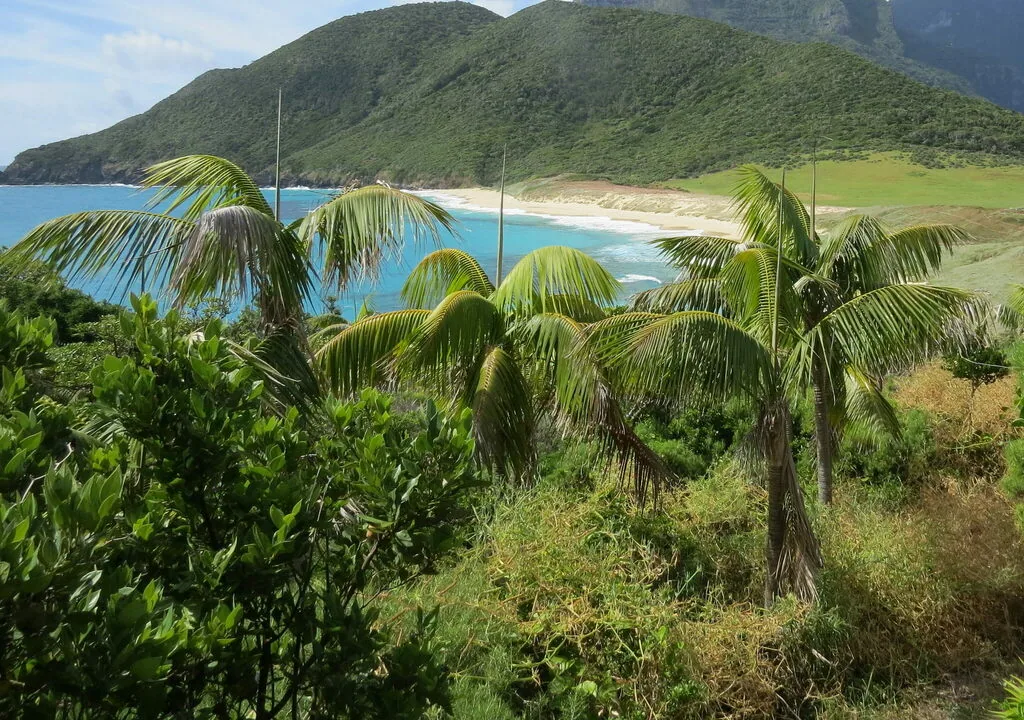
La palma kentia es una palmera perenne de hoja pinnada y tallo único, endémica de la Isla Lord Howe, Australia. [1] Es una planta de interior popular que requiere poca luz y se adapta bien a los contenedores. [1] La página la etiqueta como no tóxica para gatos, caballos y perros. [1]
Citado en inglés, como en la fuente.
Cuidados
Riego
Riego
La mezcla para macetas no debe secarse.
Qué dicen las fuentes (1)
it should have a well-drained, humus-rich potting mix that does not dry out.Notas sobre el riego
Moderadamente tolerante a la sequía y la salpicadura de sal; mezcla para macetas con buen drenaje
Qué dicen las fuentes (1)
It is also moderately tolerant of salt spray and drought.Luz
Luz filtrada a semisombra
Qué dicen las fuentes (1)
Light:
Dappled Sunlight (Shade through upper canopy all day)
Partial Shade (Direct sunlight only part of the day, 2-6 hours)Clima y frío
Rusticidad, zona más fría
9b [mínima invernal de −3,9 a −1,1 °C (de 25 a 30 °F)]
Qué dicen las fuentes (1)
Available Space To Plant:
12-24 feet
USDA Plant Hardiness Zone:
9b, 10a, 10b, 11a, 11bRusticidad, zona más cálida
11b [mínima invernal de 7,2 a 10 °C (de 45 a 50 °F)]
Qué dicen las fuentes (1)
Available Space To Plant:
12-24 feet
USDA Plant Hardiness Zone:
9b, 10a, 10b, 11a, 11bDónde cultivarla
En interior
Sí
Qué dicen las fuentes (1)
Kentia palm is a popular houseplant in temperate climates that requires little lightEn maceta
Sí
Qué dicen las fuentes (1)
These palms are well suited to containers and have a track record for surviving low lightPropagación
Semilla
Qué dicen las fuentes (1)
Life Cycle:
Perennial
Woody
Recommended Propagation Strategy:
SeedCultivo
La planta
Ciclo de vida
perenne
Qué dicen las fuentes (1)
Life Cycle: PerennialFamilia
Arecaceae
Qué dicen las fuentes (1)
Family: ArecaceaeAños hasta el primer fruto
15 años
Qué dicen las fuentes (1)
The oval-shaped fruits will appear when the tree has reached approximately 15 years old.Plagas y enfermedades
Plagas
arañitas rojas, cochinillas harinosas, cochinillas
Qué dicen las fuentes (1)
Fungal leaf spot, as well as spider mites, mealybugs and scale insects are common issues.Enfermedades
mancha foliar fúngica
Qué dicen las fuentes (1)
Fungal leaf spot, as well as spider mites, mealybugs and scale insects are common issues.Abonado
Frecuencia
Con poca frecuencia
Qué dicen las fuentes (1)
Fertilize with houseplant fertilizer infrequently; encapsulated, slow-release fertilizer is ideal.Abonos minerales
Fertilizante para plantas de interior; el fertilizante encapsulado de liberación lenta es ideal
Qué dicen las fuentes (1)
Fertilize with houseplant fertilizer infrequently; encapsulated, slow-release fertilizer is ideal.Microelementos
Manganeso y boro: en esta palmera se producen deficiencias de ambos, además de potasio
Qué dicen las fuentes (1)
Younger leaves can suffer from manganese deficiency, which will manifest as leaflet tip necrosis on the basal leaflets. Boron deficiency can cause stunted or distorted new leaves.Signos de carencia
Potasio: necrosis en las puntas de los folíolos de las hojas viejas. Manganeso: necrosis en las puntas de los folíolos basales de las hojas jóvenes. Boro: hojas nuevas atrofiadas o deformes
Qué dicen las fuentes (2)
The most serious issue for this palm is potassium deficiency. Necrosis (tissue death) can appear on the leaflet at the tips of older leaves.Younger leaves can suffer from manganese deficiency, which will manifest as leaflet tip necrosis on the basal leaflets. Boron deficiency can cause stunted or distorted new leaves.Problemas
Deficiencia de potasio
Síntoma: La necrosis puede aparecer en las puntas de los folíolos de las hojas más viejas.
Qué dicen las fuentes (1)
The most serious issue for this palm is potassium deficiency. Necrosis (tissue death) can appear on the leaflet at the tips of older leaves.
— Howea forsteriana (Forster Sentry Palm, Kentia Palm, Paradise Palm, Sentry Palm, Thatch Palm) | North Carolina Extension Gardener Plant Toolbox [1] Deficiencia de manganeso
Síntoma: Necrosis en las puntas de los folíolos basales de las hojas más jóvenes.
Qué dicen las fuentes (1)
Younger leaves can suffer from manganese deficiency, which will manifest as leaflet tip necrosis on the basal leaflets.
— Howea forsteriana (Forster Sentry Palm, Kentia Palm, Paradise Palm, Sentry Palm, Thatch Palm) | North Carolina Extension Gardener Plant Toolbox [1] Deficiencia de boro
Síntoma: Hojas nuevas atrofiadas o deformadas.
Qué dicen las fuentes (1)
Boron deficiency can cause stunted or distorted new leaves.
— Howea forsteriana (Forster Sentry Palm, Kentia Palm, Paradise Palm, Sentry Palm, Thatch Palm) | North Carolina Extension Gardener Plant Toolbox [1] Mancha foliar por hongos y plagas que se alimentan de la savia
Síntoma: La mancha foliar por hongos, las arañitas rojas, las cochinillas harinosas y las cochinillas son comunes.
Qué dicen las fuentes (1)
Fungal leaf spot, as well as spider mites, mealybugs and scale insects are common issues.
— Howea forsteriana (Forster Sentry Palm, Kentia Palm, Paradise Palm, Sentry Palm, Thatch Palm) | North Carolina Extension Gardener Plant Toolbox [1]
Remedios
Cada remedio indica qué dicen las fuentes oficiales; los remedios tradicionales sin fuente oficial aparecen marcados. Los perjudiciales están para que sepas evitarlos.
Cuidar la planta
ácaros araña
jabón insecticida Funciona
Cómo: Trata con jabón insecticida.
Spider mites, mealybugs, and scale insects : These can be a problem. Treat with insecticidal soap or neem oil.
— gardeningstepbystep.com [2] Qué dicen las pruebas For example, insecticidal soap is a safe, effective organic insecticide with minimal environmental impact.
— extension.psu.edu [3] aceite de neem Funciona en parte
Despite these being biological pesticides, it is important to read the directions on the label and wear safety equipment.
— extension.illinois.edu [6] Cómo: Trata con aceite de neem; las aplicaciones desalientan a las plagas de succionar los jugos de la planta.
Applications of Neem Oil pesticide spray will help “discourage” spider mites, scale insects and mealybugs from sucking the plant juices from you Kentia.
— plantcaretoday.com [4] Qué dicen las pruebas Some benefits of neem include low mammalian toxicity and limited persistence in the environment. However, neem oil is not effective against every insect and disease, and often must be frequently reapplied to reach the desired outcome.
— extension.unh.edu [5] limpiando las frondas con un paño húmedo Funciona
Cómo: Limpia las frondas con un paño húmedo para eliminar la acumulación de polvo.
Cleaning any dust buildup and wiping fronds with a damp cloth can help reduce mite populations.
— plantcaretoday.com [4] Qué dicen las pruebas A wipe with a damp cloth or a gentle spray of water will help remove the offenders.
— extension.psu.edu [7]
Toxicidad
Según la fuente, citada textualmente. No es un consejo médico ni veterinario: si una persona o un animal pudo haber ingerido esta planta, contacta con un centro de toxicología o con un veterinario.
#non-toxic for cats #non-toxic for horses #non-toxic for dogs
[1]La fuente señala el riesgo para este animal pero no explica por qué.
Plantas similares
- Palmera centinela Howea belmoreana
- Areca Palm Chrysalidocarpus lutescens
- Bamboo Palm Chamaedorea seifrizii
- California fan palm Washingtonia filifera
- Palma de navidad Adonidia merrillii
- Palma roja Cyrtostachys renda
- Dwarf Date Palm Phoenix acaulis
- Majesty Palm Ravenea rivularis
Fuentes
Cada valor anterior se cita de estos documentos. Los enlaces llevan al editor original.
- Howea forsteriana (Forster Sentry Palm, Kentia Palm, Paradise Palm, Sentry Palm, Thatch Palm) | North Carolina Extension Gardener Plant Toolbox · plants.ces.ncsu.edu, consultado
- gardeningstepbystep.com · gardeningstepbystep.com
- extension.psu.edu · extension.psu.edu
- plantcaretoday.com · plantcaretoday.com
- extension.unh.edu · extension.unh.edu
- extension.illinois.edu · extension.illinois.edu
- extension.psu.edu · extension.psu.edu
Escrito por Emilio Marruso · última revisión