

How to Grow and Care for Waxflower
Hoya bella
Written by Emilio Marruso · last checked
Not toxic to cats and dogs, according to the sources · Sources
At a glance
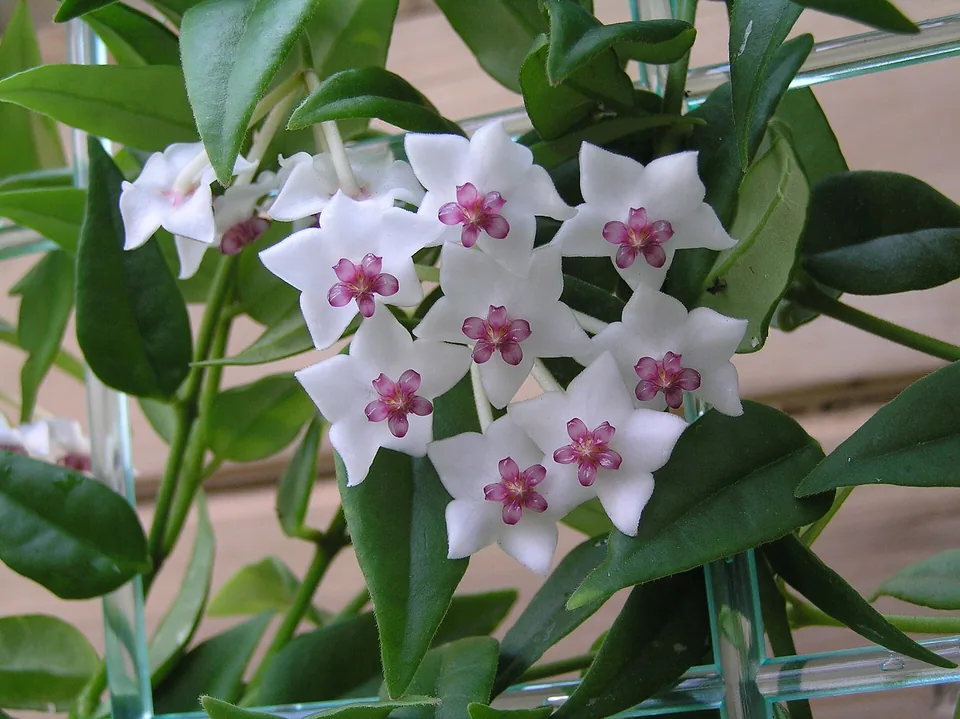
Hoya bella is a trailing vine with white flowers that looks lovely cascading from a hanging basket. It is happy indoors in bright indirect light, and its semi-succulent leaves store some water, so you only water when the soil is almost dry. Best of all, it is non-toxic for cats and dogs, a friendly choice for homes with pets.
- Sun
Bright indirect light to partial shade; in low light it grows weak and leggy
What the sources say (2)
Light: Bright indirect sunlight to partial shade
Prefers bright indirect sunlight and a loamy, well-drained potting mix.
— Hoya bella (Beautiful Hoya, Beautiful Wax Plant, Miniature Wax Plant, Pretty Waxflower, Waxflower) | North Carolina Extension Gardener Plant Toolbox [1] Light: Partial Shade (Direct sunlight only part of the day, 2-6 hours)
— Hoya bella (Beautiful Hoya, Beautiful Wax Plant, Miniature Wax Plant, Pretty Waxflower, Waxflower) | North Carolina Extension Gardener Plant Toolbox [1] - Water
Water when the soil is almost dry; too much water rots the roots
What the sources say (3)
Watering: Allow the soil to become almost dry before watering
It is best to allow the soil to become almost dry before watering.
— Hoya bella (Beautiful Hoya, Beautiful Wax Plant, Miniature Wax Plant, Pretty Waxflower, Waxflower) | North Carolina Extension Gardener Plant Toolbox [1] Watering notes: Leaves are semi-succulent and store some water; overwatering and poor drainage can cause root rot
The leaves are semi-succulent and store some water; therefore, they do not need to be watered as often as other houseplants.
— Hoya bella (Beautiful Hoya, Beautiful Wax Plant, Miniature Wax Plant, Pretty Waxflower, Waxflower) | North Carolina Extension Gardener Plant Toolbox [1] Overwatering and poor drainage can result in root rot and yellowing of the leaves.
— Hoya bella (Beautiful Hoya, Beautiful Wax Plant, Miniature Wax Plant, Pretty Waxflower, Waxflower) | North Carolina Extension Gardener Plant Toolbox [1] - Cold
Survives winters down to 40 °F (4.4 °C)
Tender: needs a frost-free greenhouse · USDA 11a · RHS H2 · Z11
What the sources say (2)
Hardiness, coldest zone: 11a [winter low 4.4 to 7.2 °C (40 to 45 °F)]
USDA Plant Hardiness Zone: 11a, 11b, 12a, 12b
— Hoya bella (Beautiful Hoya, Beautiful Wax Plant, Miniature Wax Plant, Pretty Waxflower, Waxflower) | North Carolina Extension Gardener Plant Toolbox [1] Hardiness, warmest zone: 12b [winter low 12.8 to 15.6 °C (55 to 60 °F)]
USDA Plant Hardiness Zone: 11a, 11b, 12a, 12b
— Hoya bella (Beautiful Hoya, Beautiful Wax Plant, Miniature Wax Plant, Pretty Waxflower, Waxflower) | North Carolina Extension Gardener Plant Toolbox [1] - Feeding
Liquid fertilizer with a 2:1:2 or 3:1:2 ratio helps it flower
What the sources say (2)
Mineral fertilizers: Liquid fertilizer with an NPK ratio of 2:1:2 or 3:1:2 to support flowering
A fertilizer with an NPK ratio of 2:1:2 or 3:1:2 can effectively support flowering.
— Indoor Plants – Waxflowers (Hoya) | Home & Garden Information Center [5] Due to the infrequent watering, choose a liquid fertilizer over a slow-release granular product.
— Indoor Plants – Waxflowers (Hoya) | Home & Garden Information Center [5] - Pests
Mealybugs, scale and spider mites; also root rot and powdery mildew
What the sources say (4)
Pests: mealybugs, scale, spider mites, flat mites
Potential insect pests include mealybugs, scale, and spider mites.
— Hoya bella (Beautiful Hoya, Beautiful Wax Plant, Miniature Wax Plant, Pretty Waxflower, Waxflower) | North Carolina Extension Gardener Plant Toolbox [1] Another pest to watch for is flat mites.
— Indoor Plants – Waxflowers (Hoya) | Home & Garden Information Center [5] Diseases: root rot, leaf spot, powdery mildew, fungal wilt
Overwatering and poor drainage can result in root rot and yellowing of the leaves.
— Hoya bella (Beautiful Hoya, Beautiful Wax Plant, Miniature Wax Plant, Pretty Waxflower, Waxflower) | North Carolina Extension Gardener Plant Toolbox [1] Though rare, hoyas can occasionally develop fungal diseases such as leaf spot, powdery mildew, or fungal wilt.
— Indoor Plants – Waxflowers (Hoya) | Home & Garden Information Center [5] - Watch out
Avoid direct sun and sudden changes in light or temperature: leaves scorch or drop
- Propagation
Stem cuttings in spring or summer
What the sources say (1)
Propagation: Stem cuttings in spring or summer
Propagated by stem cuttings in the spring or summer.
— Hoya bella (Beautiful Hoya, Beautiful Wax Plant, Miniature Wax Plant, Pretty Waxflower, Waxflower) | North Carolina Extension Gardener Plant Toolbox [1] - Containers
Great in pots and hanging baskets, indoors too
What the sources say (2)
In containers: Yes
Landscape Location: Container Hanging Baskets Houseplants Patio Design Feature: Specimen
— Hoya bella (Beautiful Hoya, Beautiful Wax Plant, Miniature Wax Plant, Pretty Waxflower, Waxflower) | North Carolina Extension Gardener Plant Toolbox [1] Indoors: Yes
This plant is popular as a houseplant in the United States due to its striking appearance and easy care.
— Hoya bella (Beautiful Hoya, Beautiful Wax Plant, Miniature Wax Plant, Pretty Waxflower, Waxflower) | North Carolina Extension Gardener Plant Toolbox [1] - Safety
Non-toxic for dogs and cats
Overview
Hoya bella grows 1 to 2 feet [30–61 cm] in length, with glossy, fleshy leaves and fragrant white star-shaped flowers. [1] It is grown as a houseplant and suits hanging baskets, with bright indirect light and soil allowed to become almost dry between waterings. [1] The NC State listing tags it as non-toxic for dogs and cats. [1]
Waxflower care
Measurements in square brackets are our conversion into the other unit system; the quoted text is unchanged.
How to water Waxflower
Watering
Allow the soil to become almost dry before watering
What the sources say (1)
It is best to allow the soil to become almost dry before watering.Watering notes
Leaves are semi-succulent and store some water; overwatering and poor drainage can cause root rot
What the sources say (2)
The leaves are semi-succulent and store some water; therefore, they do not need to be watered as often as other houseplants.Overwatering and poor drainage can result in root rot and yellowing of the leaves.How much light Waxflower needs
Bright indirect sunlight to partial shade
What the sources say (2)
Prefers bright indirect sunlight and a loamy, well-drained potting mix.Light:
Partial Shade (Direct sunlight only part of the day, 2-6 hours)How much cold Waxflower can take
Hardiness, coldest zone
11a [winter low 4.4 to 7.2 °C (40 to 45 °F)]
What the sources say (1)
USDA Plant Hardiness Zone:
11a, 11b, 12a, 12bHardiness, warmest zone
12b [winter low 12.8 to 15.6 °C (55 to 60 °F)]
What the sources say (1)
USDA Plant Hardiness Zone:
11a, 11b, 12a, 12bWhere to grow Waxflower
Indoors
Yes
What the sources say (1)
This plant is popular as a houseplant in the United States due to its striking appearance and easy care.In containers
Yes
What the sources say (1)
Landscape Location:
Container
Hanging Baskets
Houseplants
Patio
Design Feature:
SpecimenHow to propagate Waxflower
Stem cuttings in spring or summer
What the sources say (1)
Propagated by stem cuttings in the spring or summer.How to grow Waxflower
The plant
Family
Apocynaceae
What the sources say (1)
It is a member of the dogbane family (Apocynaceae).Pests and diseases
Pests
mealybugs, scale, spider mites, flat mites
What the sources say (2)
Potential insect pests include mealybugs, scale, and spider mites.Another pest to watch for is flat mites.Diseases
root rot, leaf spot, powdery mildew, fungal wilt
What the sources say (2)
Overwatering and poor drainage can result in root rot and yellowing of the leaves.Though rare, hoyas can occasionally develop fungal diseases such as leaf spot, powdery mildew, or fungal wilt.Fertilizing
Mineral fertilizers
Liquid fertilizer with an NPK ratio of 2:1:2 or 3:1:2 to support flowering
What the sources say (2)
A fertilizer with an NPK ratio of 2:1:2 or 3:1:2 can effectively support flowering.Due to the infrequent watering, choose a liquid fertilizer over a slow-release granular product.Waxflower pests and problems
Insect pests
Symptom: Mealybugs, scale and spider mites are potential insect pests
What to do: No treatment given in the species listing
What the sources say (1)
Potential insect pests include mealybugs, scale, and spider mites.
— Hoya bella (Beautiful Hoya, Beautiful Wax Plant, Miniature Wax Plant, Pretty Waxflower, Waxflower) | North Carolina Extension Gardener Plant Toolbox [1] Root rot and yellowing
Symptom: Overwatering and poor drainage can result in root rot and yellowing of the leaves
What to do: Allow the soil to become almost dry before watering
What the sources say (2)
Overwatering and poor drainage can result in root rot and yellowing of the leaves.
— Hoya bella (Beautiful Hoya, Beautiful Wax Plant, Miniature Wax Plant, Pretty Waxflower, Waxflower) | North Carolina Extension Gardener Plant Toolbox [1] It is best to allow the soil to become almost dry before watering.
— Hoya bella (Beautiful Hoya, Beautiful Wax Plant, Miniature Wax Plant, Pretty Waxflower, Waxflower) | North Carolina Extension Gardener Plant Toolbox [1] Leaf drop and scorch
Symptom: Leaf drop from sudden changes in temperature and light; direct sunlight can cause leaf scorch
What to do: Avoid sudden changes and direct sunlight
What the sources say (1)
Leaf drop can occur due to sudden changes in temperature and light. Direct sunlight can cause leaf scorch.
— Hoya bella (Beautiful Hoya, Beautiful Wax Plant, Miniature Wax Plant, Pretty Waxflower, Waxflower) | North Carolina Extension Gardener Plant Toolbox [1] Weak, leggy growth
Symptom: Low light levels can make the plant weak and leggy
What to do: Provide adequate light
What the sources say (1)
Low light levels can make the plant weak and leggy.
— Hoya bella (Beautiful Hoya, Beautiful Wax Plant, Miniature Wax Plant, Pretty Waxflower, Waxflower) | North Carolina Extension Gardener Plant Toolbox [1]
Remedies
Each remedy shows what official sources say about it; traditional remedies without an official source are marked as such. Harmful ones are listed so you know to avoid them.
Treating the plant
mealybugs
alcohol-soaked cotton swab Partly works
always test the alcohol on a small, inconspicuous leaf section first to ensure the Hoya does not react negatively.
— scienceinsights.org [7] How: Dab the mealybugs with a [nome commerciale] soaked in isopropyl alcohol to dry them out.
dab the mealybugs with a [nome commerciale] soaked in isopropyl alcohol to dry them out
— Indoor Plants – Waxflowers (Hoya) | Home & Garden Information Center [5] What the evidence says Picking off individual mealybugs and egg sacs or dabbing each one with an alcohol–soaked cotton swab may be satisfactory for lightly–infested plants
— yardandgarden.extension.iastate.edu [6] strong water stream Not verified
Traditional remedy, not verified by an official source.
How: Use a strong, focused stream of water to dislodge many of the insects from the stems and leaves.
spider mites
insecticidal soap or neem oil spray Works
How: Neem oil or insecticidal soap as a more organic treatment.
Alternatively, neem oil or insecticidal soap can offer a more organic treatment.
— Indoor Plants – Waxflowers (Hoya) | Home & Garden Information Center [5] What the evidence says Foliar sprays of horticultural oil, neem oil, or insecticidal soap are some of the most effective treatments available to homeowners to control spider mites.
— extension.msstate.edu [8] forceful water spray Partly works
How: Wash the mites from the leaves with a forceful spray of water, repeating several times at 3- to 5-day intervals.
Washing the mites from the leaves with a forceful spray of water is sometimes practical and effective on small plants, especially if you repeat this washing several times at 3- to 5-day intervals.
— extension.msstate.edu [8] What the evidence says Washing the mites from the leaves with a forceful spray of water is sometimes practical and effective on small plants, especially if you repeat this washing several times at 3- to 5-day intervals.
— extension.msstate.edu [8]
Is Waxflower poisonous?
Reported by the source, quoted verbatim. This is not medical or veterinary advice: if a person or an animal may have eaten this plant, contact a poison control centre or a veterinarian.
#climbing plant #trailing #container plant #cascading #hanging baskets #white flowers #vine #non-toxic for dogs #non-toxic for cats
[1]The source flags the risk for this animal but does not explain why.
Indicative values
Values from a secondary source, not checked word for word like the rest of this page. Use them as a starting point.
- Life cycle
- PerennialIndicative value, adapt it to your climate · Secondary source · Data for the variety Hoya lanceolata subsp. bella
- Mature height
- 30.5-45.7 cm (1-1.5 ft)Indicative value, adapt it to your climate · Secondary source · Data for the variety Hoya lanceolata subsp. bella
- Hours of sun
- 4-6 hoursIndicative value, adapt it to your climate · Secondary source · Data for the variety Hoya lanceolata subsp. bella
- Drought tolerant
- yesIndicative value, adapt it to your climate · Secondary source · Data for the variety Hoya lanceolata subsp. bella
- Soil pH
- 5.5-6.5Indicative value, adapt it to your climate · Secondary source · Data for the variety Hoya lanceolata subsp. bella
- Care level
- MediumIndicative value, adapt it to your climate · Secondary source · Data for the variety Hoya lanceolata subsp. bella
- Growth rate
- LowIndicative value, adapt it to your climate · Secondary source · Data for the variety Hoya lanceolata subsp. bella
- Pruning
- March, April, May, June, July, August, September, March, April, MayIndicative value, adapt it to your climate · Secondary source · Data for the variety Hoya lanceolata subsp. bella
Similar plants
- Cinnamon Hoya Hoya lacunosa
- Common Hoya Hoya australis
- Fung Wax Flower Hoya curtisii
- Sweetheart Hoya Hoya kerrii
- Wax Plant Hoya pubicalyx
- Hoya Hoya carnosa
- Mandevilla Mandevilla sanderi
- Oleander Nerium oleander
Sources
Every value above is quoted from these documents. Links lead to the original publisher.
- Hoya bella (Beautiful Hoya, Beautiful Wax Plant, Miniature Wax Plant, Pretty Waxflower, Waxflower) | North Carolina Extension Gardener Plant Toolbox · plants.ces.ncsu.edu, consulted
- Miniature Wax Plant - Hoya bella | North Carolina Extension Gardener Plant Toolbox · plants.ces.ncsu.edu, consulted
- Pretty Waxflower - Hoya bella | North Carolina Extension Gardener Plant Toolbox · plants.ces.ncsu.edu, consulted
- Hoya - Hoya | North Carolina Extension Gardener Plant Toolbox · plants.ces.ncsu.edu, consulted
- Indoor Plants – Waxflowers (Hoya) | Home & Garden Information Center · hgic.clemson.edu, consulted
- yardandgarden.extension.iastate.edu · yardandgarden.extension.iastate.edu
- scienceinsights.org · scienceinsights.org
- extension.msstate.edu · extension.msstate.edu
Written by Emilio Marruso · last checked