

Cómo cultivar y cuidar Waxflower
Hoya bella
Escrito por Emilio Marruso · última revisión
No tóxica para gatos y perros, según las fuentes · Fuentes
De un vistazo
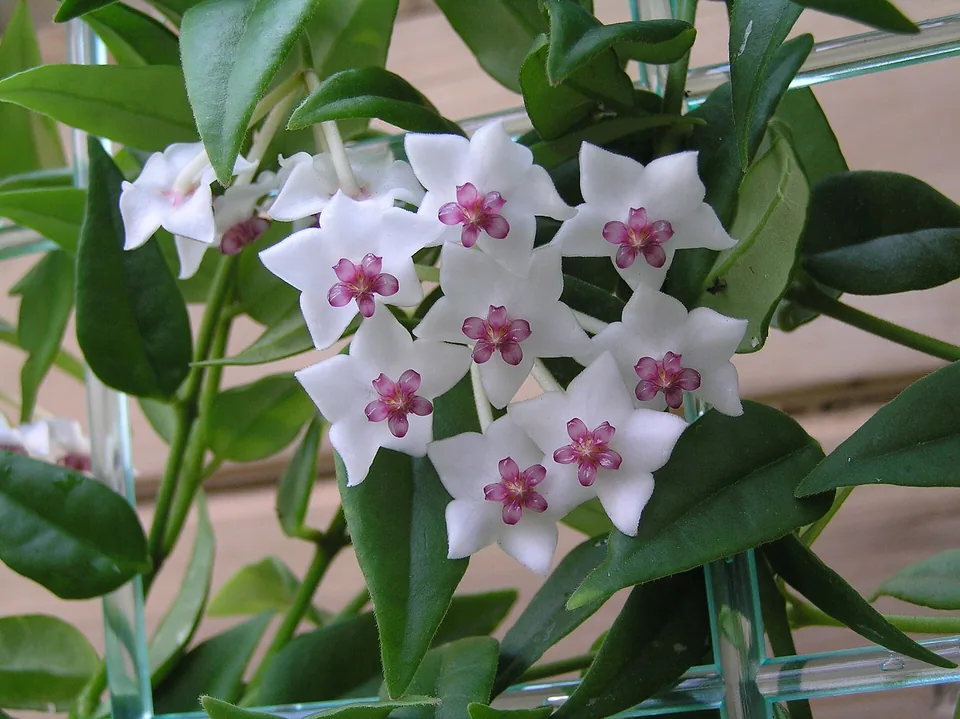
La Hoya bella es una trepadora colgante de flores blancas que luce preciosa cayendo desde una cesta colgante. Vive feliz en interior con luz brillante indirecta, y sus hojas semisuculentas guardan algo de agua, así que solo riegas cuando la tierra está casi seca. Además, no es tóxica para perros ni gatos: una elección estupenda si tienes mascotas.
- Sol
Luz brillante indirecta o semisombra; con poca luz crece débil y espigada
Qué dicen las fuentes (2)
Luz: Luz indirecta brillante a semisombra
Prefers bright indirect sunlight and a loamy, well-drained potting mix.
— Hoya bella (Beautiful Hoya, Beautiful Wax Plant, Miniature Wax Plant, Pretty Waxflower, Waxflower) | North Carolina Extension Gardener Plant Toolbox [1] Light: Partial Shade (Direct sunlight only part of the day, 2-6 hours)
— Hoya bella (Beautiful Hoya, Beautiful Wax Plant, Miniature Wax Plant, Pretty Waxflower, Waxflower) | North Carolina Extension Gardener Plant Toolbox [1] - Riego
Riega cuando la tierra esté casi seca; el exceso de agua pudre las raíces
Qué dicen las fuentes (3)
Riego: Deja que el suelo se seque casi por completo antes de regar
It is best to allow the soil to become almost dry before watering.
— Hoya bella (Beautiful Hoya, Beautiful Wax Plant, Miniature Wax Plant, Pretty Waxflower, Waxflower) | North Carolina Extension Gardener Plant Toolbox [1] Notas sobre el riego: Las hojas son semisuculentas y almacenan algo de agua; el riego excesivo y el mal drenaje pueden causar pudrición de raíces
The leaves are semi-succulent and store some water; therefore, they do not need to be watered as often as other houseplants.
— Hoya bella (Beautiful Hoya, Beautiful Wax Plant, Miniature Wax Plant, Pretty Waxflower, Waxflower) | North Carolina Extension Gardener Plant Toolbox [1] Overwatering and poor drainage can result in root rot and yellowing of the leaves.
— Hoya bella (Beautiful Hoya, Beautiful Wax Plant, Miniature Wax Plant, Pretty Waxflower, Waxflower) | North Carolina Extension Gardener Plant Toolbox [1] - Frío
Aguanta inviernos de hasta 4,4 °C (40 °F)
Delicada: necesita invernadero sin heladas · USDA 11a · RHS H2 · Z11
Qué dicen las fuentes (2)
Rusticidad, zona más fría: 11a [mínima invernal de 4,4 a 7,2 °C (de 40 a 45 °F)]
USDA Plant Hardiness Zone: 11a, 11b, 12a, 12b
— Hoya bella (Beautiful Hoya, Beautiful Wax Plant, Miniature Wax Plant, Pretty Waxflower, Waxflower) | North Carolina Extension Gardener Plant Toolbox [1] Rusticidad, zona más cálida: 12b [mínima invernal de 12,8 a 15,6 °C (de 55 a 60 °F)]
USDA Plant Hardiness Zone: 11a, 11b, 12a, 12b
— Hoya bella (Beautiful Hoya, Beautiful Wax Plant, Miniature Wax Plant, Pretty Waxflower, Waxflower) | North Carolina Extension Gardener Plant Toolbox [1] - Abonado
Abono líquido con proporción 2:1:2 o 3:1:2 para ayudar a la floración
Qué dicen las fuentes (2)
Abonos minerales: Fertilizante líquido con una relación NPK de 2:1:2 o 3:1:2 para favorecer la floración
A fertilizer with an NPK ratio of 2:1:2 or 3:1:2 can effectively support flowering.
— Indoor Plants – Waxflowers (Hoya) | Home & Garden Information Center [5] Due to the infrequent watering, choose a liquid fertilizer over a slow-release granular product.
— Indoor Plants – Waxflowers (Hoya) | Home & Garden Information Center [5] - Plagas
Cochinillas algodonosas, cochinillas y araña roja; también podredumbre de raíz y oídio
Qué dicen las fuentes (4)
Plagas: cochinillas harinosas, cochinillas, arañitas rojas, ácaros planos
Potential insect pests include mealybugs, scale, and spider mites.
— Hoya bella (Beautiful Hoya, Beautiful Wax Plant, Miniature Wax Plant, Pretty Waxflower, Waxflower) | North Carolina Extension Gardener Plant Toolbox [1] Another pest to watch for is flat mites.
— Indoor Plants – Waxflowers (Hoya) | Home & Garden Information Center [5] Enfermedades: podredumbre de raíces, mancha foliar, mildiu polvoriento, marchitez fúngica
Overwatering and poor drainage can result in root rot and yellowing of the leaves.
— Hoya bella (Beautiful Hoya, Beautiful Wax Plant, Miniature Wax Plant, Pretty Waxflower, Waxflower) | North Carolina Extension Gardener Plant Toolbox [1] Though rare, hoyas can occasionally develop fungal diseases such as leaf spot, powdery mildew, or fungal wilt.
— Indoor Plants – Waxflowers (Hoya) | Home & Garden Information Center [5] - Atención
Evita el sol directo y los cambios bruscos de luz o temperatura: las hojas se queman o caen
- Multiplicación
Esquejes de tallo en primavera o verano
Qué dicen las fuentes (1)
Propagación: Esquejes de tallo en primavera o verano
Propagated by stem cuttings in the spring or summer.
— Hoya bella (Beautiful Hoya, Beautiful Wax Plant, Miniature Wax Plant, Pretty Waxflower, Waxflower) | North Carolina Extension Gardener Plant Toolbox [1] - Maceta
Ideal en maceta y en cesta colgante, también en interior
Qué dicen las fuentes (2)
En maceta: Sí
Landscape Location: Container Hanging Baskets Houseplants Patio Design Feature: Specimen
— Hoya bella (Beautiful Hoya, Beautiful Wax Plant, Miniature Wax Plant, Pretty Waxflower, Waxflower) | North Carolina Extension Gardener Plant Toolbox [1] En interior: Sí
This plant is popular as a houseplant in the United States due to its striking appearance and easy care.
— Hoya bella (Beautiful Hoya, Beautiful Wax Plant, Miniature Wax Plant, Pretty Waxflower, Waxflower) | North Carolina Extension Gardener Plant Toolbox [1] - Seguridad
No es tóxica para perros ni gatos
Resumen
La Hoya bella crece de 1 a 2 pies [30–61 cm] de largo, con hojas brillantes y carnosas y flores blancas fragantes en forma de estrella. [1] Se cultiva como planta de interior y es adecuada para cestas colgantes, con luz indirecta brillante y suelo que se deja secar casi por completo entre riegos. [1] La lista de NC State la marca como no tóxica para perros y gatos. [1]
Citado en inglés, como en la fuente.
Cuidados
Las medidas entre corchetes son nuestra conversión al otro sistema de unidades; el texto citado no cambia.
Riego
Riego
Deja que el suelo se seque casi por completo antes de regar
Qué dicen las fuentes (1)
It is best to allow the soil to become almost dry before watering.Notas sobre el riego
Las hojas son semisuculentas y almacenan algo de agua; el riego excesivo y el mal drenaje pueden causar pudrición de raíces
Qué dicen las fuentes (2)
The leaves are semi-succulent and store some water; therefore, they do not need to be watered as often as other houseplants.Overwatering and poor drainage can result in root rot and yellowing of the leaves.Luz
Luz indirecta brillante a semisombra
Qué dicen las fuentes (2)
Prefers bright indirect sunlight and a loamy, well-drained potting mix.Light:
Partial Shade (Direct sunlight only part of the day, 2-6 hours)Clima y frío
Rusticidad, zona más fría
11a [mínima invernal de 4,4 a 7,2 °C (de 40 a 45 °F)]
Qué dicen las fuentes (1)
USDA Plant Hardiness Zone:
11a, 11b, 12a, 12bRusticidad, zona más cálida
12b [mínima invernal de 12,8 a 15,6 °C (de 55 a 60 °F)]
Qué dicen las fuentes (1)
USDA Plant Hardiness Zone:
11a, 11b, 12a, 12bDónde cultivarla
En interior
Sí
Qué dicen las fuentes (1)
This plant is popular as a houseplant in the United States due to its striking appearance and easy care.En maceta
Sí
Qué dicen las fuentes (1)
Landscape Location:
Container
Hanging Baskets
Houseplants
Patio
Design Feature:
SpecimenPropagación
Esquejes de tallo en primavera o verano
Qué dicen las fuentes (1)
Propagated by stem cuttings in the spring or summer.Cultivo
La planta
Familia
Apocynaceae
Qué dicen las fuentes (1)
It is a member of the dogbane family (Apocynaceae).Plagas y enfermedades
Plagas
cochinillas harinosas, cochinillas, arañitas rojas, ácaros planos
Qué dicen las fuentes (2)
Potential insect pests include mealybugs, scale, and spider mites.Another pest to watch for is flat mites.Enfermedades
podredumbre de raíces, mancha foliar, mildiu polvoriento, marchitez fúngica
Qué dicen las fuentes (2)
Overwatering and poor drainage can result in root rot and yellowing of the leaves.Though rare, hoyas can occasionally develop fungal diseases such as leaf spot, powdery mildew, or fungal wilt.Abonado
Abonos minerales
Fertilizante líquido con una relación NPK de 2:1:2 o 3:1:2 para favorecer la floración
Qué dicen las fuentes (2)
A fertilizer with an NPK ratio of 2:1:2 or 3:1:2 can effectively support flowering.Due to the infrequent watering, choose a liquid fertilizer over a slow-release granular product.Problemas
Insectos plaga
Síntoma: Las cochinillas harinosas, las cochinillas y las arañitas rojas son posibles plagas de insectos
Qué hacer: No se indica tratamiento en la lista de la especie
Qué dicen las fuentes (1)
Potential insect pests include mealybugs, scale, and spider mites.
— Hoya bella (Beautiful Hoya, Beautiful Wax Plant, Miniature Wax Plant, Pretty Waxflower, Waxflower) | North Carolina Extension Gardener Plant Toolbox [1] Pudrición de raíces y amarillamiento
Síntoma: El riego excesivo y el mal drenaje pueden provocar pudrición de raíces y amarillamiento de las hojas
Qué hacer: Deja que el suelo se seque casi por completo antes de regar
Qué dicen las fuentes (2)
Overwatering and poor drainage can result in root rot and yellowing of the leaves.
— Hoya bella (Beautiful Hoya, Beautiful Wax Plant, Miniature Wax Plant, Pretty Waxflower, Waxflower) | North Carolina Extension Gardener Plant Toolbox [1] It is best to allow the soil to become almost dry before watering.
— Hoya bella (Beautiful Hoya, Beautiful Wax Plant, Miniature Wax Plant, Pretty Waxflower, Waxflower) | North Carolina Extension Gardener Plant Toolbox [1] Caída de hojas y quemaduras
Síntoma: Caída de hojas por cambios repentinos de temperatura y luz; la luz solar directa puede causar quemaduras en las hojas
Qué hacer: Evita cambios bruscos y la luz solar directa.
Qué dicen las fuentes (1)
Leaf drop can occur due to sudden changes in temperature and light. Direct sunlight can cause leaf scorch.
— Hoya bella (Beautiful Hoya, Beautiful Wax Plant, Miniature Wax Plant, Pretty Waxflower, Waxflower) | North Carolina Extension Gardener Plant Toolbox [1] Crecimiento débil y alargado
Síntoma: Los niveles bajos de luz pueden hacer que la planta se debilite y se alargue
Qué hacer: Proporciona luz adecuada.
Qué dicen las fuentes (1)
Low light levels can make the plant weak and leggy.
— Hoya bella (Beautiful Hoya, Beautiful Wax Plant, Miniature Wax Plant, Pretty Waxflower, Waxflower) | North Carolina Extension Gardener Plant Toolbox [1]
Remedios
Cada remedio indica qué dicen las fuentes oficiales; los remedios tradicionales sin fuente oficial aparecen marcados. Los perjudiciales están para que sepas evitarlos.
Cuidar la planta
cochinillas harinosas
hisopo de algodón empapado en alcohol Funciona en parte
always test the alcohol on a small, inconspicuous leaf section first to ensure the Hoya does not react negatively.
— scienceinsights.org [7] Cómo: Toca las cochinillas con un hisopo empapado en alcohol isopropílico para secarlas.
dab the mealybugs with a [nome commerciale] soaked in isopropyl alcohol to dry them out
— Indoor Plants – Waxflowers (Hoya) | Home & Garden Information Center [5] Qué dicen las pruebas Picking off individual mealybugs and egg sacs or dabbing each one with an alcohol–soaked cotton swab may be satisfactory for lightly–infested plants
— yardandgarden.extension.iastate.edu [6] chorro de agua fuerte No verificado
Remedio tradicional, no verificado por una fuente oficial.
Cómo: Usa un chorro de agua fuerte y enfocado para desprender muchos de los insectos de los tallos y las hojas.
ácaros araña
jabón insecticida o aceite de neem en aerosol Funciona
Cómo: Aceite de neem o jabón insecticida como tratamiento más orgánico.
Alternatively, neem oil or insecticidal soap can offer a more organic treatment.
— Indoor Plants – Waxflowers (Hoya) | Home & Garden Information Center [5] Qué dicen las pruebas Foliar sprays of horticultural oil, neem oil, or insecticidal soap are some of the most effective treatments available to homeowners to control spider mites.
— extension.msstate.edu [8] chorro de agua fuerte Funciona en parte
Cómo: Lava los ácaros de las hojas con un chorro fuerte de agua, repitiendo varias veces a intervalos de 3 a 5 días.
Washing the mites from the leaves with a forceful spray of water is sometimes practical and effective on small plants, especially if you repeat this washing several times at 3- to 5-day intervals.
— extension.msstate.edu [8] Qué dicen las pruebas Washing the mites from the leaves with a forceful spray of water is sometimes practical and effective on small plants, especially if you repeat this washing several times at 3- to 5-day intervals.
— extension.msstate.edu [8]
Toxicidad
Según la fuente, citada textualmente. No es un consejo médico ni veterinario: si una persona o un animal pudo haber ingerido esta planta, contacta con un centro de toxicología o con un veterinario.
#climbing plant #trailing #container plant #cascading #hanging baskets #white flowers #vine #non-toxic for dogs #non-toxic for cats
[1]La fuente señala el riesgo para este animal pero no explica por qué.
Valores orientativos
Valores de una fuente secundaria, no comprobados palabra por palabra como el resto de esta página. Úselos como punto de partida.
- Ciclo de vida
- PerenneValor orientativo, adáptalo a tu clima · Fuente secundaria · Dato de la variedad Hoya lanceolata subsp. bella
- Altura adulta
- 30.5-45.7 cm (1-1.5 pies)Valor orientativo, adáptalo a tu clima · Fuente secundaria · Dato de la variedad Hoya lanceolata subsp. bella
- Horas de sol
- 4-6 horasValor orientativo, adáptalo a tu clima · Fuente secundaria · Dato de la variedad Hoya lanceolata subsp. bella
- Resiste la sequía
- SíValor orientativo, adáptalo a tu clima · Fuente secundaria · Dato de la variedad Hoya lanceolata subsp. bella
- pH del suelo
- 5.5-6.5Valor orientativo, adáptalo a tu clima · Fuente secundaria · Dato de la variedad Hoya lanceolata subsp. bella
- Nivel de cuidado
- MedioValor orientativo, adáptalo a tu clima · Fuente secundaria · Dato de la variedad Hoya lanceolata subsp. bella
- Crecimiento
- BajoValor orientativo, adáptalo a tu clima · Fuente secundaria · Dato de la variedad Hoya lanceolata subsp. bella
- Poda
- marzo, abril, mayo, junio, julio, agosto, septiembre, marzo, abril, mayoValor orientativo, adáptalo a tu clima · Fuente secundaria · Dato de la variedad Hoya lanceolata subsp. bella
Plantas similares
- Cinnamon Hoya Hoya lacunosa
- Common Hoya Hoya australis
- Fung Wax Flower Hoya curtisii
- Sweetheart Hoya Hoya kerrii
- Wax Plant Hoya pubicalyx
- Flor de nácar Hoya carnosa
- Jazmín brasileño Mandevilla sanderi
- Adelfa Nerium oleander
Fuentes
Cada valor anterior se cita de estos documentos. Los enlaces llevan al editor original.
- Hoya bella (Beautiful Hoya, Beautiful Wax Plant, Miniature Wax Plant, Pretty Waxflower, Waxflower) | North Carolina Extension Gardener Plant Toolbox · plants.ces.ncsu.edu, consultado
- Miniature Wax Plant - Hoya bella | North Carolina Extension Gardener Plant Toolbox · plants.ces.ncsu.edu, consultado
- Pretty Waxflower - Hoya bella | North Carolina Extension Gardener Plant Toolbox · plants.ces.ncsu.edu, consultado
- Hoya - Hoya | North Carolina Extension Gardener Plant Toolbox · plants.ces.ncsu.edu, consultado
- Indoor Plants – Waxflowers (Hoya) | Home & Garden Information Center · hgic.clemson.edu, consultado
- yardandgarden.extension.iastate.edu · yardandgarden.extension.iastate.edu
- scienceinsights.org · scienceinsights.org
- extension.msstate.edu · extension.msstate.edu
Escrito por Emilio Marruso · última revisión