

Cómo cultivar y cuidar Flor de nácar
Hoya carnosa
Escrito por Emilio Marruso · última revisión
No tóxica para gatos y perros, según las fuentes · Fuentes
De un vistazo
La hoya es una perenne agradecida que vive feliz en interior y en maceta. Dale luz brillante e indirecta todo el año, riégala con agua a temperatura ambiente y deja secar la tierra entre riegos. Abónala con suavidad en primavera y verano, y déjala descansar en invierno para que florezca mejor en los meses cálidos. Además, no es tóxica para gatos ni perros.
- Sol
Luz brillante e indirecta todo el año, o semisombra
Qué dicen las fuentes (1)
Luz: Luz indirecta brillante todo el año; semisombra
Bright indirect light year-round is ideal. As this plant is an epiphyte, use a loose, fast-draining potting mix high in organic matter
— Hoya carnosa (Honey Plant, Porcelainflower, Porcelain Flower, Wax Plant) | North Carolina Extension Gardener Plant Toolbox [1] - Riego
Deja secar la tierra entre riegos y usa agua a temperatura ambiente; el exceso o la falta tiran hojas
Qué dicen las fuentes (2)
Notas sobre el riego: Un suelo demasiado húmedo o demasiado seco puede provocar la caída de las hojas; el agua fría puede estresar la planta, así que usa agua a temperatura ambiente
Too wet or too dry soil can cause the leaves to drop.
— Hoya carnosa (Honey Plant, Porcelainflower, Porcelain Flower, Wax Plant) | North Carolina Extension Gardener Plant Toolbox [1] Cold water can shock this plant. Always use water at room temperature.
— Hoya carnosa (Honey Plant, Porcelainflower, Porcelain Flower, Wax Plant) | North Carolina Extension Gardener Plant Toolbox [1] - Suelo
Suelo con pH de 6,0–8,0
Qué dicen las fuentes (2)
pH del suelo, mínimo: 6.0
Soil pH: Neutral (6.0-8.0) Soil Drainage: Good Drainage
— Hoya carnosa (Honey Plant, Porcelainflower, Porcelain Flower, Wax Plant) | North Carolina Extension Gardener Plant Toolbox [1] pH del suelo, máximo: 8.0
Soil pH: Neutral (6.0-8.0) Soil Drainage: Good Drainage
— Hoya carnosa (Honey Plant, Porcelainflower, Porcelain Flower, Wax Plant) | North Carolina Extension Gardener Plant Toolbox [1] - Abonado
En primavera y verano, a la mitad o un cuarto de la dosis; nada de abono en invierno
Qué dicen las fuentes (5)
Cuándo: Primavera y verano; no abonar en invierno
Light, regular fertilizer applications in spring and summer are ideal.
— All About Hoyas | Yard and Garden [4] Do not fertilize in winter, as this allows for rest and will promote better flowering during the warmer months.
— All About Hoyas | Yard and Garden [4] Abonos minerales: Fertilizante universal a la mitad o un cuarto de la concentración; una relación NPK de 2:1:2 o 3:1:2 favorece la floración
Use an all-purpose fertilizer at 1/2 or 1/4 strength, skipping an application every other or every third watering.
— All About Hoyas | Yard and Garden [4] A fertilizer with an NPK ratio of 2:1:2 or 3:1:2 can effectively support flowering.
— Indoor Plants – Waxflowers (Hoya) | Home & Garden Information Center [6] Evitar: Abonar en invierno, cuando la planta debe descansar para florecer mejor en los meses cálidos
Do not fertilize in winter, as this allows for rest and will promote better flowering during the warmer months.
— All About Hoyas | Yard and Garden [4] - Poda
Poda a principios de primavera, antes de que empiece a crecer con fuerza
Qué dicen las fuentes (1)
Poda: A principios de primavera, antes de que comience el crecimiento rápido
If pruning is necessary, it is best done in early spring before its rapid growth begins.
— Hoya carnosa (Honey Plant, Porcelainflower, Porcelain Flower, Wax Plant) | North Carolina Extension Gardener Plant Toolbox [1] - Plagas
Cochinilla algodonosa, mosquitos del sustrato, araña roja y cochinillas; también podredumbre de raíces y oídio
Qué dicen las fuentes (5)
Plagas: cochinillas harinosas, mosquitos de los hongos, arañitas rojas, cochinillas, ácaros planos
Mealybugs can be a problem, and fungus gnats, which are attracted to potting mixes that are too wet. Occasionally, spider mites can be an issue and can appear when the air is too dry.
— Hoya carnosa (Honey Plant, Porcelainflower, Porcelain Flower, Wax Plant) | North Carolina Extension Gardener Plant Toolbox [1] Scale insects can appear as small, immobile bumps on stems and leaves, sometimes accompanied by sticky residue.
— All About Hoyas | Yard and Garden [4] Flat Mites: Another pest to watch for is flat mites.
— Indoor Plants – Waxflowers (Hoya) | Home & Garden Information Center [6] Enfermedades: mancha foliar, mildiu polvoriento, marchitez fúngica, pudrición de raíces
Though rare, hoyas can occasionally develop fungal diseases such as leaf spot, powdery mildew, or fungal wilt.
— Indoor Plants – Waxflowers (Hoya) | Home & Garden Information Center [6] Overwatering is the most common issue, often leading to root rot
— Indoor Plants – Waxflowers (Hoya) | Home & Garden Information Center [6] - Multiplicación
Se multiplica por esquejes de tallo
Qué dicen las fuentes (1)
Propagación: Esqueje de tallo
Propagate the wax plant by stem cutting. Repot the wax plant when it outgrows its current container
— Hoya carnosa (Honey Plant, Porcelainflower, Porcelain Flower, Wax Plant) | North Carolina Extension Gardener Plant Toolbox [1] - Maceta
Ideal en maceta, también en interior
Qué dicen las fuentes (2)
En maceta: Sí
use a loose, fast-draining potting mix high in organic matter and a container with good drainage
— Hoya carnosa (Honey Plant, Porcelainflower, Porcelain Flower, Wax Plant) | North Carolina Extension Gardener Plant Toolbox [1] En interior: Sí
#houseplant #interiorscape #waxy #sweet fragrance #non-toxic for cats
— Hoya carnosa (Honey Plant, Porcelainflower, Porcelain Flower, Wax Plant) | North Carolina Extension Gardener Plant Toolbox [1] - Seguridad
No es tóxica para gatos, perros ni caballos
Resumen
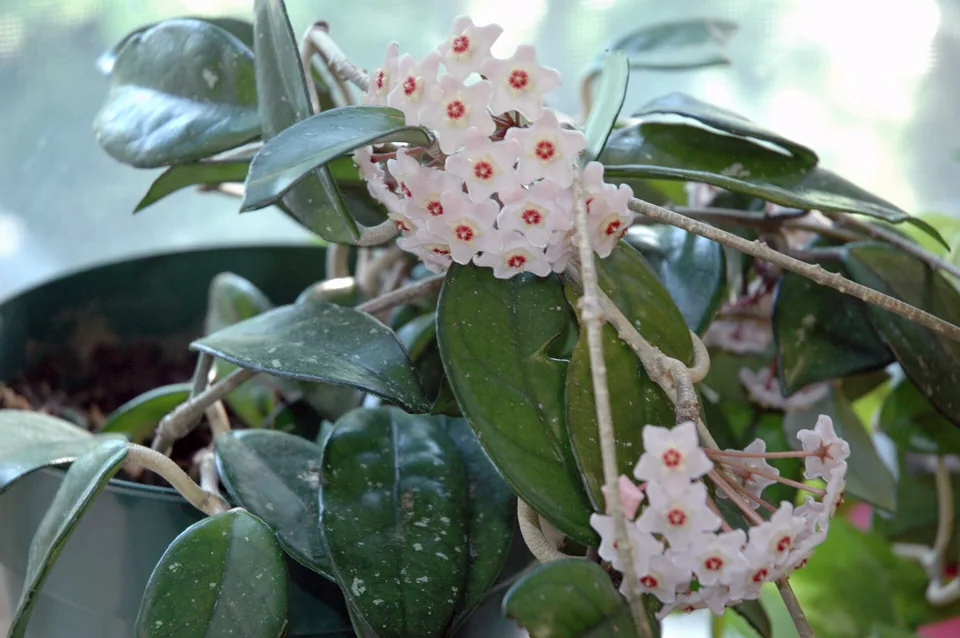
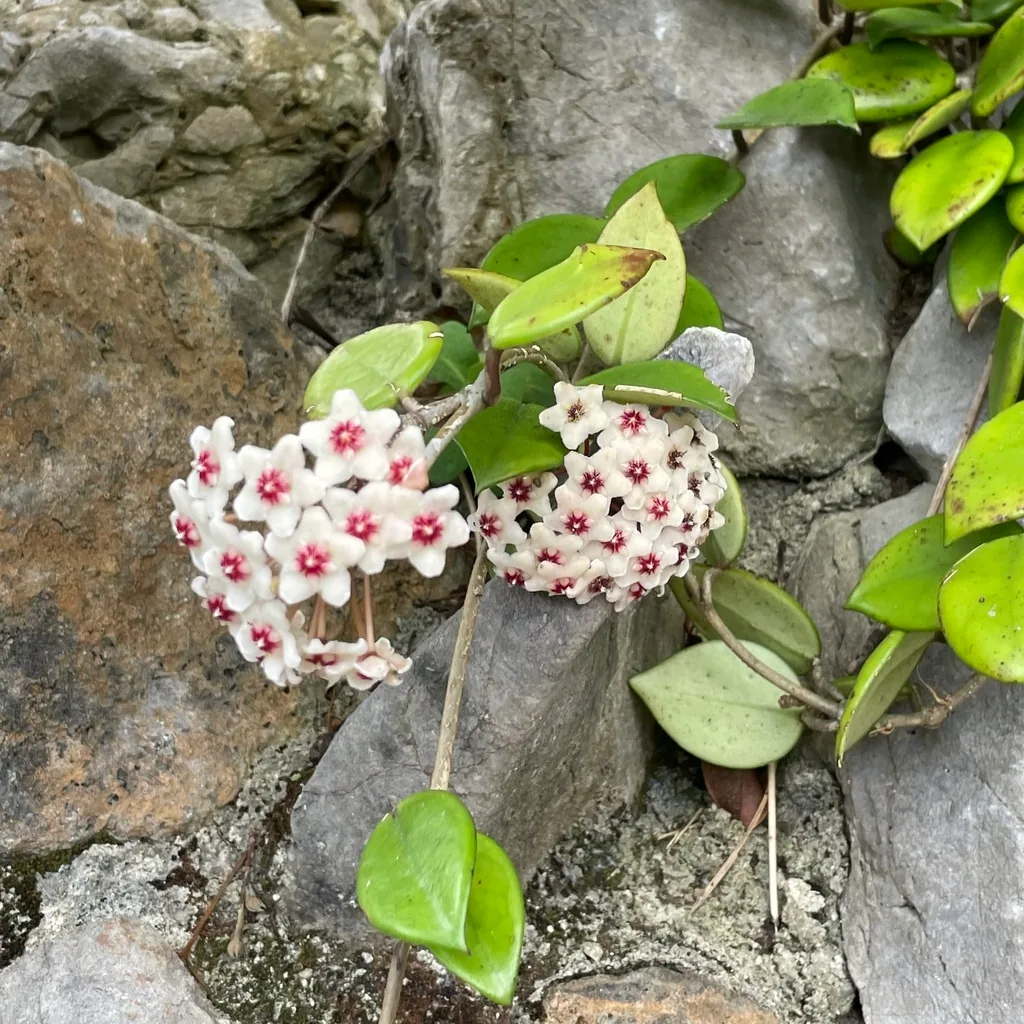
La Hoya carnosa es una trepadora perenne epífita y siempreverde originaria del Sudeste Asiático, Japón y Taiwán, cultivada como planta de interior. [1] Prefiere luz indirecta brillante y una mezcla para macetas suelta y de drenaje rápido, dejando que el suelo se seque entre riegos. [1] Se propaga por esquejes de tallo y es adecuada para cestas colgantes. [1]
Citado en inglés, como en la fuente.
Cuidados
Riego
Riego
Las fuentes dan valores distintos según la región, la zona o las condiciones de cultivo.
Lo que dice cada fuente
Según NC State Extension: Deja que el suelo se seque entre riegos
Según Penn State Extension: Mantén la tierra húmeda, no mojada
Según Iowa State Extension: Riega abundantemente y luego deja que la mezcla se seque casi por completo antes de volver a regar
Según UF/IFAS: Riega regularmente desde primavera hasta otoño, dejando que el tercio superior o la mitad del suelo se seque por completo entre riegos; riega muy escasamente en invierno
Según Clemson Extension: Deja que se seque por completo entre riegos
Qué dicen las fuentes (6)
Según NC State Extension: Allow the soil to dry out between watering.Según Penn State Extension: Choose a well-drained soil and keep it moist, not wet.Según Iowa State Extension: Water thoroughly so the entire root zone is moistened, then allow the mix to dry almost completely before watering again.Según UF/IFAS: Water it regularly from spring through fall, allowing the top third or half of the soil to dry out completely between waterings.Según Clemson Extension: Hoyas thrive when allowed to dry out completely between waterings.Allow the soil to dry out between watering.Notas sobre el riego
Un suelo demasiado húmedo o demasiado seco puede provocar la caída de las hojas; el agua fría puede estresar la planta, así que usa agua a temperatura ambiente
Qué dicen las fuentes (2)
Too wet or too dry soil can cause the leaves to drop.Cold water can shock this plant. Always use water at room temperature.Luz
Luz indirecta brillante todo el año; semisombra
Qué dicen las fuentes (1)
Bright indirect light year-round is ideal. As this plant is an epiphyte, use a loose, fast-draining potting mix high in organic matterSuelo
pH del suelo, mínimo
6.0
Qué dicen las fuentes (1)
Soil pH:
Neutral (6.0-8.0)
Soil Drainage:
Good DrainagepH del suelo, máximo
8.0
Qué dicen las fuentes (1)
Soil pH:
Neutral (6.0-8.0)
Soil Drainage:
Good DrainageDónde cultivarla
En interior
Sí
Qué dicen las fuentes (1)
#houseplant #interiorscape #waxy #sweet fragrance #non-toxic for catsEn maceta
Sí
Qué dicen las fuentes (1)
use a loose, fast-draining potting mix high in organic matter and a container with good drainagePropagación
Esqueje de tallo
Qué dicen las fuentes (1)
Propagate the wax plant by stem cutting. Repot the wax plant when it outgrows its current containerCultivo
La planta
Ciclo de vida
perenne
Qué dicen las fuentes (1)
Wax plant is a broadleaf evergreen, epiphytic, vining, herbaceous perennial in the dogbane family (Asclepiadaceae).Plagas y enfermedades
Plagas
cochinillas harinosas, mosquitos de los hongos, arañitas rojas, cochinillas, ácaros planos
Qué dicen las fuentes (3)
Mealybugs can be a problem, and fungus gnats, which are attracted to potting mixes that are too wet. Occasionally, spider mites can be an issue and can appear when the air is too dry.Scale insects can appear as small, immobile bumps on stems and leaves, sometimes accompanied by sticky residue.Flat Mites: Another pest to watch for is flat mites.Enfermedades
mancha foliar, mildiu polvoriento, marchitez fúngica, pudrición de raíces
Qué dicen las fuentes (2)
Though rare, hoyas can occasionally develop fungal diseases such as leaf spot, powdery mildew, or fungal wilt.Overwatering is the most common issue, often leading to root rotAbonado
Cuándo
Primavera y verano; no abonar en invierno
Frecuencia
Abonado ligero y regular: con la mayoría de los riegos, omitiendo uno cada segundo o tercer riego
Qué dicen las fuentes (1)
Use an all-purpose fertilizer at 1/2 or 1/4 strength, skipping an application every other or every third watering.Abonos minerales
Fertilizante universal a la mitad o un cuarto de la concentración; una relación NPK de 2:1:2 o 3:1:2 favorece la floración
Qué dicen las fuentes (2)
Use an all-purpose fertilizer at 1/2 or 1/4 strength, skipping an application every other or every third watering.A fertilizer with an NPK ratio of 2:1:2 or 3:1:2 can effectively support flowering.Evitar
Abonar en invierno, cuando la planta debe descansar para florecer mejor en los meses cálidos
Qué dicen las fuentes (1)
Do not fertilize in winter, as this allows for rest and will promote better flowering during the warmer months.Problemas
Cochinillas
Síntoma: Las cochinillas harinosas pueden ser un problema.
Qué hacer: No se indica en la fuente.
Qué dicen las fuentes (1)
Mealybugs can be a problem, and fungus gnats, which are attracted to potting mixes that are too wet.
— Hoya carnosa (Honey Plant, Porcelainflower, Porcelain Flower, Wax Plant) | North Carolina Extension Gardener Plant Toolbox [1] Mosquitos de los hongos
Síntoma: Se sienten atraídos por mezclas para macetas demasiado húmedas.
Qué hacer: Evita mezclas para macetas demasiado húmedas; deja que el suelo se seque entre riegos.
Qué dicen las fuentes (1)
Mealybugs can be a problem, and fungus gnats, which are attracted to potting mixes that are too wet.
— Hoya carnosa (Honey Plant, Porcelainflower, Porcelain Flower, Wax Plant) | North Carolina Extension Gardener Plant Toolbox [1] Arañitas rojas
Síntoma: Pueden aparecer cuando el aire está demasiado seco.
Qué hacer: No se indica en la fuente.
Qué dicen las fuentes (1)
Occasionally, spider mites can be an issue and can appear when the air is too dry.
— Hoya carnosa (Honey Plant, Porcelainflower, Porcelain Flower, Wax Plant) | North Carolina Extension Gardener Plant Toolbox [1]
Remedios
Cada remedio indica qué dicen las fuentes oficiales; los remedios tradicionales sin fuente oficial aparecen marcados. Los perjudiciales están para que sepas evitarlos.
Cuidar la planta
cochinillas harinosas
hisopo de alcohol isopropílico Funciona en parte
Cómo: toca las cochinillas harinosas con un hisopo empapado en alcohol isopropílico para secarlas
To treat an infestation, dab the mealybugs with a [nome commerciale] soaked in isopropyl alcohol to dry them out, or apply insecticidal soap or an indoor insecticide to the entire plant.
— Indoor Plants – Waxflowers (Hoya) | Home & Garden Information Center [6] Qué dicen las pruebas Individual mealybugs can be removed with a cotton swab dipped in rubbing alcohol or by removing infested plant parts.
— uaf.edu [7]
ácaros araña
aceite de neem Funciona en parte
Use pesticides only according to the directions on the label.
— Indoor Plants – Waxflowers (Hoya) | Home & Garden Information Center [6] Cómo: el aceite de neem puede ofrecer un tratamiento más orgánico
Alternatively, neem oil or insecticidal soap can offer a more organic treatment.
— Indoor Plants – Waxflowers (Hoya) | Home & Garden Information Center [6] Qué dicen las pruebas However, neem oil is not effective against every insect and disease, and often must be frequently reapplied to reach the desired outcome.
— extension.unh.edu [8]
mancha foliar
eliminando las hojas infectadas Fuente oficial, sin prueba independiente
Cómo: elimina todas las hojas infectadas para evitar la propagación de la enfermedad
Additionally, remove all infected leaves to prevent the spread of the disease.
— Indoor Plants – Waxflowers (Hoya) | Home & Garden Information Center [6]
Toxicidad
Según la fuente, citada textualmente. No es un consejo médico ni veterinario: si una persona o un animal pudo haber ingerido esta planta, contacta con un centro de toxicología o con un veterinario.
#non-toxic for cats #non-toxic for horses #non-toxic for dogs
[1]La fuente señala el riesgo para este animal pero no explica por qué.
Calendario
Poda
A principios de primavera, antes de que comience el crecimiento rápido
Qué dicen las fuentes (1)
If pruning is necessary, it is best done in early spring before its rapid growth begins.Meses tal como los dan las fuentes, en su mayoría de Estados Unidos (hemisferio norte). En el hemisferio sur se desplazan unos seis meses.
Valores orientativos
Valores de una fuente secundaria, no comprobados palabra por palabra como el resto de esta página. Úselos como punto de partida.
- Altura adulta
- 61-121.9 cm (2-4 pies)Valor orientativo, adáptalo a tu clima · Fuente secundaria
- Horas de sol
- 4-6 horasValor orientativo, adáptalo a tu clima · Fuente secundaria
- Resiste la sequía
- SíValor orientativo, adáptalo a tu clima · Fuente secundaria
- Suelo
- Bien drenadoValor orientativo, adáptalo a tu clima · Fuente secundaria
- Zonas de rusticidad USDA
- 10-12 [mínima invernal de −1,1 a 15,6 °C (de 30 a 60 °F)]Valor orientativo, adáptalo a tu clima · Fuente secundaria
- Nivel de cuidado
- MedioValor orientativo, adáptalo a tu clima · Fuente secundaria
- Crecimiento
- BajoValor orientativo, adáptalo a tu clima · Fuente secundaria
Plantas similares
- Cinnamon Hoya Hoya lacunosa
- Waxflower Hoya bella
- Common Hoya Hoya australis
- Fung Wax Flower Hoya curtisii
- Sweetheart Hoya Hoya kerrii
- Wax Plant Hoya pubicalyx
- African Blood Lily Scadoxus multiflorus
- African Living Rock Pleiospilos bolusii
Fuentes
Cada valor anterior se cita de estos documentos. Los enlaces llevan al editor original.
- Hoya carnosa (Honey Plant, Porcelainflower, Porcelain Flower, Wax Plant) | North Carolina Extension Gardener Plant Toolbox · plants.ces.ncsu.edu, consultado
- Porcelainflower - Hoya carnosa | North Carolina Extension Gardener Plant Toolbox · plants.ces.ncsu.edu, consultado
- Hoyas as Houseplants · extension.psu.edu, consultado
- All About Hoyas | Yard and Garden · yardandgarden.extension.iastate.edu, consultado
- Hoya – Gardening Solutions · gardeningsolutions.ifas.ufl.edu, consultado
- Indoor Plants – Waxflowers (Hoya) | Home & Garden Information Center · hgic.clemson.edu, consultado
- uaf.edu · uaf.edu
- extension.unh.edu · extension.unh.edu
Escrito por Emilio Marruso · última revisión