

Cómo cultivar y cuidar African Living Rock
Pleiospilos bolusii
Escrito por Emilio Marruso · última revisión
No tóxica para gatos y perros, según las fuentes · Fuentes
De un vistazo
Esta pequeña suculenta mide solo 8 cm de alto y 15 cm de ancho, ideal para un rincón luminoso de casa o una maceta pequeña. Descansa en verano sin nada de agua y despierta en otoño: entonces riégala a fondo y deja que el sustrato se seque entre riegos. Es segura para gatos, perros y caballos, y solo el pulgón suele molestarla.
- Sol
Luz intensa e indirecta; tolera el sol de la mañana, pero dale sombra por la tarde
Qué dicen las fuentes (1)
Luz: Luz indirecta brillante; tolera el sol directo de la mañana; semisombra por la tarde
This plant prefers bright, indirect sunlight. It can tolerate direct morning sun but prefers partial shade in the afternoon.
— Pleiospilos bolusii (African Living Rock, Living Rock Cactus, Mimicry Plant) | North Carolina Extension Gardener Plant Toolbox [1] - Riego
Nada de agua en verano; en otoño riega a fondo y deja secar el sustrato entre riegos
Qué dicen las fuentes (2)
Riego: Inactivo en verano y no necesita agua; en otoño, riega abundantemente durante el ciclo de crecimiento y deja que la mezcla para macetas se seque entre riegos
The plant is dormant during the summer and does not require water. During the fall, it is best to water thoroughly during its growing cycle but allow the potting mix to dry out between waterings.
— Pleiospilos bolusii (African Living Rock, Living Rock Cactus, Mimicry Plant) | North Carolina Extension Gardener Plant Toolbox [1] Notas sobre el riego: Mezcla para macetas con buen drenaje; evita el exceso de riego
Insects, Diseases, and Other Plant Problems: This plant is generally disease free. Monitor for aphids and avoid overwatering.
— Pleiospilos bolusii (African Living Rock, Living Rock Cactus, Mimicry Plant) | North Carolina Extension Gardener Plant Toolbox [1] - Frío
Aguanta inviernos de hasta −3,9 °C (25 °F)
Semirrústica: inviernos suaves o invernadero sin calefacción · USDA 9b · RHS H3 · Z9
Qué dicen las fuentes (2)
Rusticidad, zona más fría: 9b [mínima invernal de −3,9 a −1,1 °C (de 25 a 30 °F)]
USDA Plant Hardiness Zone: 9b, 10a, 10b, 11a
— Pleiospilos bolusii (African Living Rock, Living Rock Cactus, Mimicry Plant) | North Carolina Extension Gardener Plant Toolbox [1] They are not cold weather tolerant and are hardy in USDA Plant Hardiness Zones of 9b to 11b.
— Pleiospilos bolusii (African Living Rock, Living Rock Cactus, Mimicry Plant) | North Carolina Extension Gardener Plant Toolbox [1] - Suelo
Un sustrato que drene bien; el exceso de agua la perjudica
Qué dicen las fuentes (1)
Notas sobre el riego: Mezcla para macetas con buen drenaje; evita el exceso de riego
Insects, Diseases, and Other Plant Problems: This plant is generally disease free. Monitor for aphids and avoid overwatering.
— Pleiospilos bolusii (African Living Rock, Living Rock Cactus, Mimicry Plant) | North Carolina Extension Gardener Plant Toolbox [1] - Plagas
Vigila el pulgón
Qué dicen las fuentes (1)
Plagas: pulgones
Insects, Diseases, and Other Plant Problems: This plant is generally disease free. Monitor for aphids and avoid overwatering.
— Pleiospilos bolusii (African Living Rock, Living Rock Cactus, Mimicry Plant) | North Carolina Extension Gardener Plant Toolbox [1] - Tamaño
8 cm de alto y 15 cm de ancho
Qué dicen las fuentes (2)
Altura adulta: 7.62 cm (3 pulgadas)
The plant has a clump-forming habit, stemless, and grows about 3 inches tall and 6 inches wide with a split in the middle where new growth occurs.
— Pleiospilos bolusii (African Living Rock, Living Rock Cactus, Mimicry Plant) | North Carolina Extension Gardener Plant Toolbox [1] Anchura adulta: 15.24 cm (6 pulgadas)
The plant has a clump-forming habit, stemless, and grows about 3 inches tall and 6 inches wide with a split in the middle where new growth occurs.
— Pleiospilos bolusii (African Living Rock, Living Rock Cactus, Mimicry Plant) | North Carolina Extension Gardener Plant Toolbox [1] - Multiplicación
Se multiplica por semilla o dividiendo la planta
Qué dicen las fuentes (1)
Propagación: Semilla, división
Repotting may be required every 2 years. It may be propagated by seeds or division.
— Pleiospilos bolusii (African Living Rock, Living Rock Cactus, Mimicry Plant) | North Carolina Extension Gardener Plant Toolbox [1] - Maceta
Crece bien en maceta y en interior
Qué dicen las fuentes (2)
En maceta: Sí
Landscape Location: Container Houseplants Small Space Landscape Theme: Rock Garden
— Pleiospilos bolusii (African Living Rock, Living Rock Cactus, Mimicry Plant) | North Carolina Extension Gardener Plant Toolbox [1] En interior: Sí
This small plant is easy to grow, and it can be used as a houseplant or in warmer climates planted in a rock garden.
— Pleiospilos bolusii (African Living Rock, Living Rock Cactus, Mimicry Plant) | North Carolina Extension Gardener Plant Toolbox [1] - Seguridad
No es tóxica para gatos, perros ni caballos
Resumen
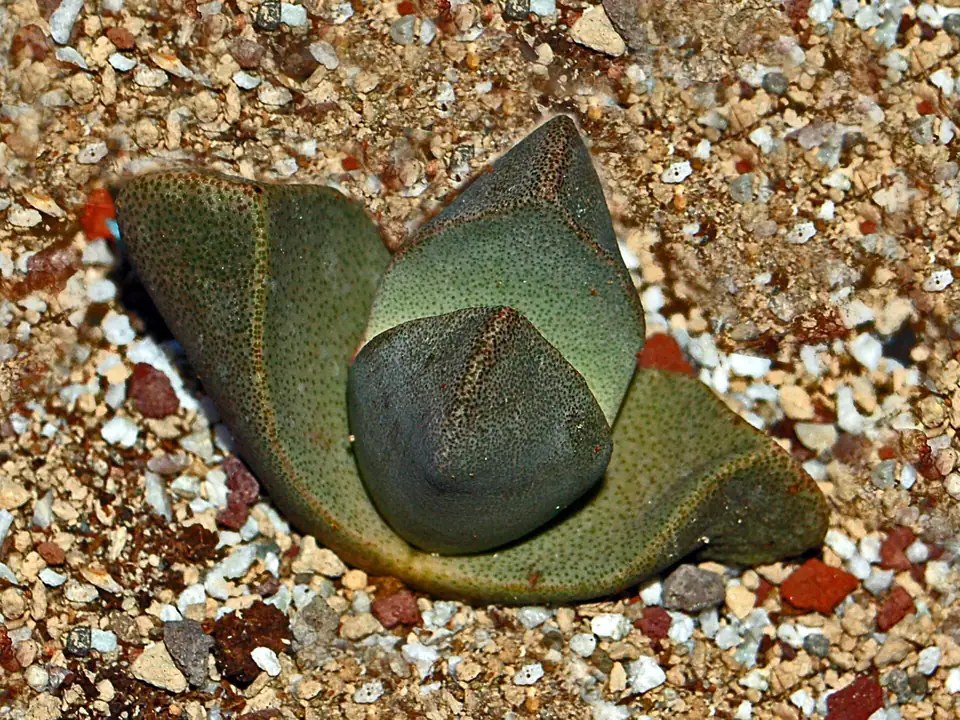
Pleiospilos bolusii es una suculenta sin tallo de Sudáfrica, de aproximadamente 3 pulgadas [7,6 cm] de alto y 6 pulgadas [15 cm] de ancho. [1] Necesita una mezcla para macetas con buen drenaje y nada de agua mientras está inactiva en verano. [1]
Citado en inglés, como en la fuente.
Cuidados
Las medidas entre corchetes son nuestra conversión al otro sistema de unidades; el texto citado no cambia.
Riego
Riego
Inactivo en verano y no necesita agua; en otoño, riega abundantemente durante el ciclo de crecimiento y deja que la mezcla para macetas se seque entre riegos
Qué dicen las fuentes (1)
The plant is dormant during the summer and does not require water. During the fall, it is best to water thoroughly during its growing cycle but allow the potting mix to dry out between waterings.Notas sobre el riego
Mezcla para macetas con buen drenaje; evita el exceso de riego
Qué dicen las fuentes (1)
Insects, Diseases, and Other Plant Problems: This plant is generally disease free. Monitor for aphids and avoid overwatering.Luz
Luz indirecta brillante; tolera el sol directo de la mañana; semisombra por la tarde
Qué dicen las fuentes (1)
This plant prefers bright, indirect sunlight. It can tolerate direct morning sun but prefers partial shade in the afternoon.Clima y frío
Rusticidad, zona más fría
9b [mínima invernal de −3,9 a −1,1 °C (de 25 a 30 °F)]
Qué dicen las fuentes (2)
USDA Plant Hardiness Zone:
9b, 10a, 10b, 11aThey are not cold weather tolerant and are hardy in USDA Plant Hardiness Zones of 9b to 11b.Rusticidad, zona más cálida
Las fuentes no coinciden:
Qué dicen las fuentes (2)
USDA Plant Hardiness Zone:
9b, 10a, 10b, 11aThey are not cold weather tolerant and are hardy in USDA Plant Hardiness Zones of 9b to 11b.Dónde cultivarla
En interior
Sí
Qué dicen las fuentes (1)
This small plant is easy to grow, and it can be used as a houseplant or in warmer climates planted in a rock garden.En maceta
Sí
Qué dicen las fuentes (1)
Landscape Location:
Container
Houseplants
Small Space
Landscape Theme:
Rock GardenPropagación
Semilla, división
Qué dicen las fuentes (1)
Repotting may be required every 2 years. It may be propagated by seeds or division.Cultivo
La planta
Ciclo de vida
perenne
Qué dicen las fuentes (1)
The African Living Rock is a small succulent herbaceous perennial that has a stone-like or pebble-like appearance and is native to South Africa.Familia
Aizoaceae
Qué dicen las fuentes (1)
It is a member of the ice plant family (Aizoaceae).Altura adulta
7.62 cm (3 pulgadas)
Qué dicen las fuentes (1)
The plant has a clump-forming habit, stemless, and grows about 3 inches tall and 6 inches wide with a split in the middle where new growth occurs.Anchura adulta
15.24 cm (6 pulgadas)
Qué dicen las fuentes (1)
The plant has a clump-forming habit, stemless, and grows about 3 inches tall and 6 inches wide with a split in the middle where new growth occurs.Plagas y enfermedades
Plagas
pulgones
Qué dicen las fuentes (1)
Insects, Diseases, and Other Plant Problems: This plant is generally disease free. Monitor for aphids and avoid overwatering.Remedios
Cada remedio indica qué dicen las fuentes oficiales; los remedios tradicionales sin fuente oficial aparecen marcados. Los perjudiciales están para que sepas evitarlos.
Cuidar la planta
cochinillas harinosas
hisopo con alcohol isopropílico Fuente oficial, sin prueba independiente
Make sure to test the soap and alcohol mixtures on a small portion of the plant prior to full application because some plants may be sensitive to soap or alcohol.
— planttalk.colostate.edu [2] Cómo: Toca los insectos con un hisopo de algodón empapado en alcohol isopropílico y repite cada semana hasta que los insectos desaparezcan.
For smaller infestations, dab the insects with a cotton swab dipped in rubbing alcohol. Repeat this procedure every week until the bugs are gone.
— planttalk.colostate.edu [2] jabón insecticida Fuente oficial, sin prueba independiente
Make sure to test the soap and alcohol mixtures on a small portion of the plant prior to full application because some plants may be sensitive to soap or alcohol.
— planttalk.colostate.edu [2] Cómo: Poda las ramas infestadas, destruye las plantas gravemente infestadas; las plagas también pueden controlarse con jabón insecticida.
Control mealy bugs by pruning infested branches and removing and destroying heavily infested plants. These pests may also be controlled with insecticidal soap.
— planttalk.colostate.edu [2]
pudrición de la raíz
eliminando las partes afectadas y cambiando el sustrato No verificado
Remedio tradicional, no verificado por una fuente oficial.
Cómo: Elimina las partes afectadas y cambia el sustrato.
Toxicidad
Según la fuente, citada textualmente. No es un consejo médico ni veterinario: si una persona o un animal pudo haber ingerido esta planta, contacta con un centro de toxicología o con un veterinario.
#succulent #non-toxic for cats #non-toxic for horses #non-toxic for dogs
[1]La fuente señala el riesgo para este animal pero no explica por qué.
Comestibilidad
Según la fuente, citada textualmente. No comas una planta basándote solo en esta página: los errores de identificación pueden ser peligrosos.
Wildlife Value: In South Africa, sheep and goats feed on this plant.
[1]
Plantas similares
- Hardy Ice Plant Delosperma nubigenum
- Delosperma sutherlandii Delosperma sutherlandii
- Hardy Ice Plant Delosperma cooperi
- Rocío Mesembryanthemum cordifolium
- Uña de gato Carpobrotus edulis
- Abeto de Vancuver Abies grandis
- Acanthus hungaricus Acanthus hungaricus
- Achlys triphylla Achlys triphylla
Fuentes
Cada valor anterior se cita de estos documentos. Los enlaces llevan al editor original.
- Pleiospilos bolusii (African Living Rock, Living Rock Cactus, Mimicry Plant) | North Carolina Extension Gardener Plant Toolbox · plants.ces.ncsu.edu, consultado
- planttalk.colostate.edu · planttalk.colostate.edu
Escrito por Emilio Marruso · última revisión