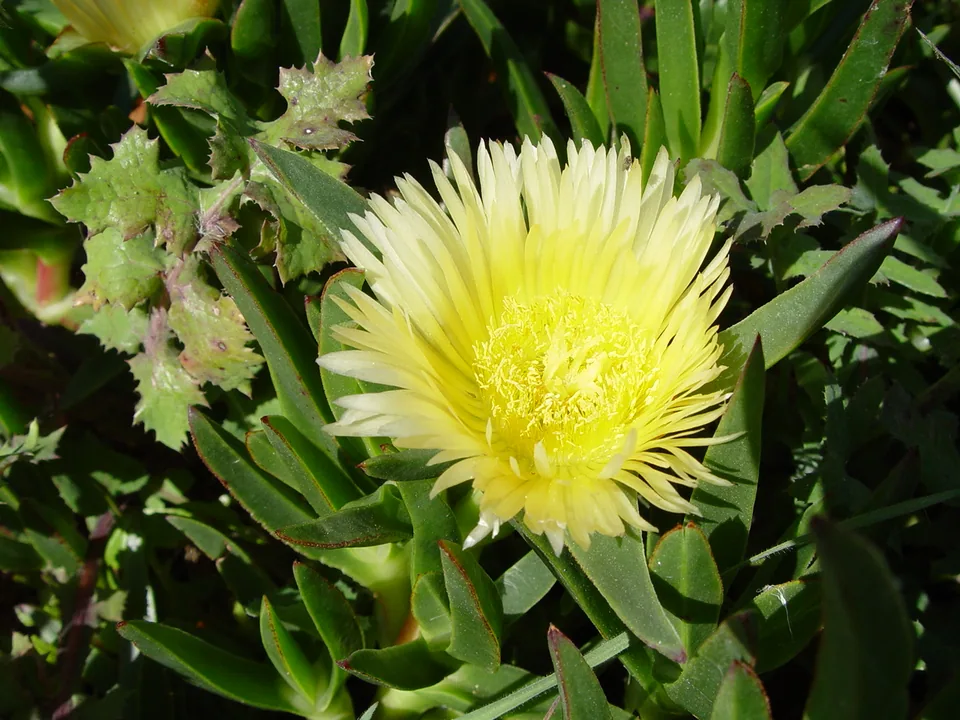

Cómo cultivar y cuidar Uña de gato
Carpobrotus edulis
Escrito por Emilio Marruso · última revisión
De un vistazo
Esta planta tapizante, baja y resistente, pide muy poco: una vez arraigada aguanta la sequía sin riego extra, a pleno sol o en sombra seca. Mide de 15 a 30 cm de alto, se multiplica rápido por esquejes de tallo y además te regala un fruto comestible de sabor intenso, salado y ácido, para comer fresco, cocinado, seco o en encurtidos y chutney.
- Sol
Sol pleno o sombra seca
Qué dicen las fuentes (2)
- Riego
Resiste la sequía: una vez arraigada no necesita riego; el exceso de agua pudre las raíces
Qué dicen las fuentes (4)
Riego: Tolerante a la sequía; no necesita riego adicional una vez establecida
This drought tolerant plant should not need additional irrigation once established.
— Hottentots Fig, Kaapsevy - Carpobrotus edulis [6] As long as their soil drains well, the soil is allowed to dry out between watering and the plant receives pinching or
— Learn About Hottentot Fig Cultivation And Is Hottentot Fig Invasive | Gardening Know How [5] Notas sobre el riego: La pudrición de la raíz es la principal preocupación en jardines con riego; la alta humedad causa pudrición bacteriana de las hojas
However, in Florida, root rot may be the greatest concern in an irrigated landscape. You might try locating it in
— FPS109 [4] It is tender to frost, and high humidity will cause bacterial rot of the leaves.
— Hottentots Fig, Kaapsevy - Carpobrotus edulis [6] - Distancia
60–90 cm entre plantas
Qué dicen las fuentes (1)
Distancia de plantación: 61.0-91.4 cm (24 a 36 pulgadas)
Plant spacing: 24 to 36 inches  3 Carpobrotus edulis Ice Plant Other Roots:
— FPS109 [4] - Plantación
Plántala en cualquier época del año donde los inviernos son suaves
Qué dicen las fuentes (1)
Plantación: Todo el año (zonas 7b-11)
Planting month for zone 7: year round Planting month for zone 8: year round
— FPS109 [4] - Poda
Poda en otoño
Qué dicen las fuentes (1)
Poda: Otoño
An important part of hottentot fig cultivation in areas where it is a problem plant is cutting back the plant in fall. This will
— Learn About Hottentot Fig Cultivation And Is Hottentot Fig Invasive | Gardening Know How [5] - Cosecha
Fruto comestible, crudo, cocinado o seco, de sabor salado y ácido
- Plagas
Podredumbre de raíz y tallo y salivazo; plántala donde la tierra drene muy bien
Qué dicen las fuentes (1)
Enfermedades: pudrición de la raíz
However, in Florida, root rot may be the greatest concern in an irrigated landscape.
— FPS109 [4] - Tamaño
De 15 a 30 cm de alto
Qué dicen las fuentes (1)
Altura adulta: 15-30 cm (½ a 1 pie)
Description Height: ½ to 1 feet Spread: depends upon supporting structure Plant habit: prostrate (flat); spreading
— FPS109 [4] - Multiplicación
Los esquejes de tallo son lo más rápido; también por semilla
Qué dicen las fuentes (2)
Propagación: Esquejes de tallo (el más rápido), semilla
Stem cutting is the fastest way to propagate this fast growing plant. Seeds are also available and you may start
— Learn About Hottentot Fig Cultivation And Is Hottentot Fig Invasive | Gardening Know How [5] Carpobrotus edulis roots easily from cuttings without the need for hormone powder. Cuttings can rot easily, so root them in
— Hottentots Fig, Kaapsevy - Carpobrotus edulis [6] - Siembra
Siembra en interior al menos 6 semanas antes de la última helada
Qué dicen las fuentes (1)
Siembra: En interiores al menos seis semanas antes de la última fecha de helada
Seeds are also available and you may start them indoors at least six weeks before the date of the last frost .
— Learn About Hottentot Fig Cultivation And Is Hottentot Fig Invasive | Gardening Know How [5] - Maceta
Crece también en maceta
Qué dicen las fuentes (1)
En maceta: Sí
Growing hottentot figs in containers is ideal, and you can overwinter them in temperate regions. Just
— Learn About Hottentot Fig Cultivation And Is Hottentot Fig Invasive | Gardening Know How [5]
Resumen
Carpobrotus edulis es una suculenta perenne de hoja perenne que forma matas, originaria de Sudáfrica y ampliamente cultivada como ornamental. [3][7] Necesita suelo bien drenado y una posición soleada, y es resistente a la sequía una vez establecida. [7][6] Ha escapado del cultivo, especialmente cerca de la costa, y se considera una maleza invasora en muchas regiones. [3][2]
Citado en inglés, como en la fuente.
Cuidados
Riego
Riego
Tolerante a la sequía; no necesita riego adicional una vez establecida
Qué dicen las fuentes (2)
This drought tolerant plant should not need additional irrigation once established.As long as their soil drains well, the soil is allowed to dry out between watering and the plant receives pinching orNotas sobre el riego
La pudrición de la raíz es la principal preocupación en jardines con riego; la alta humedad causa pudrición bacteriana de las hojas
Luz
Pleno sol a semisombra seca
Clima y frío
Rusticidad, zona más fría
Las fuentes dan valores distintos según la región, la zona o las condiciones de cultivo.
Lo que dice cada fuente
Según UF/IFAS Extension: 7b [mínima invernal de −15 a −12,2 °C (de 5 a 10 °F)]
Según Gardening Know How: 9 [mínima invernal de −6,7 a −1,1 °C (de 20 a 30 °F)]
Qué dicen las fuentes (2)
Según UF/IFAS Extension: USDA hardiness zones: 7B through 11 (Figure 4) Planting month for zone 7: yearSegún Gardening Know How: growing hottentot fig in USDA plant hardiness zones 9 to 11 is such aRusticidad, zona más cálida
11 [mínima invernal de 4,4 a 10 °C (de 40 a 50 °F)]
Dónde cultivarla
En maceta
Sí
Qué dicen las fuentes (1)
Growing hottentot figs in containers is ideal, and you can overwinter them in temperate regions. JustDistancia de plantación
61.0-91.4 cm (24 a 36 pulgadas)
Qué dicen las fuentes (1)
Plant spacing: 24 to 36 inches  3 Carpobrotus edulis Ice Plant Other Roots:Propagación
Esquejes de tallo (el más rápido), semilla
Qué dicen las fuentes (2)
Stem cutting is the fastest way to propagate this fast growing plant. Seeds are also available and you may startCarpobrotus edulis roots easily from cuttings without the need for hormone powder. Cuttings can rot easily, so root them inCultivo
La planta
Familia
Aizoaceae
Qué dicen las fuentes (2)
Scientific name: Carpobrotus edulis Pronunciation: kar-poe-BROE-tus ED-yoo-liss Common name(s): ice plant, hottentot fig Family: AizoaceaeTAXONOMÍA: Phylum: Magnoliophyta. Clase: Magnoliopsida. Orden: Caryophyllales. Familia: Aizoaceae.Altura adulta
15-30 cm (½ a 1 pie)
Qué dicen las fuentes (1)
Description Height: ½ to 1 feet Spread: depends upon supporting structure Plant habit: prostrate (flat); spreadingPlagas y enfermedades
Enfermedades
pudrición de la raíz
Qué dicen las fuentes (1)
However, in Florida, root rot may be the greatest concern in an irrigated landscape.Problemas
Podredumbre de la raíz
Síntoma: Pudrición de la raíz en jardines con riego
Qué hacer: Planta donde el drenaje sea excepcionalmente bueno y el riego no llegue
Qué dicen las fuentes (1)
You might try locating it in a place where drainage is exceptionally good (on a sandy ridge) and where irrigation
— FPS109 [4] Espumas (salivazos) y pudriciones del tallo o de la raíz
Síntoma: Chinches espumosas, pudriciones de raíz y pudriciones del tallo
Qué hacer: Rocía con jabón hortícola; minimiza el riego por aspersión
Qué dicen las fuentes (1)
The only serious threats to the plant's health are spittle bugs and some root rots and stem rots. You can
— Learn About Hottentot Fig Cultivation And Is Hottentot Fig Invasive | Gardening Know How [5]
Remedios
Cada remedio indica qué dicen las fuentes oficiales; los remedios tradicionales sin fuente oficial aparecen marcados. Los perjudiciales están para que sepas evitarlos.
Cuidar la planta
pudrición de la raíz
sitio con buen drenaje y sin riego Fuente oficial, sin prueba independiente
Cómo: Ubica la planta donde el drenaje sea excepcionalmente bueno y el riego no llegue.
You might try locating it in a place where drainage is exceptionally good (on a sandy ridge) and where irrigation does not reach.
— FPS109 [4]
Cómo eliminarla
mantos invasivos
arrancado a mano No verificado
Remedio tradicional, no verificado por una fuente oficial.
plant material should be removed and disposed of, as fragments of C. edulis can re-root following hand removal.
— gd.eppo.int [8] Cómo: Arranca las plantas individualmente a mano y retira cualquier tallo enterrado, durante todo el año; los mantos grandes se pueden enrollar como una alfombra, y la vegetación se retira del sitio o se mantiene fuera del suelo mediante acolchado.
acolchado con material vegetal retirado No verificado
Remedio tradicional, no verificado por una fuente oficial.
plant material should be removed and disposed of, as fragments of C. edulis can re-root following hand removal.
— gd.eppo.int [8] Cómo: Si la eliminación no es posible, haz acolchado con el material vegetal retirado para evitar la mayoría de los rebrotes; se necesita al menos una visita de seguimiento para eliminar los rebrotes.
secado de plantas arrancadas a mano bajo plástico negro No verificado
Remedio tradicional, no verificado por una fuente oficial.
plant material should be removed and disposed of, as fragments of C. edulis can re-root following hand removal.
— gd.eppo.int [8] Cómo: Después de arrancar a mano, deja las plantas a secar en un lugar seguro, preferiblemente cubiertas con plástico negro para acelerar su destrucción.
Calendario
Siembra
En interiores al menos seis semanas antes de la última fecha de helada
Qué dicen las fuentes (1)
Seeds are also available and you may start them indoors at least six weeks before the date of the last frost .Plantación
Todo el año (zonas 7b-11)
Qué dicen las fuentes (1)
Planting month for zone 7: year round Planting month for zone 8: year roundPoda
Otoño
Qué dicen las fuentes (1)
An important part of hottentot fig cultivation in areas where it is a problem plant is cutting back the plant in fall. This willMeses tal como los dan las fuentes, en su mayoría de Estados Unidos (hemisferio norte). En el hemisferio sur se desplazan unos seis meses.
Comestibilidad
Según la fuente, citada textualmente. No comas una planta basándote solo en esta página: los errores de identificación pueden ser peligrosos.
Plantas similares
- Delosperma sutherlandii Delosperma sutherlandii
- Hardy Ice Plant Delosperma cooperi
- Hardy Ice Plant Delosperma nubigenum
- Rocío Mesembryanthemum cordifolium
- African Living Rock Pleiospilos bolusii
- Abeto de Vancuver Abies grandis
- Abraham Trachystemon orientalis
- Bananero de Etiopía Ensete ventricosum
Fuentes
Cada valor anterior se cita de estos documentos. Los enlaces llevan al editor original.
- Carpobrotus edulis (L.) N.E. Br · miteco.gob.es, consultado
- Carpobrotus edulis (L.) L. Bolus - Herbari Virtual del Mediterrani Occidental · herbarivirtual.uib.cat, consultado
- Carpobrotus edulis - Useful Temperate Plants · temperate.theferns.info, consultado
- FPS109 · edis.ifas.ufl.edu, consultado
- Learn About Hottentot Fig Cultivation And Is Hottentot Fig Invasive | Gardening Know How · gardeningknowhow.com, consultado
- Hottentots Fig, Kaapsevy - Carpobrotus edulis · gardeninginsouthafrica.co.za, consultado
- GISD · iucngisd.org, consultado
- gd.eppo.int · gd.eppo.int
Escrito por Emilio Marruso · última revisión