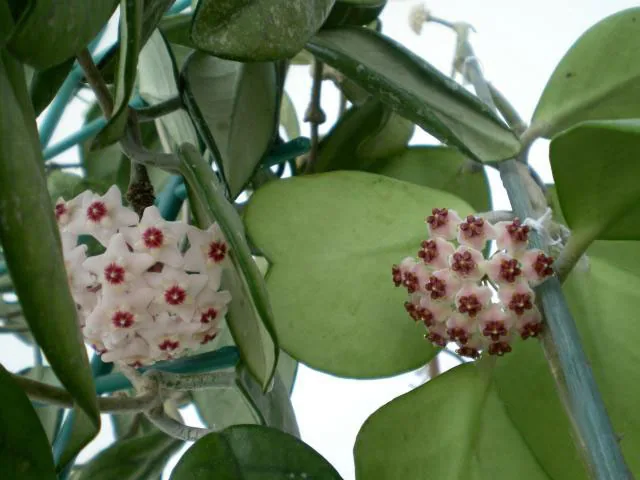


How to Grow and Care for Sweetheart Hoya
Hoya kerrii
Written by Emilio Marruso · last checked
Not toxic to cats and dogs, according to the sources · Sources
At a glance
This hoya is an easy friend for a pot indoors, and it is safe around cats, dogs and horses. Give it room-temperature water, let it dry a little between waterings, and feed it lightly in spring and summer. Let it rest in winter without fertilizer, and it will reward you by flowering better in the warm months.
- Water
Room-temperature water; let it dry a little between waterings, since too much water stops the flowers
What the sources say (2)
Watering notes: Use room-temperature water, as cold water can send the plant into shock; overwatering can inhibit flowering; thinning, brown or wrinkled leaves can mean the plant is drying too much between waterings
Watering should be done with room-temperature water, as cold water can send the plant into shock.
— Hoya kerrii (Lucky Heart Plant, Sweetheart Hoya, Sweetheart Plant, Sweetheart Valentine Hoya, Valentine Hoya, Wax Hearts) | North Carolina Extension Gardener Plant Toolbox [1] Overwatering can also inhibit the plant's ability to flower. Thinning, brown or wrinkled leaves can mean that the plant is being allowed to dry too much between watering.
— Hoya kerrii (Lucky Heart Plant, Sweetheart Hoya, Sweetheart Plant, Sweetheart Valentine Hoya, Valentine Hoya, Wax Hearts) | North Carolina Extension Gardener Plant Toolbox [1] - Soil
Soil with a pH of 6.0–8.0
What the sources say (2)
Soil pH, minimum: 6.0
Soil pH: Neutral (6.0-8.0) Soil Drainage: Good Drainage
— Hoya kerrii (Lucky Heart Plant, Sweetheart Hoya, Sweetheart Plant, Sweetheart Valentine Hoya, Valentine Hoya, Wax Hearts) | North Carolina Extension Gardener Plant Toolbox [1] Soil pH, maximum: 8.0
Soil pH: Neutral (6.0-8.0) Soil Drainage: Good Drainage
— Hoya kerrii (Lucky Heart Plant, Sweetheart Hoya, Sweetheart Plant, Sweetheart Valentine Hoya, Valentine Hoya, Wax Hearts) | North Carolina Extension Gardener Plant Toolbox [1] - Feeding
Half- or quarter-strength fertilizer with most waterings in spring and summer; none in winter
What the sources say (6)
When: Spring and summer; no feeding in winter
Light, regular fertilizer applications in spring and summer are ideal.
— All About Hoyas | Yard and Garden [3] Do not fertilize in winter, as this allows for rest and will promote better flowering during the warmer months.
— All About Hoyas | Yard and Garden [3] How often: Light, regular feeding: with most waterings, skipping one every second or third watering
Use an all-purpose fertilizer at 1/2 or 1/4 strength, skipping an application every other or every third watering.
— All About Hoyas | Yard and Garden [3] Mineral fertilizers: All-purpose fertilizer at half or quarter strength, or a slow-release fertilizer used as directed
Use an all-purpose fertilizer at 1/2 or 1/4 strength, skipping an application every other or every third watering.
— All About Hoyas | Yard and Garden [3] Alternatively, a slow-release fertilizer applied according ot directions can work well.
— All About Hoyas | Yard and Garden [3] Avoid: Fertilizing in winter, when the plant should rest to flower better in the warm months
Do not fertilize in winter, as this allows for rest and will promote better flowering during the warmer months.
— All About Hoyas | Yard and Garden [3] - Pests
Aphids, spider mites and mealybugs; too much water rots the roots
What the sources say (2)
Pests: aphids, spider mites, mealybugs
Insects affecting this plant include aphids, spider mites and mealybugs.
— Hoya kerrii (Lucky Heart Plant, Sweetheart Hoya, Sweetheart Plant, Sweetheart Valentine Hoya, Valentine Hoya, Wax Hearts) | North Carolina Extension Gardener Plant Toolbox [1] Diseases: root rot
If the container does not keep the plant root-bound, it may hold excess water, which can lead to root rot.
— Hoya kerrii (Lucky Heart Plant, Sweetheart Hoya, Sweetheart Plant, Sweetheart Valentine Hoya, Valentine Hoya, Wax Hearts) | North Carolina Extension Gardener Plant Toolbox [1] - Propagation
From stem cuttings; a single leaf without a stem joint may root but won't grow into a vine
What the sources say (2)
Propagation: Stem cutting; leaf cutting (a leaf cutting without a stem node attached may root but will not develop into a vining plant)
Recommended Propagation Strategy: Leaf Cutting Stem Cutting Country Or Region Of Origin:
— Hoya kerrii (Lucky Heart Plant, Sweetheart Hoya, Sweetheart Plant, Sweetheart Valentine Hoya, Valentine Hoya, Wax Hearts) | North Carolina Extension Gardener Plant Toolbox [1] Leaf cuttings will often root, but will not form a vine unless a node is also attached.
— All About Hoyas | Yard and Garden [3] - Containers
Grows indoors in a pot with good drainage
What the sources say (2)
Indoors: Yes
The heart-shaped leaves of this species make it a popular houseplant
— Hoya kerrii (Lucky Heart Plant, Sweetheart Hoya, Sweetheart Plant, Sweetheart Valentine Hoya, Valentine Hoya, Wax Hearts) | North Carolina Extension Gardener Plant Toolbox [1] In containers: Yes
The container should provide good drainage to allow the plant to dry somewhat between watering.
— Hoya kerrii (Lucky Heart Plant, Sweetheart Hoya, Sweetheart Plant, Sweetheart Valentine Hoya, Valentine Hoya, Wax Hearts) | North Carolina Extension Gardener Plant Toolbox [1] - Safety
Safe for cats, dogs and horses
Overview
Hoya kerrii is an evergreen, epiphytic, vining herbaceous perennial in the dogbane family (Apocynaceae). [1] Its heart-shaped leaves make it a popular houseplant, often sold as a single rooted leaf. [1] The container should drain well so the plant can dry somewhat between waterings. [1]
Sweetheart Hoya care
How to water Sweetheart Hoya
Watering
The sources give different values depending on region, zone or growing conditions.
What each source says
According to NC State Extension: Allow the plant to dry somewhat between waterings
According to Penn State Extension: Keep the soil moist, not wet; some collectors wait until the leaves slightly pucker before watering
According to Iowa State Extension: Water thoroughly, then allow the mix to dry almost completely before watering again
What the sources say (4)
According to NC State Extension: The container should provide good drainage to allow the plant to dry somewhat between watering.According to Penn State Extension: Choose a well-drained soil and keep it moist, not wet.According to Iowa State Extension: Water thoroughly so the entire root zone is moistened, then allow the mix to dry almost completely before watering again.The container should provide good drainage to allow the plant to dry somewhat between watering.Watering notes
Use room-temperature water, as cold water can send the plant into shock; overwatering can inhibit flowering; thinning, brown or wrinkled leaves can mean the plant is drying too much between waterings
What the sources say (2)
Watering should be done with room-temperature water, as cold water can send the plant into shock.Overwatering can also inhibit the plant's ability to flower. Thinning, brown or wrinkled leaves can mean that the plant is being allowed to dry too much between watering.How much light Sweetheart Hoya needs
The sources give different values depending on region, zone or growing conditions.
What each source says
According to NC State Extension: Dappled sunlight (shade through upper canopy all day)
According to Penn State Extension: Medium to bright, indirect light
According to Iowa State Extension: Bright, indirect light
What the sources say (4)
According to NC State Extension: Dappled Sunlight (Shade through upper canopy all day)According to Penn State Extension: Medium to bright, indirect light and preferably placed adjacent to a windowAccording to Iowa State Extension: Hoyas thrive in bright, indirect light.Light:
Dappled Sunlight (Shade through upper canopy all day)Best soil for Sweetheart Hoya
Soil pH, minimum
6.0
What the sources say (1)
Soil pH:
Neutral (6.0-8.0)
Soil Drainage:
Good DrainageSoil pH, maximum
8.0
What the sources say (1)
Soil pH:
Neutral (6.0-8.0)
Soil Drainage:
Good DrainageWhere to grow Sweetheart Hoya
Indoors
Yes
What the sources say (1)
The heart-shaped leaves of this species make it a popular houseplantIn containers
Yes
What the sources say (1)
The container should provide good drainage to allow the plant to dry somewhat between watering.How to propagate Sweetheart Hoya
Stem cutting; leaf cutting (a leaf cutting without a stem node attached may root but will not develop into a vining plant)
What the sources say (2)
Recommended Propagation Strategy:
Leaf Cutting
Stem Cutting
Country Or Region Of Origin:Leaf cuttings will often root, but will not form a vine unless a node is also attached.How to grow Sweetheart Hoya
The plant
Life cycle
perennial
What the sources say (1)
Sweetheart hoya is an evergreen, epiphytic, vining herbaceous perennial in the dogbane family (Apocynaceae).Family
Apocynaceae
What the sources say (1)
Sweetheart hoya is an evergreen, epiphytic, vining herbaceous perennial in the dogbane family (Apocynaceae).Pests and diseases
Pests
aphids, spider mites, mealybugs
What the sources say (1)
Insects affecting this plant include aphids, spider mites and mealybugs.Diseases
root rot
What the sources say (1)
If the container does not keep the plant root-bound, it may hold excess water, which can lead to root rot.Fertilizing
When
Spring and summer; no feeding in winter
How often
Light, regular feeding: with most waterings, skipping one every second or third watering
What the sources say (1)
Use an all-purpose fertilizer at 1/2 or 1/4 strength, skipping an application every other or every third watering.Mineral fertilizers
All-purpose fertilizer at half or quarter strength, or a slow-release fertilizer used as directed
What the sources say (2)
Use an all-purpose fertilizer at 1/2 or 1/4 strength, skipping an application every other or every third watering.Alternatively, a slow-release fertilizer applied according ot directions can work well.Avoid
Fertilizing in winter, when the plant should rest to flower better in the warm months
What the sources say (1)
Do not fertilize in winter, as this allows for rest and will promote better flowering during the warmer months.Sweetheart Hoya pests and problems
Root rot and overwatering
Symptom: Excess water in the container can lead to root rot; overwatering can also inhibit flowering.
What to do: Use a container with good drainage and let the plant dry somewhat between waterings.
What the sources say (2)
it may hold excess water, which can lead to root rot. Overwatering can also inhibit the plant's ability to flower.
— Hoya kerrii (Lucky Heart Plant, Sweetheart Hoya, Sweetheart Plant, Sweetheart Valentine Hoya, Valentine Hoya, Wax Hearts) | North Carolina Extension Gardener Plant Toolbox [1] The container should provide good drainage to allow the plant to dry somewhat between watering.
— Hoya kerrii (Lucky Heart Plant, Sweetheart Hoya, Sweetheart Plant, Sweetheart Valentine Hoya, Valentine Hoya, Wax Hearts) | North Carolina Extension Gardener Plant Toolbox [1] Insect pests
Symptom: Aphids, spider mites and mealybugs affect this plant.
What the sources say (1)
Insects affecting this plant include aphids, spider mites and mealybugs.
— Hoya kerrii (Lucky Heart Plant, Sweetheart Hoya, Sweetheart Plant, Sweetheart Valentine Hoya, Valentine Hoya, Wax Hearts) | North Carolina Extension Gardener Plant Toolbox [1] Underwatering
Symptom: Thinning, brown or wrinkled leaves can mean the plant is being allowed to dry too much between watering.
What the sources say (1)
Thinning, brown or wrinkled leaves can mean that the plant is being allowed to dry too much between watering.
— Hoya kerrii (Lucky Heart Plant, Sweetheart Hoya, Sweetheart Plant, Sweetheart Valentine Hoya, Valentine Hoya, Wax Hearts) | North Carolina Extension Gardener Plant Toolbox [1]
Remedies
Each remedy shows what official sources say about it; traditional remedies without an official source are marked as such. Harmful ones are listed so you know to avoid them.
Treating the plant
mealybugs
rubbing alcohol on a cotton swab Partly works
Make sure to test the soap and alcohol mixtures on a small portion of the plant prior to full application because some plants may be sensitive to soap or alcohol.
— planttalk.colostate.edu [6] How: Hose them off with water or dab them directly with a cotton swab dipped in rubbing alcohol as soon as they are spotted.
I usually hose them off with water or dab them directly with a cotton swab dipped in rubbing alcohol as soon as I spot them.
— joyusgarden.com [4] What the evidence says Picking off individual mealybugs and egg sacs or dabbing each one with an alcohol–soaked cotton swab may be satisfactory for lightly–infested plants
— yardandgarden.extension.iastate.edu [5] rubbing alcohol and water spray Works
Make sure to test the soap and alcohol mixtures on a small portion of the plant prior to full application because some plants may be sensitive to soap or alcohol.
— planttalk.colostate.edu [6] How: Spray a mixture of 10 percent rubbing alcohol and 90 percent water on heavy infestations; repeat every week until the bugs are gone.
For heavy infestations, spray a mixture of 10 percent rubbing alcohol and 90 percent water directly onto the insects.
— planttalk.colostate.edu [6] What the evidence says For heavy infestations, spray a mixture of 10 percent rubbing alcohol and 90 percent water directly onto the insects.
— planttalk.colostate.edu [6]
aphids
strong water spray Partly works
How: A strong spray of water is usually enough to dislodge them; give the plant a good shower in the tub or outside with the hose.
A strong spray of water is usually enough to dislodge them—give an infested plant a good shower in your tub or outside with the hose.
— libanswers.nybg.org [7] What the evidence says For light infestations, a forceful spray of water can dislodge most aphids.
— yardandgarden.extension.iastate.edu [8] insecticidal soap Works
Make sure to test the soap and alcohol mixtures on a small portion of the plant prior to full application because some plants may be sensitive to soap or alcohol.
— planttalk.colostate.edu [6] How: Insecticidal soap labeled for indoor plants is an option; follow label directions.
Insecticidal soap and other insecticides labeled for use on indoor plants are options for treatment. Always follow label directions.
— yardandgarden.extension.iastate.edu [8] What the evidence says Insecticidal soap and other insecticides labeled for use on indoor plants are options for treatment. Always follow label directions.
— yardandgarden.extension.iastate.edu [8]
scale
rubbing scales off by hand Partly works
Make sure to test the soap and alcohol mixtures on a small portion of the plant prior to full application because some plants may be sensitive to soap or alcohol.
— planttalk.colostate.edu [6] How: Rub off scales by hand; if stubborn, tap each scale with alcohol on a cotton swab.
Rub off scales by hand. If they are stubborn, tap each scale with alcohol on a cotton swab to help it to release.
— libanswers.nybg.org [7] What the evidence says If only a few are found, spot treat with a spray of rubbing alcohol or a cotton swab dipped in rubbing alcohol.
— yardandgarden.extension.iastate.edu [8]
Is Sweetheart Hoya poisonous?
Reported by the source, quoted verbatim. This is not medical or veterinary advice: if a person or an animal may have eaten this plant, contact a poison control centre or a veterinarian.
#houseplant #non-toxic for cats #non-toxic for horses #non-toxic for dogs #dry soils tolerant
[1]The source flags the risk for this animal but does not explain why.
Similar plants
- Cinnamon Hoya Hoya lacunosa
- Common Hoya Hoya australis
- Fung Wax Flower Hoya curtisii
- Wax Plant Hoya pubicalyx
- Waxflower Hoya bella
- Hoya Hoya carnosa
- Allamanda Allamanda cathartica
- Desert Rose Adenium obesum
Sources
Every value above is quoted from these documents. Links lead to the original publisher.
- Hoya kerrii (Lucky Heart Plant, Sweetheart Hoya, Sweetheart Plant, Sweetheart Valentine Hoya, Valentine Hoya, Wax Hearts) | North Carolina Extension Gardener Plant Toolbox · plants.ces.ncsu.edu, consulted
- Hoyas as Houseplants · extension.psu.edu, consulted
- All About Hoyas | Yard and Garden · yardandgarden.extension.iastate.edu, consulted
- joyusgarden.com · joyusgarden.com
- yardandgarden.extension.iastate.edu · yardandgarden.extension.iastate.edu
- planttalk.colostate.edu · planttalk.colostate.edu
- libanswers.nybg.org · libanswers.nybg.org
- yardandgarden.extension.iastate.edu · yardandgarden.extension.iastate.edu
Written by Emilio Marruso · last checked