
How to Grow and Care for Common Hoya
Hoya australis
Written by Emilio Marruso · last checked
Not toxic to cats and dogs, according to the sources · Sources
At a glance
Hoya australis is a forgiving perennial that is happy indoors and in pots, and it even likes being a little crowded in its container. Give it bright light for the best blooms and go easy on the water, since it tolerates dry soil. Its flowers last a long time, and it is non-toxic to cats, dogs and horses.
- Sun
Bright light for the best blooms
What the sources say (1)
Light: Bright light for best blooming
Do not overwater and place in bright light for best blooming.
— Hoya australis (Common Hoya, Common Wax Flower, Wax Vine) | North Carolina Extension Gardener Plant Toolbox [1] - Water
Don't overwater: it handles dry soil, and too much water rots the roots
What the sources say (3)
Watering: Do not overwater; tolerant of dry soils
Do not overwater and place in bright light for best blooming.
— Hoya australis (Common Hoya, Common Wax Flower, Wax Vine) | North Carolina Extension Gardener Plant Toolbox [1] Aphids, mealybugs, scale, and spider mites are the most common pest problems. Overwatering can lead to root rot.
— Hoya australis (Common Hoya, Common Wax Flower, Wax Vine) | North Carolina Extension Gardener Plant Toolbox [1] Diseases: root rot (from overwatering)
Aphids, mealybugs, scale, and spider mites are the most common pest problems. Overwatering can lead to root rot.
— Hoya australis (Common Hoya, Common Wax Flower, Wax Vine) | North Carolina Extension Gardener Plant Toolbox [1] - Cold
Survives winters down to 30 °F (−1.1 °C)
Half hardy: mild winters or an unheated greenhouse · USDA 10a · RHS H3 · Z10
What the sources say (2)
Hardiness, coldest zone: 10a [winter low −1.1 to 1.7 °C (30 to 35 °F)]
USDA Plant Hardiness Zone: 10a, 10b, 11a, 11b
— Hoya australis (Common Hoya, Common Wax Flower, Wax Vine) | North Carolina Extension Gardener Plant Toolbox [1] Hardiness, warmest zone: 11b [winter low 7.2 to 10 °C (45 to 50 °F)]
USDA Plant Hardiness Zone: 10a, 10b, 11a, 11b
— Hoya australis (Common Hoya, Common Wax Flower, Wax Vine) | North Carolina Extension Gardener Plant Toolbox [1] - Soil
Well-drained soil, pH 6.0–8.0
What the sources say (3)
Watering notes: Likes well-drained soil and being pot-bound
Like many succulents, it likes to be pot-bound in well-drained soil.
— Hoya australis (Common Hoya, Common Wax Flower, Wax Vine) | North Carolina Extension Gardener Plant Toolbox [1] Soil pH, minimum: 6.0
Soil pH: Neutral (6.0-8.0)
— Hoya australis (Common Hoya, Common Wax Flower, Wax Vine) | North Carolina Extension Gardener Plant Toolbox [1] Soil pH, maximum: 8.0
Soil pH: Neutral (6.0-8.0)
— Hoya australis (Common Hoya, Common Wax Flower, Wax Vine) | North Carolina Extension Gardener Plant Toolbox [1] - Feeding
Light feeding in spring and summer at half or quarter strength; none in winter
What the sources say (6)
When: Spring and summer; no feeding in winter
Light, regular fertilizer applications in spring and summer are ideal.
— All About Hoyas | Yard and Garden [3] Do not fertilize in winter, as this allows for rest and will promote better flowering during the warmer months.
— All About Hoyas | Yard and Garden [3] How often: Light, regular feeding: with most waterings, skipping one every second or third watering
Use an all-purpose fertilizer at 1/2 or 1/4 strength, skipping an application every other or every third watering.
— All About Hoyas | Yard and Garden [3] Mineral fertilizers: All-purpose fertilizer at half or quarter strength, or a slow-release fertilizer used as directed
Use an all-purpose fertilizer at 1/2 or 1/4 strength, skipping an application every other or every third watering.
— All About Hoyas | Yard and Garden [3] Alternatively, a slow-release fertilizer applied according ot directions can work well.
— All About Hoyas | Yard and Garden [3] Avoid: Fertilizing in winter, when the plant should rest to flower better in the warm months
Do not fertilize in winter, as this allows for rest and will promote better flowering during the warmer months.
— All About Hoyas | Yard and Garden [3] - Pests
Aphids, mealybugs, scale and spider mites
What the sources say (1)
Pests: aphids, mealybugs, scale, spider mites
Aphids, mealybugs, scale, and spider mites are the most common pest problems. Overwatering can lead to root rot.
— Hoya australis (Common Hoya, Common Wax Flower, Wax Vine) | North Carolina Extension Gardener Plant Toolbox [1] - Propagation
Grows from seed
What the sources say (1)
Propagation: Seed
Recommended Propagation Strategy: Seed
— Hoya australis (Common Hoya, Common Wax Flower, Wax Vine) | North Carolina Extension Gardener Plant Toolbox [1] - Containers
Great in pots and indoors; it likes being pot-bound
What the sources say (3)
In containers: Yes
#tropical vine #container plant #trellis #wet soils intolerant
— Hoya australis (Common Hoya, Common Wax Flower, Wax Vine) | North Carolina Extension Gardener Plant Toolbox [1] Indoors: Yes
Common hoya is a houseplant that can spend its summers outside.
— Hoya australis (Common Hoya, Common Wax Flower, Wax Vine) | North Carolina Extension Gardener Plant Toolbox [1] Watering notes: Likes well-drained soil and being pot-bound
Like many succulents, it likes to be pot-bound in well-drained soil.
— Hoya australis (Common Hoya, Common Wax Flower, Wax Vine) | North Carolina Extension Gardener Plant Toolbox [1] - Safety
Non-toxic to cats, dogs and horses
Overview
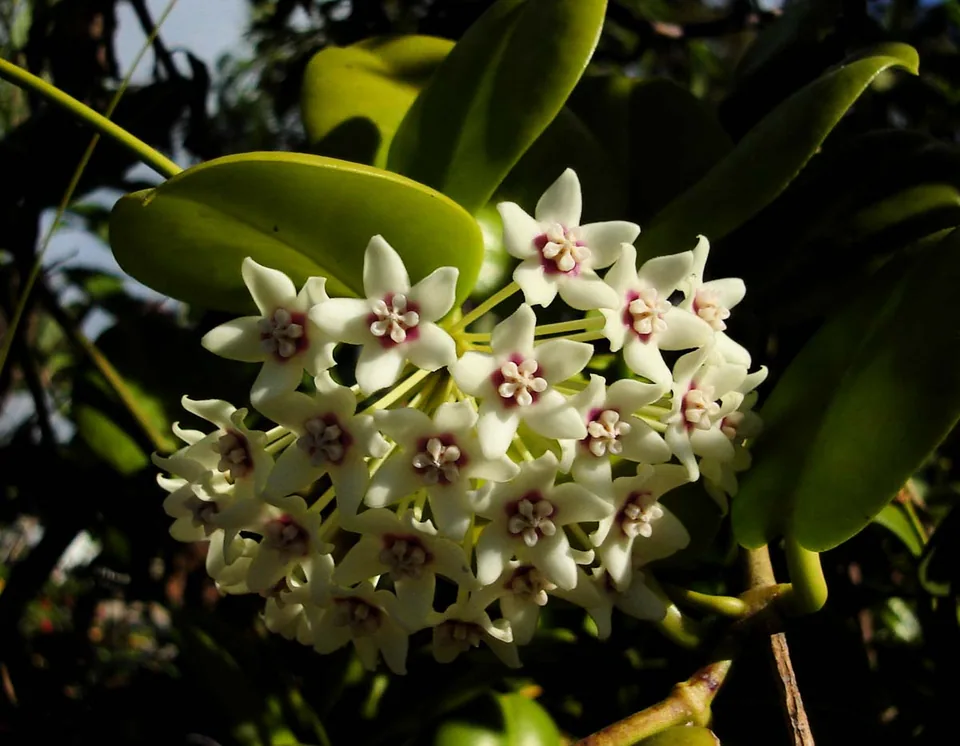
Common hoya is a flowering vine native from Borneo to New Guinea and Australia that is grown as a houseplant. [1] It likes to be pot-bound in well-drained soil, should not be overwatered, and needs bright light for best blooming. [1] The species is listed as non-toxic for cats, dogs and horses. [1]
Common Hoya care
How to water Common Hoya
Watering
Do not overwater; tolerant of dry soils
What the sources say (2)
Do not overwater and place in bright light for best blooming.Aphids, mealybugs, scale, and spider mites are the most common pest problems. Overwatering can lead to root rot.Watering notes
Likes well-drained soil and being pot-bound
What the sources say (1)
Like many succulents, it likes to be pot-bound in well-drained soil.How much light Common Hoya needs
Bright light for best blooming
What the sources say (1)
Do not overwater and place in bright light for best blooming.How much cold Common Hoya can take
Hardiness, coldest zone
10a [winter low −1.1 to 1.7 °C (30 to 35 °F)]
What the sources say (1)
USDA Plant Hardiness Zone:
10a, 10b, 11a, 11bHardiness, warmest zone
11b [winter low 7.2 to 10 °C (45 to 50 °F)]
What the sources say (1)
USDA Plant Hardiness Zone:
10a, 10b, 11a, 11bBest soil for Common Hoya
Soil pH, minimum
6.0
What the sources say (1)
Soil pH:
Neutral (6.0-8.0)Soil pH, maximum
8.0
What the sources say (1)
Soil pH:
Neutral (6.0-8.0)Where to grow Common Hoya
Indoors
Yes
What the sources say (1)
Common hoya is a houseplant that can spend its summers outside.In containers
Yes
What the sources say (1)
#tropical vine #container plant #trellis #wet soils intolerantHow to propagate Common Hoya
Seed
What the sources say (1)
Recommended Propagation Strategy:
SeedHow to grow Common Hoya
The plant
Life cycle
perennial
What the sources say (1)
Family:
Apocynaceae
Life Cycle:
Perennial
Recommended Propagation Strategy:
Seed
Stem CuttingFamily
Apocynaceae
What the sources say (1)
Family:
Apocynaceae
Life Cycle:
Perennial
Recommended Propagation Strategy:
Seed
Stem CuttingPests and diseases
Pests
aphids, mealybugs, scale, spider mites
What the sources say (1)
Aphids, mealybugs, scale, and spider mites are the most common pest problems. Overwatering can lead to root rot.Diseases
root rot (from overwatering)
What the sources say (1)
Aphids, mealybugs, scale, and spider mites are the most common pest problems. Overwatering can lead to root rot.Fertilizing
When
Spring and summer; no feeding in winter
How often
Light, regular feeding: with most waterings, skipping one every second or third watering
What the sources say (1)
Use an all-purpose fertilizer at 1/2 or 1/4 strength, skipping an application every other or every third watering.Mineral fertilizers
All-purpose fertilizer at half or quarter strength, or a slow-release fertilizer used as directed
What the sources say (2)
Use an all-purpose fertilizer at 1/2 or 1/4 strength, skipping an application every other or every third watering.Alternatively, a slow-release fertilizer applied according ot directions can work well.Avoid
Fertilizing in winter, when the plant should rest to flower better in the warm months
What the sources say (1)
Do not fertilize in winter, as this allows for rest and will promote better flowering during the warmer months.Common Hoya pests and problems
Pests
Symptom: Aphids, mealybugs, scale, and spider mites are the most common pest problems.
What to do: No management given in the species source.
What the sources say (1)
Aphids, mealybugs, scale, and spider mites are the most common pest problems.
— Hoya australis (Common Hoya, Common Wax Flower, Wax Vine) | North Carolina Extension Gardener Plant Toolbox [1] Root rot from overwatering
Symptom: Overwatering can lead to root rot.
What to do: Do not overwater; grow in well-drained soil.
What the sources say (2)
Overwatering can lead to root rot.
— Hoya australis (Common Hoya, Common Wax Flower, Wax Vine) | North Carolina Extension Gardener Plant Toolbox [1] Do not overwater and place in bright light for best blooming.
— Hoya australis (Common Hoya, Common Wax Flower, Wax Vine) | North Carolina Extension Gardener Plant Toolbox [1]
Remedies
Each remedy shows what official sources say about it; traditional remedies without an official source are marked as such. Harmful ones are listed so you know to avoid them.
Treating the plant
mealybugs
rubbing alcohol on a cotton swab Partly works
Be careful not to get the alcohol on the leaves of the plants as they may be damaged.
— extension.umd.edu [5] Make sure to test the soap and alcohol mixtures on a small portion of the plant prior to full application because some plants may be sensitive to soap or alcohol.
— planttalk.colostate.edu [7] How: Dip a cotton swab in household alcohol and dab it on the individual mealybugs.
Dipping a cotton swab in household alcohol and dabbing it on the individual mealybugs can control light infestations.
— extension.umd.edu [5] What the evidence says Mealybugs can be managed by hand on a small number of plants by dabbing each insect with alcohol-soaked cotton swab
— yardandgarden.extension.iastate.edu [6] rubbing alcohol spray Official source, not independently tested
Make sure to test the soap and alcohol mixtures on a small portion of the plant prior to full application because some plants may be sensitive to soap or alcohol.
— planttalk.colostate.edu [7] How: For heavy infestations, spray a mixture of 10 percent rubbing alcohol and 90 percent water directly onto the insects; repeat every week.
For heavy infestations, spray a mixture of 10 percent rubbing alcohol and 90 percent water directly onto the insects.
— planttalk.colostate.edu [7] insecticidal soap spray Partly works
Make sure to test the soap and alcohol mixtures on a small portion of the plant prior to full application because some plants may be sensitive to soap or alcohol.
— planttalk.colostate.edu [7] How: Spray the plants thoroughly with insecticidal soap for indoor plants.
For heavy infestations, spray the plants thoroughly with insecticidal soap for indoor plants or a registered houseplant spray.
— extension.umd.edu [5] What the evidence says These pests may also be controlled with insecticidal soap.
— planttalk.colostate.edu [7]
Is Common Hoya poisonous?
Reported by the source, quoted verbatim. This is not medical or veterinary advice: if a person or an animal may have eaten this plant, contact a poison control centre or a veterinarian.
#milky sap #long-lasting flowers #tropical herbaceous perennial #ornamentals #non-toxic for cats
[1]The source flags the risk for this animal but does not explain why.
#wet soils intolerant #non-toxic for horses #non-toxic for dogs
[1]The source flags the risk for this animal but does not explain why.
Similar plants
- Cinnamon Hoya Hoya lacunosa
- Fung Wax Flower Hoya curtisii
- Sweetheart Hoya Hoya kerrii
- Wax Plant Hoya pubicalyx
- Waxflower Hoya bella
- Hoya Hoya carnosa
- Allamanda Allamanda cathartica
- Asiatic Jasmine Trachelospermum asiaticum
Sources
Every value above is quoted from these documents. Links lead to the original publisher.
- Hoya australis (Common Hoya, Common Wax Flower, Wax Vine) | North Carolina Extension Gardener Plant Toolbox · plants.ces.ncsu.edu, consulted
- Hoya - Hoya | North Carolina Extension Gardener Plant Toolbox · plants.ces.ncsu.edu, consulted
- All About Hoyas | Yard and Garden · yardandgarden.extension.iastate.edu, consulted
- Hoya – Gardening Solutions · gardeningsolutions.ifas.ufl.edu, consulted
- extension.umd.edu · extension.umd.edu
- yardandgarden.extension.iastate.edu · yardandgarden.extension.iastate.edu
- planttalk.colostate.edu · planttalk.colostate.edu
Written by Emilio Marruso · last checked