
How to Grow and Care for Mandevilla
Mandevilla sanderi
Written by Emilio Marruso · last checked
At a glance
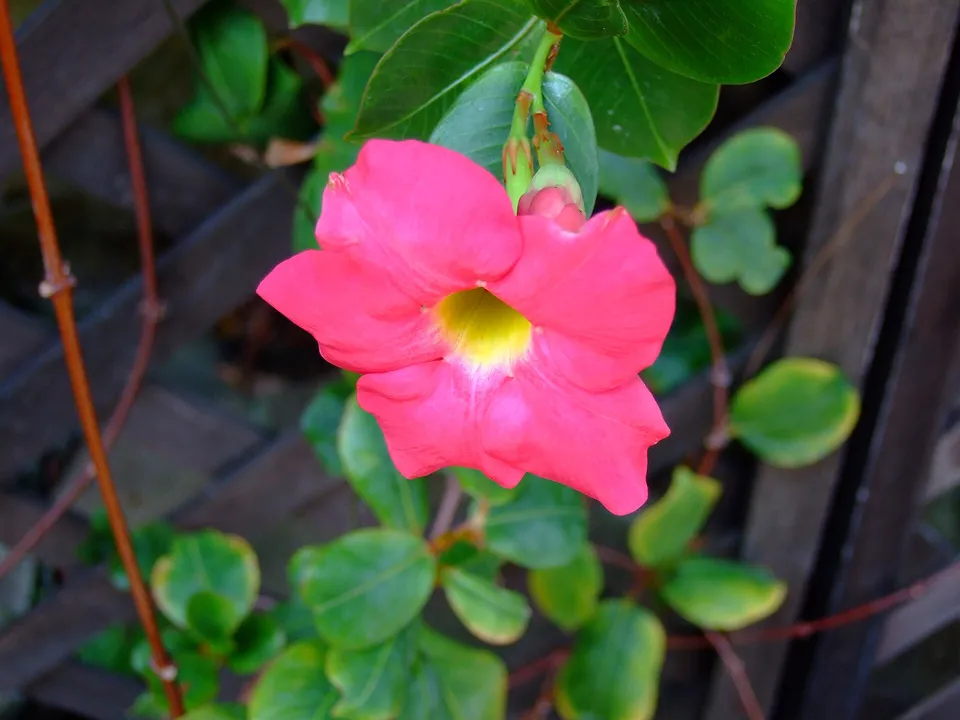
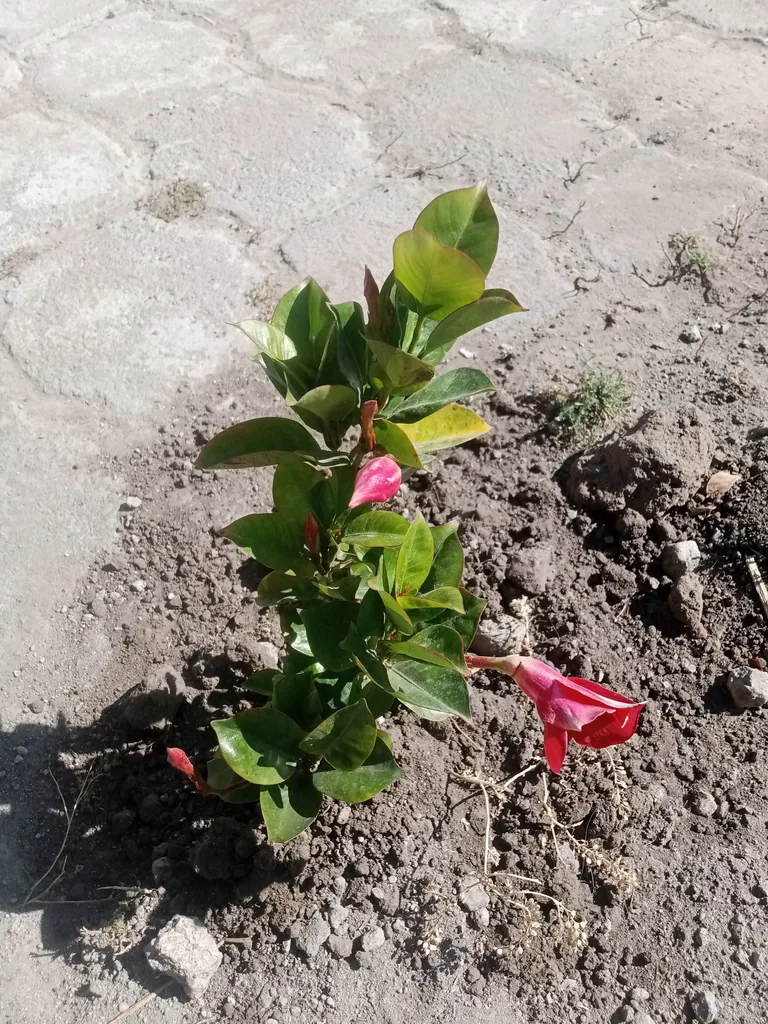
Mandevilla is a tropical climbing vine with big funnel-shaped flowers, often white to rose with a yellow center. It grows happily in a pot: keep it outdoors in the warm months and bring it inside when frost is near, where it makes a lovely houseplant.
- Sun
Full sun to part shade; afternoon shade in hot, humid places; bright indirect light indoors
What the sources say (3)
Light: Full sun to partial shade; afternoon shade in hot humid climates; bright indirect light indoors
Light: Full sun (6 or more hours of direct sunlight a day) Partial Shade (Direct sunlight only part of the day, 2-6 hours)
— Mandevilla sanderi (Mandevilla) | North Carolina Extension Gardener Plant Toolbox [3] Prefers moist, well-drained soil appreciates afternoon shade in hot humid climates.
— Mandevilla sanderi (Mandevilla) | North Carolina Extension Gardener Plant Toolbox [3] Indoors they need bright indirect light, average room temperature, and high humidity.
— Mandevilla sanderi (Mandevilla) | North Carolina Extension Gardener Plant Toolbox [3] - Water
Moist but never soggy, with plenty of water in summer; let it dry out in winter indoors
What the sources say (5)
Watering: Keep soil moist but not soggy; plenty of water in summer
Indoors they need bright indirect light, average room temperature, and high humidity. Soil should remain moist but not soggy.
— Mandevilla sanderi (Mandevilla) | North Carolina Extension Gardener Plant Toolbox [3] Tolerant of coastal conditions; Provide plenty of water in summer.
— Mandevilla sanderi (Mandevilla) | North Carolina Extension Gardener Plant Toolbox [3] Watering notes: Allow soil to dry out during the winter indoors; moist, well-drained soil; high humidity indoors
bring indoors in areas with frost and allow soil to dry out during the winter.
— Mandevilla sanderi (Mandevilla) | North Carolina Extension Gardener Plant Toolbox [3] Prefers moist, well-drained soil appreciates afternoon shade in hot humid climates.
— Mandevilla sanderi (Mandevilla) | North Carolina Extension Gardener Plant Toolbox [3] Indoors they need bright indirect light, average room temperature, and high humidity.
— Mandevilla sanderi (Mandevilla) | North Carolina Extension Gardener Plant Toolbox [3] - Cold
Survives winters down to 30 °F (−1.1 °C)
Half hardy: mild winters or an unheated greenhouse · USDA 10a · RHS H3 · Z10
What the sources say (2)
Hardiness, coldest zone: 10a [winter low −1.1 to 1.7 °C (30 to 35 °F)]
USDA Plant Hardiness Zone: 10a, 10b, 11a, 11b
— Mandevilla sanderi (Mandevilla) | North Carolina Extension Gardener Plant Toolbox [3] Hardiness, warmest zone: 11b [winter low 7.2 to 10 °C (45 to 50 °F)]
USDA Plant Hardiness Zone: 10a, 10b, 11a, 11b
— Mandevilla sanderi (Mandevilla) | North Carolina Extension Gardener Plant Toolbox [3] - Pruning
Prune in spring, before moving it back outdoors
What the sources say (1)
Pruning: Spring, before moving the plant back outdoors
allow soil to dry out during the winter. Prune before placing back outdoors in the spring.
— Mandevilla sanderi (Mandevilla) | North Carolina Extension Gardener Plant Toolbox [3] - Pests
Watch for mealybugs, aphids and scale insects
What the sources say (1)
Pests: mealybugs, aphids, scale insects
No major problems but can attract mealybugs, aphids and scale insects.
— Mandevilla sanderi (Mandevilla) | North Carolina Extension Gardener Plant Toolbox [3] - Size
3–10 ft tall and 3–4 ft wide
What the sources say (2)
Mature height: 91.4-304.8 cm (3-10 ft)
Dimensions: Height: 3 ft. 0 in. - 10 ft. 0 in. Width: 3 ft. 0 in. - 4 ft. 0 in.
— Mandevilla sanderi (Mandevilla) | North Carolina Extension Gardener Plant Toolbox [3] Mature width: 91.4-121.9 cm (3-4 ft)
Dimensions: Height: 3 ft. 0 in. - 10 ft. 0 in. Width: 3 ft. 0 in. - 4 ft. 0 in.
— Mandevilla sanderi (Mandevilla) | North Carolina Extension Gardener Plant Toolbox [3] - Containers
Grows well in a pot and indoors
What the sources say (2)
In containers: Yes
If grown outdoors, plant in a container as they are cold sensitive; bring indoors in areas with frost
— Mandevilla sanderi (Mandevilla) | North Carolina Extension Gardener Plant Toolbox [3] Indoors: Yes
A tropical vine that is commonly grown as a houseplant in temperate regions.
— Mandevilla sanderi (Mandevilla) | North Carolina Extension Gardener Plant Toolbox [3]
Overview
Mandevilla sanderi is a tropical twining vine native to Rio de Janeiro, Brazil, grown as a houseplant in temperate regions. [3] It is cold sensitive: outdoors it is grown in a container and brought indoors where frost occurs. [3] Its large funnel-shaped flowers, usually white to rose with a yellow center, attract hummingbirds and butterflies. [3]
This record is incomplete: the sources we read do not cover every field yet.
Not yet covered by our sources: Propagation
Mandevilla care
How to water Mandevilla
Watering
Keep soil moist but not soggy; plenty of water in summer
What the sources say (2)
Indoors they need bright indirect light, average room temperature, and high humidity. Soil should remain moist but not soggy.Tolerant of coastal conditions; Provide plenty of water in summer.Watering notes
Allow soil to dry out during the winter indoors; moist, well-drained soil; high humidity indoors
What the sources say (3)
bring indoors in areas with frost and allow soil to dry out during the winter.Prefers moist, well-drained soil appreciates afternoon shade in hot humid climates.Indoors they need bright indirect light, average room temperature, and high humidity.How much light Mandevilla needs
Full sun to partial shade; afternoon shade in hot humid climates; bright indirect light indoors
What the sources say (3)
Light:
Full sun (6 or more hours of direct sunlight a day)
Partial Shade (Direct sunlight only part of the day, 2-6 hours)Prefers moist, well-drained soil appreciates afternoon shade in hot humid climates.Indoors they need bright indirect light, average room temperature, and high humidity.How much cold Mandevilla can take
Hardiness, coldest zone
10a [winter low −1.1 to 1.7 °C (30 to 35 °F)]
What the sources say (1)
USDA Plant Hardiness Zone:
10a, 10b, 11a, 11bHardiness, warmest zone
11b [winter low 7.2 to 10 °C (45 to 50 °F)]
What the sources say (1)
USDA Plant Hardiness Zone:
10a, 10b, 11a, 11bWhere to grow Mandevilla
Indoors
Yes
What the sources say (1)
A tropical vine that is commonly grown as a houseplant in temperate regions.In containers
Yes
What the sources say (1)
If grown outdoors, plant in a container as they are cold sensitive; bring indoors in areas with frostHow to propagate Mandevilla
Not stated in the sources we read.
How to grow Mandevilla
The plant
Family
Apocynaceae
What the sources say (1)
Genus:
Mandevilla
Species:
sanderi
Family:
Apocynaceae
Life Cycle:
Woody
Country Or Region Of Origin:Mature height
91.4-304.8 cm (3-10 ft)
What the sources say (1)
Dimensions:
Height: 3 ft. 0 in. - 10 ft. 0 in.
Width: 3 ft. 0 in. - 4 ft. 0 in.Mature width
91.4-121.9 cm (3-4 ft)
What the sources say (1)
Dimensions:
Height: 3 ft. 0 in. - 10 ft. 0 in.
Width: 3 ft. 0 in. - 4 ft. 0 in.Pests and diseases
Pests
mealybugs, aphids, scale insects
What the sources say (1)
No major problems but can attract mealybugs, aphids and scale insects.Mandevilla pests and problems
Mealybugs, aphids and scale insects
Symptom: Insect infestation
What to do: No major problems are reported for the species.
What the sources say (1)
No major problems but can attract mealybugs, aphids and scale insects.
— Mandevilla sanderi (Mandevilla) | North Carolina Extension Gardener Plant Toolbox [3]
Remedies
Each remedy shows what official sources say about it; traditional remedies without an official source are marked as such. Harmful ones are listed so you know to avoid them.
Treating the plant
mealybugs
insecticidal soap spray Works
Limitations of insecticidal soaps include the need to wet the insect during application, absence of any residual effectiveness, and potential to damage some plants.
— extension.colostate.edu [8] How: Spray the plant with insecticidal soap and recheck it often; weekly sprays may be needed to destroy new mealybugs as they emerge from their egg sacs.
Spray your plant with insecticidal soap and recheck it often for signs of mealybugs.
— gardeningknowhow.com [7] What the evidence says In general, insecticidal soap sprays are effective against small, soft-bodied arthropods, such as aphids, young scales, whiteflies, psyllids, mealybugs, and mites.
— extension.colostate.edu [8]
scale insects
neem oil spray Not verified
Traditional remedy, not verified by an official source.
How: Neem oil is the spray of choice for scale, with weekly spray treatments.
Calendar
Pruning
Spring, before moving the plant back outdoors
What the sources say (1)
allow soil to dry out during the winter. Prune before placing back outdoors in the spring.Months as given by the sources, which are mostly from the United States (northern hemisphere). In the southern hemisphere they shift by about six months.
Similar plants
- Mandevilla splendens Mandevilla splendens
- Mandevilla boliviensis Mandevilla boliviensis
- Allamanda Allamanda cathartica
- Asiatic Jasmine Trachelospermum asiaticum
- Bladderflower Araujia sericifera
- Blue Star Amsonia ciliata
- Blue Star Amsonia hubrichtii
- Bush allamanda Allamanda schottii
Sources
Every value above is quoted from these documents. Links lead to the original publisher.
- Mandevilla – Gardening Solutions · gardeningsolutions.ifas.ufl.edu, consulted
- Plants of Hawai'i | Bishop Museum · plantsofhawaii.org, consulted
- Mandevilla sanderi (Mandevilla) | North Carolina Extension Gardener Plant Toolbox · plants.ces.ncsu.edu, consulted
- How to Grow Mandevilla | BBC Gardeners World Magazine · gardenersworld.com, consulted
- Mandevilla (Annual Vine) | The Morton Arboretum · mortonarb.org, consulted
- Mandevilla: come coltivare la pianta - GreenStyle · greenstyle.it, consulted
- gardeningknowhow.com · gardeningknowhow.com
- extension.colostate.edu · extension.colostate.edu
Written by Emilio Marruso · last checked