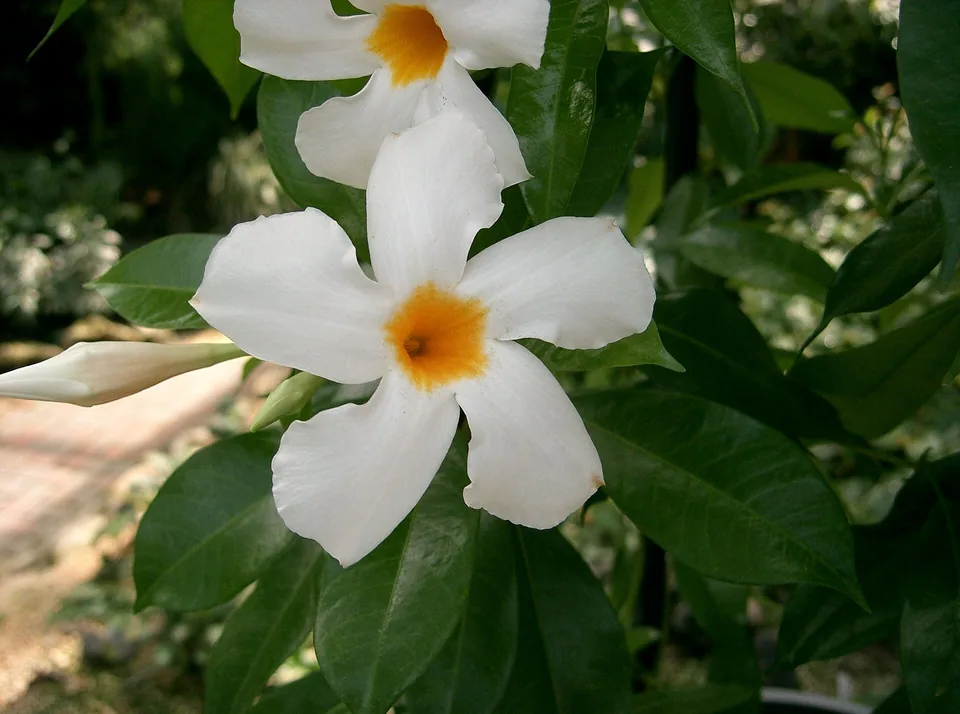

How to Grow and Care for Mandevilla boliviensis
Mandevilla boliviensis
Written by Emilio Marruso · last checked
Toxic to: People · Why
At a glance
This mandevilla is a vine that happily grows in containers, so you can enjoy it even on a small patio. Keep its well-drained soil moist in summer and a little drier in winter. You can start new plants from seed or from cuttings taken in spring and summer, and share them with your friends.
- Water
Keep moist in summer, drier in winter
What the sources say (3)
Watering: Keep moist in summer, drier in winter
Growth Habits: Vigorous evergreen twining vine to 12 feet (4 m), or sprawling shrub Watering Needs: Keep moist in summer, drier in winter
— Mandevilla (Mandevilla boliviensis) [2] It prefers an exposition in full sun or slightly shaded and acid or neutral soils, well drained and kept humid.
— Mandevilla boliviensis - Monaco Nature Encyclopedia [5] Moderate Watering – Requires Regular Watering. Non Indigenous Non Indigenous – Exotic to South Africa.
— Mandevilla boliviensis (White mandevilla) - Plantinfo [3] - Cold
Survives winters down to 30 °F (−1.1 °C)
Half hardy: mild winters or an unheated greenhouse · USDA 10 · RHS H3 · Z10
What the sources say (4)
Hardiness, coldest zone: 10 [winter low −1.1 to 4.4 °C (30 to 40 °F)]
Recommended Temperature Zone: Sunset: 21-25 USDA: 10-12 Frost Tolerance: Tender in Phoenix, needs protection on colder nights
— Mandevilla (Mandevilla boliviensis) [2] [Broad climate suitability (environmental versatility)? No] "Zone: 10 to 11"
— Designation: [7] Hardiness, warmest zone:
According to Desert Tropicals: Recommended Temperature Zone: Sunset: 21-25 USDA: 10-12 Frost Tolerance: Tender in Phoenix, needs protection on colder nights
— Mandevilla (Mandevilla boliviensis) [2] According to Hawaii Pacific Weed Risk Assessment: [Broad climate suitability (environmental versatility)? No] "Zone: 10 to 11"
— Designation: [7] - Soil
Well-drained soil
What the sources say (1)
Watering notes: Soil should be well drained
It prefers an exposition in full sun or slightly shaded and acid or neutral soils, well drained and kept humid.
— Mandevilla boliviensis - Monaco Nature Encyclopedia [5] - Pests
Watch for scale and mealybugs
What the sources say (1)
Pests: scale, mealybugs
These plants have no serious disease or insect problems, but they’re occasionally bothered by scale and mealybugs. Use an insecticidal soap if needed to treat these pests.
— Mandevilla – Gardening Solutions [1] - Propagation
From seed, soft cuttings in spring or semi-woody cuttings in summer
What the sources say (1)
Propagation: Seed; herbaceous cuttings in spring; semi-woody cuttings in summer
The fruits are oblong follicles containing many seeds provided with a tuft of hair which favour their dispersal. It reproduces by seed, by herbaceous cutting in spring or semi-woody in summer.
— Mandevilla boliviensis - Monaco Nature Encyclopedia [5] - Containers
Grows in containers too
What the sources say (2)
In containers: Yes
Plant which can be cultivated in tropical, subtropical and, marginally, warm-temperate climates areas, as it does not bear temperatures around the 0°C, elsewhere it can be cultivated in pot, in order to be sheltered in winter.
— Mandevilla boliviensis - Monaco Nature Encyclopedia [5] This climbing plant is often grown as an ornamental in warm climates and container gardens, where it can be trained on trellises, fences, or allowed to cascade from hanging baskets.
— Mandevilla boliviensis | Plant Pono [6] - Safety
Poisonous if eaten, and its sap irritates the skin
Overview
Mandevilla boliviensis is an evergreen woody climber with stems up to 4 m [13.1 ft], native from Costa Rica to Bolivia and Brazil. [5] It bears white flowers with a yellow throat in summer and is grown as an ornamental in warm climates and containers. [2][6] It does not tolerate temperatures around 0 °C [32 °F], so in colder areas it is grown in pots and sheltered in winter. [5]
This record is incomplete: the sources we read do not cover every field yet.
Not yet covered by our sources: Pruning
Mandevilla boliviensis care
Measurements in square brackets are our conversion into the other unit system; the quoted text is unchanged.
How to water Mandevilla boliviensis
Watering
Keep moist in summer, drier in winter
What the sources say (3)
Growth Habits: Vigorous evergreen twining vine to 12 feet (4 m), or sprawling shrub Watering Needs: Keep moist in summer, drier in winterIt prefers an exposition in full sun or slightly shaded and acid or neutral soils, well drained and kept humid.Moderate Watering – Requires Regular Watering. Non Indigenous Non Indigenous – Exotic to South Africa.Watering notes
Soil should be well drained
What the sources say (1)
It prefers an exposition in full sun or slightly shaded and acid or neutral soils, well drained and kept humid.How much light Mandevilla boliviensis needs
The sources give different values depending on region, zone or growing conditions.
What each source says
According to Monaco Nature Encyclopedia: Full sun or slightly shaded
According to Desert Tropicals: Full sun, tolerates partial shade
According to PlantInfo: Half sun (3 to 6 hours a day)
According to Plant Pono: Full sun
What the sources say (6)
According to Monaco Nature Encyclopedia: It prefers an exposition in full sun or slightly shaded and acid or neutral soils, well drained and kept humid.According to Desert Tropicals: Sun Exposure: Full sun, tolerates partial shade Origin: Bolivia, Ecuador, Costa RicaAccording to PlantInfo: Half Sun – Prefers 3 To 6 Hours of Sunlight a Day. Frost HardyAccording to Plant Pono: - Unarmed - Requires full sun - Fruit and seed may be rarely, if ever, produced in cultivationIt prefers an exposition in full sun or slightly shaded and acid or neutral soils, well drained and kept humid.Sun Exposure: Full sun, tolerates partial shade Origin: Bolivia, Ecuador, Costa RicaHow much cold Mandevilla boliviensis can take
Hardiness, coldest zone
10 [winter low −1.1 to 4.4 °C (30 to 40 °F)]
Hardiness, warmest zone
The sources give different values depending on region, zone or growing conditions.
What each source says
According to Desert Tropicals: 12 [winter low 10 to 15.6 °C (50 to 60 °F)]
According to Hawaii Pacific Weed Risk Assessment: 11 [winter low 4.4 to 10 °C (40 to 50 °F)]
What the sources say (2)
According to Desert Tropicals: Recommended Temperature Zone: Sunset: 21-25 USDA: 10-12 Frost Tolerance: Tender in Phoenix, needs protection on colder nightsAccording to Hawaii Pacific Weed Risk Assessment: [Broad climate suitability (environmental versatility)? No] "Zone: 10 to 11"Where to grow Mandevilla boliviensis
Yes
What the sources say (2)
Plant which can be cultivated in tropical, subtropical and, marginally, warm-temperate climates areas, as it does not bear temperatures around the 0°C, elsewhere it can be cultivated in pot, in order to be sheltered in winter.This climbing plant is often grown as an ornamental in warm climates and container gardens, where it can be trained on trellises, fences, or allowed to cascade from hanging baskets.How to propagate Mandevilla boliviensis
Seed; herbaceous cuttings in spring; semi-woody cuttings in summer
What the sources say (1)
The fruits are oblong follicles containing many seeds provided with a tuft of hair which favour their dispersal. It reproduces by seed, by herbaceous cutting in spring or semi-woody in summer.How to grow Mandevilla boliviensis
Pests and diseases
Pests
scale, mealybugs
What the sources say (1)
These plants have no serious disease or insect problems, but they’re occasionally bothered by scale and mealybugs. Use an insecticidal soap if needed to treat these pests.Remedies
Each remedy shows what official sources say about it; traditional remedies without an official source are marked as such. Harmful ones are listed so you know to avoid them.
First aid
First aid: not a substitute for a doctor
skin contact with sap
wash skin with running water Official source, not independently tested
Call the NSW Poisons Information Centre on 13 11 26 for immediate support. They will give you information about any first aid you need to do
— schn.health.nsw.gov.au [8] How: For plant poisoning, first aid may include washing the affected skin with running water.
For plant poisoning , first aid may include: - washing the affected skin with running water
— schn.health.nsw.gov.au [8]
sap in eyes
flush eyes with running water Official source, not independently tested
Call the NSW Poisons Information Centre on 13 11 26 for immediate support. They will give you information about any first aid you need to do
— schn.health.nsw.gov.au [8] How: Flush the eyes with clean, running water for 10-15 minutes.
flushing the eyes with clean, running water for 10-15 minutes
— schn.health.nsw.gov.au [8]
ingestion
remove plant pieces and rinse mouth Official source, not independently tested
Call the NSW Poisons Information Centre on 13 11 26 for immediate support. They will give you information about any first aid you need to do
— schn.health.nsw.gov.au [8] How: Remove plant pieces from the child's mouth, then rinse with water.
removing plant pieces from your child's mouth, then rinsing with water.
— schn.health.nsw.gov.au [8]
Treating the plant
mealybugs
insecticidal soap Works
How: Use an insecticidal soap when the plant is bothered by mealybugs.
These Mandevilla have no serious disease or insect problems but might, once in a while, possibly be bothered by scale and mealybugs which can be fast resolved by use of an insecticidal soap.
— manzanillosun.com [9] What the evidence says These plants have no serious disease or insect problems, but they’re occasionally bothered by scale and mealybugs. Use an insecticidal soap if needed to treat these pests.
— Mandevilla – Gardening Solutions [1]
scale
insecticidal soap Works
How: Use an insecticidal soap when the plant is bothered by scale.
These Mandevilla have no serious disease or insect problems but might, once in a while, possibly be bothered by scale and mealybugs which can be fast resolved by use of an insecticidal soap.
— manzanillosun.com [9] What the evidence says These plants have no serious disease or insect problems, but they’re occasionally bothered by scale and mealybugs. Use an insecticidal soap if needed to treat these pests.
— Mandevilla – Gardening Solutions [1]
Is Mandevilla boliviensis poisonous?
Reported by the source, quoted verbatim. This is not medical or veterinary advice: if a person or an animal may have eaten this plant, contact a poison control centre or a veterinarian.
[Causes allergies or is otherwise toxic to humans? Yes] "Note - This vine has poisonous parts if ingested, and has a skin-irritating sap."
[7]- Poisonous parts
All the parts of the plant are poisonous if ingested, as it usually happens for the plants belonging to the family of the Apocynaceae ; the sap can cause rashes.
[5]- Symptoms
All the parts of the plant are poisonous if ingested, as it usually happens for the plants belonging to the family of the Apocynaceae ; the sap can cause rashes.
[5]
Calendar
Pruning
Not stated in the sources we read.
Months as given by the sources, which are mostly from the United States (northern hemisphere). In the southern hemisphere they shift by about six months.
Indicative values
Values from a secondary source, not checked word for word like the rest of this page. Use them as a starting point.
- Life cycle
- PerennialIndicative value, adapt it to your climate · Secondary source
- Mature height
- 91.4-304.8 cm (3-10 ft)Indicative value, adapt it to your climate · Secondary source
- Soil pH
- 6-7Indicative value, adapt it to your climate · Secondary source
- Care level
- MediumIndicative value, adapt it to your climate · Secondary source
- Growth rate
- HighIndicative value, adapt it to your climate · Secondary source
- Pruning
- March, April, May, March, April, May, June, July, August, SeptemberIndicative value, adapt it to your climate · Secondary source
Similar plants
- Mandevilla Mandevilla sanderi
- Mandevilla splendens Mandevilla splendens
- Aaron's Beard Hypericum calycinum
- Abies grandis Abies grandis
- Abraham Trachystemon orientalis
- Abyssinian banana Ensete ventricosum
- Acacia longifolia Acacia longifolia
- Acacia retinodes Acacia retinodes
Sources
Every value above is quoted from these documents. Links lead to the original publisher.
- Mandevilla – Gardening Solutions · gardeningsolutions.ifas.ufl.edu, consulted
- Mandevilla (Mandevilla boliviensis) · desert-tropicals.com, consulted
- Mandevilla boliviensis (White mandevilla) - Plantinfo · plantinfo.co.za, consulted
- Mandevilla [Lindl. ] · floracostaricensis.myspecies.info, consulted
- Mandevilla boliviensis - Monaco Nature Encyclopedia · monaconatureencyclopedia.com, consulted
- Mandevilla boliviensis | Plant Pono · plantpono.org, consulted
- Designation: · plantpono.org, consulted
- schn.health.nsw.gov.au · schn.health.nsw.gov.au
- manzanillosun.com · manzanillosun.com
Written by Emilio Marruso · last checked