
Cómo cultivar y cuidar Mandevilla boliviensis
Mandevilla boliviensis
Escrito por Emilio Marruso · última revisión
Tóxica para: Personas · Por qué
De un vistazo
Esta mandevilla es una trepadora que crece feliz en maceta, así que puedes disfrutarla incluso en un balcón pequeño. Mantén su tierra, bien drenada, húmeda en verano y algo más seca en invierno. Puedes conseguir plantas nuevas a partir de semillas o de esquejes en primavera y verano, y compartirlas con tus amigos.
- Riego
Mantenla húmeda en verano y más seca en invierno
Qué dicen las fuentes (3)
Riego: Mantén húmedo en verano, más seco en invierno
Growth Habits: Vigorous evergreen twining vine to 12 feet (4 m), or sprawling shrub Watering Needs: Keep moist in summer, drier in winter
— Mandevilla (Mandevilla boliviensis) [2] It prefers an exposition in full sun or slightly shaded and acid or neutral soils, well drained and kept humid.
— Mandevilla boliviensis - Monaco Nature Encyclopedia [5] Moderate Watering – Requires Regular Watering. Non Indigenous Non Indigenous – Exotic to South Africa.
— Mandevilla boliviensis (White mandevilla) - Plantinfo [3] - Frío
Aguanta inviernos de hasta −1,1 °C (30 °F)
Semirrústica: inviernos suaves o invernadero sin calefacción · USDA 10 · RHS H3 · Z10
Qué dicen las fuentes (4)
Rusticidad, zona más fría: 10 [mínima invernal de −1,1 a 4,4 °C (de 30 a 40 °F)]
Recommended Temperature Zone: Sunset: 21-25 USDA: 10-12 Frost Tolerance: Tender in Phoenix, needs protection on colder nights
— Mandevilla (Mandevilla boliviensis) [2] [Broad climate suitability (environmental versatility)? No] "Zone: 10 to 11"
— Designation: [7] Rusticidad, zona más cálida:
Según Desert Tropicals: Recommended Temperature Zone: Sunset: 21-25 USDA: 10-12 Frost Tolerance: Tender in Phoenix, needs protection on colder nights
— Mandevilla (Mandevilla boliviensis) [2] Según Hawaii Pacific Weed Risk Assessment: [Broad climate suitability (environmental versatility)? No] "Zone: 10 to 11"
— Designation: [7] - Suelo
Suelo bien drenado
Qué dicen las fuentes (1)
Notas sobre el riego: El suelo debe estar bien drenado
It prefers an exposition in full sun or slightly shaded and acid or neutral soils, well drained and kept humid.
— Mandevilla boliviensis - Monaco Nature Encyclopedia [5] - Plagas
Vigila las cochinillas de escudo y las cochinillas algodonosas
Qué dicen las fuentes (1)
Plagas: cochinillas, cochinillas harinosas
These plants have no serious disease or insect problems, but they’re occasionally bothered by scale and mealybugs. Use an insecticidal soap if needed to treat these pests.
— Mandevilla – Gardening Solutions [1] - Multiplicación
Por semilla, esquejes tiernos en primavera o esquejes semileñosos en verano
Qué dicen las fuentes (1)
Propagación: Semilla; esquejes herbáceos en primavera; esquejes semileñosos en verano
The fruits are oblong follicles containing many seeds provided with a tuft of hair which favour their dispersal. It reproduces by seed, by herbaceous cutting in spring or semi-woody in summer.
— Mandevilla boliviensis - Monaco Nature Encyclopedia [5] - Maceta
Crece también en maceta
Qué dicen las fuentes (2)
En maceta: Sí
Plant which can be cultivated in tropical, subtropical and, marginally, warm-temperate climates areas, as it does not bear temperatures around the 0°C, elsewhere it can be cultivated in pot, in order to be sheltered in winter.
— Mandevilla boliviensis - Monaco Nature Encyclopedia [5] This climbing plant is often grown as an ornamental in warm climates and container gardens, where it can be trained on trellises, fences, or allowed to cascade from hanging baskets.
— Mandevilla boliviensis | Plant Pono [6] - Seguridad
Es tóxica si se ingiere y su savia irrita la piel
Resumen
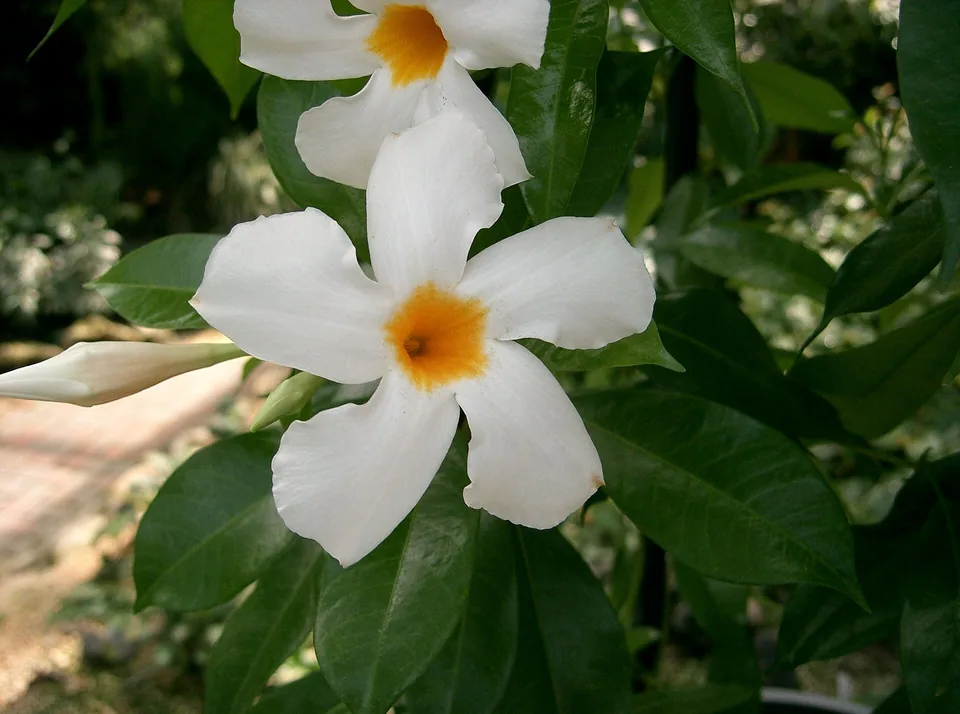
Mandevilla boliviensis es una trepadora leñosa de hoja perenne con tallos de hasta 4 m [13,1 ft], nativa de Costa Rica hasta Bolivia y Brasil. [5] Tiene flores blancas con la garganta amarilla en verano y se cultiva como ornamental en climas cálidos y contenedores. [2][6] No tolera temperaturas alrededor de 0 °C [32 °F], por lo que en zonas más frías se cultiva en macetas y se protege en invierno. [5]
Citado en inglés, como en la fuente.
Esta ficha está incompleta: las fuentes consultadas aún no cubren todos los campos.
Aún no cubierto por nuestras fuentes: Poda
Cuidados
Las medidas entre corchetes son nuestra conversión al otro sistema de unidades; el texto citado no cambia.
Riego
Riego
Mantén húmedo en verano, más seco en invierno
Qué dicen las fuentes (3)
Growth Habits: Vigorous evergreen twining vine to 12 feet (4 m), or sprawling shrub Watering Needs: Keep moist in summer, drier in winterIt prefers an exposition in full sun or slightly shaded and acid or neutral soils, well drained and kept humid.Moderate Watering – Requires Regular Watering. Non Indigenous Non Indigenous – Exotic to South Africa.Notas sobre el riego
El suelo debe estar bien drenado
Qué dicen las fuentes (1)
It prefers an exposition in full sun or slightly shaded and acid or neutral soils, well drained and kept humid.Luz
Las fuentes dan valores distintos según la región, la zona o las condiciones de cultivo.
Lo que dice cada fuente
Según Monaco Nature Encyclopedia: Pleno sol o semisombra
Según Desert Tropicals: Pleno sol, tolera semisombra
Según PlantInfo: Semisombra (3 a 6 horas al día)
Según Plant Pono: Pleno sol
Qué dicen las fuentes (6)
Según Monaco Nature Encyclopedia: It prefers an exposition in full sun or slightly shaded and acid or neutral soils, well drained and kept humid.Según Desert Tropicals: Sun Exposure: Full sun, tolerates partial shade Origin: Bolivia, Ecuador, Costa RicaSegún PlantInfo: Half Sun – Prefers 3 To 6 Hours of Sunlight a Day. Frost HardySegún Plant Pono: - Unarmed - Requires full sun - Fruit and seed may be rarely, if ever, produced in cultivationIt prefers an exposition in full sun or slightly shaded and acid or neutral soils, well drained and kept humid.Sun Exposure: Full sun, tolerates partial shade Origin: Bolivia, Ecuador, Costa RicaClima y frío
Rusticidad, zona más fría
10 [mínima invernal de −1,1 a 4,4 °C (de 30 a 40 °F)]
Rusticidad, zona más cálida
Las fuentes dan valores distintos según la región, la zona o las condiciones de cultivo.
Lo que dice cada fuente
Según Desert Tropicals: 12 [mínima invernal de 10 a 15,6 °C (de 50 a 60 °F)]
Según Hawaii Pacific Weed Risk Assessment: 11 [mínima invernal de 4,4 a 10 °C (de 40 a 50 °F)]
Qué dicen las fuentes (2)
Según Desert Tropicals: Recommended Temperature Zone: Sunset: 21-25 USDA: 10-12 Frost Tolerance: Tender in Phoenix, needs protection on colder nightsSegún Hawaii Pacific Weed Risk Assessment: [Broad climate suitability (environmental versatility)? No] "Zone: 10 to 11"Dónde cultivarla
Sí
Qué dicen las fuentes (2)
Plant which can be cultivated in tropical, subtropical and, marginally, warm-temperate climates areas, as it does not bear temperatures around the 0°C, elsewhere it can be cultivated in pot, in order to be sheltered in winter.This climbing plant is often grown as an ornamental in warm climates and container gardens, where it can be trained on trellises, fences, or allowed to cascade from hanging baskets.Propagación
Semilla; esquejes herbáceos en primavera; esquejes semileñosos en verano
Qué dicen las fuentes (1)
The fruits are oblong follicles containing many seeds provided with a tuft of hair which favour their dispersal. It reproduces by seed, by herbaceous cutting in spring or semi-woody in summer.Cultivo
Plagas y enfermedades
Plagas
cochinillas, cochinillas harinosas
Qué dicen las fuentes (1)
These plants have no serious disease or insect problems, but they’re occasionally bothered by scale and mealybugs. Use an insecticidal soap if needed to treat these pests.Remedios
Cada remedio indica qué dicen las fuentes oficiales; los remedios tradicionales sin fuente oficial aparecen marcados. Los perjudiciales están para que sepas evitarlos.
Primeros auxilios
Primeros auxilios: no sustituyen al médico
contacto de la piel con la savia
lava la piel con agua corriente Fuente oficial, sin prueba independiente
Call the NSW Poisons Information Centre on 13 11 26 for immediate support. They will give you information about any first aid you need to do
— schn.health.nsw.gov.au [8] Cómo: Para el envenenamiento por plantas, los primeros auxilios pueden incluir lavar la piel afectada con agua corriente.
For plant poisoning , first aid may include: - washing the affected skin with running water
— schn.health.nsw.gov.au [8]
savia en los ojos
enjuaga los ojos con agua corriente Fuente oficial, sin prueba independiente
Call the NSW Poisons Information Centre on 13 11 26 for immediate support. They will give you information about any first aid you need to do
— schn.health.nsw.gov.au [8] Cómo: Enjuaga los ojos con agua limpia y corriente durante 10-15 minutos.
flushing the eyes with clean, running water for 10-15 minutes
— schn.health.nsw.gov.au [8]
ingestión
retira los trozos de planta y enjuaga la boca Fuente oficial, sin prueba independiente
Call the NSW Poisons Information Centre on 13 11 26 for immediate support. They will give you information about any first aid you need to do
— schn.health.nsw.gov.au [8] Cómo: Retira los trozos de planta de la boca del niño y luego enjuaga con agua.
removing plant pieces from your child's mouth, then rinsing with water.
— schn.health.nsw.gov.au [8]
Cuidar la planta
cochinillas harinosas
jabón insecticida Funciona
Cómo: Usa un jabón insecticida cuando la planta tenga cochinillas harinosas.
These Mandevilla have no serious disease or insect problems but might, once in a while, possibly be bothered by scale and mealybugs which can be fast resolved by use of an insecticidal soap.
— manzanillosun.com [9] Qué dicen las pruebas These plants have no serious disease or insect problems, but they’re occasionally bothered by scale and mealybugs. Use an insecticidal soap if needed to treat these pests.
— Mandevilla – Gardening Solutions [1]
cochinilla
jabón insecticida Funciona
Cómo: Usa un jabón insecticida cuando la planta tenga cochinillas escudo.
These Mandevilla have no serious disease or insect problems but might, once in a while, possibly be bothered by scale and mealybugs which can be fast resolved by use of an insecticidal soap.
— manzanillosun.com [9] Qué dicen las pruebas These plants have no serious disease or insect problems, but they’re occasionally bothered by scale and mealybugs. Use an insecticidal soap if needed to treat these pests.
— Mandevilla – Gardening Solutions [1]
Toxicidad
Según la fuente, citada textualmente. No es un consejo médico ni veterinario: si una persona o un animal pudo haber ingerido esta planta, contacta con un centro de toxicología o con un veterinario.
[Causes allergies or is otherwise toxic to humans? Yes] "Note - This vine has poisonous parts if ingested, and has a skin-irritating sap."
[7]- Partes venenosas
All the parts of the plant are poisonous if ingested, as it usually happens for the plants belonging to the family of the Apocynaceae ; the sap can cause rashes.
[5]- Síntomas
All the parts of the plant are poisonous if ingested, as it usually happens for the plants belonging to the family of the Apocynaceae ; the sap can cause rashes.
[5]
Calendario
Poda
No figura en las fuentes consultadas.
Meses tal como los dan las fuentes, en su mayoría de Estados Unidos (hemisferio norte). En el hemisferio sur se desplazan unos seis meses.
Valores orientativos
Valores de una fuente secundaria, no comprobados palabra por palabra como el resto de esta página. Úselos como punto de partida.
- Ciclo de vida
- PerenneValor orientativo, adáptalo a tu clima · Fuente secundaria
- Altura adulta
- 91.4-304.8 cm (3-10 pies)Valor orientativo, adáptalo a tu clima · Fuente secundaria
- pH del suelo
- 6-7Valor orientativo, adáptalo a tu clima · Fuente secundaria
- Nivel de cuidado
- MedioValor orientativo, adáptalo a tu clima · Fuente secundaria
- Crecimiento
- AltaValor orientativo, adáptalo a tu clima · Fuente secundaria
- Poda
- marzo, abril, mayo, marzo, abril, mayo, junio, julio, agosto, septiembreValor orientativo, adáptalo a tu clima · Fuente secundaria
Plantas similares
- Jazmín brasileño Mandevilla sanderi
- Mandevilla splendens Mandevilla splendens
- Hipérico rastrero Hypericum calycinum
- Abeto de Vancuver Abies grandis
- Abraham Trachystemon orientalis
- Bananero de Etiopía Ensete ventricosum
- Acacia longifolia Acacia longifolia
- Acacia plateada Acacia retinodes
Fuentes
Cada valor anterior se cita de estos documentos. Los enlaces llevan al editor original.
- Mandevilla – Gardening Solutions · gardeningsolutions.ifas.ufl.edu, consultado
- Mandevilla (Mandevilla boliviensis) · desert-tropicals.com, consultado
- Mandevilla boliviensis (White mandevilla) - Plantinfo · plantinfo.co.za, consultado
- Mandevilla [Lindl. ] · floracostaricensis.myspecies.info, consultado
- Mandevilla boliviensis - Monaco Nature Encyclopedia · monaconatureencyclopedia.com, consultado
- Mandevilla boliviensis | Plant Pono · plantpono.org, consultado
- Designation: · plantpono.org, consultado
- schn.health.nsw.gov.au · schn.health.nsw.gov.au
- manzanillosun.com · manzanillosun.com
Escrito por Emilio Marruso · última revisión