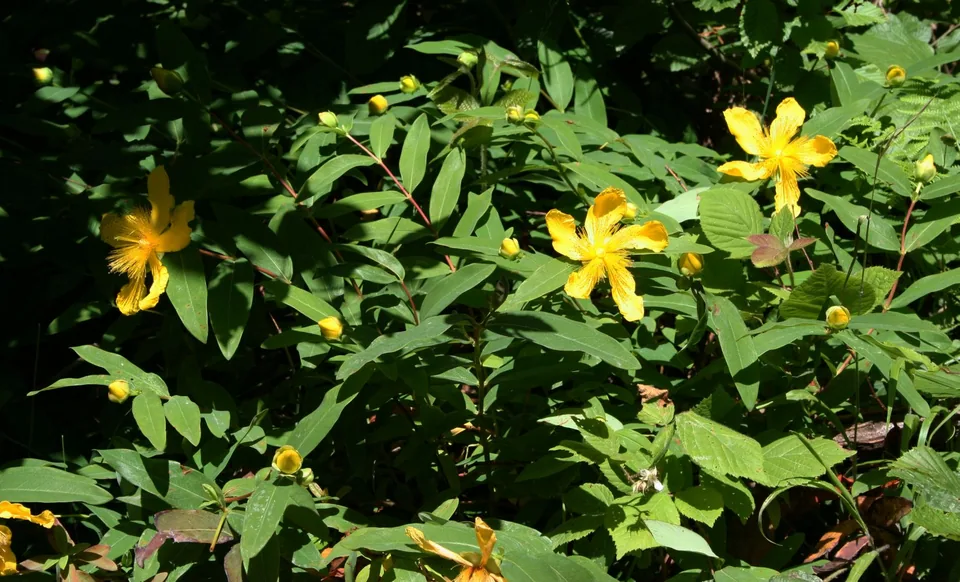


Cómo cultivar y cuidar Hipérico rastrero
Hypericum calycinum
Escrito por Emilio Marruso · última revisión
Tóxica para: Personas · Por qué
De un vistazo
Esta vivaz resistente crece feliz al sol o a la sombra, aunque florece mejor en un lugar soleado. Una vez establecida aguanta bien la sequía y se adapta a cualquier suelo con buen drenaje, incluso seco o arcilloso y pesado. Córtala a ras de suelo cada primavera y formará una cubierta baja de 30 a 46 cm de alto.
- Sol
Sol o sombra; florece mejor en un lugar soleado
Qué dicen las fuentes (1)
Luz: Sol o sombra; florece mejor en una posición soleada
It will grow in sun or shade, but flowers best in a sunny position.
— Hypericum calycinum (Aaron's Beard, Creeping Aaron's Beard, St. John's Wort) | North Carolina Extension Gardener Plant Toolbox [1] - Riego
Riego moderado; una vez establecida, aguanta la sequía
Qué dicen las fuentes (2)
Riego: Tolerancia moderada a la sequía; tolera la sequía una vez establecida
spreads by underground stems and has moderate drought tolerance.
— Hypericum calycinum (Aaron's Beard, Creeping Aaron's Beard, St. John's Wort) | North Carolina Extension Gardener Plant Toolbox [1] It tolerates cold and drought once established and is ornamental but rapidly spreading by means of stolons.
— Hypericum calycinum (Aaron's Beard, Creeping Aaron's Beard, St. John's Wort) | North Carolina Extension Gardener Plant Toolbox [1] - Frío
Aguanta inviernos de hasta −28,9 °C (−20 °F)
Muy rústica · USDA 5a · RHS H7 · Z5
Qué dicen las fuentes (2)
Rusticidad, zona más fría: 5a [mínima invernal de −28,9 a −26,1 °C (de −20 a −15 °F)]
USDA Plant Hardiness Zone: 5a, 5b, 6a, 6b, 7a, 7b, 8a, 8b, 9a, 9b, 10a, 10b
— Hypericum calycinum (Aaron's Beard, Creeping Aaron's Beard, St. John's Wort) | North Carolina Extension Gardener Plant Toolbox [1] Rusticidad, zona más cálida: 10b [mínima invernal de 1,7 a 4,4 °C (de 35 a 40 °F)]
USDA Plant Hardiness Zone: 5a, 5b, 6a, 6b, 7a, 7b, 8a, 8b, 9a, 9b, 10a, 10b
— Hypericum calycinum (Aaron's Beard, Creeping Aaron's Beard, St. John's Wort) | North Carolina Extension Gardener Plant Toolbox [1] - Suelo
Cualquier suelo con buen drenaje, incluso seco o arcilloso; pH 6,0 o menos
Qué dicen las fuentes (2)
Notas sobre el riego: Crece en cualquier suelo bien drenado pero que retiene la humedad, incluidos suelos secos y arcilla pesada
easily grown in any well-drained but moisture retentive soil including dry soils and heavy clay.
— Hypericum calycinum (Aaron's Beard, Creeping Aaron's Beard, St. John's Wort) | North Carolina Extension Gardener Plant Toolbox [1] pH del suelo, máximo: 6.0
Soil Texture: Clay Loam (Silt) Sand Soil pH: Acid (<6.0)
— Hypericum calycinum (Aaron's Beard, Creeping Aaron's Beard, St. John's Wort) | North Carolina Extension Gardener Plant Toolbox [1] - Poda
Córtala a ras de suelo en primavera para una cubierta tupida
Qué dicen las fuentes (1)
Poda: Corta a ras de suelo en primavera (para maximizar su uso como cobertura del suelo)
To maximize its use as a ground cover, you can cut it to ground level in the spring.
— Hypericum calycinum (Aaron's Beard, Creeping Aaron's Beard, St. John's Wort) | North Carolina Extension Gardener Plant Toolbox [1] - Plagas
Vigila la roya en las hojas
Qué dicen las fuentes (1)
Enfermedades: roya
Diseases, Insect Pests, and Other Plant Problems: No significant problems. Rust can sometimes be a problem.
— Hypericum calycinum (Aaron's Beard, Creeping Aaron's Beard, St. John's Wort) | North Carolina Extension Gardener Plant Toolbox [1] - Tamaño
De 30 a 46 cm de alto y de 46 a 61 cm de ancho
Qué dicen las fuentes (2)
Altura adulta: 30.5-45.7 cm (1 pie 0 pulg - 1 pie 6 pulg)
Dimensions: Height: 1 ft. 0 in. - 1 ft. 6 in. Width: 1 ft. 6 in. - 2 ft. 0 in.
— Hypericum calycinum (Aaron's Beard, Creeping Aaron's Beard, St. John's Wort) | North Carolina Extension Gardener Plant Toolbox [1] Anchura adulta: 45.7-61 cm (1 pie 6 pulg - 2 pies 0 pulg)
Dimensions: Height: 1 ft. 0 in. - 1 ft. 6 in. Width: 1 ft. 6 in. - 2 ft. 0 in.
— Hypericum calycinum (Aaron's Beard, Creeping Aaron's Beard, St. John's Wort) | North Carolina Extension Gardener Plant Toolbox [1] - Multiplicación
Divide las matas o multiplícala por semilla
Qué dicen las fuentes (1)
Propagación: División; semilla
Recommended Propagation Strategy: Division Seed Country Or Region Of Origin: Southern Europe, Western Asia, Turkey
— Hypericum calycinum (Aaron's Beard, Creeping Aaron's Beard, St. John's Wort) | North Carolina Extension Gardener Plant Toolbox [1] - Seguridad
Es tóxica si se ingiere; las hojas y la savia pueden irritar la piel
Resumen
Hypericum calycinum es un arbusto extendido, a menudo de hoja perenne, utilizado como cobertura del suelo, con flores amarillas en verano. [1] Tolera sol o sombra y sequía una vez establecido, y se extiende rápidamente por estolones. [1] La fuente lo clasifica como de alta severidad en características de veneno. [1]
Citado en inglés, como en la fuente.
Cuidados
Riego
Riego
Tolerancia moderada a la sequía; tolera la sequía una vez establecida
Qué dicen las fuentes (2)
spreads by underground stems and has moderate drought tolerance.It tolerates cold and drought once established and is ornamental but rapidly spreading by means of stolons.Notas sobre el riego
Crece en cualquier suelo bien drenado pero que retiene la humedad, incluidos suelos secos y arcilla pesada
Qué dicen las fuentes (1)
easily grown in any well-drained but moisture retentive soil including dry soils and heavy clay.Luz
Sol o sombra; florece mejor en una posición soleada
Qué dicen las fuentes (1)
It will grow in sun or shade, but flowers best in a sunny position.Clima y frío
Rusticidad, zona más fría
5a [mínima invernal de −28,9 a −26,1 °C (de −20 a −15 °F)]
Qué dicen las fuentes (1)
USDA Plant Hardiness Zone:
5a, 5b, 6a, 6b, 7a, 7b, 8a, 8b, 9a, 9b, 10a, 10bRusticidad, zona más cálida
10b [mínima invernal de 1,7 a 4,4 °C (de 35 a 40 °F)]
Qué dicen las fuentes (1)
USDA Plant Hardiness Zone:
5a, 5b, 6a, 6b, 7a, 7b, 8a, 8b, 9a, 9b, 10a, 10bSuelo
6.0
Qué dicen las fuentes (1)
Soil Texture:
Clay
Loam (Silt)
Sand
Soil pH:
Acid (<6.0)Propagación
División; semilla
Qué dicen las fuentes (1)
Recommended Propagation Strategy:
Division
Seed
Country Or Region Of Origin:
Southern Europe, Western Asia, TurkeyCultivo
La planta
Ciclo de vida
perenne
Qué dicen las fuentes (1)
Life Cycle: PerennialFamilia
Hypericaceae
Qué dicen las fuentes (1)
Family: HypericaceaeAltura adulta
30.5-45.7 cm (1 pie 0 pulg - 1 pie 6 pulg)
Qué dicen las fuentes (1)
Dimensions: Height: 1 ft. 0 in. - 1 ft. 6 in. Width: 1 ft. 6 in. - 2 ft. 0 in.Anchura adulta
45.7-61 cm (1 pie 6 pulg - 2 pies 0 pulg)
Qué dicen las fuentes (1)
Dimensions: Height: 1 ft. 0 in. - 1 ft. 6 in. Width: 1 ft. 6 in. - 2 ft. 0 in.Plagas y enfermedades
Enfermedades
roya
Qué dicen las fuentes (1)
Diseases, Insect Pests, and Other Plant Problems: No significant problems. Rust can sometimes be a problem.Remedios
Cada remedio indica qué dicen las fuentes oficiales; los remedios tradicionales sin fuente oficial aparecen marcados. Los perjudiciales están para que sepas evitarlos.
Primeros auxilios
Primeros auxilios: no sustituyen al médico
dermatitis por contacto
Enjuaga la piel con agua corriente. Fuente oficial, sin prueba independiente
The local poison control center can be reached directly by calling the national toll-free Poison Help hotline (1-800-222-1222) from anywhere in the United States.
— medlineplus.gov [3] Cómo: Usa abundante agua corriente a temperatura ambiente y enjuaga durante al menos 15 minutos.
Use lots of room temperature running water and rinse for at least 15 minutes.
— poison.org [2]
ingestión de la planta
no induzcas el vómito Fuente oficial, sin prueba independiente
The local poison control center can be reached directly by calling the national toll-free Poison Help hotline (1-800-222-1222) from anywhere in the United States.
— medlineplus.gov [3] Cómo: No induzcas el vómito. El jarabe de ipecacuana ya no se recomienda.
Do not induce vomiting. Ipecac syrup is no longer recommended.
— poison.org [2]
Toxicidad
Según la fuente, citada textualmente. No es un consejo médico ni veterinario: si una persona o un animal pudo haber ingerido esta planta, contacta con un centro de toxicología o con un veterinario.
Calendario
Poda
Corta a ras de suelo en primavera (para maximizar su uso como cobertura del suelo)
Qué dicen las fuentes (1)
To maximize its use as a ground cover, you can cut it to ground level in the spring.Meses tal como los dan las fuentes, en su mayoría de Estados Unidos (hemisferio norte). En el hemisferio sur se desplazan unos seis meses.
Valores orientativos
Valores de una fuente secundaria, no comprobados palabra por palabra como el resto de esta página. Úselos como punto de partida.
- Resiste la sequía
- SíValor orientativo, adáptalo a tu clima · Fuente secundaria
- Suelo
- Bien drenadoValor orientativo, adáptalo a tu clima · Fuente secundaria
- Nivel de cuidado
- MedioValor orientativo, adáptalo a tu clima · Fuente secundaria
- Crecimiento
- AltaValor orientativo, adáptalo a tu clima · Fuente secundaria
- Plagas
- Resistente a plagas, Resistente a enfermedades, Resistente a ciervos, Resistente a conejos, Resistente a sequíaValor orientativo, adáptalo a tu clima · Fuente secundaria
Plantas similares
- Atlantic St. John's Wort Hypericum tenuifolium
- Bedstraw Hypericum galioides
- Bushy St. John's Wort Hypericum densiflorum
- Cedarglade St. Johnswort Hypericum frondosum
- Hipérico Hypericum perforatum
- Mount Olympus St. John's Wort Hypericum olympicum
- Shrubby St. John's Wort Hypericum prolificum
- St. Andrew's Cross Hypericum hypericoides
Fuentes
Cada valor anterior se cita de estos documentos. Los enlaces llevan al editor original.
- Hypericum calycinum (Aaron's Beard, Creeping Aaron's Beard, St. John's Wort) | North Carolina Extension Gardener Plant Toolbox · plants.ces.ncsu.edu, consultado
- poison.org · poison.org
- medlineplus.gov · medlineplus.gov
Escrito por Emilio Marruso · última revisión