

Cómo cultivar y cuidar Shrubby St. John's Wort
Hypericum prolificum
Escrito por Emilio Marruso · última revisión
Tóxica para: Personas · Por qué
De un vistazo
Esta perenne tan agradecida se adapta a casi cualquier rincón: le gusta la tierra húmeda, pero tolera el suelo seco y la sequía, y aguanta tanto sitios mojados como secos. Dale sol pleno para tener más flores, aunque también vive en semisombra. Pódala en primavera y, si quieres más plantas, multiplícala por división o por semilla.
- Sol
Sol pleno o semisombra; a pleno sol da más flores
Qué dicen las fuentes (2)
Luz: Pleno sol a semisombra (el pleno sol maximiza la floración)
The plant will grow in full sun or partial shade, but full sun will maximize blooms.
— Hypericum prolificum (Common St. John's Wort, Shrubby St. John's Wort, St. John's Wort) | North Carolina Extension Gardener Plant Toolbox [1] Full sun to partial shade; tolerates both wet and dry sites; tolerates alkaline soil.
— Shrubby St. Johnswort (Hypericum prolificum)-Hort Answers - University of Illinois Extension [3] - Riego
Prefiere la tierra húmeda, pero tolera la sequía y los sitios mojados o secos
Qué dicen las fuentes (3)
Riego: Prefiere mantenerse húmedo; tolera suelos secos y sequía
Shrubby St. John's Wort will grow in a range of soils from sandy to clay and, while it prefers to stay moist, it will tolerate dry soils.
— Hypericum prolificum (Common St. John's Wort, Shrubby St. John's Wort, St. John's Wort) | North Carolina Extension Gardener Plant Toolbox [1] It is a slow grower and will tolerate drought.
— Hypericum prolificum (Common St. John's Wort, Shrubby St. John's Wort, St. John's Wort) | North Carolina Extension Gardener Plant Toolbox [1] Notas sobre el riego: Tolera sitios húmedos y secos.
Full sun to partial shade; tolerates both wet and dry sites; tolerates alkaline soil.
— Shrubby St. Johnswort (Hypericum prolificum)-Hort Answers - University of Illinois Extension [3] - Poda
Pódala en primavera
Qué dicen las fuentes (1)
Poda: Primavera
but can be kept under control with spring pruning.
— Hypericum prolificum (Common St. John's Wort, Shrubby St. John's Wort, St. John's Wort) | North Carolina Extension Gardener Plant Toolbox [1] - Plagas
La podredumbre de raíz y la marchitez pueden darle problemas en climas cálidos y húmedos; también la botritis
Qué dicen las fuentes (2)
Enfermedades: pudrición de raíces, marchitez, moho gris, pudriciones de madera y descomposición
No known diseases or insect pests. However, root rot and wilt can be significant problems in hot and humid climates.
— Hypericum prolificum (Common St. John's Wort, Shrubby St. John's Wort, St. John's Wort) | North Carolina Extension Gardener Plant Toolbox [1] Fungal Disease - Gray Mold [Trees and Shrubs] ( Botrytis cinerea and other species ) - Wood Rots and Decays ( Many genus and species involved )
— Shrubby St. Johnswort (Hypericum prolificum)-Hort Answers - University of Illinois Extension [3] - Multiplicación
Multiplícala por división o por semilla
Qué dicen las fuentes (1)
Propagación: División; semilla
Recommended Propagation Strategy: Division
— Hypericum prolificum (Common St. John's Wort, Shrubby St. John's Wort, St. John's Wort) | North Carolina Extension Gardener Plant Toolbox [1] - Seguridad
Moderadamente tóxica para las personas: no la comas
Resumen
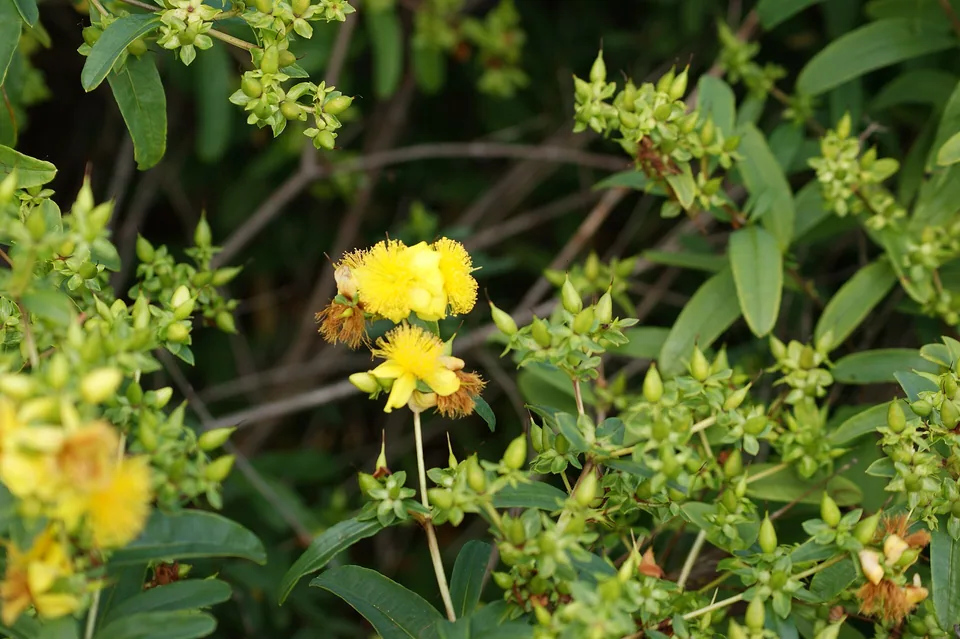
La hierba de San Juan arbustiva es un arbusto de floración caducifolia con flores amarillas, que se encuentra en bosques abiertos, pantanos y lugares secos y soleados. [1] Crece a pleno sol o semisombra y tolera tanto sitios húmedos como secos. [3] La planta tiene características de toxicidad de severidad media, y el contacto de la piel con la savia puede causar dermatitis. [1]
Citado en inglés, como en la fuente.
Cuidados
Riego
Riego
Prefiere mantenerse húmedo; tolera suelos secos y sequía
Qué dicen las fuentes (2)
Shrubby St. John's Wort will grow in a range of soils from sandy to clay and, while it prefers to stay moist, it will tolerate dry soils.It is a slow grower and will tolerate drought.Notas sobre el riego
Tolera sitios húmedos y secos.
Qué dicen las fuentes (1)
Full sun to partial shade; tolerates both wet and dry sites; tolerates alkaline soil.Luz
Pleno sol a semisombra (el pleno sol maximiza la floración)
Qué dicen las fuentes (2)
The plant will grow in full sun or partial shade, but full sun will maximize blooms.Full sun to partial shade; tolerates both wet and dry sites; tolerates alkaline soil.Clima y frío
Rusticidad, zona más fría
Las fuentes dan valores distintos según la región, la zona o las condiciones de cultivo.
Lo que dice cada fuente
Según NC State Extension: 3a [mínima invernal de −40 a −37,2 °C (de −40 a −35 °F)]
Según University of Illinois Extension: 4 [mínima invernal de −34,4 a −28,9 °C (de −30 a −20 °F)]
Qué dicen las fuentes (2)
Según NC State Extension: USDA Plant Hardiness Zone:
3a, 3b, 4a, 4b, 5a, 5b, 6a, 6b, 7a, 7b, 8a, 8bSegún University of Illinois Extension: USDA Hardiness Zone
4 - 8Rusticidad, zona más cálida
8b [mínima invernal de −9,4 a −6,7 °C (de 15 a 20 °F)]
Lo que dice cada fuente
Según University of Illinois Extension: 8 [mínima invernal de −12,2 a −6,7 °C (de 10 a 20 °F)]
Qué dicen las fuentes (2)
Según University of Illinois Extension: USDA Hardiness Zone
4 - 8USDA Plant Hardiness Zone:
3a, 3b, 4a, 4b, 5a, 5b, 6a, 6b, 7a, 7b, 8a, 8bPropagación
División; semilla
Qué dicen las fuentes (1)
Recommended Propagation Strategy:
DivisionCultivo
La planta
Ciclo de vida
perenne
Qué dicen las fuentes (1)
Shrubby St. John's Wort is a herbaceous, perennial, deciduous or evergreen flowering shrub with a compact, dense habit, dark green leaves, and yellow flowers.Familia
Hypericaceae
Qué dicen las fuentes (1)
Genus:
Hypericum
Species:
prolificum
Family:
Hypericaceae
Life Cycle:
PerennialAltura adulta
Plagas y enfermedades
Enfermedades
pudrición de raíces, marchitez, moho gris, pudriciones de madera y descomposición
Qué dicen las fuentes (2)
No known diseases or insect pests. However, root rot and wilt can be significant problems in hot and humid climates.Fungal Disease
- Gray Mold [Trees and Shrubs] ( Botrytis cinerea and other species )
- Wood Rots and Decays ( Many genus and species involved )Problemas
Pudrición de raíz y marchitez
Síntoma: La pudrición de raíz y el marchitamiento pueden ser significativos en climas cálidos y húmedos
Qué hacer: La fuente no reporta enfermedades conocidas ni plagas de insectos por lo demás
Qué dicen las fuentes (1)
No known diseases or insect pests. However, root rot and wilt can be significant problems in hot and humid climates.
— Hypericum prolificum (Common St. John's Wort, Shrubby St. John's Wort, St. John's Wort) | North Carolina Extension Gardener Plant Toolbox [1]
Remedios
Cada remedio indica qué dicen las fuentes oficiales; los remedios tradicionales sin fuente oficial aparecen marcados. Los perjudiciales están para que sepas evitarlos.
Primeros auxilios
Primeros auxilios: no sustituyen al médico
fotosensibilidad por contacto con la savia
protector solar con alta protección UVA y cubriendo la piel Fuente oficial, sin prueba independiente
Cómo: Usa un protector solar con alta protección UVA y cubre la piel para evitar una mayor exposición a la luz, comenzando tan pronto como se reconozca la exposición accidental.
The use of a sunscreen with high UVA protection in addition to covering the skin to prevent further light exposure may diminish the severity of the reaction if it is commenced as soon as the accidental exposure is recognised.
— dermnetnz.org [5]
Cuidar la planta
roya del hipérico
Poda el crecimiento infectado Funciona
Cómo: Poda todo el crecimiento infectado que esté por encima del suelo, deja que la planta se regenere y rastrilla y desecha (no lo conviertas en compost) los restos.
The best recourse for now is to prune back infected growth (all of the above-ground growth) and let the plant rejuvenate; rake up and discard, do not compost, the debris.
— ask.extension.org [6] Qué dicen las pruebas The best recourse for now is to prune back infected growth (all of the above-ground growth) and let the plant rejuvenate; rake up and discard, do not compost, the debris.
— ask.extension.org [6] retira las hojas infectadas y la hojarasca Fuente oficial, sin prueba independiente
Cómo: Retira las hojas infectadas y la hojarasca del lugar de plantación, siega las plantaciones gravemente infectadas, rastrilla todas las hojas y destruye la hojarasca.
Remove infected leaves and leaf litter in the planting site. This may require mowing severely infected plantings, raking all leaves, and destroying infected leaf litter.
— hortsense.cahnrs.wsu.edu [7] evita el riego por aspersión por la tarde Fuente oficial, sin prueba independiente
Cómo: Evita el riego por aspersión por la tarde.
Remove infected leaves and leaf litter in the planting site. This may require mowing severely infected plantings, raking all leaves, and destroying infected leaf litter. - Avoid overhead watering in the evening.
— hortsense.cahnrs.wsu.edu [7]
Toxicidad
Según la fuente, citada textualmente. No es un consejo médico ni veterinario: si una persona o un animal pudo haber ingerido esta planta, contacta con un centro de toxicología o con un veterinario.
This plant has medium severity poison characteristics.
[1]- Partes venenosas
Poison Part: Leaves
[1]- Principio tóxico
Poison Toxic Principle: Unidentified, possibly a glycoside
[1]- Síntomas
Skin contact with the sap, or ingestion of the plant, can cause photosensitivity in some people. Common side-effects are gastointestinal disturbances, allergic reactions and fatigue.
[1]- Gravedad
Poison Severity: Medium
[1]
Calendario
Poda
Primavera
Qué dicen las fuentes (1)
but can be kept under control with spring pruning.Meses tal como los dan las fuentes, en su mayoría de Estados Unidos (hemisferio norte). En el hemisferio sur se desplazan unos seis meses.
Valores orientativos
Valores de una fuente secundaria, no comprobados palabra por palabra como el resto de esta página. Úselos como punto de partida.
- Suelo
- Arenoso Arcilloso RocosoValor orientativo, adáptalo a tu clima · Fuente secundaria
- pH del suelo
- 5.5-7.5Valor orientativo, adáptalo a tu clima · Fuente secundaria
- Nivel de cuidado
- MedioValor orientativo, adáptalo a tu clima · Fuente secundaria
- Crecimiento
- AltaValor orientativo, adáptalo a tu clima · Fuente secundaria
Plantas similares
- Atlantic St. John's Wort Hypericum tenuifolium
- Bedstraw Hypericum galioides
- Bushy St. John's Wort Hypericum densiflorum
- Cedarglade St. Johnswort Hypericum frondosum
- Hipérico Hypericum perforatum
- Mount Olympus St. John's Wort Hypericum olympicum
- St. Andrew's Cross Hypericum hypericoides
- Hipérico rastrero Hypericum calycinum
Fuentes
Cada valor anterior se cita de estos documentos. Los enlaces llevan al editor original.
- Hypericum prolificum (Common St. John's Wort, Shrubby St. John's Wort, St. John's Wort) | North Carolina Extension Gardener Plant Toolbox · plants.ces.ncsu.edu, consultado
- Shrubby St. Johnswort (Hypericum prolificum) - Selecting Shrubs for Your Home - University of Illinois Extension · web.extension.illinois.edu, consultado
- Shrubby St. Johnswort (Hypericum prolificum)-Hort Answers - University of Illinois Extension · web.extension.illinois.edu, consultado
- St. John's Wort - Hypericum prolificum | North Carolina Extension Gardener Plant Toolbox · plants.ces.ncsu.edu, consultado
- dermnetnz.org · dermnetnz.org
- ask.extension.org · ask.extension.org
- hortsense.cahnrs.wsu.edu · hortsense.cahnrs.wsu.edu
Escrito por Emilio Marruso · última revisión