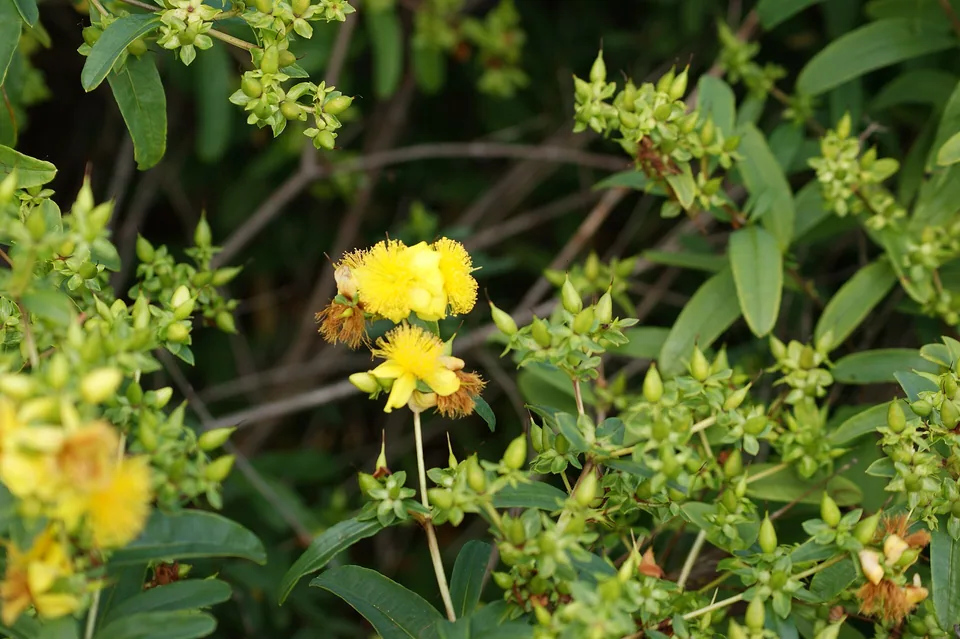


How to Grow and Care for Shrubby St. John's Wort
Hypericum prolificum
Written by Emilio Marruso · last checked
Toxic to: People · Why
At a glance
This easygoing perennial is happy almost anywhere: it likes to stay moist, yet it tolerates dry soil and drought, and it copes with both wet and dry sites. Give it full sun for the most blooms, though partial shade works too. Prune it in spring, and you can make new plants by division or from seed whenever you want more.
- Sun
Full sun to partial shade; full sun gives the most blooms
What the sources say (2)
Light: Full sun to partial shade (full sun maximizes blooms)
The plant will grow in full sun or partial shade, but full sun will maximize blooms.
— Hypericum prolificum (Common St. John's Wort, Shrubby St. John's Wort, St. John's Wort) | North Carolina Extension Gardener Plant Toolbox [1] Full sun to partial shade; tolerates both wet and dry sites; tolerates alkaline soil.
— Shrubby St. Johnswort (Hypericum prolificum)-Hort Answers - University of Illinois Extension [3] - Water
Likes moist soil but tolerates drought and both wet and dry spots
What the sources say (3)
Watering: Prefers to stay moist; tolerates dry soils and drought
Shrubby St. John's Wort will grow in a range of soils from sandy to clay and, while it prefers to stay moist, it will tolerate dry soils.
— Hypericum prolificum (Common St. John's Wort, Shrubby St. John's Wort, St. John's Wort) | North Carolina Extension Gardener Plant Toolbox [1] It is a slow grower and will tolerate drought.
— Hypericum prolificum (Common St. John's Wort, Shrubby St. John's Wort, St. John's Wort) | North Carolina Extension Gardener Plant Toolbox [1] Watering notes: Tolerates both wet and dry sites
Full sun to partial shade; tolerates both wet and dry sites; tolerates alkaline soil.
— Shrubby St. Johnswort (Hypericum prolificum)-Hort Answers - University of Illinois Extension [3] - Pruning
Prune in spring
What the sources say (1)
Pruning: Spring
but can be kept under control with spring pruning.
— Hypericum prolificum (Common St. John's Wort, Shrubby St. John's Wort, St. John's Wort) | North Carolina Extension Gardener Plant Toolbox [1] - Pests
Root rot and wilt can be a problem in hot, humid climates; also gray mold
What the sources say (2)
Diseases: root rot, wilt, gray mold, wood rots and decays
No known diseases or insect pests. However, root rot and wilt can be significant problems in hot and humid climates.
— Hypericum prolificum (Common St. John's Wort, Shrubby St. John's Wort, St. John's Wort) | North Carolina Extension Gardener Plant Toolbox [1] Fungal Disease - Gray Mold [Trees and Shrubs] ( Botrytis cinerea and other species ) - Wood Rots and Decays ( Many genus and species involved )
— Shrubby St. Johnswort (Hypericum prolificum)-Hort Answers - University of Illinois Extension [3] - Propagation
Make new plants by division or from seed
What the sources say (1)
Propagation: Division; seed
Recommended Propagation Strategy: Division
— Hypericum prolificum (Common St. John's Wort, Shrubby St. John's Wort, St. John's Wort) | North Carolina Extension Gardener Plant Toolbox [1] - Safety
Moderately poisonous to people: do not eat it
Overview
Shrubby St. John's wort is a deciduous flowering shrub with yellow flowers, found in open woods, bogs and dry sunny places. [1] It grows in full sun or partial shade and tolerates both wet and dry sites. [3] The plant has medium severity poison characteristics, and skin contact with the sap can cause dermatitis. [1]
Shrubby St. John's Wort care
How to water Shrubby St. John's Wort
Watering
Prefers to stay moist; tolerates dry soils and drought
What the sources say (2)
Shrubby St. John's Wort will grow in a range of soils from sandy to clay and, while it prefers to stay moist, it will tolerate dry soils.It is a slow grower and will tolerate drought.Watering notes
Tolerates both wet and dry sites
What the sources say (1)
Full sun to partial shade; tolerates both wet and dry sites; tolerates alkaline soil.How much light Shrubby St. John's Wort needs
Full sun to partial shade (full sun maximizes blooms)
What the sources say (2)
The plant will grow in full sun or partial shade, but full sun will maximize blooms.Full sun to partial shade; tolerates both wet and dry sites; tolerates alkaline soil.How much cold Shrubby St. John's Wort can take
Hardiness, coldest zone
The sources give different values depending on region, zone or growing conditions.
What each source says
According to NC State Extension: 3a [winter low −40 to −37.2 °C (−40 to −35 °F)]
According to University of Illinois Extension: 4 [winter low −34.4 to −28.9 °C (−30 to −20 °F)]
What the sources say (2)
According to NC State Extension: USDA Plant Hardiness Zone:
3a, 3b, 4a, 4b, 5a, 5b, 6a, 6b, 7a, 7b, 8a, 8bAccording to University of Illinois Extension: USDA Hardiness Zone
4 - 8Hardiness, warmest zone
8b [winter low −9.4 to −6.7 °C (15 to 20 °F)]
What each source says
According to University of Illinois Extension: 8 [winter low −12.2 to −6.7 °C (10 to 20 °F)]
What the sources say (2)
According to University of Illinois Extension: USDA Hardiness Zone
4 - 8USDA Plant Hardiness Zone:
3a, 3b, 4a, 4b, 5a, 5b, 6a, 6b, 7a, 7b, 8a, 8bHow to propagate Shrubby St. John's Wort
Division; seed
What the sources say (1)
Recommended Propagation Strategy:
DivisionHow to grow Shrubby St. John's Wort
The plant
Life cycle
perennial
What the sources say (1)
Shrubby St. John's Wort is a herbaceous, perennial, deciduous or evergreen flowering shrub with a compact, dense habit, dark green leaves, and yellow flowers.Family
Hypericaceae
What the sources say (1)
Genus:
Hypericum
Species:
prolificum
Family:
Hypericaceae
Life Cycle:
PerennialMature height
Pests and diseases
Diseases
root rot, wilt, gray mold, wood rots and decays
What the sources say (2)
No known diseases or insect pests. However, root rot and wilt can be significant problems in hot and humid climates.Fungal Disease
- Gray Mold [Trees and Shrubs] ( Botrytis cinerea and other species )
- Wood Rots and Decays ( Many genus and species involved )Shrubby St. John's Wort pests and problems
Root rot and wilt
Symptom: Root rot and wilt can be significant in hot and humid climates
What to do: The source reports no known diseases or insect pests otherwise
What the sources say (1)
No known diseases or insect pests. However, root rot and wilt can be significant problems in hot and humid climates.
— Hypericum prolificum (Common St. John's Wort, Shrubby St. John's Wort, St. John's Wort) | North Carolina Extension Gardener Plant Toolbox [1]
Remedies
Each remedy shows what official sources say about it; traditional remedies without an official source are marked as such. Harmful ones are listed so you know to avoid them.
First aid
First aid: not a substitute for a doctor
photosensitivity from sap contact
sunscreen with high UVA protection and covering the skin Official source, not independently tested
How: Use a sunscreen with high UVA protection and cover the skin to prevent further light exposure, starting as soon as the accidental exposure is recognised.
The use of a sunscreen with high UVA protection in addition to covering the skin to prevent further light exposure may diminish the severity of the reaction if it is commenced as soon as the accidental exposure is recognised.
— dermnetnz.org [5]
Treating the plant
hypericum rust
prune back infected growth Works
How: Prune back all the infected above-ground growth, let the plant rejuvenate, and rake up and discard (do not compost) the debris.
The best recourse for now is to prune back infected growth (all of the above-ground growth) and let the plant rejuvenate; rake up and discard, do not compost, the debris.
— ask.extension.org [6] What the evidence says The best recourse for now is to prune back infected growth (all of the above-ground growth) and let the plant rejuvenate; rake up and discard, do not compost, the debris.
— ask.extension.org [6] remove infected leaves and leaf litter Official source, not independently tested
How: Remove infected leaves and leaf litter from the planting site, mowing severely infected plantings, raking all leaves and destroying the litter.
Remove infected leaves and leaf litter in the planting site. This may require mowing severely infected plantings, raking all leaves, and destroying infected leaf litter.
— hortsense.cahnrs.wsu.edu [7] avoid overhead watering in the evening Official source, not independently tested
How: Avoid overhead watering in the evening.
Remove infected leaves and leaf litter in the planting site. This may require mowing severely infected plantings, raking all leaves, and destroying infected leaf litter. - Avoid overhead watering in the evening.
— hortsense.cahnrs.wsu.edu [7]
Is Shrubby St. John's Wort poisonous?
Reported by the source, quoted verbatim. This is not medical or veterinary advice: if a person or an animal may have eaten this plant, contact a poison control centre or a veterinarian.
This plant has medium severity poison characteristics.
[1]- Poisonous parts
Poison Part: Leaves
[1]- Toxic principle
Poison Toxic Principle: Unidentified, possibly a glycoside
[1]- Symptoms
Skin contact with the sap, or ingestion of the plant, can cause photosensitivity in some people. Common side-effects are gastointestinal disturbances, allergic reactions and fatigue.
[1]- Severity
Poison Severity: Medium
[1]
Calendar
Pruning
Spring
What the sources say (1)
but can be kept under control with spring pruning.Months as given by the sources, which are mostly from the United States (northern hemisphere). In the southern hemisphere they shift by about six months.
Indicative values
Values from a secondary source, not checked word for word like the rest of this page. Use them as a starting point.
- Soil
- Sandy Clay RockyIndicative value, adapt it to your climate · Secondary source
- Soil pH
- 5.5-7.5Indicative value, adapt it to your climate · Secondary source
- Care level
- MediumIndicative value, adapt it to your climate · Secondary source
- Growth rate
- HighIndicative value, adapt it to your climate · Secondary source
Similar plants
- Atlantic St. John's Wort Hypericum tenuifolium
- Bedstraw Hypericum galioides
- Bushy St. John's Wort Hypericum densiflorum
- Cedarglade St. Johnswort Hypericum frondosum
- Common St. John's-wort Hypericum perforatum
- Mount Olympus St. John's Wort Hypericum olympicum
- St. Andrew's Cross Hypericum hypericoides
- Aaron's Beard Hypericum calycinum
Sources
Every value above is quoted from these documents. Links lead to the original publisher.
- Hypericum prolificum (Common St. John's Wort, Shrubby St. John's Wort, St. John's Wort) | North Carolina Extension Gardener Plant Toolbox · plants.ces.ncsu.edu, consulted
- Shrubby St. Johnswort (Hypericum prolificum) - Selecting Shrubs for Your Home - University of Illinois Extension · web.extension.illinois.edu, consulted
- Shrubby St. Johnswort (Hypericum prolificum)-Hort Answers - University of Illinois Extension · web.extension.illinois.edu, consulted
- St. John's Wort - Hypericum prolificum | North Carolina Extension Gardener Plant Toolbox · plants.ces.ncsu.edu, consulted
- dermnetnz.org · dermnetnz.org
- ask.extension.org · ask.extension.org
- hortsense.cahnrs.wsu.edu · hortsense.cahnrs.wsu.edu
Written by Emilio Marruso · last checked