
How to Grow and Care for Thimble Cactus
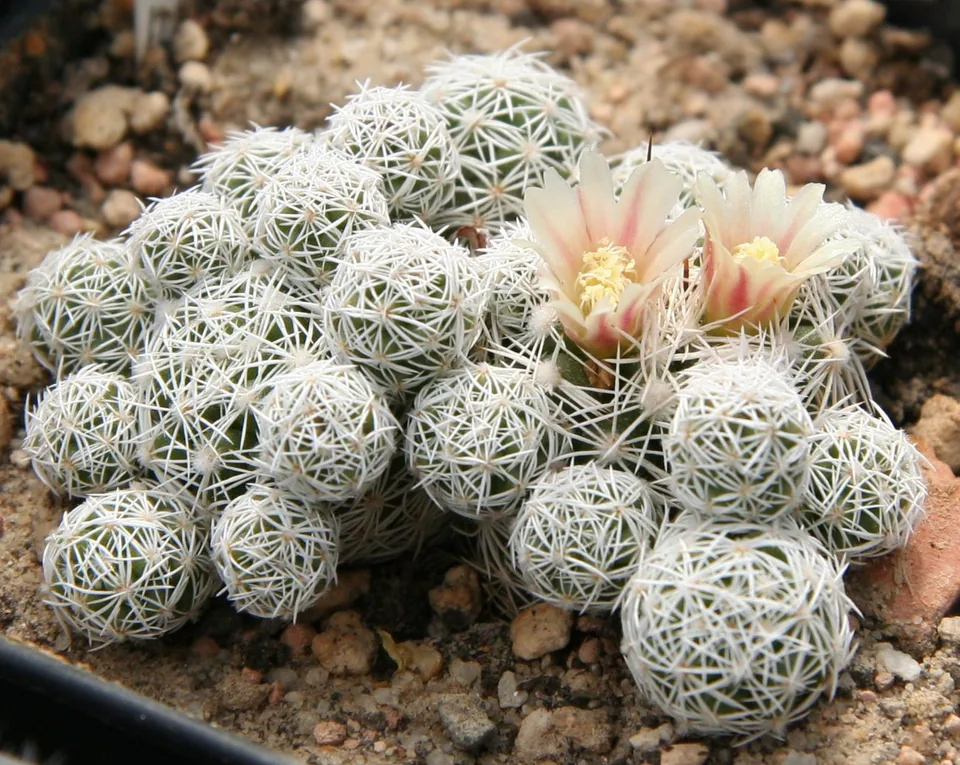
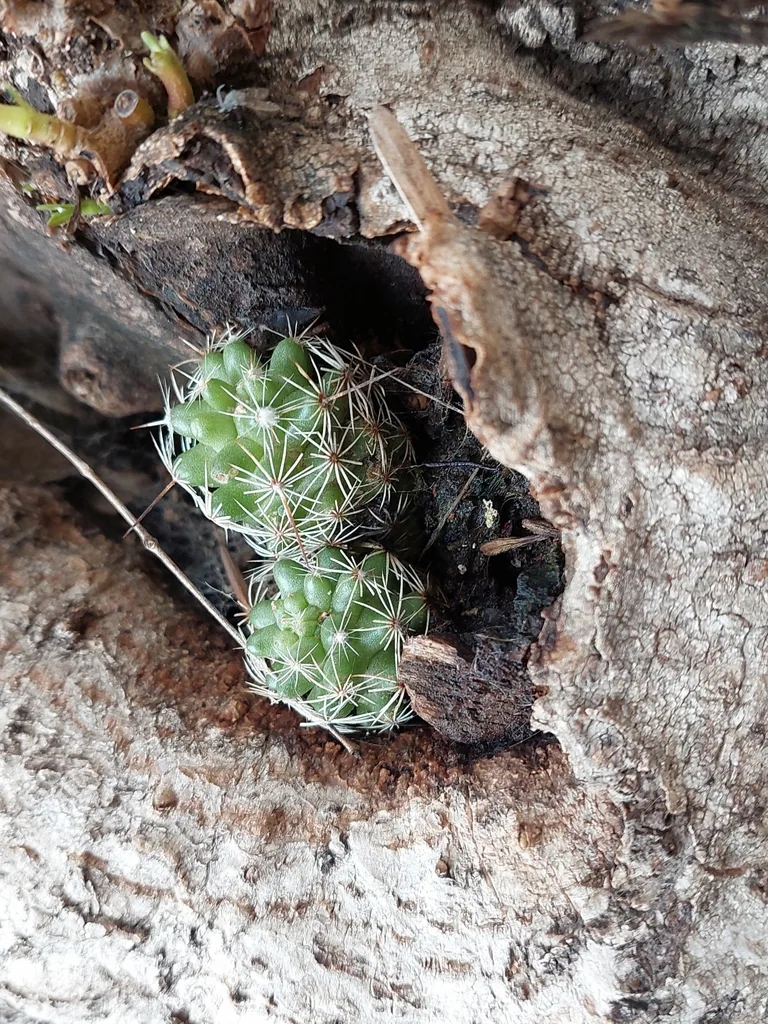
Mammillaria vetula
Written by Emilio Marruso · last checked
Not toxic to cats and dogs, according to the sources · Sources
At a glance
This little cactus is easy to grow and happy in a pot, indoors or out. Give it full sun, let the soil dry out completely between waterings, and it stays a tidy 3–6 inches tall. Stop watering in winter and keep it somewhere colder, and it rewards you with spring flowers and even edible fruit.
- Sun
Full sun or bright direct light; some afternoon shade in hot weather
What the sources say (1)
Light: Full sun or bright direct light, with some afternoon shade in hot weather
This plant grows best in full sun or bright direct light and appreciates some afternoon shade in hot weather.
— Mammillaria vetula (Thimble Cactus, Thimble mammillaria) | North Carolina Extension Gardener Plant Toolbox [1] - Water
Let the soil dry out completely between waterings; no water in winter
What the sources say (2)
Watering: Drought tolerant; allow the soil to dry out completely between waterings
The plant is drought tolerant, and It is best to allow the soil to dry out completely between waterings.
— Mammillaria vetula (Thimble Cactus, Thimble mammillaria) | North Carolina Extension Gardener Plant Toolbox [1] Watering notes: Stop watering in winter and move to a colder location to encourage spring flowering
Stop watering in the winter and move to a colder location to encourage flowering in the spring.
— Mammillaria vetula (Thimble Cactus, Thimble mammillaria) | North Carolina Extension Gardener Plant Toolbox [1] - Cold
Survives winters down to 20 °F (−6.7 °C)
Hardy in average winters · USDA 9a · RHS H4 · Z9
What the sources say (2)
Hardiness, coldest zone: 9a [winter low −6.7 to −3.9 °C (20 to 25 °F)]
USDA Plant Hardiness Zone: 9a, 9b, 10a, 10b, 11a, 11b
— Mammillaria vetula (Thimble Cactus, Thimble mammillaria) | North Carolina Extension Gardener Plant Toolbox [1] Hardiness, warmest zone: 11b [winter low 7.2 to 10 °C (45 to 50 °F)]
USDA Plant Hardiness Zone: 9a, 9b, 10a, 10b, 11a, 11b
— Mammillaria vetula (Thimble Cactus, Thimble mammillaria) | North Carolina Extension Gardener Plant Toolbox [1] - Harvest
The fruit is edible
- Pests
Mealybugs, scale insects and spider mites; check the plant often
What the sources say (1)
Pests: mealybugs, scale insects, spider mites
This plant is generally pest-free. Monitor for mealybugs, scale insects, and spider mites.
— Mammillaria vetula (Thimble Cactus, Thimble mammillaria) | North Carolina Extension Gardener Plant Toolbox [1] - Watch out
Too much water rots the roots; give it good air flow
What the sources say (1)
Diseases: root rot, fungal infections
Avoid overwatering to prevent root rot and provide good air circulation to prevent fungal infections.
— Mammillaria vetula (Thimble Cactus, Thimble mammillaria) | North Carolina Extension Gardener Plant Toolbox [1] - Size
3–6 in tall and 4–5 in wide
What the sources say (2)
Mature height: 7.62-15.24 cm (3-6 in)
This cactus has a clumping habit and grows from 3 to 6 inches tall and 4 to 5 inches wide.
— Mammillaria vetula (Thimble Cactus, Thimble mammillaria) | North Carolina Extension Gardener Plant Toolbox [1] Mature width: 10.16-12.7 cm (4-5 in)
This cactus has a clumping habit and grows from 3 to 6 inches tall and 4 to 5 inches wide.
— Mammillaria vetula (Thimble Cactus, Thimble mammillaria) | North Carolina Extension Gardener Plant Toolbox [1] - Propagation
From offsets, stem cuttings or seeds
What the sources say (1)
Propagation: Offsets, stem cuttings, seeds
It is propagated by offsets, stem cuttings, and seeds.
— Mammillaria vetula (Thimble Cactus, Thimble mammillaria) | North Carolina Extension Gardener Plant Toolbox [1] - Containers
Grows well in pots, indoors too
What the sources say (3)
In containers: Yes
Landscape Location: Container
— Mammillaria vetula (Thimble Cactus, Thimble mammillaria) | North Carolina Extension Gardener Plant Toolbox [1] #container plant
— Mammillaria vetula (Thimble Cactus, Thimble mammillaria) | North Carolina Extension Gardener Plant Toolbox [1] Indoors: Yes
It is frequently used as a houseplant or in rock gardens or xeriscapes.
— Mammillaria vetula (Thimble Cactus, Thimble mammillaria) | North Carolina Extension Gardener Plant Toolbox [1] - Safety
Not toxic to cats, dogs or horses
Overview
Mammillaria vetula is a small, slow-growing, clumping cactus from Mexico, used as a houseplant or in rock gardens. [1] It prefers full sun and good drainage, and the soil should dry out completely between waterings. [1] It is propagated by offsets, stem cuttings and seeds. [1]
Thimble Cactus care
How to water Thimble Cactus
Watering
Drought tolerant; allow the soil to dry out completely between waterings
What the sources say (1)
The plant is drought tolerant, and It is best to allow the soil to dry out completely between waterings.Watering notes
Stop watering in winter and move to a colder location to encourage spring flowering
What the sources say (1)
Stop watering in the winter and move to a colder location to encourage flowering in the spring.How much light Thimble Cactus needs
Full sun or bright direct light, with some afternoon shade in hot weather
What the sources say (1)
This plant grows best in full sun or bright direct light and appreciates some afternoon shade in hot weather.How much cold Thimble Cactus can take
Hardiness, coldest zone
9a [winter low −6.7 to −3.9 °C (20 to 25 °F)]
What the sources say (1)
USDA Plant Hardiness Zone:
9a, 9b, 10a, 10b, 11a, 11bHardiness, warmest zone
11b [winter low 7.2 to 10 °C (45 to 50 °F)]
What the sources say (1)
USDA Plant Hardiness Zone:
9a, 9b, 10a, 10b, 11a, 11bWhere to grow Thimble Cactus
Indoors
Yes
What the sources say (1)
It is frequently used as a houseplant or in rock gardens or xeriscapes.In containers
Yes
How to propagate Thimble Cactus
Offsets, stem cuttings, seeds
What the sources say (1)
It is propagated by offsets, stem cuttings, and seeds.How to grow Thimble Cactus
The plant
Life cycle
perennial
What the sources say (1)
#container plant #houseplant #perennial #succulent #clumping #rock garden #yellow flowers #slow growing #low maintenanceFamily
Cactaceae
What the sources say (1)
The origin of the common name, thimble cactus, results from the stems looking like tiny little thimbles. It is a member of the Cactaceae family.Mature height
7.62-15.24 cm (3-6 in)
What the sources say (1)
This cactus has a clumping habit and grows from 3 to 6 inches tall and 4 to 5 inches wide.Mature width
10.16-12.7 cm (4-5 in)
What the sources say (1)
This cactus has a clumping habit and grows from 3 to 6 inches tall and 4 to 5 inches wide.Pests and diseases
Pests
mealybugs, scale insects, spider mites
What the sources say (1)
This plant is generally pest-free. Monitor for mealybugs, scale insects, and spider mites.Diseases
root rot, fungal infections
What the sources say (1)
Avoid overwatering to prevent root rot and provide good air circulation to prevent fungal infections.Thimble Cactus pests and problems
Root rot and fungal infections
Symptom: Root rot from overwatering; fungal infections
What to do: Avoid overwatering and provide good air circulation
What the sources say (1)
Avoid overwatering to prevent root rot and provide good air circulation to prevent fungal infections.
— Mammillaria vetula (Thimble Cactus, Thimble mammillaria) | North Carolina Extension Gardener Plant Toolbox [1] Mealybugs, scale insects and spider mites
Symptom: Possible pest infestation
What to do: Monitor the plant
What the sources say (1)
Monitor for mealybugs, scale insects, and spider mites.
— Mammillaria vetula (Thimble Cactus, Thimble mammillaria) | North Carolina Extension Gardener Plant Toolbox [1]
Remedies
Each remedy shows what official sources say about it; traditional remedies without an official source are marked as such. Harmful ones are listed so you know to avoid them.
Treating the plant
mealybugs
alcohol cotton swab Partly works
Be careful not to get the alcohol on the leaves of the plants as they may be damaged.
— extension.umd.edu [4] How: Dab bugs and white fluff with denatured alcohol on a cotton swab to kill the insects. Repeat this treatment as often as necessary, checking the plant thoroughly once every three weeks.
Dab bugs and white fluff with denatured alcohol on a cotton swab to kill the insects. Repeat this treatment as often as necessary to remove all bugs from the plant, checking it thoroughly once every three weeks.
— worldofsucculents.com [3] What the evidence says Dipping a cotton swab in household alcohol and dabbing it on the individual mealybugs can control light infestations.
— extension.umd.edu [4] insecticidal soap spray Works
Be sure to follow all directions carefully and make sure that the plant or pest is on the label.
— extension.umd.edu [4] How: For heavy infestations, spray the plants thoroughly with insecticidal soap for indoor plants; multiple applications will most likely be necessary.
For heavy infestations, spray the plants thoroughly with insecticidal soap for indoor plants or a registered houseplant spray.
— extension.umd.edu [4] What the evidence says For heavy infestations, spray the plants thoroughly with insecticidal soap for indoor plants or a registered houseplant spray.
— extension.umd.edu [4] dish soap spray Not verified
Traditional remedy, not verified by an official source.
I advise that you test this on a few leaves to see if the plant is sensitive to this mix. You could do as much damage as the insects.
— extension.sdstate.edu [5] How: Spray the cactus with several drops of dish soap diluted in a cup of water.
spider mites
forceful jet of water Works
How: Put the plant in the kitchen sink or shower and spray it down with tepid water, directing it to all parts of the plant.
Also, a forceful jet of water will blast away lots of mites. Put the plant in your kitchen sink or shower and spray it down.
— extension.sdstate.edu [5] What the evidence says Also, a forceful jet of water will blast away lots of mites. Put the plant in your kitchen sink or shower and spray it down.
— extension.sdstate.edu [5] dish soap and vegetable oil spray Official source, not independently tested
You might want to try this on a few leaves first to make sure you don’t damage the plant’s leaves.
— extension.sdstate.edu [5] How: Mix a spray bottle with a few drops of dish soap and a teaspoon of vegetable oil, fill the bottle with water, shake well and spray it on the plants.
You can also mix up a spray bottle with a few drops of dish soap and a teaspoon of vegetable oil and then fill the bottle with water. Shake well, then spray it on the plants.
— extension.sdstate.edu [5]
scale insects
rubbing alcohol swab Not verified
Traditional remedy, not verified by an official source.
How: Use the rubbing alcohol treatment to remove the scales by hand, with a cotton swab or a small, stiff paintbrush.
soft toothbrush Official source, not independently tested
How: Gently dislodge the adult scale insects from the plant with an old, soft toothbrush.
Some people will use an old, soft toothbrush to gently dislodge the adult scale insects from the plant.
— extension.sdstate.edu [5]
Is Thimble Cactus poisonous?
Reported by the source, quoted verbatim. This is not medical or veterinary advice: if a person or an animal may have eaten this plant, contact a poison control centre or a veterinarian.
#non-toxic for cats #non-toxic for horses #non-toxic for dogs
[1]The source flags the risk for this animal but does not explain why.
Edibility
Reported by the source, quoted verbatim. Do not eat a plant on the basis of this page alone: identification mistakes can be dangerous.
Play Value: Easy to Grow Edible fruit
[1]
Similar plants
- Bunny Ears Opuntia microdasys
- Devil's Tongue Opuntia humifusa
- Dragon Fruit Selenicereus undatus
- Easter Lily Cactus Echinopsis oxygona
- Eve's Needle Austrocylindropuntia subulata
- Old Man Cactus Cephalocereus senilis
- Plains Prickly Pear Opuntia macrorhiza
- Easter Cactus Rhipsalidopsis gaertneri
Sources
Every value above is quoted from these documents. Links lead to the original publisher.
- Mammillaria vetula (Thimble Cactus, Thimble mammillaria) | North Carolina Extension Gardener Plant Toolbox · plants.ces.ncsu.edu, consulted
- Mammillaria (Pincushion Cactus) | North Carolina Extension Gardener Plant Toolbox · plants.ces.ncsu.edu, consulted
- worldofsucculents.com · worldofsucculents.com
- extension.umd.edu · extension.umd.edu
- extension.sdstate.edu · extension.sdstate.edu
Written by Emilio Marruso · last checked