
How to Grow and Care for Bunny Ears
Opuntia microdasys
Written by Emilio Marruso · last checked
Toxic to: Cattle, People · Why
At a glance
This cactus is an easy companion for a sunny window or patio: it grows indoors and in pots, and asks for very little water. Water it thoroughly, then let the soil dry out completely. In summer its ripe fruit is good to eat raw or in jelly, and the pads can be eaten too, once the spines and bristles are removed.
- Sun
Full sun to partial shade; indoors, at least 6–8 hours of bright light
What the sources say (3)
Light: Full sun to partial shade
indoors: Indoor plants should receive at least 6-8 hours of bright light for a happy plant. If the home interior is dim, use a plant bulb to provide supplemental light.
— Bunny Ear Cactus: How To Grow This Adorable Desert-Dweller | Gardening Know How [4] The bunny ears cactus requires full sun to partial shade and should be grown in a fast-draining cactus potting mix to prevent root rot.
— Opuntia microdasys (Angel's-Wings, Bunny Ears, Golden Bristle Cactus, Polka Dot Cactus, Rabbit Cactus) | North Carolina Extension Gardener Plant Toolbox [1] | Light Preference | Full Sun, Semi-Shade | Water Preference | Little Water
— NParks | Opuntia microdasys [2] - Water
Water deeply, then let the soil dry out completely; very little water in winter
What the sources say (5)
Watering: Water thoroughly, then let the soil dry out completely before watering again
It is best to let the soil completely dry out between waterings. This plant prefers dry and low humid conditions.
— Opuntia microdasys (Angel's-Wings, Bunny Ears, Golden Bristle Cactus, Polka Dot Cactus, Rabbit Cactus) | North Carolina Extension Gardener Plant Toolbox [1] Water thoroughly and then allow the soil to dry out completely before re-watering (as opposed to giving small amounts of water on a frequent basis).
— NParks | Opuntia microdasys [2] Watering notes: Very little water in winter; overwatering and poor drainage cause root or stem rot; prefers low humidity
In the winter months, it requires cooler temperatures of 50-65 degrees Fahrenheit, very little water and partial sun conditions.
— Opuntia microdasys (Angel's-Wings, Bunny Ears, Golden Bristle Cactus, Polka Dot Cactus, Rabbit Cactus) | North Carolina Extension Gardener Plant Toolbox [1] Insects, Diseases, and Other Plant Problems: Monitor for mealybugs and scale insects. Overwatering and poor drainage can cause root rot or stem rot.
— Opuntia microdasys (Angel's-Wings, Bunny Ears, Golden Bristle Cactus, Polka Dot Cactus, Rabbit Cactus) | North Carolina Extension Gardener Plant Toolbox [1] Homes with high humidity should water less than those with low ambient moisture. A good rule of thumb is to allow the soil to dry out before irrigation .
— Bunny Ear Cactus: How To Grow This Adorable Desert-Dweller | Gardening Know How [4] - Soil
Fast-draining cactus mix: poor drainage rots roots and stems
What the sources say (3)
Watering notes: Very little water in winter; overwatering and poor drainage cause root or stem rot; prefers low humidity
In the winter months, it requires cooler temperatures of 50-65 degrees Fahrenheit, very little water and partial sun conditions.
— Opuntia microdasys (Angel's-Wings, Bunny Ears, Golden Bristle Cactus, Polka Dot Cactus, Rabbit Cactus) | North Carolina Extension Gardener Plant Toolbox [1] Insects, Diseases, and Other Plant Problems: Monitor for mealybugs and scale insects. Overwatering and poor drainage can cause root rot or stem rot.
— Opuntia microdasys (Angel's-Wings, Bunny Ears, Golden Bristle Cactus, Polka Dot Cactus, Rabbit Cactus) | North Carolina Extension Gardener Plant Toolbox [1] Homes with high humidity should water less than those with low ambient moisture. A good rule of thumb is to allow the soil to dry out before irrigation .
— Bunny Ear Cactus: How To Grow This Adorable Desert-Dweller | Gardening Know How [4] - Planting
Plant in spring
What the sources say (1)
Planting: Spring
Soil requirements- well draining, gritty Hardiness zones- USDA 7-10 When to plant- spring
— Bunny Ear Cactus: How To Grow This Adorable Desert-Dweller | Gardening Know How [4] - Pruning
Any time, removing only dead or damaged parts
What the sources say (1)
Pruning: Any time (dead or damaged material only)
Bunny ear cacti don't need pruning, but dead or damaged plant material can be removed at any time.
— Bunny Ear Cactus: How To Grow This Adorable Desert-Dweller | Gardening Know How [4] - Harvest
Fruit ripens June to August; eat it raw or in jelly after removing spines and bristles
What the sources say (2)
Harvest: Summer (fruit ripens June to August)
Fruit Value To Gardener: Edible Display/Harvest Time: Summer
— Opuntia microdasys (Angel's-Wings, Bunny Ears, Golden Bristle Cactus, Polka Dot Cactus, Rabbit Cactus) | North Carolina Extension Gardener Plant Toolbox [1] Red to reddish-purple berry fruit is produced in the summer from June to August. The fruit is green when immature, and red when ripens.
— Opuntia microdasys (Angel's-Wings, Bunny Ears, Golden Bristle Cactus, Polka Dot Cactus, Rabbit Cactus) | North Carolina Extension Gardener Plant Toolbox [1] - Pests
Mealybugs and scale: rub them off with a swab dipped in alcohol; overwatering causes rot
What the sources say (2)
Pests: mealybugs, scale insects
Insects, Diseases, and Other Plant Problems: Monitor for mealybugs and scale insects. Overwatering and poor drainage can cause root rot or stem rot.
— Opuntia microdasys (Angel's-Wings, Bunny Ears, Golden Bristle Cactus, Polka Dot Cactus, Rabbit Cactus) | North Carolina Extension Gardener Plant Toolbox [1] Diseases: root rot, stem rot
Insects, Diseases, and Other Plant Problems: Monitor for mealybugs and scale insects. Overwatering and poor drainage can cause root rot or stem rot.
— Opuntia microdasys (Angel's-Wings, Bunny Ears, Golden Bristle Cactus, Polka Dot Cactus, Rabbit Cactus) | North Carolina Extension Gardener Plant Toolbox [1] - Watch out
Moved outdoors for summer, it can scorch: give it a break from the noonday sun
- Size
2–3 ft tall and 4–5 ft wide
What the sources say (2)
Mature height: 61-91 cm (2-3 ft)
This plant is slow-growing and will reach 2 to 3 feet tall and spread 4 to 5 feet as a mature plant.
— Opuntia microdasys (Angel's-Wings, Bunny Ears, Golden Bristle Cactus, Polka Dot Cactus, Rabbit Cactus) | North Carolina Extension Gardener Plant Toolbox [1] Mature width: 122-152 cm (4-5 ft)
This plant is slow-growing and will reach 2 to 3 feet tall and spread 4 to 5 feet as a mature plant.
— Opuntia microdasys (Angel's-Wings, Bunny Ears, Golden Bristle Cactus, Polka Dot Cactus, Rabbit Cactus) | North Carolina Extension Gardener Plant Toolbox [1] - Propagation
In spring, break off a pad and root it in well-drained soil; also from seed
What the sources say (3)
Propagation: Pad (stem) cuttings; seed
Propagation is done by breaking off one of the pads in spring and rooting in well-drained soil.
— Opuntia microdasys (Angel's-Wings, Bunny Ears, Golden Bristle Cactus, Polka Dot Cactus, Rabbit Cactus) | North Carolina Extension Gardener Plant Toolbox [1] Recommended Propagation Strategy: Seed Stem Cutting Country Or Region Of Origin: Mexico
— Opuntia microdasys (Angel's-Wings, Bunny Ears, Golden Bristle Cactus, Polka Dot Cactus, Rabbit Cactus) | North Carolina Extension Gardener Plant Toolbox [1] Cuttings: Pad cuttings: break off a pad in spring and root it in well-drained soil.
Propagation is done by breaking off one of the pads in spring and rooting in well-drained soil.
— Opuntia microdasys (Angel's-Wings, Bunny Ears, Golden Bristle Cactus, Polka Dot Cactus, Rabbit Cactus) | North Carolina Extension Gardener Plant Toolbox [1] - Containers
Grows well in pots and indoors
What the sources say (2)
In containers: Yes
It is fast spreading, and its growth can be controlled by using it as a container plant.
— Opuntia microdasys (Angel's-Wings, Bunny Ears, Golden Bristle Cactus, Polka Dot Cactus, Rabbit Cactus) | North Carolina Extension Gardener Plant Toolbox [1] Indoors: Yes
Bunny ears cactus is native to northern Mexico and desert regions stretching into Arizona and is popular as a decorative houseplant.
— Opuntia microdasys (Angel's-Wings, Bunny Ears, Golden Bristle Cactus, Polka Dot Cactus, Rabbit Cactus) | North Carolina Extension Gardener Plant Toolbox [1] - Safety
Not toxic to cats and dogs, but its bristles detach easily and irritate skin and eyes
Overview
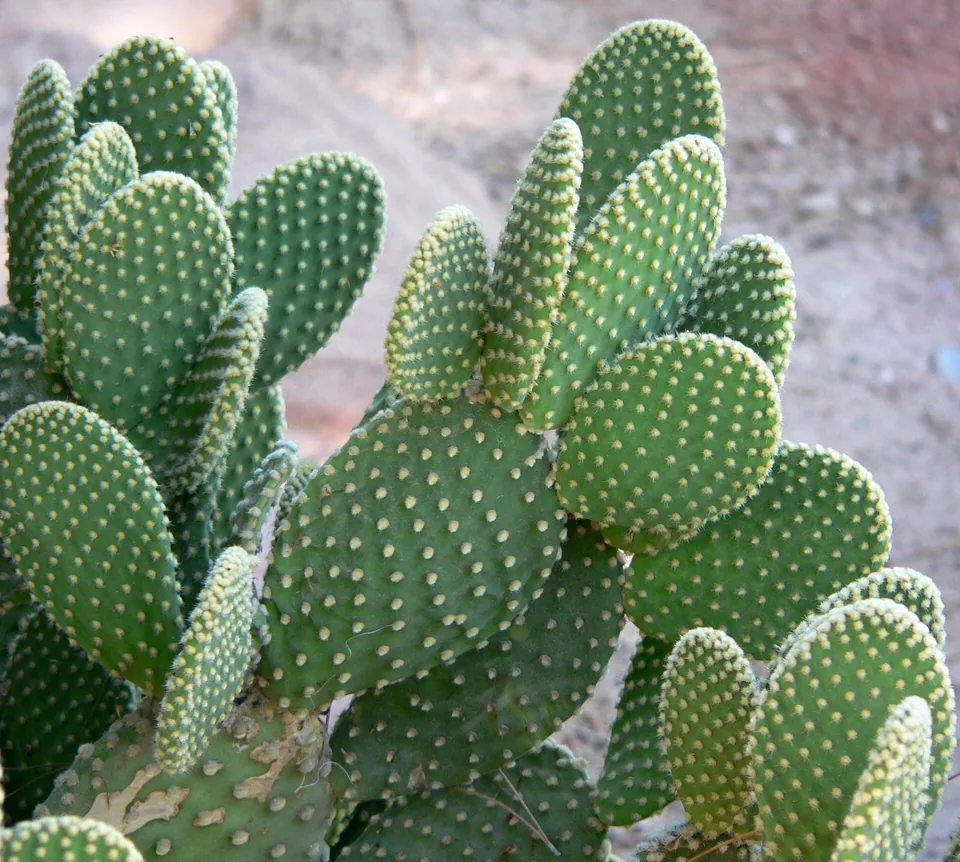
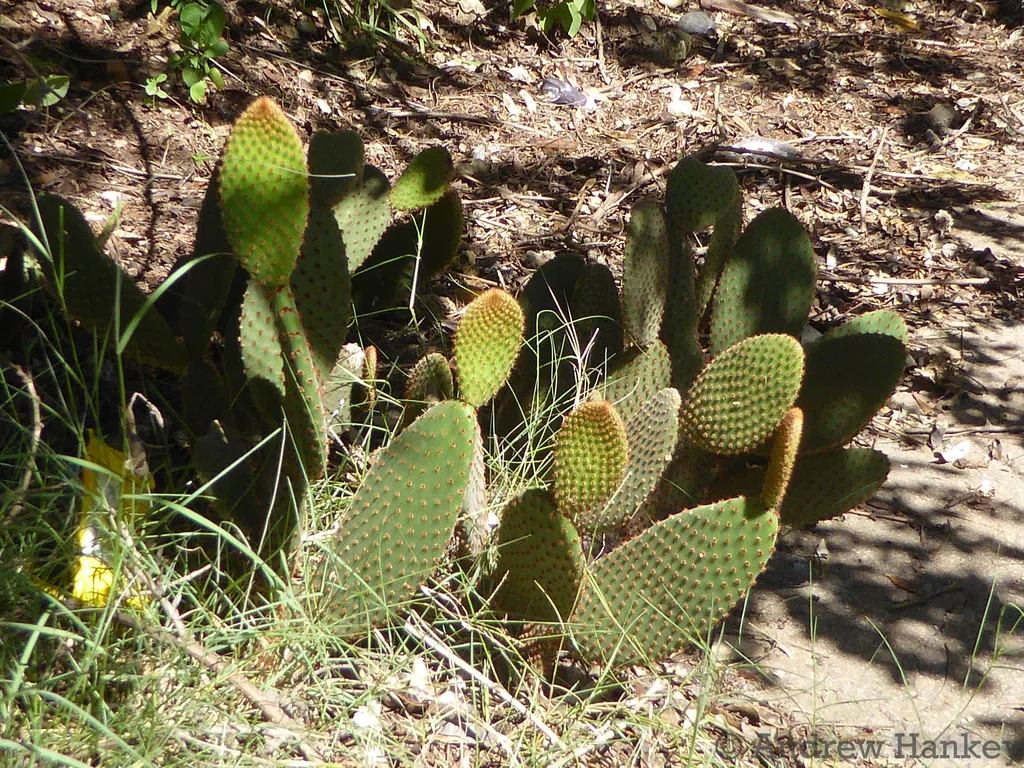
Bunny ears is a slow-growing, clump-forming cactus from northern Mexico with flat pads covered in detachable barbed bristles (glochids) instead of spines. [1] It is grown as a houseplant or in containers in a fast-draining cactus mix, watered thoroughly and then allowed to dry out completely. [1][2] Outside its native range it forms dense thickets and is a regulated weed in New South Wales, where it must not be sold. [3]
Bunny Ears care
How to water Bunny Ears
Watering
Water thoroughly, then let the soil dry out completely before watering again
What the sources say (2)
It is best to let the soil completely dry out between waterings. This plant prefers dry and low humid conditions.Water thoroughly and then allow the soil to dry out completely before re-watering (as opposed to giving small amounts of water on a frequent basis).Watering notes
Very little water in winter; overwatering and poor drainage cause root or stem rot; prefers low humidity
What the sources say (3)
In the winter months, it requires cooler temperatures of 50-65 degrees Fahrenheit, very little water and partial sun conditions.Insects, Diseases, and Other Plant Problems: Monitor for mealybugs and scale insects. Overwatering and poor drainage can cause root rot or stem rot.Homes with high humidity should water less than those with low ambient moisture. A good rule of thumb is to allow the soil to dry out before irrigation .How much light Bunny Ears needs
Full sun to partial shade
What each source says
indoors: At least 6-8 hours of bright light
What the sources say (3)
indoors: Indoor plants should receive at least 6-8 hours of bright light for a happy plant. If the home interior is dim, use a plant bulb to provide supplemental light.The bunny ears cactus requires full sun to partial shade and should be grown in a fast-draining cactus potting mix to prevent root rot.| Light Preference
| Full Sun, Semi-Shade
| Water Preference
| Little WaterHow much cold Bunny Ears can take
Hardiness, coldest zone
The sources give different values depending on region, zone or growing conditions.
What each source says
According to NC State Extension: 9a-11b [winter low −6.7 to 10 °C (20 to 50 °F)]
According to Gardening Know How: 7-10 [winter low −17.8 to 4.4 °C (0 to 40 °F)]
What the sources say (2)
According to NC State Extension: USDA Plant Hardiness Zone:
9a, 9b, 10a, 11a, 11bAccording to Gardening Know How: The plant is hardy to United States Department of Agriculture zones 7-10. It will be killed by temperatures of 25 Fahrenheit ( -3.9 C.).Hardiness, warmest zone
The sources give different values depending on region, zone or growing conditions.
What each source says
According to NC State Extension: 9a-11b [winter low −6.7 to 10 °C (20 to 50 °F)]
According to Gardening Know How: 7-10 [winter low −17.8 to 4.4 °C (0 to 40 °F)]
What the sources say (2)
According to NC State Extension: USDA Plant Hardiness Zone:
9a, 9b, 10a, 11a, 11bAccording to Gardening Know How: The plant is hardy to United States Department of Agriculture zones 7-10. It will be killed by temperatures of 25 Fahrenheit ( -3.9 C.).Where to grow Bunny Ears
Indoors
Yes
What the sources say (1)
Bunny ears cactus is native to northern Mexico and desert regions stretching into Arizona and is popular as a decorative houseplant.In containers
Yes
What the sources say (1)
It is fast spreading, and its growth can be controlled by using it as a container plant.How to propagate Bunny Ears
Pad (stem) cuttings; seed
What the sources say (2)
Propagation is done by breaking off one of the pads in spring and rooting in well-drained soil.Recommended Propagation Strategy:
Seed
Stem Cutting
Country Or Region Of Origin:
MexicoHow to grow Bunny Ears
The plant
Life cycle
perennial
What the sources say (1)
It is a member of the cactus family (Cactaceae). This perennial succulent forms low clumps with a creeping habit to nearly erect with many branches.Family
Cactaceae
What the sources say (1)
It is a member of the cactus family (Cactaceae). This perennial succulent forms low clumpsMature height
61-91 cm (2-3 ft)
What the sources say (1)
This plant is slow-growing and will reach 2 to 3 feet tall and spread 4 to 5 feet as a mature plant.Mature width
122-152 cm (4-5 ft)
What the sources say (1)
This plant is slow-growing and will reach 2 to 3 feet tall and spread 4 to 5 feet as a mature plant.Pests and diseases
Pests
mealybugs, scale insects
What the sources say (1)
Insects, Diseases, and Other Plant Problems: Monitor for mealybugs and scale insects. Overwatering and poor drainage can cause root rot or stem rot.Diseases
root rot, stem rot
What the sources say (1)
Insects, Diseases, and Other Plant Problems: Monitor for mealybugs and scale insects. Overwatering and poor drainage can cause root rot or stem rot.Propagation
Cuttings
Pad cuttings: break off a pad in spring and root it in well-drained soil.
What the sources say (1)
Propagation is done by breaking off one of the pads in spring and rooting in well-drained soil.Heat and drought
Drought
Prefers dry, low-humidity conditions; let the soil dry out completely between waterings.
What the sources say (1)
It is best to let the soil completely dry out between waterings. This plant prefers dry and low humid conditions.Bunny Ears pests and problems
Mealybugs and scale insects
Symptom: Insect pests on the pads
What to do: Rub them off with a swab dipped in alcohol
What the sources say (2)
Insects, Diseases, and Other Plant Problems: Monitor for mealybugs and scale insects. Overwatering and poor drainage can cause root rot or stem rot.
— Opuntia microdasys (Angel's-Wings, Bunny Ears, Golden Bristle Cactus, Polka Dot Cactus, Rabbit Cactus) | North Carolina Extension Gardener Plant Toolbox [1] Plants that are moved outdoors may get scale, mealybug, and other insect pests. Rub these off with a swab dipped in alcohol.
— Bunny Ear Cactus: How To Grow This Adorable Desert-Dweller | Gardening Know How [4] Root and stem rot
Symptom: Rot caused by overwatering and poor drainage
What to do: Fast-draining cactus mix; let soil dry completely between waterings
What the sources say (1)
The bunny ears cactus requires full sun to partial shade and should be grown in a fast-draining cactus potting mix to prevent root rot.
— Opuntia microdasys (Angel's-Wings, Bunny Ears, Golden Bristle Cactus, Polka Dot Cactus, Rabbit Cactus) | North Carolina Extension Gardener Plant Toolbox [1] Sunscald
Symptom: Scaly, hardened, discolored skin after moving outdoors for summer
What to do: Site it where it gets a reprieve from noonday sun
What the sources say (1)
Sunscald can occur when the plant is brought outside for summer. This shows as scaly, hardened, discolored material on the skin.
— Bunny Ear Cactus: How To Grow This Adorable Desert-Dweller | Gardening Know How [4]
Remedies
Each remedy shows what official sources say about it; traditional remedies without an official source are marked as such. Harmful ones are listed so you know to avoid them.
First aid
First aid: not a substitute for a doctor
spines and glochids in the skin
removing spines with tweezers Official source, not independently tested
Call the NSW Poisons Information Centre on 13 11 26 for further advice or see your local doctor.
— schn.health.nsw.gov.au [8] How: Remove the largest spines from the injured area with tweezers; use a sterilized needle to gently lift embedded spines to the surface for removal with tweezers. Work slowly.
Remove the largest spines and splinters from the injured area with tweezers. - Use sterilized needle to gently lift embedded spines and splinters to the surface for removal with tweezers.
— msutexas.edu [7]
small spines and glochids in the skin
duct tape to lift small spines, then washing Official source, not independently tested
Call the NSW Poisons Information Centre on 13 11 26 for further advice or see your local doctor.
— schn.health.nsw.gov.au [8] How: Apply a piece of duct tape before washing the area to remove small spines, then clean the area gently with soap and warm water.
Apply a piece of duct tape before washing the area to remove small spines. - Apply gentle pressure to the area if it is bleeding. - Clean area gently with soap and warm water.
— msutexas.edu [7]
glochids on skin or in the eyes
washing skin and flushing eyes with running water Official source, not independently tested
Call the NSW Poisons Information Centre on 13 11 26 for immediate support. They will give you information about any first aid you need to do and tell you which emergency department to go to.
— schn.health.nsw.gov.au [8] If a plant has seriously injured your child, go to your nearest emergency department.
— schn.health.nsw.gov.au [8] How: Wash the affected skin with running water; flush the eyes with clean, running water for 10-15 minutes.
washing the affected skin with running water - flushing the eyes with clean, running water for 10-15 minutes
— schn.health.nsw.gov.au [8]
Treating the plant
mealybugs and scale insects
swab dipped in alcohol Not verified
Traditional remedy, not verified by an official source.
Don’t forget to use thick gloves to prevent the slender, tiny spines from breaking into your skin. They are very irritating and difficult to remove.
— Bunny Ear Cactus: How To Grow This Adorable Desert-Dweller | Gardening Know How [4] How: Rub the insects off with a swab dipped in alcohol.
Getting rid of it
bunny ears cactus infestation
digging up small plants Official source, not independently tested
The barbed bristles can detach easily and cause skin irritation including blisters, itching and burning. They can also cause severe irritation to eyes.
— NSW WeedWise [3] How: Dig up small or isolated plants with a mattock or other tools, wearing protective clothing and gloves against the bristles; follow up on regrowth.
Dig up small or isolated plants using a mattock or other tools. Wear appropriate protective clothing and gloves to protect against injuries from the bristles.
— NSW WeedWise [3] burying or burning removed plants Official source, not independently tested
How: Dispose of removed plants by burying them at least one metre deep or burning them in a hot fire.
Dispose of bunny ears cactus by burying it at least one metre deep or by burning in a hot fire. Contact your local council for information about other disposal options.
— NSW WeedWise [3]
Is Bunny Ears toxic to pets?
Reported by the source, quoted verbatim. This is not medical or veterinary advice: if a person or an animal may have eaten this plant, contact a poison control centre or a veterinarian.
Animals
The barbed bristles can detach easily and be blown in the wind. They can cause eye irritation or blindness in cattle.
[3]#full sun tolerant #container plant #non-toxic for cats #perennial #shrub #non-toxic for dogs #edible fruits
[1]The source flags the risk for this animal but does not explain why.
People
The barbed bristles can detach easily and cause skin irritation including blisters, itching and burning. They can also cause severe irritation to eyes.
[3]
Calendar
Spring
What the sources say (1)
Soil requirements- well draining, gritty
Hardiness zones- USDA 7-10
When to plant- springSummer (fruit ripens June to August)
What the sources say (2)
Fruit Value To Gardener:
Edible
Display/Harvest Time:
SummerRed to reddish-purple berry fruit is produced in the summer from June to August. The fruit is green when immature, and red when ripens.Any time (dead or damaged material only)
What the sources say (1)
Bunny ear cacti don't need pruning, but dead or damaged plant material can be removed at any time.Months as given by the sources, which are mostly from the United States (northern hemisphere). In the southern hemisphere they shift by about six months.
Edibility
Reported by the source, quoted verbatim. Do not eat a plant on the basis of this page alone: identification mistakes can be dangerous.
Ripe fruit edible raw or in jelly. Pads can be eaten raw or cooked and have a mucilaginous texture. Remove spines and glochids from pads and fruit before eating.
[1]Ripe fruit edible raw or in jelly. Pads can be eaten raw or cooked and have a mucilaginous texture. Remove spines and glochids from pads and fruit before eating.
[1]
Similar plants
- Devil's Tongue Opuntia humifusa
- Plains Prickly Pear Opuntia macrorhiza
- Erect Prickly Pear Opuntia stricta
- Indian Fig Opuntia ficus-indica
- Dragon Fruit Selenicereus undatus
- Easter Lily Cactus Echinopsis oxygona
- Eve's Needle Austrocylindropuntia subulata
- Mistletoe Cactus Rhipsalis baccifera
Sources
Every value above is quoted from these documents. Links lead to the original publisher.
- Opuntia microdasys (Angel's-Wings, Bunny Ears, Golden Bristle Cactus, Polka Dot Cactus, Rabbit Cactus) | North Carolina Extension Gardener Plant Toolbox · plants.ces.ncsu.edu, consulted
- NParks | Opuntia microdasys · nparks.gov.sg, consulted
- NSW WeedWise · weeds.dpi.nsw.gov.au, consulted
- Bunny Ear Cactus: How To Grow This Adorable Desert-Dweller | Gardening Know How · gardeningknowhow.com, consulted
- The COMPLETE Guide for Growing Prickly Pears (Opuntia) · ukhouseplants.com, consulted
- VicFlora: Opuntia microdasys · vicflora.rbg.vic.gov.au, consulted
- msutexas.edu · msutexas.edu
- schn.health.nsw.gov.au · schn.health.nsw.gov.au
Written by Emilio Marruso · last checked