
How to Grow and Care for Mistletoe Cactus
Rhipsalis baccifera
Written by Emilio Marruso · last checked
Not toxic to cats and dogs, according to the sources · Sources
At a glance
This easygoing cactus is happy indoors or in a pot, asking only for bright, indirect light and a drink when the soil feels dry. It can grow 4 to 6 feet long, and you can start new plants from stem cuttings. Best of all, it is non-toxic to cats, dogs and horses, so it fits right into a home with pets.
- Sun
Bright, indirect light or partial shade; strong direct sun scorches the stems
What the sources say (2)
Light: Bright, indirect light; partial shade (direct sunlight only part of the day, 2-6 hours)
Light: Partial Shade (Direct sunlight only part of the day, 2-6 hours)
— Rhipsalis baccifera (Mistletoe Cacti, Mistletoe Cactus, Spaghetti Cactus) | North Carolina Extension Gardener Plant Toolbox [1] This plant prefers bright, indirect light, high humidity
— Rhipsalis baccifera (Mistletoe Cacti, Mistletoe Cactus, Spaghetti Cactus) | North Carolina Extension Gardener Plant Toolbox [1] - Water
Water when the soil feels dry, never too much; water less in winter
What the sources say (2)
Watering: Water when the soil feels dry; avoid overwatering
Water the plant when the soil feels dry but avoid overwatering.
— Rhipsalis baccifera (Mistletoe Cacti, Mistletoe Cactus, Spaghetti Cactus) | North Carolina Extension Gardener Plant Toolbox [1] Watering notes: Reduce watering when the plant is dormant in winter
When the plant is dormant during the winter, reduce watering.
— Rhipsalis baccifera (Mistletoe Cacti, Mistletoe Cactus, Spaghetti Cactus) | North Carolina Extension Gardener Plant Toolbox [1] - Cold
Survives winters down to 25 °F (−3.9 °C)
Half hardy: mild winters or an unheated greenhouse · USDA 9b · RHS H3 · Z9
What the sources say (2)
Hardiness, coldest zone: 9b [winter low −3.9 to −1.1 °C (25 to 30 °F)]
USDA Plant Hardiness Zone: 9b, 10a, 10b, 11a, 11b
— Rhipsalis baccifera (Mistletoe Cacti, Mistletoe Cactus, Spaghetti Cactus) | North Carolina Extension Gardener Plant Toolbox [1] Hardiness, warmest zone: 11b [winter low 7.2 to 10 °C (45 to 50 °F)]
USDA Plant Hardiness Zone: 9b, 10a, 10b, 11a, 11b
— Rhipsalis baccifera (Mistletoe Cacti, Mistletoe Cactus, Spaghetti Cactus) | North Carolina Extension Gardener Plant Toolbox [1] - Soil
Acidic soil, pH up to 6.0
What the sources say (1)
Soil pH, maximum: 6.0
Soil Texture: Sand Soil pH: Acid (<6.0) Soil Drainage:
— Rhipsalis baccifera (Mistletoe Cacti, Mistletoe Cactus, Spaghetti Cactus) | North Carolina Extension Gardener Plant Toolbox [1] - Pests
Spider mites, aphids and mealybugs; too much water rots the roots
What the sources say (2)
Pests: spider mites, aphids, mealybugs
The mistletoe cactus can be susceptible to spider mites, aphids, and mealybugs.
— Rhipsalis baccifera (Mistletoe Cacti, Mistletoe Cactus, Spaghetti Cactus) | North Carolina Extension Gardener Plant Toolbox [1] Diseases: root rot
Overwatering can cause mushy stems and root rot.
— Rhipsalis baccifera (Mistletoe Cacti, Mistletoe Cactus, Spaghetti Cactus) | North Carolina Extension Gardener Plant Toolbox [1] - Watch out
Mushy stems mean too much water; brown tips mean dry air or too little water
- Size
4–6 ft tall and 1–2 ft wide
What the sources say (2)
Mature height: 122-183 cm (4-6 ft)
Height: 4 ft. 0 in. - 6 ft. 0 in.
— Rhipsalis baccifera (Mistletoe Cacti, Mistletoe Cactus, Spaghetti Cactus) | North Carolina Extension Gardener Plant Toolbox [1] Mature width: 30-61 cm (1-2 ft)
Width: 1 ft. 0 in. - 2 ft. 0 in.
— Rhipsalis baccifera (Mistletoe Cacti, Mistletoe Cactus, Spaghetti Cactus) | North Carolina Extension Gardener Plant Toolbox [1] - Propagation
From stem cuttings or seeds
What the sources say (1)
Propagation: Stem cuttings; seeds
It can be propagated by stem cuttings and seeds.
— Rhipsalis baccifera (Mistletoe Cacti, Mistletoe Cactus, Spaghetti Cactus) | North Carolina Extension Gardener Plant Toolbox [1] - Containers
Grows in pots and indoors too
What the sources say (2)
In containers: Yes
Landscape Location: Container Hanging Baskets Houseplants Patio Resistance To Challenges:
— Rhipsalis baccifera (Mistletoe Cacti, Mistletoe Cactus, Spaghetti Cactus) | North Carolina Extension Gardener Plant Toolbox [1] Indoors: Yes
The mistletoe cactus grows best as a hanging indoor houseplant
— Rhipsalis baccifera (Mistletoe Cacti, Mistletoe Cactus, Spaghetti Cactus) | North Carolina Extension Gardener Plant Toolbox [1] - Safety
Non-toxic to cats, dogs and horses
Overview
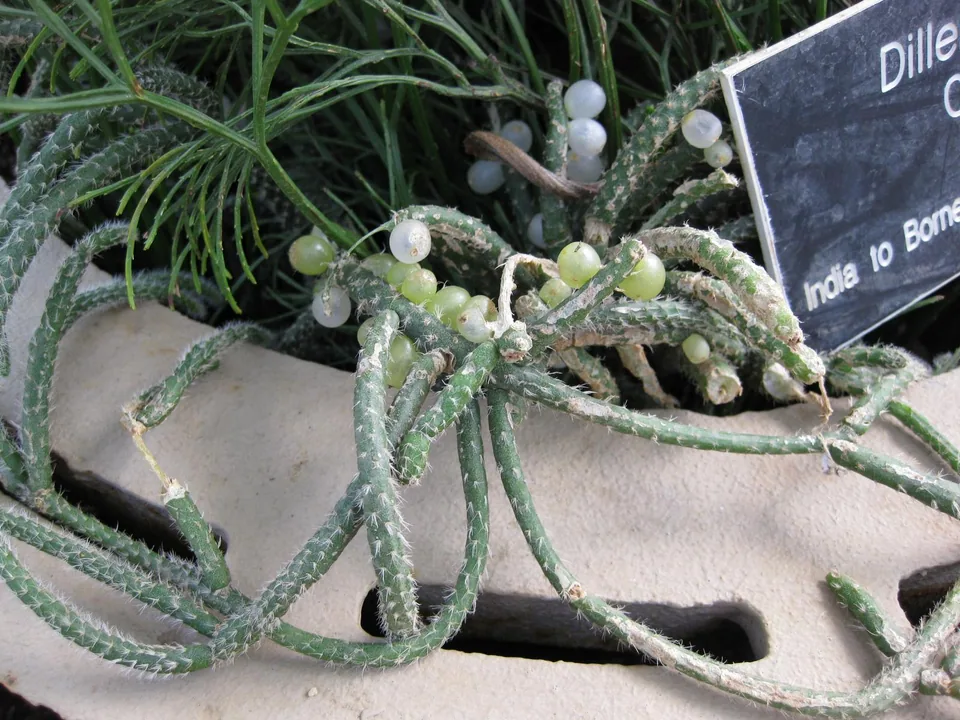
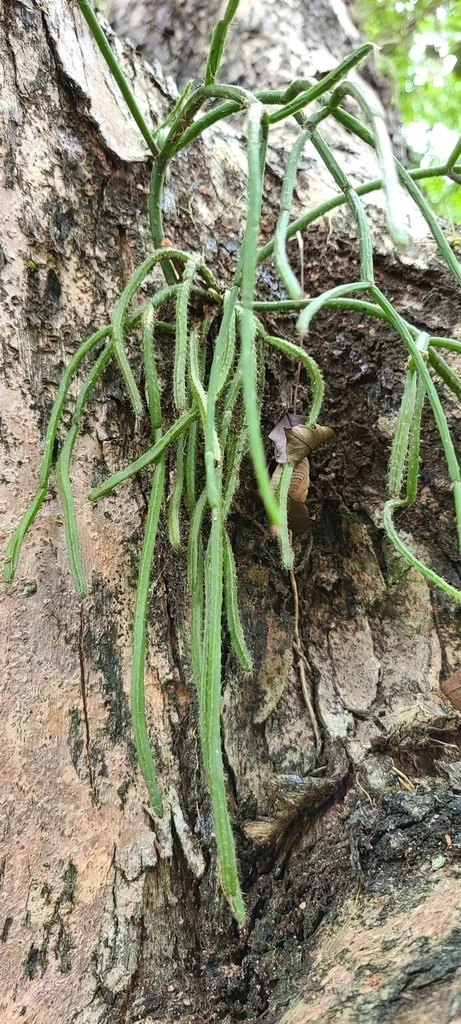
Mistletoe cactus is a trailing, leafless epiphytic succulent grown as a hanging houseplant. [1] It prefers bright, indirect light and is watered when the soil feels dry. [1]
Mistletoe Cactus care
How to water Mistletoe Cactus
Watering
Water when the soil feels dry; avoid overwatering
What the sources say (1)
Water the plant when the soil feels dry but avoid overwatering.Watering notes
Reduce watering when the plant is dormant in winter
What the sources say (1)
When the plant is dormant during the winter, reduce watering.How much light Mistletoe Cactus needs
Bright, indirect light; partial shade (direct sunlight only part of the day, 2-6 hours)
What the sources say (2)
Light:
Partial Shade (Direct sunlight only part of the day, 2-6 hours)This plant prefers bright, indirect light, high humidityHow much cold Mistletoe Cactus can take
Hardiness, coldest zone
9b [winter low −3.9 to −1.1 °C (25 to 30 °F)]
What the sources say (1)
USDA Plant Hardiness Zone:
9b, 10a, 10b, 11a, 11bHardiness, warmest zone
11b [winter low 7.2 to 10 °C (45 to 50 °F)]
What the sources say (1)
USDA Plant Hardiness Zone:
9b, 10a, 10b, 11a, 11bBest soil for Mistletoe Cactus
6.0
What the sources say (1)
Soil Texture:
Sand
Soil pH:
Acid (<6.0)
Soil Drainage:Where to grow Mistletoe Cactus
Indoors
Yes
What the sources say (1)
The mistletoe cactus grows best as a hanging indoor houseplantIn containers
Yes
What the sources say (1)
Landscape Location:
Container
Hanging Baskets
Houseplants
Patio
Resistance To Challenges:How to propagate Mistletoe Cactus
Stem cuttings; seeds
What the sources say (1)
It can be propagated by stem cuttings and seeds.How to grow Mistletoe Cactus
The plant
Life cycle
perennial
What the sources say (1)
Life Cycle: PerennialFamily
Cactaceae
What the sources say (1)
Family: CactaceaeMature height
122-183 cm (4-6 ft)
What the sources say (1)
Height: 4 ft. 0 in. - 6 ft. 0 in.Mature width
30-61 cm (1-2 ft)
What the sources say (1)
Width: 1 ft. 0 in. - 2 ft. 0 in.Pests and diseases
Pests
spider mites, aphids, mealybugs
What the sources say (1)
The mistletoe cactus can be susceptible to spider mites, aphids, and mealybugs.Diseases
root rot
What the sources say (1)
Overwatering can cause mushy stems and root rot.Mistletoe Cactus pests and problems
Pests
Symptom: Susceptible to spider mites, aphids and mealybugs
What to do: Monitor the plant
What the sources say (1)
The mistletoe cactus can be susceptible to spider mites, aphids, and mealybugs.
— Rhipsalis baccifera (Mistletoe Cacti, Mistletoe Cactus, Spaghetti Cactus) | North Carolina Extension Gardener Plant Toolbox [1] Overwatering
Symptom: Mushy stems and root rot
What to do: Avoid overwatering
What the sources say (1)
Overwatering can cause mushy stems and root rot.
— Rhipsalis baccifera (Mistletoe Cacti, Mistletoe Cactus, Spaghetti Cactus) | North Carolina Extension Gardener Plant Toolbox [1] Low humidity or underwatering
Symptom: Browning at the tips of the stems
What to do: Raise humidity and water when the soil is dry
What the sources say (1)
The lack of humidity or under-watering can cause browning at the tips of the stems.
— Rhipsalis baccifera (Mistletoe Cacti, Mistletoe Cactus, Spaghetti Cactus) | North Carolina Extension Gardener Plant Toolbox [1] Direct sunlight
Symptom: Scorched stems
What to do: Provide bright, indirect light
What the sources say (1)
Direct sunlight can cause scorching of the stems.
— Rhipsalis baccifera (Mistletoe Cacti, Mistletoe Cactus, Spaghetti Cactus) | North Carolina Extension Gardener Plant Toolbox [1]
Remedies
Each remedy shows what official sources say about it; traditional remedies without an official source are marked as such. Harmful ones are listed so you know to avoid them.
Treating the plant
mealybugs and scale
removing with tweezers and swabbing with alcohol Not verified
Traditional remedy, not verified by an official source.
How: remove them with tweezers and swab the area with alcohol to prevent future infestation
mealybugs
plant oil spray Not verified
Traditional remedy, not verified by an official source.
How: spray the plant with plant oils
predatory ladybirds Not verified
Traditional remedy, not verified by an official source.
How: introduce predatory ladybirds
spider mites
neem oil spray Partly works
How: spray the plant with neem insecticide
Get rid of them, spray your plant with Neem insecticide or a mix of systemic pesticide.
— plantcaretoday.com [2] What the evidence says However, neem oil is not effective against every insect and disease, and often must be frequently reapplied to reach the desired outcome.
— extension.unh.edu [3]
Is Mistletoe Cactus poisonous?
Reported by the source, quoted verbatim. This is not medical or veterinary advice: if a person or an animal may have eaten this plant, contact a poison control centre or a veterinarian.
#non-toxic for cats #non-toxic for horses #non-toxic for dogs
[1]The source flags the risk for this animal but does not explain why.
Similar plants
- Bunny Ears Opuntia microdasys
- Easter Lily Cactus Echinopsis oxygona
- Eve's Needle Austrocylindropuntia subulata
- Pink Star Cactus Rhipsalidopsis rosea
- Dragon Fruit Selenicereus undatus
- Easter Cactus Rhipsalidopsis gaertneri
- Old Man Cactus Cephalocereus senilis
- Queen of the Night Epiphyllum oxypetalum
Sources
Every value above is quoted from these documents. Links lead to the original publisher.
- Rhipsalis baccifera (Mistletoe Cacti, Mistletoe Cactus, Spaghetti Cactus) | North Carolina Extension Gardener Plant Toolbox · plants.ces.ncsu.edu, consulted
- plantcaretoday.com · plantcaretoday.com
- extension.unh.edu · extension.unh.edu
Written by Emilio Marruso · last checked