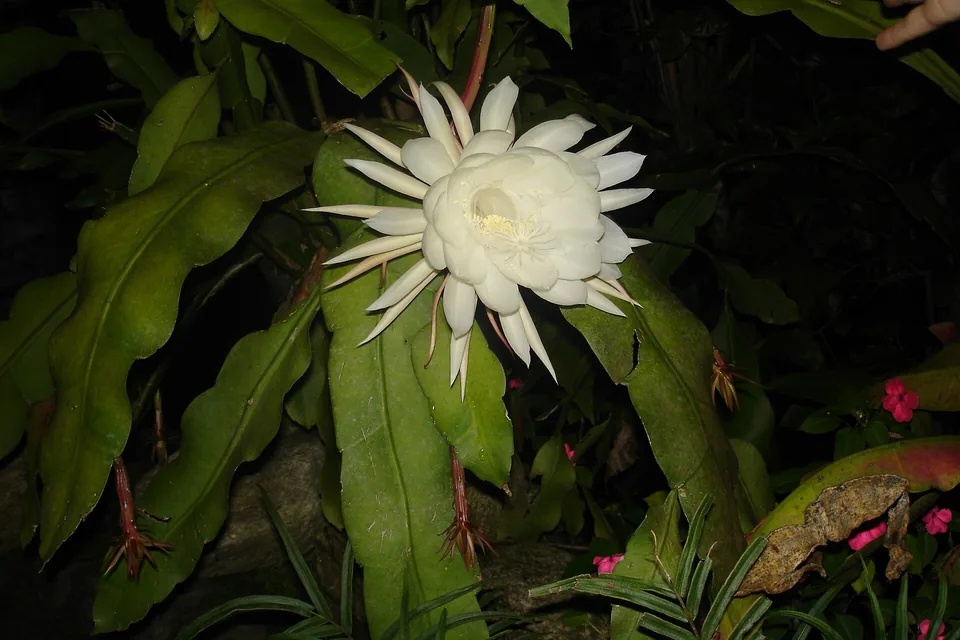


How to Grow and Care for Queen of the Night
Epiphyllum oxypetalum
Written by Emilio Marruso · last checked
At a glance
This cactus is happy in a pot, even indoors, and can grow 8–10 ft tall. Soak the soil when you water, let the top dry out in between, and keep it out of the harsh afternoon sun. After flowering it gives you purplish-red fruits you can eat, ready in the fall: a lovely reward for a little care.
- Sun
Keep it out of the harsh afternoon sun: direct sun can burn it
- Water
Soak the soil, let the top dry between waterings; water less in fall and winter
What the sources say (5)
Watering: Soak the soil completely when watering; water regularly during spring and summer; allow the top of the soil to dry out between waterings
According to NC State Extension: Soak the soil completely when watering, and water regularly during the spring and summer. Allow the top of the soil to dry out between watering.
— Epiphyllum oxypetalum (Dutchman's Pipe Cactus, Jungle Cactus, Lady of the Night, Night-blooming Cactus, Night-blooming Cereus, Night Queen, Orchid Cactus, Queen of the Night) | North Carolina Extension Gardener Plant Toolbox [1] According to University of Illinois Extension (14-inch planter): is watered once a week and allowed to dry down between waterings
— Succulent Cacti | Flowers, Fruits, and Frass | Illinois Extension | Illinois [2] Soak the soil completely when watering, and water regularly during the spring and summer. Allow the top of the soil to dry out between watering.
— Epiphyllum oxypetalum (Dutchman's Pipe Cactus, Jungle Cactus, Lady of the Night, Night-blooming Cactus, Night-blooming Cereus, Night Queen, Orchid Cactus, Queen of the Night) | North Carolina Extension Gardener Plant Toolbox [1] Watering notes: Reduce the water schedule during fall and winter when growth is slowed; overwatering or poorly drained soil can cause root rot
Reduce the water schedule during the fall and winter when growth is slowed.
— Epiphyllum oxypetalum (Dutchman's Pipe Cactus, Jungle Cactus, Lady of the Night, Night-blooming Cactus, Night-blooming Cereus, Night Queen, Orchid Cactus, Queen of the Night) | North Carolina Extension Gardener Plant Toolbox [1] The plant is susceptible to root rot in the presence of overwatering or poorly drained soil.
— Epiphyllum oxypetalum (Dutchman's Pipe Cactus, Jungle Cactus, Lady of the Night, Night-blooming Cactus, Night-blooming Cereus, Night Queen, Orchid Cactus, Queen of the Night) | North Carolina Extension Gardener Plant Toolbox [1] - Cold
Survives winters down to 30 °F (−1.1 °C)
Half hardy: mild winters or an unheated greenhouse · USDA 10a · RHS H3 · Z10
What the sources say (2)
Hardiness, coldest zone: 10a [winter low −1.1 to 1.7 °C (30 to 35 °F)]
USDA Plant Hardiness Zone: 10a, 10b, 11a, 11b
— Epiphyllum oxypetalum (Dutchman's Pipe Cactus, Jungle Cactus, Lady of the Night, Night-blooming Cactus, Night-blooming Cereus, Night Queen, Orchid Cactus, Queen of the Night) | North Carolina Extension Gardener Plant Toolbox [1] Hardiness, warmest zone: 11b [winter low 7.2 to 10 °C (45 to 50 °F)]
USDA Plant Hardiness Zone: 10a, 10b, 11a, 11b
— Epiphyllum oxypetalum (Dutchman's Pipe Cactus, Jungle Cactus, Lady of the Night, Night-blooming Cactus, Night-blooming Cereus, Night Queen, Orchid Cactus, Queen of the Night) | North Carolina Extension Gardener Plant Toolbox [1] - Feeding
A little cactus fertilizer every 2 weeks, early spring to fall; don't overfeed
What the sources say (5)
When: Early spring to autumn
To encourage strong growth, you can apply a cactus fertiliser fortnightly from early spring to autumn.
— [3] How often: Every 2 weeks, sparingly
To encourage strong growth, you can apply a cactus fertiliser fortnightly from early spring to autumn.
— [3] Epiphyllum cacti grow naturally in a low-nutrient environment, so feed sparingly. Overly generous feeding can be damaging, rather than beneficial.
— [3] Mineral fertilizers: Cactus fertilizer
To encourage strong growth, you can apply a cactus fertiliser fortnightly from early spring to autumn.
— [3] Avoid: Overly generous feeding
Epiphyllum cacti grow naturally in a low-nutrient environment, so feed sparingly. Overly generous feeding can be damaging, rather than beneficial.
— [3] - Harvest
Edible purplish-red fruits after flowering, ready in the fall
What the sources say (1)
Harvest: Fall (fruit display/harvest time)
Fruit Value To Gardener: Edible Display/Harvest Time: Fall
— Epiphyllum oxypetalum (Dutchman's Pipe Cactus, Jungle Cactus, Lady of the Night, Night-blooming Cactus, Night-blooming Cereus, Night Queen, Orchid Cactus, Queen of the Night) | North Carolina Extension Gardener Plant Toolbox [1] - Pests
Mealybugs, spider mites and scale; too much water causes root rot
What the sources say (3)
Pests: mealybugs, spider mites, scale
Common insects include mealybugs, spider mites, and scale.
— Epiphyllum oxypetalum (Dutchman's Pipe Cactus, Jungle Cactus, Lady of the Night, Night-blooming Cactus, Night-blooming Cereus, Night Queen, Orchid Cactus, Queen of the Night) | North Carolina Extension Gardener Plant Toolbox [1] Diseases: root rot, powdery mildew
The plant is susceptible to root rot in the presence of overwatering or poorly drained soil.
— Epiphyllum oxypetalum (Dutchman's Pipe Cactus, Jungle Cactus, Lady of the Night, Night-blooming Cactus, Night-blooming Cereus, Night Queen, Orchid Cactus, Queen of the Night) | North Carolina Extension Gardener Plant Toolbox [1] Powdery mildew can occur if the air circulation is poor.
— Epiphyllum oxypetalum (Dutchman's Pipe Cactus, Jungle Cactus, Lady of the Night, Night-blooming Cactus, Night-blooming Cereus, Night Queen, Orchid Cactus, Queen of the Night) | North Carolina Extension Gardener Plant Toolbox [1] - Size
8–10 ft tall and 2–3 ft wide
What the sources say (2)
Mature height: 244-305 cm (8 to 10 ft)
Height: 8 ft. 0 in. - 10 ft. 0 in.
— Epiphyllum oxypetalum (Dutchman's Pipe Cactus, Jungle Cactus, Lady of the Night, Night-blooming Cactus, Night-blooming Cereus, Night Queen, Orchid Cactus, Queen of the Night) | North Carolina Extension Gardener Plant Toolbox [1] Mature width: 61-91 cm (2 to 3 ft)
Width: 2 ft. 0 in. - 3 ft. 0 in.
— Epiphyllum oxypetalum (Dutchman's Pipe Cactus, Jungle Cactus, Lady of the Night, Night-blooming Cactus, Night-blooming Cereus, Night Queen, Orchid Cactus, Queen of the Night) | North Carolina Extension Gardener Plant Toolbox [1] - Propagation
Grow new plants from stem cuttings
What the sources say (1)
Propagation: Stem cutting
The queen of the night can be easily propagated by stem cuttings.
— Epiphyllum oxypetalum (Dutchman's Pipe Cactus, Jungle Cactus, Lady of the Night, Night-blooming Cactus, Night-blooming Cereus, Night Queen, Orchid Cactus, Queen of the Night) | North Carolina Extension Gardener Plant Toolbox [1] - Containers
Grows well in a pot, even indoors
What the sources say (3)
In containers: Yes
Landscape Location: Container Hanging Baskets Houseplants Patio Landscape Theme:
— Epiphyllum oxypetalum (Dutchman's Pipe Cactus, Jungle Cactus, Lady of the Night, Night-blooming Cactus, Night-blooming Cereus, Night Queen, Orchid Cactus, Queen of the Night) | North Carolina Extension Gardener Plant Toolbox [1] Indoors: Yes
The queen of the night has slightly different growing needs than other cacti or succulents. If you are up for the challenge, you will be rewarded with a beautiful and unique houseplant.
— Epiphyllum oxypetalum (Dutchman's Pipe Cactus, Jungle Cactus, Lady of the Night, Night-blooming Cactus, Night-blooming Cereus, Night Queen, Orchid Cactus, Queen of the Night) | North Carolina Extension Gardener Plant Toolbox [1] Plant Type: Herbaceous Perennial Houseplant Succulent Habit/Form: Arching
— Epiphyllum oxypetalum (Dutchman's Pipe Cactus, Jungle Cactus, Lady of the Night, Night-blooming Cactus, Night-blooming Cereus, Night Queen, Orchid Cactus, Queen of the Night) | North Carolina Extension Gardener Plant Toolbox [1]
Overview
Epiphyllum oxypetalum is a tropical, spineless, epiphytic cactus grown for its large, fragrant, night-blooming flowers. [1] It is listed for USDA zones 10a to 11b and is propagated by stem cuttings. [1]
Queen of the Night care
How to water Queen of the Night
Watering
Soak the soil completely when watering; water regularly during spring and summer; allow the top of the soil to dry out between waterings
What each source says
According to NC State Extension: Soak the soil completely when watering; water regularly in spring and summer; let the top of the soil dry out between waterings
According to University of Illinois Extension (14-inch planter): Once a week, allowed to dry down between waterings
What the sources say (3)
According to NC State Extension: Soak the soil completely when watering, and water regularly during the spring and summer. Allow the top of the soil to dry out between watering.According to University of Illinois Extension (14-inch planter): is watered once a week and allowed to dry down between wateringsSoak the soil completely when watering, and water regularly during the spring and summer. Allow the top of the soil to dry out between watering.Watering notes
Reduce the water schedule during fall and winter when growth is slowed; overwatering or poorly drained soil can cause root rot
What the sources say (2)
Reduce the water schedule during the fall and winter when growth is slowed.The plant is susceptible to root rot in the presence of overwatering or poorly drained soil.How much light Queen of the Night needs
The sources give different values depending on region, zone or growing conditions.
What each source says
According to NC State Extension: Bright, indirect light; protection from harsh afternoon sun; direct sunlight can cause sunburn
According to University of Illinois Extension (front porch): Bright morning sun
What the sources say (4)
According to NC State Extension: This plant requires bright, indirect light and protection from the harsh afternoon sun.According to University of Illinois Extension (front porch): in bright morning sun on my front porchThis plant requires bright, indirect light and protection from the harsh afternoon sun.Light:
Partial Shade (Direct sunlight only part of the day, 2-6 hours)How much cold Queen of the Night can take
Hardiness, coldest zone
10a [winter low −1.1 to 1.7 °C (30 to 35 °F)]
What the sources say (1)
USDA Plant Hardiness Zone:
10a, 10b, 11a, 11bHardiness, warmest zone
11b [winter low 7.2 to 10 °C (45 to 50 °F)]
What the sources say (1)
USDA Plant Hardiness Zone:
10a, 10b, 11a, 11bWhere to grow Queen of the Night
Indoors
Yes
What the sources say (2)
The queen of the night has slightly different growing needs than other cacti or succulents. If you are up for the challenge, you will be rewarded with a beautiful and unique houseplant.Plant Type:
Herbaceous Perennial
Houseplant
Succulent
Habit/Form:
ArchingIn containers
Yes
What the sources say (1)
Landscape Location:
Container
Hanging Baskets
Houseplants
Patio
Landscape Theme:How to propagate Queen of the Night
Stem cutting
What the sources say (1)
The queen of the night can be easily propagated by stem cuttings.How to grow Queen of the Night
The plant
Life cycle
perennial
What the sources say (1)
Life Cycle:
PerennialFamily
Cactaceae
What the sources say (1)
This member of the cactus family (Cactaceae) is the most frequently cultivated species in the genus.Mature height
244-305 cm (8 to 10 ft)
What the sources say (1)
Height: 8 ft. 0 in. - 10 ft. 0 in.Mature width
61-91 cm (2 to 3 ft)
What the sources say (1)
Width: 2 ft. 0 in. - 3 ft. 0 in.Pests and diseases
Pests
mealybugs, spider mites, scale
What the sources say (1)
Common insects include mealybugs, spider mites, and scale.Diseases
root rot, powdery mildew
What the sources say (2)
The plant is susceptible to root rot in the presence of overwatering or poorly drained soil.Powdery mildew can occur if the air circulation is poor.Fertilizing
When
Early spring to autumn
What the sources say (1)
To encourage strong growth, you can apply a cactus fertiliser fortnightly from early spring to autumn.How often
Every 2 weeks, sparingly
What the sources say (2)
To encourage strong growth, you can apply a cactus fertiliser fortnightly from early spring to autumn.Epiphyllum cacti grow naturally in a low-nutrient environment, so feed sparingly. Overly generous feeding can be damaging, rather than beneficial.Mineral fertilizers
Cactus fertilizer
What the sources say (1)
To encourage strong growth, you can apply a cactus fertiliser fortnightly from early spring to autumn.Avoid
Overly generous feeding
What the sources say (1)
Epiphyllum cacti grow naturally in a low-nutrient environment, so feed sparingly. Overly generous feeding can be damaging, rather than beneficial.Queen of the Night pests and problems
Root rot
Symptom: Root rot with overwatering or poorly drained soil
What to do: Use a well-drained potting mix and allow the top of the soil to dry out between waterings
What the sources say (1)
The plant is susceptible to root rot in the presence of overwatering or poorly drained soil.
— Epiphyllum oxypetalum (Dutchman's Pipe Cactus, Jungle Cactus, Lady of the Night, Night-blooming Cactus, Night-blooming Cereus, Night Queen, Orchid Cactus, Queen of the Night) | North Carolina Extension Gardener Plant Toolbox [1] Mealybugs, spider mites and scale
Symptom: Common insect pests
What to do: Not stated in the source
What the sources say (1)
Common insects include mealybugs, spider mites, and scale.
— Epiphyllum oxypetalum (Dutchman's Pipe Cactus, Jungle Cactus, Lady of the Night, Night-blooming Cactus, Night-blooming Cereus, Night Queen, Orchid Cactus, Queen of the Night) | North Carolina Extension Gardener Plant Toolbox [1] Powdery mildew
Symptom: Occurs if air circulation is poor
What to do: Not stated in the source
What the sources say (1)
Powdery mildew can occur if the air circulation is poor.
— Epiphyllum oxypetalum (Dutchman's Pipe Cactus, Jungle Cactus, Lady of the Night, Night-blooming Cactus, Night-blooming Cereus, Night Queen, Orchid Cactus, Queen of the Night) | North Carolina Extension Gardener Plant Toolbox [1] Sunburn
Symptom: Exposure to direct sunlight can cause sunburn
What to do: Protect from the harsh afternoon sun
What the sources say (2)
Powdery mildew can occur if the air circulation is poor. Exposure to direct sunlight can cause sunburn.
— Epiphyllum oxypetalum (Dutchman's Pipe Cactus, Jungle Cactus, Lady of the Night, Night-blooming Cactus, Night-blooming Cereus, Night Queen, Orchid Cactus, Queen of the Night) | North Carolina Extension Gardener Plant Toolbox [1] This plant requires bright, indirect light and protection from the harsh afternoon sun.
— Epiphyllum oxypetalum (Dutchman's Pipe Cactus, Jungle Cactus, Lady of the Night, Night-blooming Cactus, Night-blooming Cereus, Night Queen, Orchid Cactus, Queen of the Night) | North Carolina Extension Gardener Plant Toolbox [1]
Remedies
Each remedy shows what official sources say about it; traditional remedies without an official source are marked as such. Harmful ones are listed so you know to avoid them.
Treating the plant
mealybugs
strong stream of water Not verified
Traditional remedy, not verified by an official source.
However, keep the soil covered while spraying.
— gardenerdy.com [4] How: Apply a strong stream of water to wash off mealybugs and mites; keep the soil covered while spraying.
cotton swab dipped in alcohol Not verified
Traditional remedy, not verified by an official source.
How: Wipe off pests with a cotton swab dipped in alcohol.
aphids
insecticidal soap spray Works
When “oils and soaps” are mentioned in UC IPM publications, we are referring to commercially available oils and soaps that are formulated specifically for use as pesticides- not household oils and soaps meant for cooking, cleaning, or other purposes.
— ucanr.edu [7] How: Treat infestations with insecticidal soap.
Treat infestations with insecticidal soap or neem oil.
— ecopatchy.com [5] What the evidence says For example, insecticidal soap is a safe, effective organic insecticide with minimal environmental impact.
— extension.psu.edu [6] neem oil Partly works
Despite these being biological pesticides, it is important to read the directions on the label and wear safety equipment.
— extension.illinois.edu [9] How: Treat infestations with neem oil.
Treat infestations with insecticidal soap or neem oil.
— ecopatchy.com [5] What the evidence says However, neem oil is not effective against every insect and disease, and often must be frequently reapplied to reach the desired outcome.
— extension.unh.edu [8]
Calendar
Harvest
Fall (fruit display/harvest time)
What the sources say (1)
Fruit Value To Gardener:
Edible
Display/Harvest Time:
FallMonths as given by the sources, which are mostly from the United States (northern hemisphere). In the southern hemisphere they shift by about six months.
Edibility
Reported by the source, quoted verbatim. Do not eat a plant on the basis of this page alone: identification mistakes can be dangerous.
Similar plants
- Bunny Ears Opuntia microdasys
- Devil's Tongue Opuntia humifusa
- Dragon Fruit Selenicereus undatus
- Easter Cactus Rhipsalidopsis gaertneri
- Easter Lily Cactus Echinopsis oxygona
- Erect Prickly Pear Opuntia stricta
- Eve's Needle Austrocylindropuntia subulata
- Mistletoe Cactus Rhipsalis baccifera
Sources
Every value above is quoted from these documents. Links lead to the original publisher.
- Epiphyllum oxypetalum (Dutchman's Pipe Cactus, Jungle Cactus, Lady of the Night, Night-blooming Cactus, Night-blooming Cereus, Night Queen, Orchid Cactus, Queen of the Night) | North Carolina Extension Gardener Plant Toolbox · plants.ces.ncsu.edu, consulted
- Succulent Cacti | Flowers, Fruits, and Frass | Illinois Extension | Illinois · extension.illinois.edu, consulted
- rhs.org.uk · rhs.org.uk
- gardenerdy.com · gardenerdy.com
- ecopatchy.com · ecopatchy.com
- extension.psu.edu · extension.psu.edu
- ucanr.edu · ucanr.edu
- extension.unh.edu · extension.unh.edu
- extension.illinois.edu · extension.illinois.edu
Written by Emilio Marruso · last checked