
How to Grow and Care for Easter Lily Cactus
Echinopsis oxygona
Written by Emilio Marruso · last checked
Not toxic to cats and dogs, according to the sources · Sources
At a glance
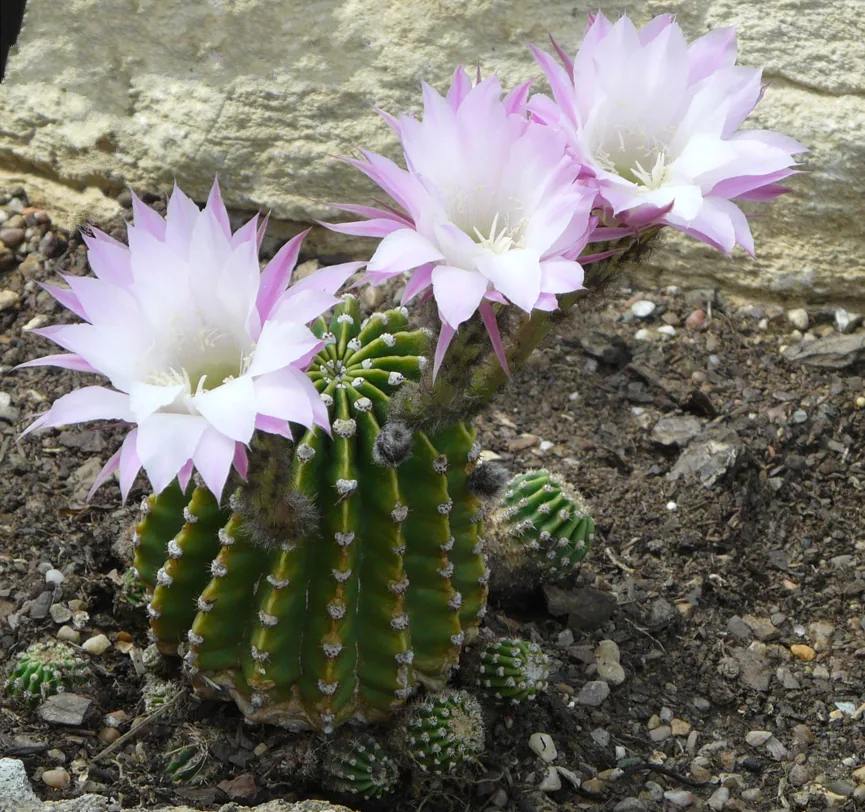
This cactus is a cheerful, easy companion: it brings large, showy pink flowers and tolerates drought. Give it full sun or partial shade, a well-drained cactus mix and a little more water than most cacti, cutting back in winter. It grows happily in a pot or indoors, stays 12 inches tall, and is safe for cats, dogs and horses.
- Sun
Full sun to partial shade; it likes some shelter from the afternoon sun
What the sources say (1)
Light: Full sun to partial shade; some protection from afternoon sun is appreciated
Easter lily cactus prefers full sun to partial shade, but it will appreciate some protection from the afternoon sun.
— Echinopsis oxygona (Easter Lily Cactus, Night-Blooming Hedge-Hogs, Pink Easter Lily Cactus, Sea-Urchin Cactus) | North Carolina Extension Gardener Plant Toolbox [1] - Water
A bit more water than most cacti, less in winter; too much water rots the roots
What the sources say (3)
Watering: A little more water than some cacti; cut back on watering in winter
Since it is fast-growing for a cactus, it will require a little more water than some cacti. Be sure to cut back on watering in the winter months.
— Echinopsis oxygona (Easter Lily Cactus, Night-Blooming Hedge-Hogs, Pink Easter Lily Cactus, Sea-Urchin Cactus) | North Carolina Extension Gardener Plant Toolbox [1] Watering notes: Well-drained cactus or succulent mix in containers; overwatering can lead to root rot; intolerant of high humidity
If planted in a container, well-drained cactus or succulent mix is recommended to promote adequate drainage.
— Echinopsis oxygona (Easter Lily Cactus, Night-Blooming Hedge-Hogs, Pink Easter Lily Cactus, Sea-Urchin Cactus) | North Carolina Extension Gardener Plant Toolbox [1] Overwatering can lead to fungal diseases such as root rot. It is Intolerant of high humidity.
— Echinopsis oxygona (Easter Lily Cactus, Night-Blooming Hedge-Hogs, Pink Easter Lily Cactus, Sea-Urchin Cactus) | North Carolina Extension Gardener Plant Toolbox [1] - Cold
Survives winters down to 15 °F (−9.4 °C)
Hardy in average winters · USDA 8b · RHS H4 · Z8
What the sources say (2)
Hardiness, coldest zone: 8b [winter low −9.4 to −6.7 °C (15 to 20 °F)]
It is hardy in USDA hardiness zones 8b to 11b and can withstand a light frost if kept dry.
— Echinopsis oxygona (Easter Lily Cactus, Night-Blooming Hedge-Hogs, Pink Easter Lily Cactus, Sea-Urchin Cactus) | North Carolina Extension Gardener Plant Toolbox [1] Hardiness, warmest zone: 11b [winter low 7.2 to 10 °C (45 to 50 °F)]
It is hardy in USDA hardiness zones 8b to 11b and can withstand a light frost if kept dry.
— Echinopsis oxygona (Easter Lily Cactus, Night-Blooming Hedge-Hogs, Pink Easter Lily Cactus, Sea-Urchin Cactus) | North Carolina Extension Gardener Plant Toolbox [1] - Soil
Well-drained cactus mix, pH 6.0–8.0
What the sources say (4)
Soil pH, minimum: 6.0
Soil pH: Neutral (6.0-8.0) Soil Drainage: Good Drainage Occasionally Dry
— Echinopsis oxygona (Easter Lily Cactus, Night-Blooming Hedge-Hogs, Pink Easter Lily Cactus, Sea-Urchin Cactus) | North Carolina Extension Gardener Plant Toolbox [1] Soil pH, maximum: 8.0
Soil pH: Neutral (6.0-8.0) Soil Drainage: Good Drainage Occasionally Dry
— Echinopsis oxygona (Easter Lily Cactus, Night-Blooming Hedge-Hogs, Pink Easter Lily Cactus, Sea-Urchin Cactus) | North Carolina Extension Gardener Plant Toolbox [1] Watering notes: Well-drained cactus or succulent mix in containers; overwatering can lead to root rot; intolerant of high humidity
If planted in a container, well-drained cactus or succulent mix is recommended to promote adequate drainage.
— Echinopsis oxygona (Easter Lily Cactus, Night-Blooming Hedge-Hogs, Pink Easter Lily Cactus, Sea-Urchin Cactus) | North Carolina Extension Gardener Plant Toolbox [1] Overwatering can lead to fungal diseases such as root rot. It is Intolerant of high humidity.
— Echinopsis oxygona (Easter Lily Cactus, Night-Blooming Hedge-Hogs, Pink Easter Lily Cactus, Sea-Urchin Cactus) | North Carolina Extension Gardener Plant Toolbox [1] - Pests
Watch for spider mites and mealybugs; overwatering causes root rot
What the sources say (2)
Pests: spider mites, mealybugs
No significant problems, but monitor for spider mites and mealybugs.
— Echinopsis oxygona (Easter Lily Cactus, Night-Blooming Hedge-Hogs, Pink Easter Lily Cactus, Sea-Urchin Cactus) | North Carolina Extension Gardener Plant Toolbox [1] Diseases: root rot
Overwatering can lead to fungal diseases such as root rot.
— Echinopsis oxygona (Easter Lily Cactus, Night-Blooming Hedge-Hogs, Pink Easter Lily Cactus, Sea-Urchin Cactus) | North Carolina Extension Gardener Plant Toolbox [1] - Watch out
It does not like high humidity
What the sources say (2)
Watering notes: Well-drained cactus or succulent mix in containers; overwatering can lead to root rot; intolerant of high humidity
If planted in a container, well-drained cactus or succulent mix is recommended to promote adequate drainage.
— Echinopsis oxygona (Easter Lily Cactus, Night-Blooming Hedge-Hogs, Pink Easter Lily Cactus, Sea-Urchin Cactus) | North Carolina Extension Gardener Plant Toolbox [1] Overwatering can lead to fungal diseases such as root rot. It is Intolerant of high humidity.
— Echinopsis oxygona (Easter Lily Cactus, Night-Blooming Hedge-Hogs, Pink Easter Lily Cactus, Sea-Urchin Cactus) | North Carolina Extension Gardener Plant Toolbox [1] - Size
12 in tall and 24 in wide
What the sources say (2)
Mature height: 30 cm (12 in)
It is fast-growing and measures up to 12 inches tall and 24 inches wide.
— Echinopsis oxygona (Easter Lily Cactus, Night-Blooming Hedge-Hogs, Pink Easter Lily Cactus, Sea-Urchin Cactus) | North Carolina Extension Gardener Plant Toolbox [1] Mature width: 61 cm (24 in)
It is fast-growing and measures up to 12 inches tall and 24 inches wide.
— Echinopsis oxygona (Easter Lily Cactus, Night-Blooming Hedge-Hogs, Pink Easter Lily Cactus, Sea-Urchin Cactus) | North Carolina Extension Gardener Plant Toolbox [1] - Propagation
From the small offsets around the base, or from seed
What the sources say (2)
Propagation: Offsets (division) and seed
The plant will produce offsets that can be used to propagate new plants when they are large enough. They may also be propagated by seeds.
— Echinopsis oxygona (Easter Lily Cactus, Night-Blooming Hedge-Hogs, Pink Easter Lily Cactus, Sea-Urchin Cactus) | North Carolina Extension Gardener Plant Toolbox [1] Recommended Propagation Strategy: Division Seed Country Or Region Of Origin:
— Echinopsis oxygona (Easter Lily Cactus, Night-Blooming Hedge-Hogs, Pink Easter Lily Cactus, Sea-Urchin Cactus) | North Carolina Extension Gardener Plant Toolbox [1] - Containers
Grows well in pots, indoors too
What the sources say (2)
In containers: Yes
Most often, this plant is used as a container houseplant.
— Echinopsis oxygona (Easter Lily Cactus, Night-Blooming Hedge-Hogs, Pink Easter Lily Cactus, Sea-Urchin Cactus) | North Carolina Extension Gardener Plant Toolbox [1] Indoors: Yes
Most often, this plant is used as a container houseplant.
— Echinopsis oxygona (Easter Lily Cactus, Night-Blooming Hedge-Hogs, Pink Easter Lily Cactus, Sea-Urchin Cactus) | North Carolina Extension Gardener Plant Toolbox [1] - Safety
Not toxic to cats, dogs or horses
Overview
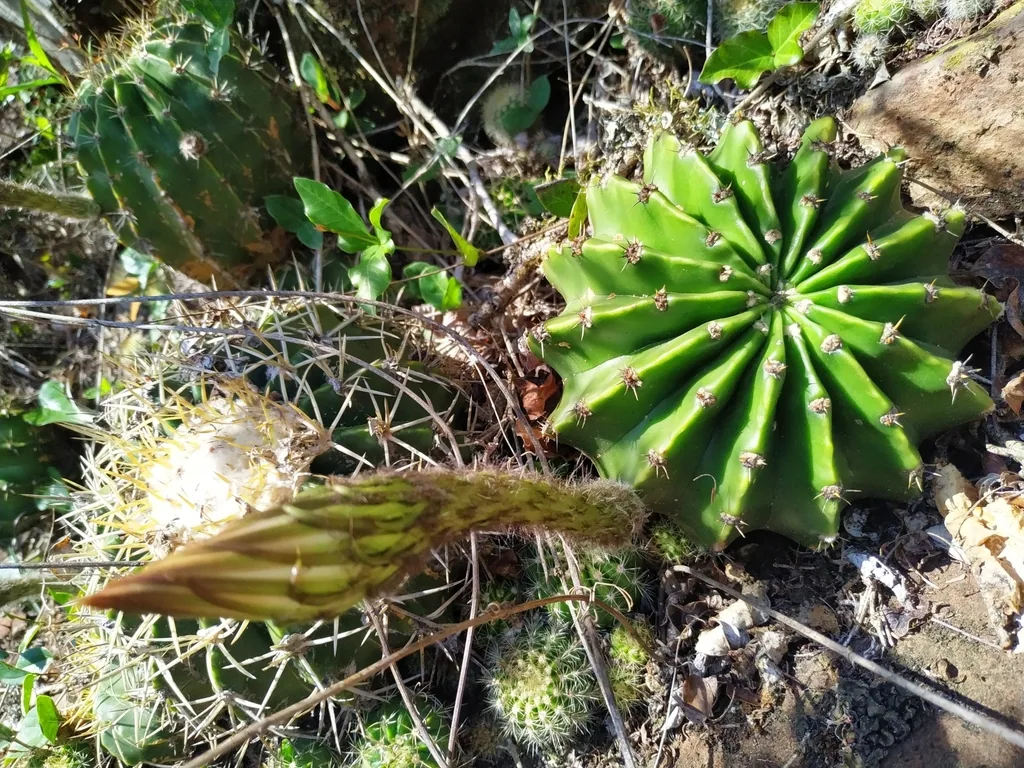
Easter lily cactus is a clumping, mat-forming cactus native to Brazil and Argentina that bears showy, scented, night-blooming flowers in spring to summer. [1] It prefers full sun to partial shade and well-drained cactus or succulent mix, and needs less watering in winter. [1] It is most often used as a container houseplant and is propagated by offsets or seeds. [1]
Easter Lily Cactus care
How to water Easter Lily Cactus
Watering
A little more water than some cacti; cut back on watering in winter
What the sources say (1)
Since it is fast-growing for a cactus, it will require a little more water than some cacti. Be sure to cut back on watering in the winter months.Watering notes
Well-drained cactus or succulent mix in containers; overwatering can lead to root rot; intolerant of high humidity
What the sources say (2)
If planted in a container, well-drained cactus or succulent mix is recommended to promote adequate drainage.Overwatering can lead to fungal diseases such as root rot. It is Intolerant of high humidity.How much light Easter Lily Cactus needs
Full sun to partial shade; some protection from afternoon sun is appreciated
What the sources say (1)
Easter lily cactus prefers full sun to partial shade, but it will appreciate some protection from the afternoon sun.How much cold Easter Lily Cactus can take
Hardiness, coldest zone
8b [winter low −9.4 to −6.7 °C (15 to 20 °F)]
What the sources say (1)
It is hardy in USDA hardiness zones 8b to 11b and can withstand a light frost if kept dry.Hardiness, warmest zone
11b [winter low 7.2 to 10 °C (45 to 50 °F)]
What the sources say (1)
It is hardy in USDA hardiness zones 8b to 11b and can withstand a light frost if kept dry.Best soil for Easter Lily Cactus
Soil pH, minimum
6.0
What the sources say (1)
Soil pH:
Neutral (6.0-8.0)
Soil Drainage:
Good Drainage
Occasionally DrySoil pH, maximum
8.0
What the sources say (1)
Soil pH:
Neutral (6.0-8.0)
Soil Drainage:
Good Drainage
Occasionally DryWhere to grow Easter Lily Cactus
Indoors
Yes
What the sources say (1)
Most often, this plant is used as a container houseplant.In containers
Yes
What the sources say (1)
Most often, this plant is used as a container houseplant.How to propagate Easter Lily Cactus
Offsets (division) and seed
What the sources say (2)
The plant will produce offsets that can be used to propagate new plants when they are large enough. They may also be propagated by seeds.Recommended Propagation Strategy:
Division
Seed
Country Or Region Of Origin:How to grow Easter Lily Cactus
The plant
Life cycle
perennial
What the sources say (1)
Life Cycle:
Perennial
Recommended Propagation Strategy:
Division
SeedFamily
Cactaceae
What the sources say (1)
Easter lily cactus is native to Brazil and Argentina and is a member of the cactus family (Cactaceae).Mature height
30 cm (12 in)
What the sources say (1)
It is fast-growing and measures up to 12 inches tall and 24 inches wide.Mature width
61 cm (24 in)
What the sources say (1)
It is fast-growing and measures up to 12 inches tall and 24 inches wide.Pests and diseases
Pests
spider mites, mealybugs
What the sources say (1)
No significant problems, but monitor for spider mites and mealybugs.Diseases
root rot
What the sources say (1)
Overwatering can lead to fungal diseases such as root rot.Easter Lily Cactus pests and problems
Spider mites and mealybugs
Symptom: No significant problems, but monitor for spider mites and mealybugs
What to do: Monitor
What the sources say (1)
No significant problems, but monitor for spider mites and mealybugs.
— Echinopsis oxygona (Easter Lily Cactus, Night-Blooming Hedge-Hogs, Pink Easter Lily Cactus, Sea-Urchin Cactus) | North Carolina Extension Gardener Plant Toolbox [1] Root rot
Symptom: Fungal diseases such as root rot from overwatering
What to do: Avoid overwatering
What the sources say (1)
Overwatering can lead to fungal diseases such as root rot.
— Echinopsis oxygona (Easter Lily Cactus, Night-Blooming Hedge-Hogs, Pink Easter Lily Cactus, Sea-Urchin Cactus) | North Carolina Extension Gardener Plant Toolbox [1]
Remedies
Each remedy shows what official sources say about it; traditional remedies without an official source are marked as such. Harmful ones are listed so you know to avoid them.
Treating the plant
mealybugs
rubbing alcohol on a cotton swab Works
Be careful not to get the alcohol on the leaves of the plants as they may be damaged.
— extension.umd.edu [7] Make sure to test the soap and alcohol mixtures on a small portion of the plant prior to full application because some plants may be sensitive to soap or alcohol.
— planttalk.colostate.edu [8] How: Minor infestations can be handled by dabbing with a cotton swab dipped in rubbing alcohol; more severe problems must be treated several times over a few weeks.
Minor infestations can be handled by dabbing with a cotton swab that has been dipped in rubbing alcohol.
— libanswers.nybg.org [6] What the evidence says Dipping a cotton swab in household alcohol and dabbing it on the individual mealybugs can control light infestations.
— extension.umd.edu [7] strong jet of water Not verified
Traditional remedy, not verified by an official source.
How: Take the plant to a sink or hose and give it a strong shower; mealybugs can be blasted off with a forceful stream of water.
dishwashing liquid in water Not verified
Traditional remedy, not verified by an official source.
Insecticidal soaps are made from potassium salts of fatty acids (don’t make a homemade soap solution as this can burn and damage plants).
— extension.umn.edu [9] Make sure to test the soap and alcohol mixtures on a small portion of the plant prior to full application because some plants may be sensitive to soap or alcohol.
— planttalk.colostate.edu [8] How: A couple of drops of dishwashing liquid in a quart of water; the soap acts as a wetter, breaking down the waxy outer coating of soft-bodied insects.
spider mites
high-pressure water spray Official source, not independently tested
How: Use a high-pressure water spray to dislodge the mites; this can also wash away their protective webbing.
Use a high-pressure water spray to dislodge twospotted spider mites. This can also wash away their protective webbing.
— extension.umn.edu [9]
root rot
cut away rotted roots and let the cactus dry Not verified
Traditional remedy, not verified by an official source.
How: Unpot the plant, brush the soil from the roots, cut away the black and brown roots and leave the cactus out of its pot to dry.
remove all rot with a clean knife and reroot Not verified
Traditional remedy, not verified by an official source.
How: Remove all the rot with a sharp, clean knife, let the cut sections form a thick scab for several days, then pot in cactus soil in a clay pot; do not water for the first week.
Is Easter Lily Cactus poisonous?
Reported by the source, quoted verbatim. This is not medical or veterinary advice: if a person or an animal may have eaten this plant, contact a poison control centre or a veterinarian.
#showy flowers #pink flowers #drought tolerant #large flowers #non-toxic for cats #non-toxic for horses #non-toxic for dogs #rock garden
[1]The source flags the risk for this animal but does not explain why.
Similar plants
- Bunny Ears Opuntia microdasys
- Dragon Fruit Selenicereus undatus
- Eve's Needle Austrocylindropuntia subulata
- Mistletoe Cactus Rhipsalis baccifera
- Old Man Cactus Cephalocereus senilis
- Pink Star Cactus Rhipsalidopsis rosea
- Thimble Cactus Mammillaria vetula
- Easter Cactus Rhipsalidopsis gaertneri
Sources
Every value above is quoted from these documents. Links lead to the original publisher.
- Echinopsis oxygona (Easter Lily Cactus, Night-Blooming Hedge-Hogs, Pink Easter Lily Cactus, Sea-Urchin Cactus) | North Carolina Extension Gardener Plant Toolbox · plants.ces.ncsu.edu, consulted
- Echinopsis (Easter Lily Cactus, Hedgehog Cactus, Sea Urchin Cactus) | North Carolina Extension Gardener Plant Toolbox · plants.ces.ncsu.edu, consulted
- Easter Lily Cactus - Echinopsis | North Carolina Extension Gardener Plant Toolbox · plants.ces.ncsu.edu, consulted
- Hedgehog Cactus - Echinopsis | North Carolina Extension Gardener Plant Toolbox · plants.ces.ncsu.edu, consulted
- Sea Urchin Cactus - Echinopsis | North Carolina Extension Gardener Plant Toolbox · plants.ces.ncsu.edu, consulted
- libanswers.nybg.org · libanswers.nybg.org
- extension.umd.edu · extension.umd.edu
- planttalk.colostate.edu · planttalk.colostate.edu
- extension.umn.edu · extension.umn.edu
Written by Emilio Marruso · last checked