
How to Grow and Care for Dragon Fruit
Selenicereus undatus
Written by Emilio Marruso · last checked
Toxic to: People · Why
At a glance
Dragon fruit is a cactus that rewards you with sweet fruit from summer to fall, and even its flowers are edible, brewed into tea. Give it full sun, at least 6 hours a day, and water only when the soil is almost completely dry. It grows happily in a pot or indoors too, and it is safe for cats, dogs and horses.
- Sun
Full sun: at least 6 hours a day
What the sources say (1)
Light: Full sun (6 or more hours of direct sunlight a day)
Light: Full sun (6 or more hours of direct sunlight a day) Soil Texture:
— Selenicereus undatus (Belle-Of-The-Night, Cinderella Plant, Dragon Fruit, Dragon Fruit Tree, Honolulu Queen, Moonlight Cactus, Nightblooming Cactus, Night Blooming Cereus, Pitahya Plant, Pitaya, Queen of the Night, Red Pitaya, Strawberry-Pear, White-fleshed Pitahaya) | North Carolina Extension Gardener Plant Toolbox [1] - Water
Water when the soil is almost dry; less in winter, but never let it dry out completely
What the sources say (2)
Watering: Water when the soil is almost completely dry
Water this plant when the soil is almost completely dry and provide good air circulation to prevent disease.
— Selenicereus undatus (Belle-Of-The-Night, Cinderella Plant, Dragon Fruit, Dragon Fruit Tree, Honolulu Queen, Moonlight Cactus, Nightblooming Cactus, Night Blooming Cereus, Pitahya Plant, Pitaya, Queen of the Night, Red Pitaya, Strawberry-Pear, White-fleshed Pitahaya) | North Carolina Extension Gardener Plant Toolbox [1] Watering notes: Water adequately in spring and summer until flowering ends; reduce watering in winter without letting the plant dry out completely
Provide adequate watering in the spring and summer, and up until the flowering period ends. Reduce watering during the winter months, but don't allow the plant to dry out completely.
— Selenicereus undatus (Belle-Of-The-Night, Cinderella Plant, Dragon Fruit, Dragon Fruit Tree, Honolulu Queen, Moonlight Cactus, Nightblooming Cactus, Night Blooming Cereus, Pitahya Plant, Pitaya, Queen of the Night, Red Pitaya, Strawberry-Pear, White-fleshed Pitahaya) | North Carolina Extension Gardener Plant Toolbox [1] - Cold
Survives winters down to 30 °F (−1.1 °C)
Half hardy: mild winters or an unheated greenhouse · USDA 10a · RHS H3 · Z10
What the sources say (2)
Hardiness, coldest zone: 10a [winter low −1.1 to 1.7 °C (30 to 35 °F)]
USDA Plant Hardiness Zone: 10a, 10b, 11a, 11b - Fruit:
— Selenicereus undatus (Belle-Of-The-Night, Cinderella Plant, Dragon Fruit, Dragon Fruit Tree, Honolulu Queen, Moonlight Cactus, Nightblooming Cactus, Night Blooming Cereus, Pitahya Plant, Pitaya, Queen of the Night, Red Pitaya, Strawberry-Pear, White-fleshed Pitahaya) | North Carolina Extension Gardener Plant Toolbox [1] Hardiness, warmest zone: 11b [winter low 7.2 to 10 °C (45 to 50 °F)]
USDA Plant Hardiness Zone: 10a, 10b, 11a, 11b - Fruit:
— Selenicereus undatus (Belle-Of-The-Night, Cinderella Plant, Dragon Fruit, Dragon Fruit Tree, Honolulu Queen, Moonlight Cactus, Nightblooming Cactus, Night Blooming Cereus, Pitahya Plant, Pitaya, Queen of the Night, Red Pitaya, Strawberry-Pear, White-fleshed Pitahaya) | North Carolina Extension Gardener Plant Toolbox [1] - Feeding
Feed only during the growing season
What the sources say (1)
When: Only during the growing season
Reduce watering during the winter months, but don't allow the plant to dry out completely. Fertilize the plant only during the growing season.
— Selenicereus undatus (Belle-Of-The-Night, Cinderella Plant, Dragon Fruit, Dragon Fruit Tree, Honolulu Queen, Moonlight Cactus, Nightblooming Cactus, Night Blooming Cereus, Pitahya Plant, Pitaya, Queen of the Night, Red Pitaya, Strawberry-Pear, White-fleshed Pitahaya) | North Carolina Extension Gardener Plant Toolbox [1] - Harvest
Pick the sweet fruit from summer to fall; eat it fresh, in jams or smoothies
What the sources say (1)
Harvest: Summer to fall
Display/Harvest Time: Fall Summer Fruit Type: Berry Fruit Length:
— Selenicereus undatus (Belle-Of-The-Night, Cinderella Plant, Dragon Fruit, Dragon Fruit Tree, Honolulu Queen, Moonlight Cactus, Nightblooming Cactus, Night Blooming Cereus, Pitahya Plant, Pitaya, Queen of the Night, Red Pitaya, Strawberry-Pear, White-fleshed Pitahaya) | North Carolina Extension Gardener Plant Toolbox [1] - Pests
Watch for ants, scale and mealybugs; birds peck the fruit
What the sources say (2)
Pests: ants, scale, mealybugs (birds peck the fruits)
Insects, Diseases, and Other Plant Problems: Monitor for ants, scale, and mealybugs.
— Selenicereus undatus (Belle-Of-The-Night, Cinderella Plant, Dragon Fruit, Dragon Fruit Tree, Honolulu Queen, Moonlight Cactus, Nightblooming Cactus, Night Blooming Cereus, Pitahya Plant, Pitaya, Queen of the Night, Red Pitaya, Strawberry-Pear, White-fleshed Pitahaya) | North Carolina Extension Gardener Plant Toolbox [1] Diseases: anthracnose, stem and root rot, brown spots from fungal or bacterial infections
Avoid anthracnose by providing the plant good air circulation. Overwatering or too much rainfall can lead to stem and root rot. Brown spots can develop from fungal or bacterial infections.
— Selenicereus undatus (Belle-Of-The-Night, Cinderella Plant, Dragon Fruit, Dragon Fruit Tree, Honolulu Queen, Moonlight Cactus, Nightblooming Cactus, Night Blooming Cereus, Pitahya Plant, Pitaya, Queen of the Night, Red Pitaya, Strawberry-Pear, White-fleshed Pitahaya) | North Carolina Extension Gardener Plant Toolbox [1] - Watch out
Too much water rots stems and roots; too much sun can scorch it
- Size
8 to 20 ft tall and 3 to 10 ft wide
What the sources say (2)
Mature height: 244-610 cm (8-20 ft)
Dimensions: Height: 8 ft. 0 in. - 20 ft. 0 in.
— Selenicereus undatus (Belle-Of-The-Night, Cinderella Plant, Dragon Fruit, Dragon Fruit Tree, Honolulu Queen, Moonlight Cactus, Nightblooming Cactus, Night Blooming Cereus, Pitahya Plant, Pitaya, Queen of the Night, Red Pitaya, Strawberry-Pear, White-fleshed Pitahaya) | North Carolina Extension Gardener Plant Toolbox [1] Mature width: 91-305 cm (3-10 ft)
Height: 8 ft. 0 in. - 20 ft. 0 in. Width: 3 ft. 0 in. - 10 ft. 0 in.
— Selenicereus undatus (Belle-Of-The-Night, Cinderella Plant, Dragon Fruit, Dragon Fruit Tree, Honolulu Queen, Moonlight Cactus, Nightblooming Cactus, Night Blooming Cereus, Pitahya Plant, Pitaya, Queen of the Night, Red Pitaya, Strawberry-Pear, White-fleshed Pitahaya) | North Carolina Extension Gardener Plant Toolbox [1] - Propagation
Grow new plants from seed or stem cuttings
What the sources say (1)
Propagation: Seed; stem cuttings
It may be propagated by seeds or stem cuttings.
— Selenicereus undatus (Belle-Of-The-Night, Cinderella Plant, Dragon Fruit, Dragon Fruit Tree, Honolulu Queen, Moonlight Cactus, Nightblooming Cactus, Night Blooming Cereus, Pitahya Plant, Pitaya, Queen of the Night, Red Pitaya, Strawberry-Pear, White-fleshed Pitahaya) | North Carolina Extension Gardener Plant Toolbox [1] - Containers
Grows in containers and indoors too
What the sources say (2)
In containers: Yes
Dragon fruit or pitaya can be grown in containers but be sure to wear protective gloves when handling this plant due to the sharp spines along the stems.
— Selenicereus undatus (Belle-Of-The-Night, Cinderella Plant, Dragon Fruit, Dragon Fruit Tree, Honolulu Queen, Moonlight Cactus, Nightblooming Cactus, Night Blooming Cereus, Pitahya Plant, Pitaya, Queen of the Night, Red Pitaya, Strawberry-Pear, White-fleshed Pitahaya) | North Carolina Extension Gardener Plant Toolbox [1] Indoors: Yes
Landscape Location: Container Houseplants Patio Landscape Theme: Drought Tolerant Garden
— Selenicereus undatus (Belle-Of-The-Night, Cinderella Plant, Dragon Fruit, Dragon Fruit Tree, Honolulu Queen, Moonlight Cactus, Nightblooming Cactus, Night Blooming Cereus, Pitahya Plant, Pitaya, Queen of the Night, Red Pitaya, Strawberry-Pear, White-fleshed Pitahaya) | North Carolina Extension Gardener Plant Toolbox [1] - Safety
Safe for cats, dogs and horses; some people may be allergic to the fruit
Overview
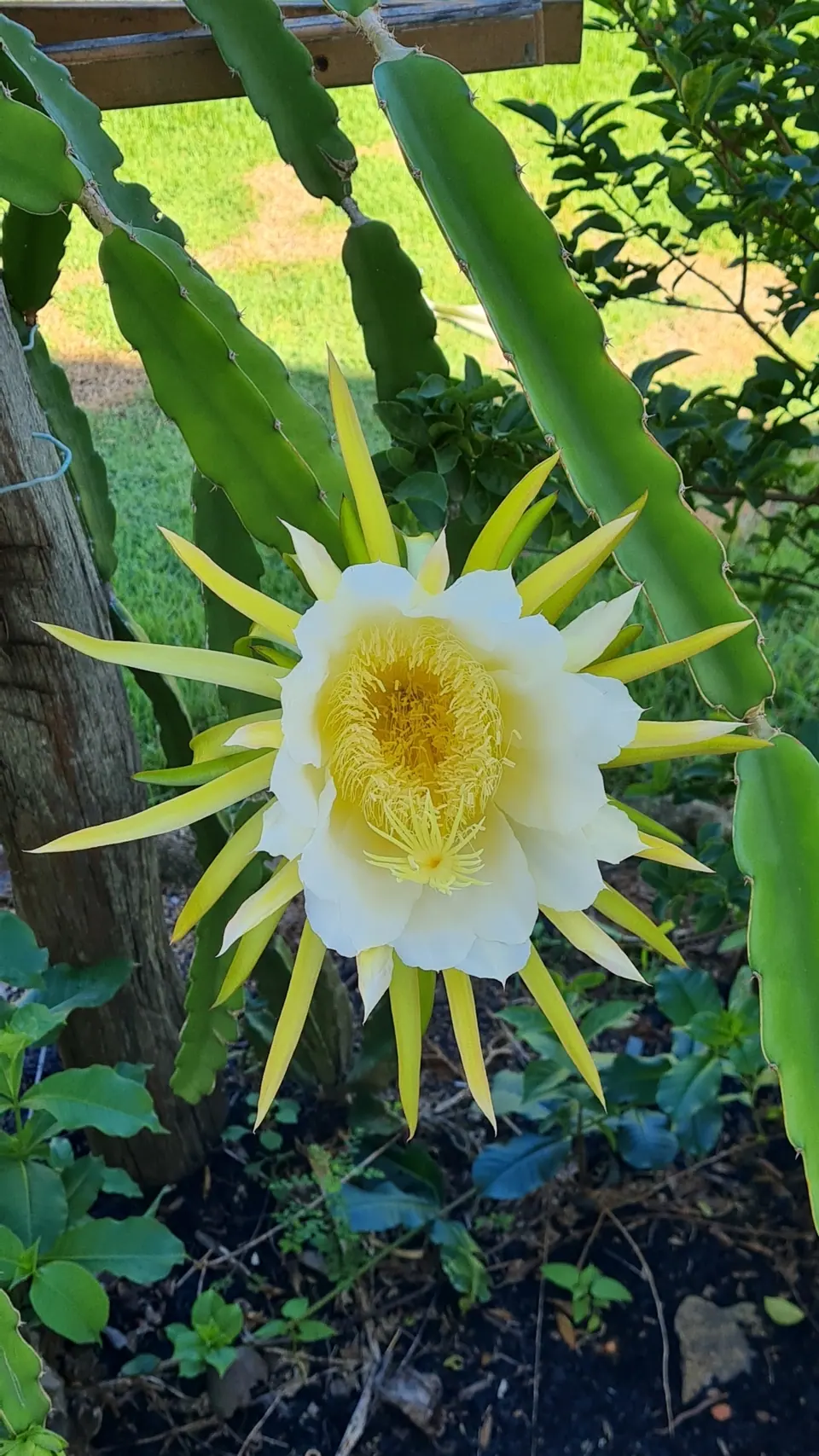
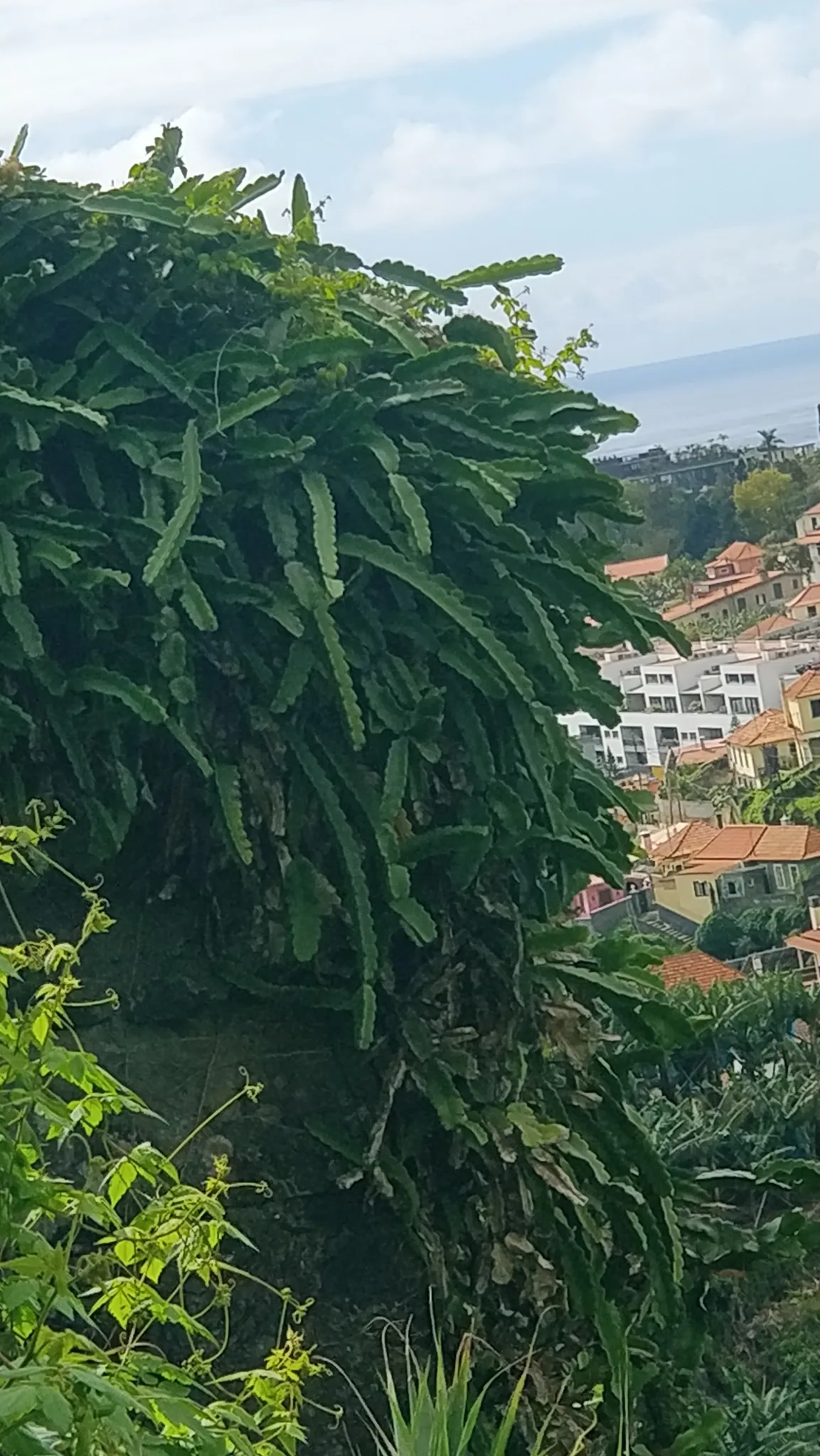
Dragon fruit is a climbing, night-blooming cactus grown mainly for its sweet edible fruits. [1] It prefers bright direct sunlight, warm temperatures and well-drained soil, and can be grown in containers. [1] Kew accepts the name and gives its native range as Mexico to Honduras. [2]
This record is incomplete: the sources we read do not cover every field yet.
Not yet covered by our sources: Planting, Spacing
Dragon Fruit care
How to water Dragon Fruit
Watering
Water when the soil is almost completely dry
What the sources say (1)
Water this plant when the soil is almost completely dry and provide good air circulation to prevent disease.Watering notes
Water adequately in spring and summer until flowering ends; reduce watering in winter without letting the plant dry out completely
What the sources say (1)
Provide adequate watering in the spring and summer, and up until the flowering period ends. Reduce watering during the winter months, but don't allow the plant to dry out completely.How much light Dragon Fruit needs
Full sun (6 or more hours of direct sunlight a day)
What the sources say (1)
Light:
Full sun (6 or more hours of direct sunlight a day)
Soil Texture:How much cold Dragon Fruit can take
Hardiness, coldest zone
10a [winter low −1.1 to 1.7 °C (30 to 35 °F)]
What the sources say (1)
USDA Plant Hardiness Zone:
10a, 10b, 11a, 11b
-
Fruit:Hardiness, warmest zone
11b [winter low 7.2 to 10 °C (45 to 50 °F)]
What the sources say (1)
USDA Plant Hardiness Zone:
10a, 10b, 11a, 11b
-
Fruit:Where to grow Dragon Fruit
Indoors
Yes
What the sources say (1)
Landscape Location:
Container
Houseplants
Patio
Landscape Theme:
Drought Tolerant GardenIn containers
Yes
What the sources say (1)
Dragon fruit or pitaya can be grown in containers but be sure to wear protective gloves when handling this plant due to the sharp spines along the stems.Spacing
Not stated in the sources we read.
How to propagate Dragon Fruit
Seed; stem cuttings
What the sources say (1)
It may be propagated by seeds or stem cuttings.How to grow Dragon Fruit
The plant
Life cycle
perennial
What the sources say (1)
Life Cycle:
Perennial
Recommended Propagation Strategy:
Seed
Stem CuttingFamily
Cactaceae
What the sources say (1)
This plant is a member of the cactus family (Cactaceae) and is a succulent, epiphyte that has fragrant, night-blooming flowersMature height
244-610 cm (8-20 ft)
What the sources say (1)
Dimensions:
Height: 8 ft. 0 in. - 20 ft. 0 in.Mature width
91-305 cm (3-10 ft)
What the sources say (1)
Height: 8 ft. 0 in. - 20 ft. 0 in.
Width: 3 ft. 0 in. - 10 ft. 0 in.Pests and diseases
Pests
ants, scale, mealybugs (birds peck the fruits)
What the sources say (1)
Insects, Diseases, and Other Plant Problems: Monitor for ants, scale, and mealybugs.Diseases
anthracnose, stem and root rot, brown spots from fungal or bacterial infections
What the sources say (1)
Avoid anthracnose by providing the plant good air circulation. Overwatering or too much rainfall can lead to stem and root rot. Brown spots can develop from fungal or bacterial infections.Fertilizing
When
Only during the growing season
What the sources say (1)
Reduce watering during the winter months, but don't allow the plant to dry out completely. Fertilize the plant only during the growing season.Dragon Fruit pests and problems
Stem and root rot
Symptom: Overwatering or too much rainfall can lead to stem and root rot.
What to do: Water only when the soil is almost completely dry and provide good air circulation.
What the sources say (2)
Overwatering or too much rainfall can lead to stem and root rot.
— Selenicereus undatus (Belle-Of-The-Night, Cinderella Plant, Dragon Fruit, Dragon Fruit Tree, Honolulu Queen, Moonlight Cactus, Nightblooming Cactus, Night Blooming Cereus, Pitahya Plant, Pitaya, Queen of the Night, Red Pitaya, Strawberry-Pear, White-fleshed Pitahaya) | North Carolina Extension Gardener Plant Toolbox [1] Water this plant when the soil is almost completely dry and provide good air circulation to prevent disease.
— Selenicereus undatus (Belle-Of-The-Night, Cinderella Plant, Dragon Fruit, Dragon Fruit Tree, Honolulu Queen, Moonlight Cactus, Nightblooming Cactus, Night Blooming Cereus, Pitahya Plant, Pitaya, Queen of the Night, Red Pitaya, Strawberry-Pear, White-fleshed Pitahaya) | North Carolina Extension Gardener Plant Toolbox [1] Sun-scorch
Symptom: Too much sun can lead to sun-scorch and dehydration.
What the sources say (1)
Too much sun can lead to sun-scorch and dehydration.
— Selenicereus undatus (Belle-Of-The-Night, Cinderella Plant, Dragon Fruit, Dragon Fruit Tree, Honolulu Queen, Moonlight Cactus, Nightblooming Cactus, Night Blooming Cereus, Pitahya Plant, Pitaya, Queen of the Night, Red Pitaya, Strawberry-Pear, White-fleshed Pitahaya) | North Carolina Extension Gardener Plant Toolbox [1] Ants, scale and mealybugs
Symptom: Monitor for ants, scale, and mealybugs.
What the sources say (1)
Insects, Diseases, and Other Plant Problems: Monitor for ants, scale, and mealybugs.
— Selenicereus undatus (Belle-Of-The-Night, Cinderella Plant, Dragon Fruit, Dragon Fruit Tree, Honolulu Queen, Moonlight Cactus, Nightblooming Cactus, Night Blooming Cereus, Pitahya Plant, Pitaya, Queen of the Night, Red Pitaya, Strawberry-Pear, White-fleshed Pitahaya) | North Carolina Extension Gardener Plant Toolbox [1]
Remedies
The sources we checked give no remedies for this plant.
Is Dragon Fruit poisonous?
Reported by the source, quoted verbatim. This is not medical or veterinary advice: if a person or an animal may have eaten this plant, contact a poison control centre or a veterinarian.
Animals
#non-toxic for cats #non-toxic for horses #non-toxic for dogs #edible #edible fruits
[1]The source flags the risk for this animal but does not explain why.
People
Some people may be allergic to dragon fruit, particularly if they have allergies to other fruits.
[1]
Calendar
Planting
Not stated in the sources we read.
Harvest
Summer to fall
What the sources say (1)
Display/Harvest Time:
Fall
Summer
Fruit Type:
Berry
Fruit Length:Months as given by the sources, which are mostly from the United States (northern hemisphere). In the southern hemisphere they shift by about six months.
Edibility
Reported by the source, quoted verbatim. Do not eat a plant on the basis of this page alone: identification mistakes can be dangerous.
Similar plants
- Bunny Ears Opuntia microdasys
- Devil's Tongue Opuntia humifusa
- Easter Lily Cactus Echinopsis oxygona
- Eve's Needle Austrocylindropuntia subulata
- Old Man Cactus Cephalocereus senilis
- Plains Prickly Pear Opuntia macrorhiza
- Thimble Cactus Mammillaria vetula
- Easter Cactus Rhipsalidopsis gaertneri
Sources
Every value above is quoted from these documents. Links lead to the original publisher.
- Selenicereus undatus (Belle-Of-The-Night, Cinderella Plant, Dragon Fruit, Dragon Fruit Tree, Honolulu Queen, Moonlight Cactus, Nightblooming Cactus, Night Blooming Cereus, Pitahya Plant, Pitaya, Queen of the Night, Red Pitaya, Strawberry-Pear, White-fleshed Pitahaya) | North Carolina Extension Gardener Plant Toolbox · plants.ces.ncsu.edu, consulted
- Selenicereus undatus (Haw.) D.R.Hunt | Plants of the World Online | Kew Science · powo.science.kew.org, consulted
Written by Emilio Marruso · last checked