
How to Grow and Care for Old Man Cactus
Cephalocereus senilis
Written by Emilio Marruso · last checked
Not toxic to cats and dogs, according to the sources · Sources
At a glance
This hairy cactus is a forgiving plant for beginners: give it full sun, or bright light with some direct sun indoors, water well and let it dry out before watering again. Feed it monthly in the growing season and let it rest in winter. Indoors it reaches 3–4 ft, and it is safe around cats, dogs and horses.
- Sun
Full sun outdoors; indoors, bright light with some direct sun
What the sources say (3)
Light: Full sun
grown outside: If grown outside, place it in the full sun.
— Cephalocereus senilis (Bunny Cactus, Old Man Cactus, Old Man of Mexico, White Persian Cat Cactus) | North Carolina Extension Gardener Plant Toolbox [1] grown indoors: If grown indoors, provide bright light and some direct sun.
— Cephalocereus senilis (Bunny Cactus, Old Man Cactus, Old Man of Mexico, White Persian Cat Cactus) | North Carolina Extension Gardener Plant Toolbox [1] Light: Full sun (6 or more hours of direct sunlight a day)
— Cephalocereus senilis (Bunny Cactus, Old Man Cactus, Old Man of Mexico, White Persian Cat Cactus) | North Carolina Extension Gardener Plant Toolbox [1] - Water
Water well, then let it dry out; no water in winter
What the sources say (4)
Watering: Water well, then allow to dry out before rewatering
Water the plants well and allow them to dry out before rewatering.
— Cephalocereus senilis (Bunny Cactus, Old Man Cactus, Old Man of Mexico, White Persian Cat Cactus) | North Carolina Extension Gardener Plant Toolbox [1] Watering notes: Withhold water and fertilizer in winter; an unglazed pot lets excess moisture evaporate; overwatering causes root rot
During the winter water and fertilizer should be withheld.
— Cephalocereus senilis (Bunny Cactus, Old Man Cactus, Old Man of Mexico, White Persian Cat Cactus) | North Carolina Extension Gardener Plant Toolbox [1] Using an unglazed pot for your indoor planting will allow the excess moisture to evaporate.
— Cephalocereus senilis (Bunny Cactus, Old Man Cactus, Old Man of Mexico, White Persian Cat Cactus) | North Carolina Extension Gardener Plant Toolbox [1] It is susceptible to fungal diseases such as root rot, if overwatered.
— Cephalocereus senilis (Bunny Cactus, Old Man Cactus, Old Man of Mexico, White Persian Cat Cactus) | North Carolina Extension Gardener Plant Toolbox [1] - Cold
Survives winters down to 20 °F (−6.7 °C)
Hardy in average winters · USDA 9a · RHS H4 · Z9
What the sources say (2)
Hardiness, coldest zone: 9a [winter low −6.7 to −3.9 °C (20 to 25 °F)]
USDA Plant Hardiness Zone: 9a, 9b, 10a, 10b, 11a, 11b
— Cephalocereus senilis (Bunny Cactus, Old Man Cactus, Old Man of Mexico, White Persian Cat Cactus) | North Carolina Extension Gardener Plant Toolbox [1] Hardiness, warmest zone: 11b [winter low 7.2 to 10 °C (45 to 50 °F)]
USDA Plant Hardiness Zone: 9a, 9b, 10a, 10b, 11a, 11b
— Cephalocereus senilis (Bunny Cactus, Old Man Cactus, Old Man of Mexico, White Persian Cat Cactus) | North Carolina Extension Gardener Plant Toolbox [1] - Feeding
Balanced fertilizer once a month in the growing season; never in winter
What the sources say (5)
When: During the growing season; not in winter
During the growing season, fertilize it monthly with a balanced fertilizer.
— Cephalocereus senilis (Bunny Cactus, Old Man Cactus, Old Man of Mexico, White Persian Cat Cactus) | North Carolina Extension Gardener Plant Toolbox [1] During the winter water and fertilizer should be withheld.
— Cephalocereus senilis (Bunny Cactus, Old Man Cactus, Old Man of Mexico, White Persian Cat Cactus) | North Carolina Extension Gardener Plant Toolbox [1] How often: Monthly during the growing season
During the growing season, fertilize it monthly with a balanced fertilizer.
— Cephalocereus senilis (Bunny Cactus, Old Man Cactus, Old Man of Mexico, White Persian Cat Cactus) | North Carolina Extension Gardener Plant Toolbox [1] Mineral fertilizers: Balanced fertilizer
During the growing season, fertilize it monthly with a balanced fertilizer.
— Cephalocereus senilis (Bunny Cactus, Old Man Cactus, Old Man of Mexico, White Persian Cat Cactus) | North Carolina Extension Gardener Plant Toolbox [1] Avoid: Fertilizing in winter
During the winter water and fertilizer should be withheld.
— Cephalocereus senilis (Bunny Cactus, Old Man Cactus, Old Man of Mexico, White Persian Cat Cactus) | North Carolina Extension Gardener Plant Toolbox [1] - Pests
Mealybugs and scale hide in its hairs; too much water rots the roots
What the sources say (2)
Pests: mealybugs, scale, other flying insects
Mealybugs, scale and other flying insects can be an issue because they are difficult to view due to the hairs present on the plant.
— Cephalocereus senilis (Bunny Cactus, Old Man Cactus, Old Man of Mexico, White Persian Cat Cactus) | North Carolina Extension Gardener Plant Toolbox [1] Diseases: root rot (if overwatered)
It is susceptible to fungal diseases such as root rot, if overwatered.
— Cephalocereus senilis (Bunny Cactus, Old Man Cactus, Old Man of Mexico, White Persian Cat Cactus) | North Carolina Extension Gardener Plant Toolbox [1] - Watch out
Moving it outdoors? Add sun little by little over several weeks to avoid sunburn
- Size
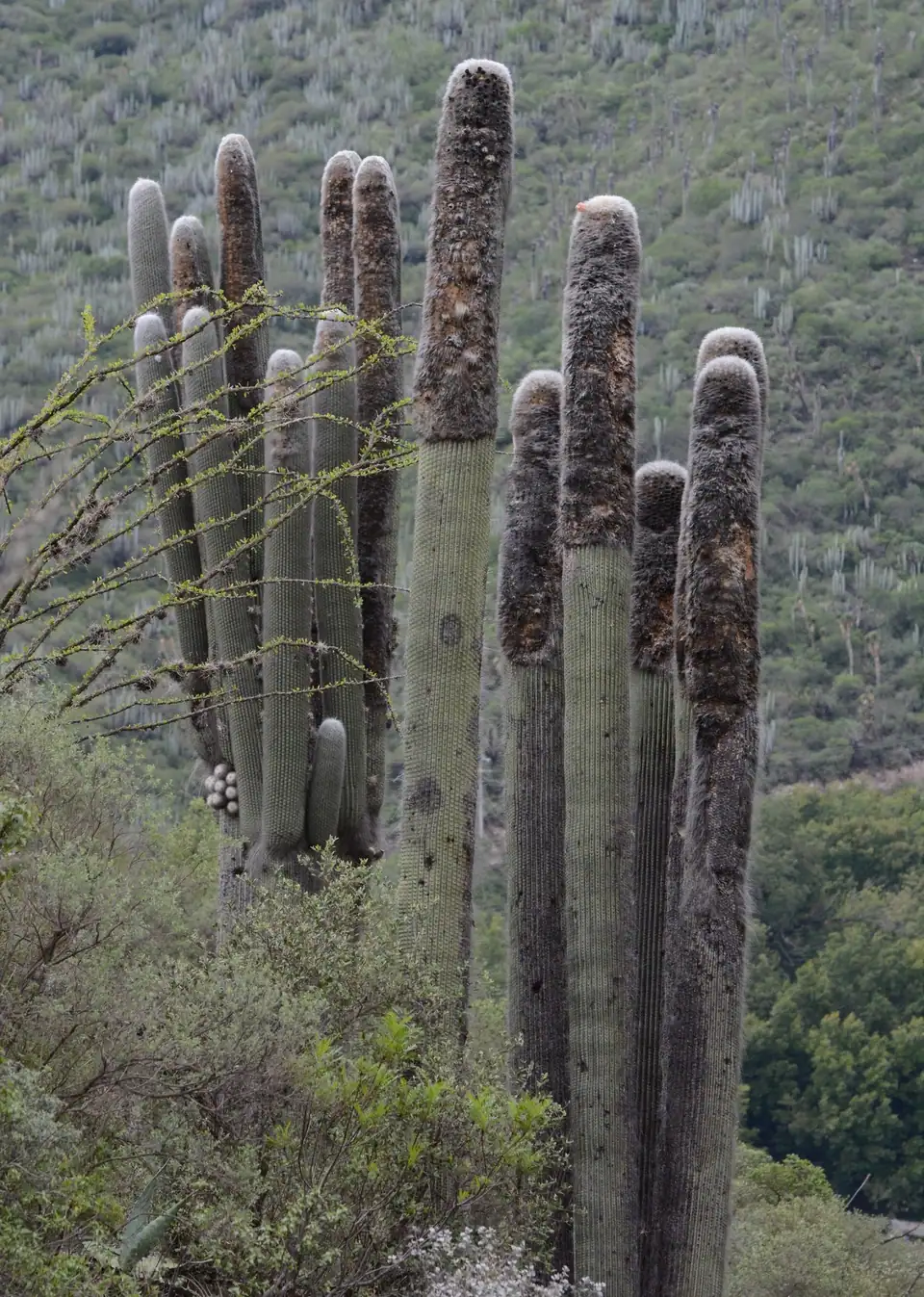
3–4 ft tall as a houseplant (up to 40 ft in the wild), 6–12 in wide
What the sources say (2)
Mature height: wild: up to 1219.2 (40 ft [12.2 m]); houseplant: 91.44-121.92 (3-4 ft [0.9–1.2 m])
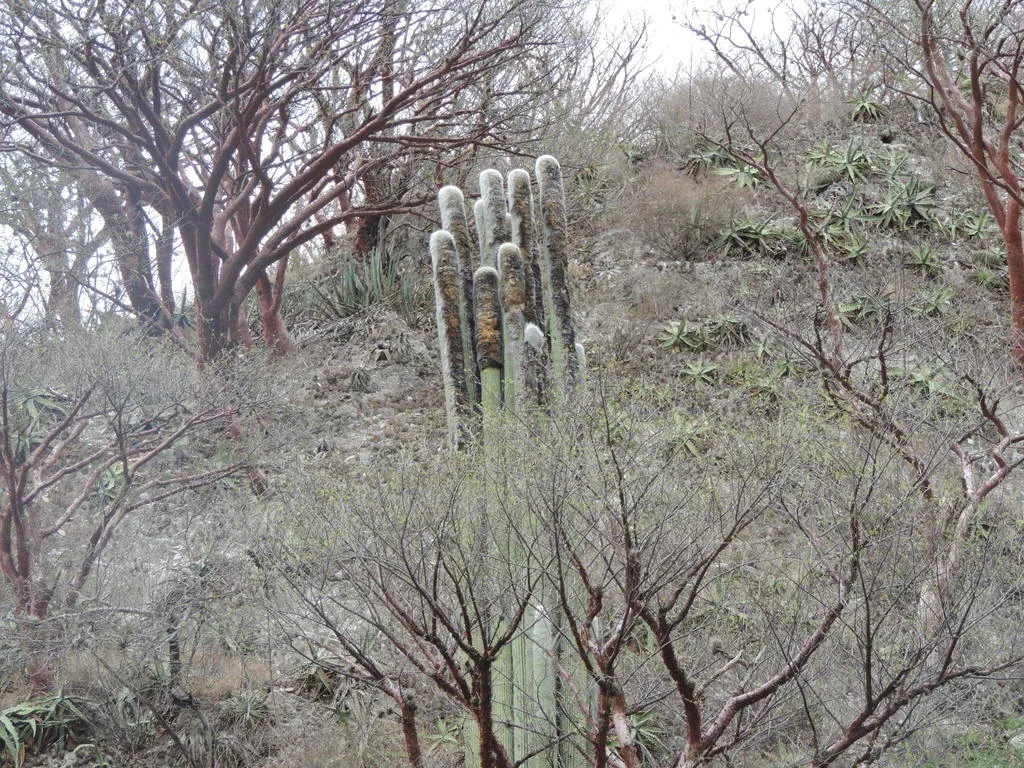
Growing to heights of 40 feet in the wild, when grown as a houseplant it will typically reach a maximum height of 3-4 feet tall.
— Cephalocereus senilis (Bunny Cactus, Old Man Cactus, Old Man of Mexico, White Persian Cat Cactus) | North Carolina Extension Gardener Plant Toolbox [1] Mature width: 15.24-30.48 cm (6-12 in)
Width: 0 ft. 6 in. - 1 ft. 0 in.
— Cephalocereus senilis (Bunny Cactus, Old Man Cactus, Old Man of Mexico, White Persian Cat Cactus) | North Carolina Extension Gardener Plant Toolbox [1] - Propagation
Grown from seed
What the sources say (1)
Propagation: Seed
Recommended Propagation Strategy: Seed
— Cephalocereus senilis (Bunny Cactus, Old Man Cactus, Old Man of Mexico, White Persian Cat Cactus) | North Carolina Extension Gardener Plant Toolbox [1] - Containers
Great in pots and indoors; an unglazed pot lets extra moisture escape
What the sources say (5)
In containers: Yes
Typically used as a houseplant/container plant.
— Cephalocereus senilis (Bunny Cactus, Old Man Cactus, Old Man of Mexico, White Persian Cat Cactus) | North Carolina Extension Gardener Plant Toolbox [1] Indoors: Yes
The old man cactus is a popular houseplant and grown for its woolly appearance.
— Cephalocereus senilis (Bunny Cactus, Old Man Cactus, Old Man of Mexico, White Persian Cat Cactus) | North Carolina Extension Gardener Plant Toolbox [1] Watering notes: Withhold water and fertilizer in winter; an unglazed pot lets excess moisture evaporate; overwatering causes root rot
During the winter water and fertilizer should be withheld.
— Cephalocereus senilis (Bunny Cactus, Old Man Cactus, Old Man of Mexico, White Persian Cat Cactus) | North Carolina Extension Gardener Plant Toolbox [1] Using an unglazed pot for your indoor planting will allow the excess moisture to evaporate.
— Cephalocereus senilis (Bunny Cactus, Old Man Cactus, Old Man of Mexico, White Persian Cat Cactus) | North Carolina Extension Gardener Plant Toolbox [1] It is susceptible to fungal diseases such as root rot, if overwatered.
— Cephalocereus senilis (Bunny Cactus, Old Man Cactus, Old Man of Mexico, White Persian Cat Cactus) | North Carolina Extension Gardener Plant Toolbox [1] - Safety
Not toxic to cats, dogs or horses
Overview
Cephalocereus senilis is a tall, columnar succulent from northeastern Mexico, popular as a houseplant for its shaggy white hairs. [1] It needs bright sunlight and well-drained soil, and should be allowed to dry out between waterings. [1] It is hardy in USDA zones 9 to 11 and needs frost and freeze protection. [1]
Old Man Cactus care
How to water Old Man Cactus
Watering
Water well, then allow to dry out before rewatering
What the sources say (1)
Water the plants well and allow them to dry out before rewatering.Watering notes
Withhold water and fertilizer in winter; an unglazed pot lets excess moisture evaporate; overwatering causes root rot
What the sources say (3)
During the winter water and fertilizer should be withheld.Using an unglazed pot for your indoor planting will allow the excess moisture to evaporate.It is susceptible to fungal diseases such as root rot, if overwatered.How much light Old Man Cactus needs
Full sun
What each source says
grown outside: Full sun
grown indoors: Bright light and some direct sun
What the sources say (3)
grown outside: If grown outside, place it in the full sun.grown indoors: If grown indoors, provide bright light and some direct sun.Light:
Full sun (6 or more hours of direct sunlight a day)How much cold Old Man Cactus can take
Hardiness, coldest zone
9a [winter low −6.7 to −3.9 °C (20 to 25 °F)]
What the sources say (1)
USDA Plant Hardiness Zone:
9a, 9b, 10a, 10b, 11a, 11bHardiness, warmest zone
11b [winter low 7.2 to 10 °C (45 to 50 °F)]
What the sources say (1)
USDA Plant Hardiness Zone:
9a, 9b, 10a, 10b, 11a, 11bWhere to grow Old Man Cactus
Indoors
Yes
What the sources say (1)
The old man cactus is a popular houseplant and grown for its woolly appearance.In containers
Yes
What the sources say (1)
Typically used as a houseplant/container plant.How to propagate Old Man Cactus
Seed
What the sources say (1)
Recommended Propagation Strategy:
SeedHow to grow Old Man Cactus
The plant
Family
Cactaceae
What the sources say (1)
It is a member of the cactus family (Cactaceae) and has spines that form fine white hairs that are reminiscent of an old man.Mature height
wild: up to 1219.2 (40 ft [12.2 m]); houseplant: 91.44-121.92 (3-4 ft [0.9–1.2 m])
What the sources say (1)
Growing to heights of 40 feet in the wild, when grown as a houseplant it will typically reach a maximum height of 3-4 feet tall.Mature width
15.24-30.48 cm (6-12 in)
What the sources say (1)
Width: 0 ft. 6 in. - 1 ft. 0 in.Pests and diseases
Pests
mealybugs, scale, other flying insects
What the sources say (1)
Mealybugs, scale and other flying insects can be an issue because they are difficult to view due to the hairs present on the plant.Diseases
root rot (if overwatered)
What the sources say (1)
It is susceptible to fungal diseases such as root rot, if overwatered.Fertilizing
When
During the growing season; not in winter
What the sources say (2)
During the growing season, fertilize it monthly with a balanced fertilizer.During the winter water and fertilizer should be withheld.How often
Monthly during the growing season
What the sources say (1)
During the growing season, fertilize it monthly with a balanced fertilizer.Mineral fertilizers
Balanced fertilizer
What the sources say (1)
During the growing season, fertilize it monthly with a balanced fertilizer.Avoid
Fertilizing in winter
What the sources say (1)
During the winter water and fertilizer should be withheld.Old Man Cactus pests and problems
Mealybugs, scale and flying insects
Symptom: Hard to see because of the hairs on the plant.
What the sources say (1)
Mealybugs, scale and other flying insects can be an issue because they are difficult to view due to the hairs present on the plant.
— Cephalocereus senilis (Bunny Cactus, Old Man Cactus, Old Man of Mexico, White Persian Cat Cactus) | North Carolina Extension Gardener Plant Toolbox [1] Root rot
Symptom: Fungal disease when overwatered.
What to do: Avoid overwatering.
What the sources say (1)
It is susceptible to fungal diseases such as root rot, if overwatered.
— Cephalocereus senilis (Bunny Cactus, Old Man Cactus, Old Man of Mexico, White Persian Cat Cactus) | North Carolina Extension Gardener Plant Toolbox [1] Sunburn
Symptom: Too much light too soon when moved outdoors.
What to do: Gradually increase sun exposure over several weeks.
What the sources say (1)
Place the plant outdoors for a brief period of time, then gradually increase the sun exposure over a period of several weeks.
— Cephalocereus senilis (Bunny Cactus, Old Man Cactus, Old Man of Mexico, White Persian Cat Cactus) | North Carolina Extension Gardener Plant Toolbox [1]
Remedies
Each remedy shows what official sources say about it; traditional remedies without an official source are marked as such. Harmful ones are listed so you know to avoid them.
Treating the plant
mealybugs
rubbing alcohol Works
Make sure to test the soap and alcohol mixtures on a small portion of the plant prior to full application because some plants may be sensitive to soap or alcohol.
— planttalk.colostate.edu [4] How: apply it to individual bugs with a cotton swab, cotton ball or soft cloth, or dilute it (10 percent alcohol, 90 percent water) for heavy infestations; repeat every week until the bugs are gone
For heavy infestations, spray a mixture of 10 percent rubbing alcohol and 90 percent water directly onto the insects. For smaller infestations, dab the insects with a cotton swab dipped in rubbing alcohol.
— planttalk.colostate.edu [4] What the evidence says For heavy infestations, spray a mixture of 10 percent rubbing alcohol and 90 percent water directly onto the insects. For smaller infestations, dab the insects with a cotton swab dipped in rubbing alcohol.
— planttalk.colostate.edu [4] insecticidal soap Works
Make sure to test the soap and alcohol mixtures on a small portion of the plant prior to full application because some plants may be sensitive to soap or alcohol.
— planttalk.colostate.edu [4] How: spray the plant with insecticidal soap
These pests may also be controlled with insecticidal soap.
— planttalk.colostate.edu [4] What the evidence says These pests may also be controlled with insecticidal soap.
— planttalk.colostate.edu [4]
Is Old Man Cactus poisonous?
Reported by the source, quoted verbatim. This is not medical or veterinary advice: if a person or an animal may have eaten this plant, contact a poison control centre or a veterinarian.
Similar plants
- Bunny Ears Opuntia microdasys
- Dragon Fruit Selenicereus undatus
- Easter Lily Cactus Echinopsis oxygona
- Eve's Needle Austrocylindropuntia subulata
- Thimble Cactus Mammillaria vetula
- Easter Cactus Rhipsalidopsis gaertneri
- Mistletoe Cactus Rhipsalis baccifera
- Pink Star Cactus Rhipsalidopsis rosea
Sources
Every value above is quoted from these documents. Links lead to the original publisher.
- Cephalocereus senilis (Bunny Cactus, Old Man Cactus, Old Man of Mexico, White Persian Cat Cactus) | North Carolina Extension Gardener Plant Toolbox · plants.ces.ncsu.edu, consulted
- Old Man Cactus - Cephalocereus senilis | North Carolina Extension Gardener Plant Toolbox · plants.ces.ncsu.edu, consulted
- Old Man of Mexico - Cephalocereus senilis | North Carolina Extension Gardener Plant Toolbox · plants.ces.ncsu.edu, consulted
- planttalk.colostate.edu · planttalk.colostate.edu
Written by Emilio Marruso · last checked