
How to Grow and Care for Indian Fig
Opuntia ficus-indica
Written by Emilio Marruso · last checked
At a glance
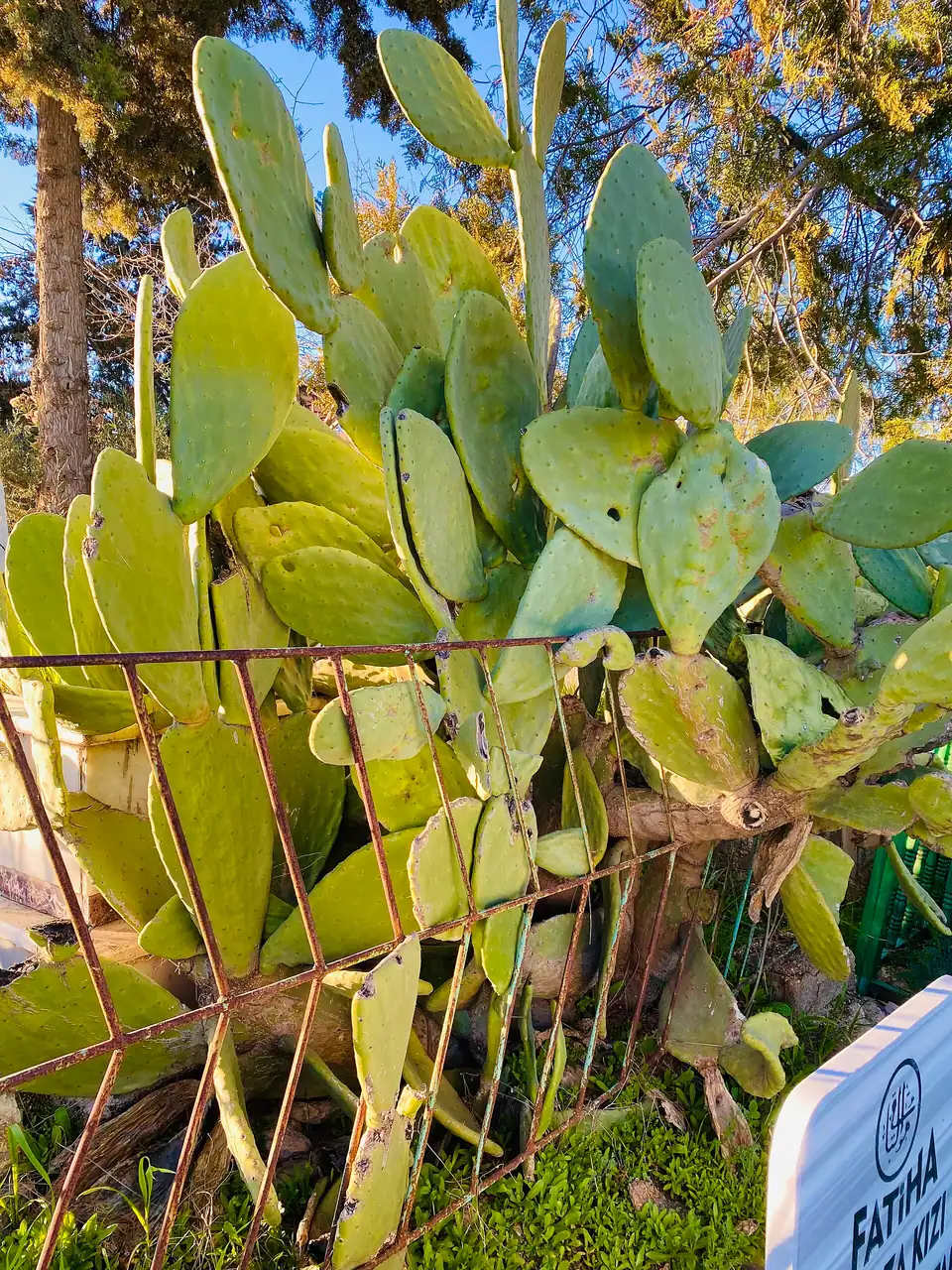
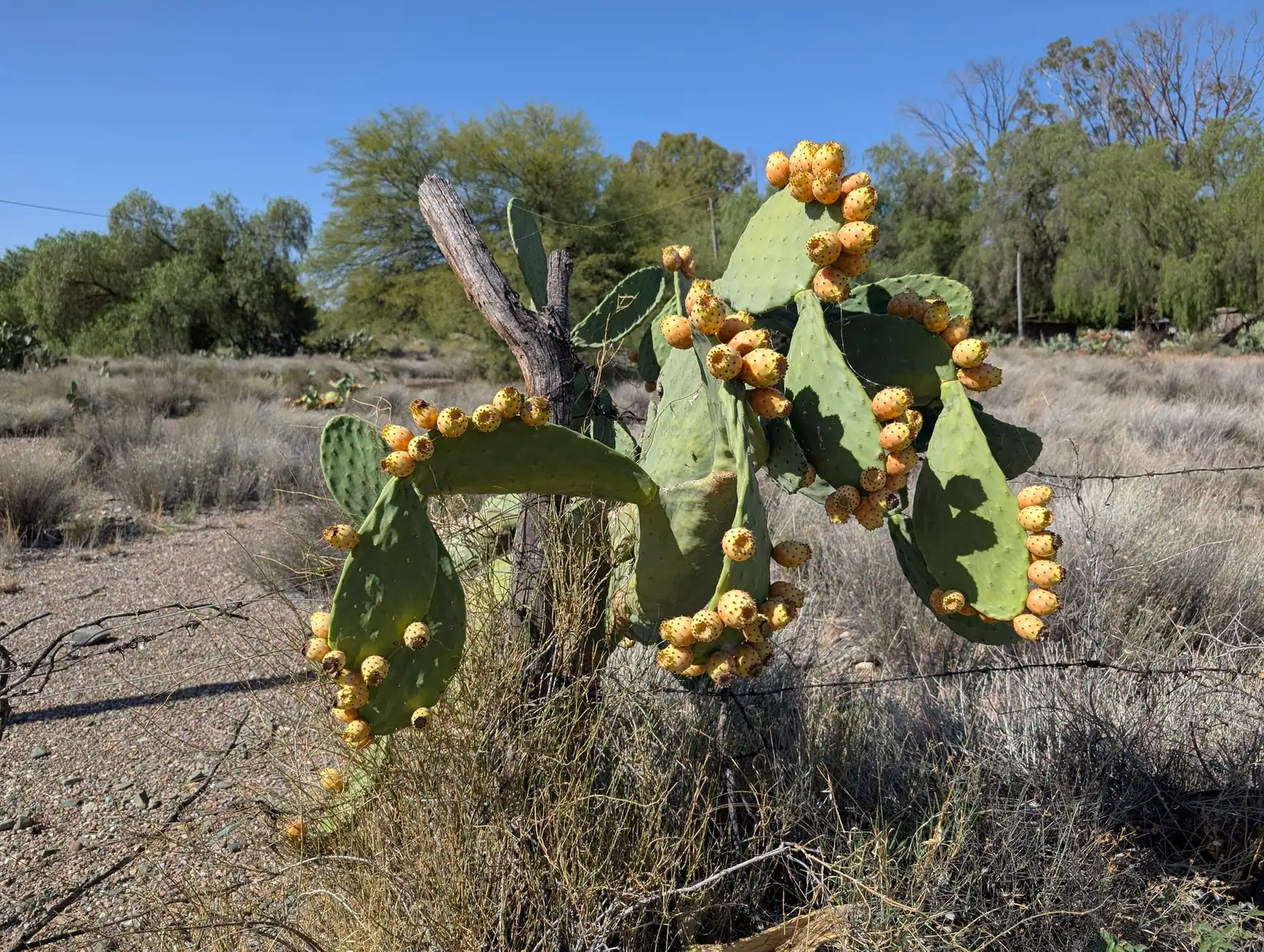
The prickly pear is a tough, sun-loving plant that shrugs off drought once established and grows 10–20 feet tall. Almost all of it is good to eat: the fruit raw or chilled with lemon juice, the pads in salads or fried like eggplant, even the seeds ground into flour. In warm climates you can harvest pads up to six times a year.
- Sun
Full sun
What the sources say (2)
- Water
Handles drought once settled; let the soil dry out between waterings
What the sources say (3)
Watering: Drought tolerant once established; tolerates plentiful water with excellent drainage
with excellent drainage, can tolerate almost as much water as any other cultivated plant. They are, however, drought tolerant once established.
— Prickly Pear Cactus | UC Small Farms Network [1] Watering notes: Newly planted pads are not watered at planting; water once after a month, then let the soil dry between waterings. In the dormant period only enough water to keep the pads from shriveling
After a month, some roots will have formed, and the pad will stand firmly by itself in the soil. Water it once then, but let it dry between future waterings.
— Prickly Pear Cactus | UC Small Farms Network [1] During this dormant period, the plants require a bright situation and enough water only to keep the pads from shriveling.
— Prickly Pear Cactus | UC Small Farms Network [1] - Spacing
1 foot apart for hedges
What the sources say (2)
Spacing: About 30.5 cm (a foot or so) for hedges
hedges and fences: Prickly pear cacti can be grown into hedges and fences by planting them a foot or so apart.
— Prickly Pear Cactus | UC Small Farms Network [1] Prickly pear cacti can be grown into hedges and fences by planting them a foot or so apart.
— Prickly Pear Cactus | UC Small Farms Network [1] - Feeding
Balanced feed from spring to fall; high nitrogen for pads, no nitrogen for fruit
What the sources say (4)
When: During the spring-to-fall growing period
Plants benefit from applications of a balanced fertilizer during their spring-through-fall growing period and, with excellent drainage, can tolerate almost as much water as any other cultivated plant.
— Prickly Pear Cactus | UC Small Farms Network [1] Mineral fertilizers: Balanced fertilizer
grown for edible pads: If you grow the prickly pear for its pads, feed with a high-nitrogen fertilizer. In warm climates, well-tended plants may be harvested of pads up to six times a year
— Prickly Pear Cactus | UC Small Farms Network [1] grown for flowers and fruit: If you prefer more flowers and fruits, give the plants a no-nitrogen fertilizer such as 0-10-10 once a month, even through the winter.
— Prickly Pear Cactus | UC Small Farms Network [1] Plants benefit from applications of a balanced fertilizer during their spring-through-fall growing period and, with excellent drainage, can tolerate almost as much water as any other cultivated plant.
— Prickly Pear Cactus | UC Small Farms Network [1] - Harvest
Twist fruit off once its tiny spines drop; pads up to six times a year in warm climates
What the sources say (6)
Harvest: Pads up to six times a year in warm climates; fruits ripen from early spring through late fall, depending on the variety
pads, warm climates: In warm climates, well-tended plants may be harvested of pads up to six times a year
— Prickly Pear Cactus | UC Small Farms Network [1] fruits, depending on the variety: The fruits ripen from early spring through late fall, depending on the variety.
— Prickly Pear Cactus | UC Small Farms Network [1] In warm climates, well-tended plants may be harvested of pads up to six times a year
— Prickly Pear Cactus | UC Small Farms Network [1] The fruits ripen from early spring through late fall, depending on the variety.
— Prickly Pear Cactus | UC Small Farms Network [1] How to harvest: Harvest fruit when the glochids fall off, twisting rather than pulling the fruit from the pad; harvest pads from mid-morning to mid-afternoon
The fruits are ripe enough to harvest when the glochids fall off. Twist, rather than pull, the fruit from the pad to avoid tearing it.
— Prickly Pear Cactus | UC Small Farms Network [1] The best time of day to harvest the pads is from mid-morning to mid-afternoon, when the acid content in the pads is at its lowest.
— Prickly Pear Cactus | UC Small Farms Network [1] - Size
10 to 20 ft tall
What the sources say (1)
Mature height: 304.8-609.6 cm (10-20 ft)
In time, cacti plants such as Opuntia ficus-indica may grow into freely-branching trees from 10 to 20 feet tall.
— Prickly Pear Cactus | UC Small Farms Network [1] - Propagation
From seed or from pads at least six months old, left to dry and heal over first
What the sources say (2)
Propagation: Seed; pad cuttings (pads at least six months old, left to form callous)
Opuntias may be started from seeds, and will sprout readily if they are simply scattered in a shady garden bed
— Prickly Pear Cactus | UC Small Farms Network [1] From a growing cactus, cut a pad that is at least six months old, and allow it to form callous.
— Prickly Pear Cactus | UC Small Farms Network [1] - Sowing
From seed, the first fruit comes in 3–4 years
What the sources say (1)
Years to first fruit: 3-4 (from seed)
However, growth from seed is slow, and three to four years may pass before flowers and fruits appear.
— Prickly Pear Cactus | UC Small Farms Network [1]
Overview
Prickly pear grows best in a sunny position in well-drained sandy loam and is drought tolerant once established. [1] It can be propagated from seed or from cladode pads at least six months old. [1] Both the pads and the fruit are eaten. [1]
This record is incomplete: the sources we read do not cover every field yet.
Not yet covered by our sources: Planting
Indian Fig care
How to water Indian Fig
Watering
Drought tolerant once established; tolerates plentiful water with excellent drainage
What the sources say (1)
with excellent drainage, can tolerate almost as much water as any other cultivated plant. They are, however, drought tolerant once established.Watering notes
Newly planted pads are not watered at planting; water once after a month, then let the soil dry between waterings. In the dormant period only enough water to keep the pads from shriveling
What the sources say (2)
After a month, some roots will have formed, and the pad will stand firmly by itself in the soil. Water it once then, but let it dry between future waterings.During this dormant period, the plants require a bright situation and enough water only to keep the pads from shriveling.How much light Indian Fig needs
Where to grow Indian Fig
About 30.5 cm (a foot or so) for hedges
What each source says
hedges and fences: 30.5 cm (a foot or so)
What the sources say (2)
hedges and fences: Prickly pear cacti can be grown into hedges and fences by planting them a foot or so apart.Prickly pear cacti can be grown into hedges and fences by planting them a foot or so apart.How to propagate Indian Fig
Seed; pad cuttings (pads at least six months old, left to form callous)
What the sources say (2)
Opuntias may be started from seeds, and will sprout readily if they are simply scattered in a shady garden bedFrom a growing cactus, cut a pad that is at least six months old, and allow it to form callous.How to grow Indian Fig
The plant
Mature height
304.8-609.6 cm (10-20 ft)
What the sources say (1)
In time, cacti plants such as Opuntia ficus-indica may grow into freely-branching trees from 10 to 20 feet tall.Years to first fruit
3-4 (from seed)
What the sources say (1)
However, growth from seed is slow, and three to four years may pass before flowers and fruits appear.Harvest and storage
How to harvest
Harvest fruit when the glochids fall off, twisting rather than pulling the fruit from the pad; harvest pads from mid-morning to mid-afternoon
What the sources say (2)
The fruits are ripe enough to harvest when the glochids fall off. Twist, rather than pull, the fruit from the pad to avoid tearing it.The best time of day to harvest the pads is from mid-morning to mid-afternoon, when the acid content in the pads is at its lowest.Fertilizing
When
During the spring-to-fall growing period
What the sources say (1)
Plants benefit from applications of a balanced fertilizer during their spring-through-fall growing period and, with excellent drainage, can tolerate almost as much water as any other cultivated plant.How often
The sources give different values depending on region, zone or growing conditions.
What each source says
grown for flowers and fruit: Once a month, also through the winter
What the sources say (1)
grown for flowers and fruit: If you prefer more flowers and fruits, give the plants a no-nitrogen fertilizer such as 0-10-10 once a month, even through the winter.Natural fertilizers
The sources give different values depending on region, zone or growing conditions.
What each source says
commercial plantations in Mexico: Dairy manure
What the sources say (1)
commercial plantations in Mexico: A mutually beneficial barter system between cacti and dairy producers provides all the manure the cactus can use in return for all the pads the dairy stock can eat.Mineral fertilizers
Balanced fertilizer
What each source says
grown for edible pads: High-nitrogen fertilizer
grown for flowers and fruit: No-nitrogen fertilizer such as 0-10-10
What the sources say (3)
grown for edible pads: If you grow the prickly pear for its pads, feed with a high-nitrogen fertilizer. In warm climates, well-tended plants may be harvested of pads up to six times a yeargrown for flowers and fruit: If you prefer more flowers and fruits, give the plants a no-nitrogen fertilizer such as 0-10-10 once a month, even through the winter.Plants benefit from applications of a balanced fertilizer during their spring-through-fall growing period and, with excellent drainage, can tolerate almost as much water as any other cultivated plant.Avoid
The sources give different values depending on region, zone or growing conditions.
What each source says
grown for flowers and fruit: Nitrogen in the fertilizer
What the sources say (1)
grown for flowers and fruit: If you prefer more flowers and fruits, give the plants a no-nitrogen fertilizer such as 0-10-10 once a month, even through the winter.Remedies
Each remedy shows what official sources say about it; traditional remedies without an official source are marked as such. Harmful ones are listed so you know to avoid them.
Treating the plant
cochineal scale
pruning infested cladodes Official source, not independently tested
How: Prune away infested cladodes to reduce pest populations and improve the effectiveness of applied treatments.
Pruning helps manage D. opuntiae by removing infested cladodes, reducing pest populations, and improving the effectiveness of applied treatments.
— pmc.ncbi.nlm.nih.gov [2] black soap spray Official source, not independently tested
How: Black soap at 60 g/L, with a second application at a three-day interval.
second application of black soap (60 g/L) at a three-day interval significantly increased adult female mortality, reaching 82.5% 3 days after the second treatment
— pmc.ncbi.nlm.nih.gov [2] mineral oil spray Official source, not independently tested
How: Mineral oil spray against nymphs and adult females.
Mineral oil (780 g/L) at 2400 cc/hL demonstrated high efficacy against both nymphs and adult females, with 91.94% mortality recorded 120 h after treatment under field conditions
— pmc.ncbi.nlm.nih.gov [2]
Getting rid of it
invasive spread
mechanical removal Partly works
Spines can cause injuries to people and animals.
— greenadelaide.sa.gov.au [3] Movement of cladodes is the most common way new plants establish. A single segment is able to take root on contact with soil.
— greenadelaide.sa.gov.au [3] How: Mechanical removal can be done at any time; restore the soil and monitor the area for regrowth and seedlings.
Ideal for paddocks and degraded sites and where on-site burial may be an option, mechanical removal can be done at any time.
— greenadelaide.sa.gov.au [3] What the evidence says mechanical removal can be done at any time. Method may not be suitable in sites where there is risk of soil erosion and damage to native vegetation.
— greenadelaide.sa.gov.au [3]
Calendar
Planting
Not stated in the sources we read.
Harvest
Pads up to six times a year in warm climates; fruits ripen from early spring through late fall, depending on the variety
What each source says
pads, warm climates: up to six times a year
fruits, depending on the variety: early spring through late fall
What the sources say (4)
pads, warm climates: In warm climates, well-tended plants may be harvested of pads up to six times a yearfruits, depending on the variety: The fruits ripen from early spring through late fall, depending on the variety.In warm climates, well-tended plants may be harvested of pads up to six times a yearThe fruits ripen from early spring through late fall, depending on the variety.Months as given by the sources, which are mostly from the United States (northern hemisphere). In the southern hemisphere they shift by about six months.
Edibility
Reported by the source, quoted verbatim. Do not eat a plant on the basis of this page alone: identification mistakes can be dangerous.
You can eat them raw, at room temperature or chilled, and alone or with lemon juice.
[1]They can be eaten raw in salads, boiled and fried like eggplant, pickled with spices
[1]Even the seeds can be eaten in soups or dried and ground into flour.
[1]Fresh pads provide a dependable source of food and drink for livestock and poultry.
[1]
Similar plants
- Bunny Ears Opuntia microdasys
- Plains Prickly Pear Opuntia macrorhiza
- Erect Prickly Pear Opuntia stricta
- Devil's Tongue Opuntia humifusa
- Abraham Trachystemon orientalis
- Abyssinian banana Ensete ventricosum
- Acacia longifolia Acacia longifolia
- Afghan Cherry Prunus jacquemontii
Sources
Every value above is quoted from these documents. Links lead to the original publisher.
- Prickly Pear Cactus | UC Small Farms Network · ucanr.edu, consulted
- pmc.ncbi.nlm.nih.gov · pmc.ncbi.nlm.nih.gov
- greenadelaide.sa.gov.au · greenadelaide.sa.gov.au
Written by Emilio Marruso · last checked