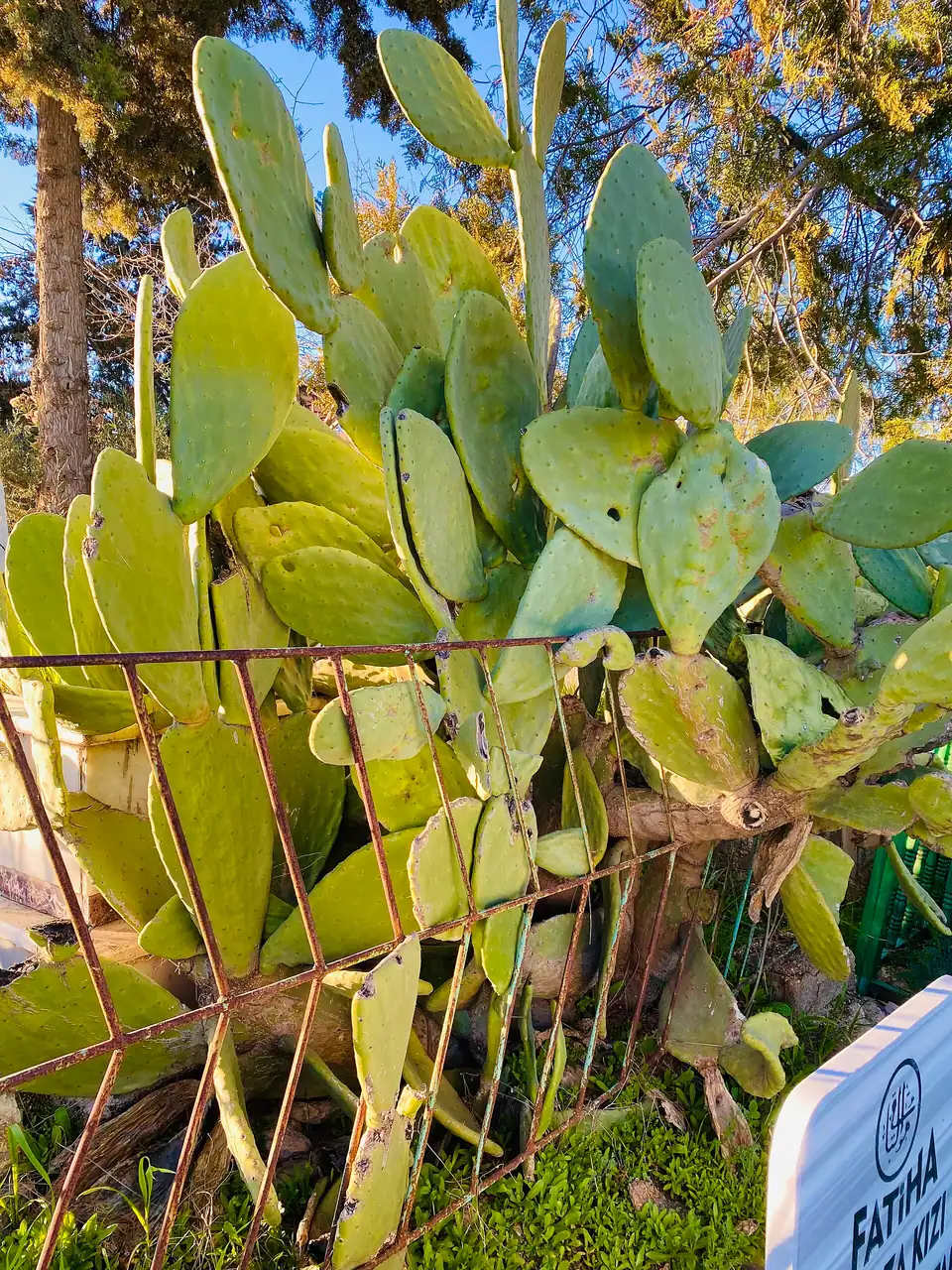
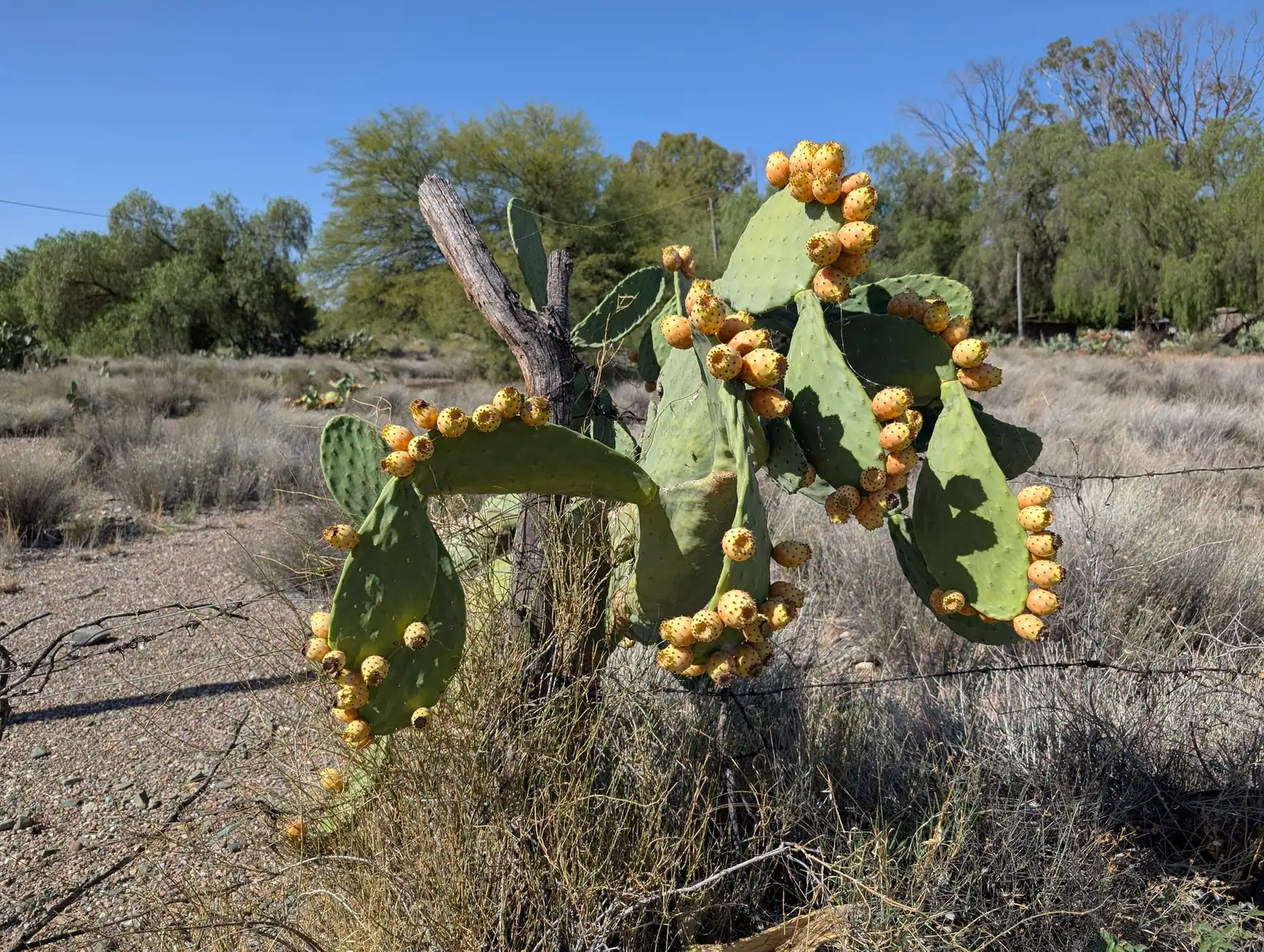

Cómo cultivar y cuidar Nopal
Opuntia ficus-indica
Escrito por Emilio Marruso · última revisión
De un vistazo
La chumbera es una planta resistente que adora el sol pleno, aguanta la sequía una vez establecida y alcanza 3–6 m de alto. Casi todo se come: los higos chumbos crudos o fríos con zumo de limón, las palas en ensalada o fritas como berenjenas, e incluso las semillas molidas en harina. En climas cálidos puedes cosechar palas hasta seis veces al año.
- Sol
Sol pleno
Qué dicen las fuentes (2)
- Riego
Resiste la sequía una vez establecida; deja secar la tierra entre riegos
Qué dicen las fuentes (3)
Riego: Tolerante a la sequía una vez establecida; tolera abundante agua con excelente drenaje
with excellent drainage, can tolerate almost as much water as any other cultivated plant. They are, however, drought tolerant once established.
— Prickly Pear Cactus | UC Small Farms Network [1] Notas sobre el riego: Los nopales recién plantados no se riegan al plantar; riega una vez después de un mes, luego deja que el suelo se seque entre riegos. En el período de reposo solo suficiente agua para evitar que los nopales se arruguen
After a month, some roots will have formed, and the pad will stand firmly by itself in the soil. Water it once then, but let it dry between future waterings.
— Prickly Pear Cactus | UC Small Farms Network [1] During this dormant period, the plants require a bright situation and enough water only to keep the pads from shriveling.
— Prickly Pear Cactus | UC Small Farms Network [1] - Distancia
30 cm entre plantas para setos
Qué dicen las fuentes (2)
Distancia de plantación: Unos 30.5 cm (aproximadamente un pie) para setos
setos y cercas: Prickly pear cacti can be grown into hedges and fences by planting them a foot or so apart.
— Prickly Pear Cactus | UC Small Farms Network [1] Prickly pear cacti can be grown into hedges and fences by planting them a foot or so apart.
— Prickly Pear Cactus | UC Small Farms Network [1] - Abonado
Abono equilibrado de primavera a otoño; mucho nitrógeno para palas, nada de nitrógeno para frutos
Qué dicen las fuentes (4)
Cuándo: Durante el período de crecimiento de primavera a otoño
Plants benefit from applications of a balanced fertilizer during their spring-through-fall growing period and, with excellent drainage, can tolerate almost as much water as any other cultivated plant.
— Prickly Pear Cactus | UC Small Farms Network [1] Abonos minerales: Fertilizante equilibrado
cultivado para nopalitos comestibles: If you grow the prickly pear for its pads, feed with a high-nitrogen fertilizer. In warm climates, well-tended plants may be harvested of pads up to six times a year
— Prickly Pear Cactus | UC Small Farms Network [1] cultivado para flores y frutos: If you prefer more flowers and fruits, give the plants a no-nitrogen fertilizer such as 0-10-10 once a month, even through the winter.
— Prickly Pear Cactus | UC Small Farms Network [1] Plants benefit from applications of a balanced fertilizer during their spring-through-fall growing period and, with excellent drainage, can tolerate almost as much water as any other cultivated plant.
— Prickly Pear Cactus | UC Small Farms Network [1] - Cosecha
Gira el fruto, sin tirar, cuando caen sus espinitas; palas hasta seis veces al año en clima cálido
Qué dicen las fuentes (6)
Cosecha: Nopales hasta seis veces al año en climas cálidos; los frutos maduran desde principios de primavera hasta finales de otoño, según la variedad
nopales, climas cálidos: In warm climates, well-tended plants may be harvested of pads up to six times a year
— Prickly Pear Cactus | UC Small Farms Network [1] frutos, según la variedad: The fruits ripen from early spring through late fall, depending on the variety.
— Prickly Pear Cactus | UC Small Farms Network [1] In warm climates, well-tended plants may be harvested of pads up to six times a year
— Prickly Pear Cactus | UC Small Farms Network [1] The fruits ripen from early spring through late fall, depending on the variety.
— Prickly Pear Cactus | UC Small Farms Network [1] Cómo cosechar: Cosecha los frutos cuando caigan los gloquidios, girando en lugar de tirar del fruto para desprenderlo de la penca; cosecha las pencas desde media mañana hasta media tarde
The fruits are ripe enough to harvest when the glochids fall off. Twist, rather than pull, the fruit from the pad to avoid tearing it.
— Prickly Pear Cactus | UC Small Farms Network [1] The best time of day to harvest the pads is from mid-morning to mid-afternoon, when the acid content in the pads is at its lowest.
— Prickly Pear Cactus | UC Small Farms Network [1] - Tamaño
De 3 a 6 m de alto
Qué dicen las fuentes (1)
Altura adulta: 304.8-609.6 cm (10-20 pies)
In time, cacti plants such as Opuntia ficus-indica may grow into freely-branching trees from 10 to 20 feet tall.
— Prickly Pear Cactus | UC Small Farms Network [1] - Multiplicación
Por semilla o por palas de al menos seis meses, dejadas secar hasta que cicatricen
Qué dicen las fuentes (2)
Propagación: Semilla; esquejes de nopal (nopales de al menos seis meses, dejados para formar callo)
Opuntias may be started from seeds, and will sprout readily if they are simply scattered in a shady garden bed
— Prickly Pear Cactus | UC Small Farms Network [1] From a growing cactus, cut a pad that is at least six months old, and allow it to form callous.
— Prickly Pear Cactus | UC Small Farms Network [1] - Siembra
Desde semilla, da los primeros frutos en 3–4 años
Qué dicen las fuentes (1)
Años hasta el primer fruto: 3-4 (desde la semilla)
However, growth from seed is slow, and three to four years may pass before flowers and fruits appear.
— Prickly Pear Cactus | UC Small Farms Network [1]
Resumen
El nopal crece mejor en una posición soleada en suelo franco arenoso bien drenado y es tolerante a la sequía una vez establecido. [1] Se puede propagar por semilla o por almohadillas de cladodio de al menos seis meses de edad. [1] Tanto las almohadillas como el fruto se comen. [1]
Citado en inglés, como en la fuente.
Esta ficha está incompleta: las fuentes consultadas aún no cubren todos los campos.
Aún no cubierto por nuestras fuentes: Plantación
Cuidados
Riego
Riego
Tolerante a la sequía una vez establecida; tolera abundante agua con excelente drenaje
Qué dicen las fuentes (1)
with excellent drainage, can tolerate almost as much water as any other cultivated plant. They are, however, drought tolerant once established.Notas sobre el riego
Los nopales recién plantados no se riegan al plantar; riega una vez después de un mes, luego deja que el suelo se seque entre riegos. En el período de reposo solo suficiente agua para evitar que los nopales se arruguen
Qué dicen las fuentes (2)
After a month, some roots will have formed, and the pad will stand firmly by itself in the soil. Water it once then, but let it dry between future waterings.During this dormant period, the plants require a bright situation and enough water only to keep the pads from shriveling.Luz
Dónde cultivarla
Unos 30.5 cm (aproximadamente un pie) para setos
Lo que dice cada fuente
setos y cercas: 30.5 cm (aproximadamente un pie)
Qué dicen las fuentes (2)
setos y cercas: Prickly pear cacti can be grown into hedges and fences by planting them a foot or so apart.Prickly pear cacti can be grown into hedges and fences by planting them a foot or so apart.Propagación
Semilla; esquejes de nopal (nopales de al menos seis meses, dejados para formar callo)
Qué dicen las fuentes (2)
Opuntias may be started from seeds, and will sprout readily if they are simply scattered in a shady garden bedFrom a growing cactus, cut a pad that is at least six months old, and allow it to form callous.Cultivo
La planta
Altura adulta
304.8-609.6 cm (10-20 pies)
Qué dicen las fuentes (1)
In time, cacti plants such as Opuntia ficus-indica may grow into freely-branching trees from 10 to 20 feet tall.Años hasta el primer fruto
3-4 (desde la semilla)
Qué dicen las fuentes (1)
However, growth from seed is slow, and three to four years may pass before flowers and fruits appear.Cosecha y conservación
Cómo cosechar
Cosecha los frutos cuando caigan los gloquidios, girando en lugar de tirar del fruto para desprenderlo de la penca; cosecha las pencas desde media mañana hasta media tarde
Qué dicen las fuentes (2)
The fruits are ripe enough to harvest when the glochids fall off. Twist, rather than pull, the fruit from the pad to avoid tearing it.The best time of day to harvest the pads is from mid-morning to mid-afternoon, when the acid content in the pads is at its lowest.Abonado
Cuándo
Durante el período de crecimiento de primavera a otoño
Qué dicen las fuentes (1)
Plants benefit from applications of a balanced fertilizer during their spring-through-fall growing period and, with excellent drainage, can tolerate almost as much water as any other cultivated plant.Frecuencia
Las fuentes dan valores distintos según la región, la zona o las condiciones de cultivo.
Lo que dice cada fuente
cultivado para flores y frutos: Una vez al mes, también durante el invierno
Qué dicen las fuentes (1)
cultivado para flores y frutos: If you prefer more flowers and fruits, give the plants a no-nitrogen fertilizer such as 0-10-10 once a month, even through the winter.Abonos naturales
Las fuentes dan valores distintos según la región, la zona o las condiciones de cultivo.
Lo que dice cada fuente
plantaciones comerciales en México: Estiércol de vaca
Qué dicen las fuentes (1)
plantaciones comerciales en México: A mutually beneficial barter system between cacti and dairy producers provides all the manure the cactus can use in return for all the pads the dairy stock can eat.Abonos minerales
Fertilizante equilibrado
Lo que dice cada fuente
cultivado para nopalitos comestibles: Fertilizante con alto contenido de nitrógeno
cultivado para flores y frutos: Fertilizante sin nitrógeno, como 0-10-10
Qué dicen las fuentes (3)
cultivado para nopalitos comestibles: If you grow the prickly pear for its pads, feed with a high-nitrogen fertilizer. In warm climates, well-tended plants may be harvested of pads up to six times a yearcultivado para flores y frutos: If you prefer more flowers and fruits, give the plants a no-nitrogen fertilizer such as 0-10-10 once a month, even through the winter.Plants benefit from applications of a balanced fertilizer during their spring-through-fall growing period and, with excellent drainage, can tolerate almost as much water as any other cultivated plant.Evitar
Las fuentes dan valores distintos según la región, la zona o las condiciones de cultivo.
Lo que dice cada fuente
cultivado para flores y frutos: Nitrógeno en el fertilizante
Qué dicen las fuentes (1)
cultivado para flores y frutos: If you prefer more flowers and fruits, give the plants a no-nitrogen fertilizer such as 0-10-10 once a month, even through the winter.Remedios
Cada remedio indica qué dicen las fuentes oficiales; los remedios tradicionales sin fuente oficial aparecen marcados. Los perjudiciales están para que sepas evitarlos.
Cuidar la planta
cochinilla del nopal
poda de cladodios infestados Fuente oficial, sin prueba independiente
Cómo: Poda los cladodios infestados para reducir las poblaciones de plagas y mejorar la eficacia de los tratamientos aplicados.
Pruning helps manage D. opuntiae by removing infested cladodes, reducing pest populations, and improving the effectiveness of applied treatments.
— pmc.ncbi.nlm.nih.gov [2] rociado con jabón negro Fuente oficial, sin prueba independiente
Cómo: Jabón negro a 60 g/L, con una segunda aplicación a intervalos de tres días.
second application of black soap (60 g/L) at a three-day interval significantly increased adult female mortality, reaching 82.5% 3 days after the second treatment
— pmc.ncbi.nlm.nih.gov [2] Rociado con aceite mineral Fuente oficial, sin prueba independiente
Cómo: Rociado con aceite mineral contra ninfas y hembras adultas.
Mineral oil (780 g/L) at 2400 cc/hL demonstrated high efficacy against both nymphs and adult females, with 91.94% mortality recorded 120 h after treatment under field conditions
— pmc.ncbi.nlm.nih.gov [2]
Cómo eliminarla
propagación invasiva
eliminación mecánica Funciona en parte
Spines can cause injuries to people and animals.
— greenadelaide.sa.gov.au [3] Movement of cladodes is the most common way new plants establish. A single segment is able to take root on contact with soil.
— greenadelaide.sa.gov.au [3] Cómo: La eliminación mecánica se puede realizar en cualquier momento; restaura el suelo y vigila la zona para detectar rebrotes y plántulas.
Ideal for paddocks and degraded sites and where on-site burial may be an option, mechanical removal can be done at any time.
— greenadelaide.sa.gov.au [3] Qué dicen las pruebas mechanical removal can be done at any time. Method may not be suitable in sites where there is risk of soil erosion and damage to native vegetation.
— greenadelaide.sa.gov.au [3]
Calendario
Plantación
No figura en las fuentes consultadas.
Cosecha
Nopales hasta seis veces al año en climas cálidos; los frutos maduran desde principios de primavera hasta finales de otoño, según la variedad
Lo que dice cada fuente
nopales, climas cálidos: hasta seis veces al año
frutos, según la variedad: principios de primavera hasta finales de otoño
Qué dicen las fuentes (4)
nopales, climas cálidos: In warm climates, well-tended plants may be harvested of pads up to six times a yearfrutos, según la variedad: The fruits ripen from early spring through late fall, depending on the variety.In warm climates, well-tended plants may be harvested of pads up to six times a yearThe fruits ripen from early spring through late fall, depending on the variety.Meses tal como los dan las fuentes, en su mayoría de Estados Unidos (hemisferio norte). En el hemisferio sur se desplazan unos seis meses.
Comestibilidad
Según la fuente, citada textualmente. No comas una planta basándote solo en esta página: los errores de identificación pueden ser peligrosos.
You can eat them raw, at room temperature or chilled, and alone or with lemon juice.
[1]They can be eaten raw in salads, boiled and fried like eggplant, pickled with spices
[1]Even the seeds can be eaten in soups or dried and ground into flour.
[1]Fresh pads provide a dependable source of food and drink for livestock and poultry.
[1]
Plantas similares
- Nopal Cegador Opuntia microdasys
- Nopal Raizudo Opuntia macrorhiza
- Nopal Estricto Opuntia stricta
- Nopal del Este Opuntia humifusa
- Abraham Trachystemon orientalis
- Bananero de Etiopía Ensete ventricosum
- Acacia longifolia Acacia longifolia
- Afghan Cherry Prunus jacquemontii
Fuentes
Cada valor anterior se cita de estos documentos. Los enlaces llevan al editor original.
- Prickly Pear Cactus | UC Small Farms Network · ucanr.edu, consultado
- pmc.ncbi.nlm.nih.gov · pmc.ncbi.nlm.nih.gov
- greenadelaide.sa.gov.au · greenadelaide.sa.gov.au
Escrito por Emilio Marruso · última revisión