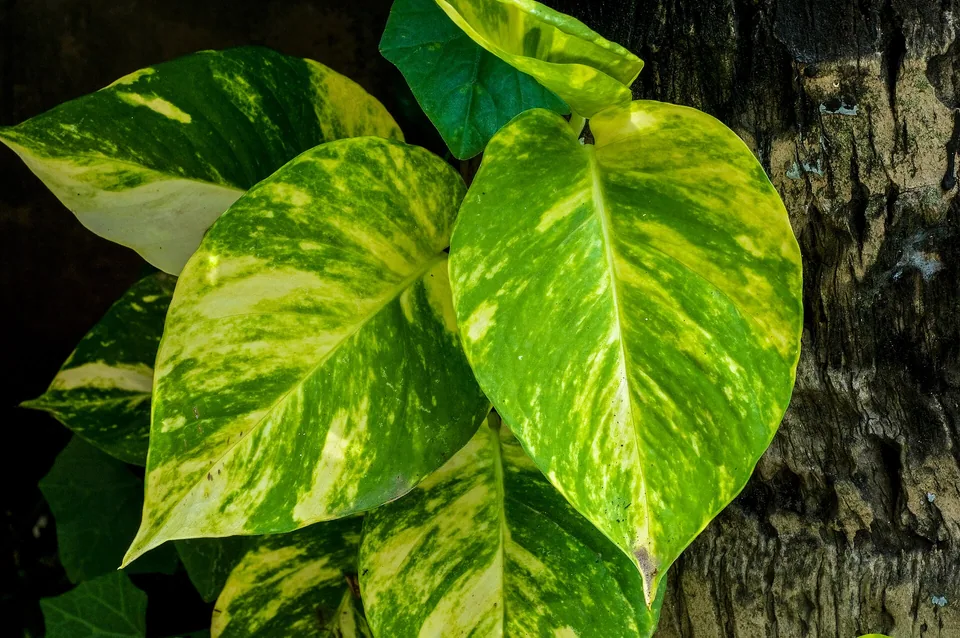


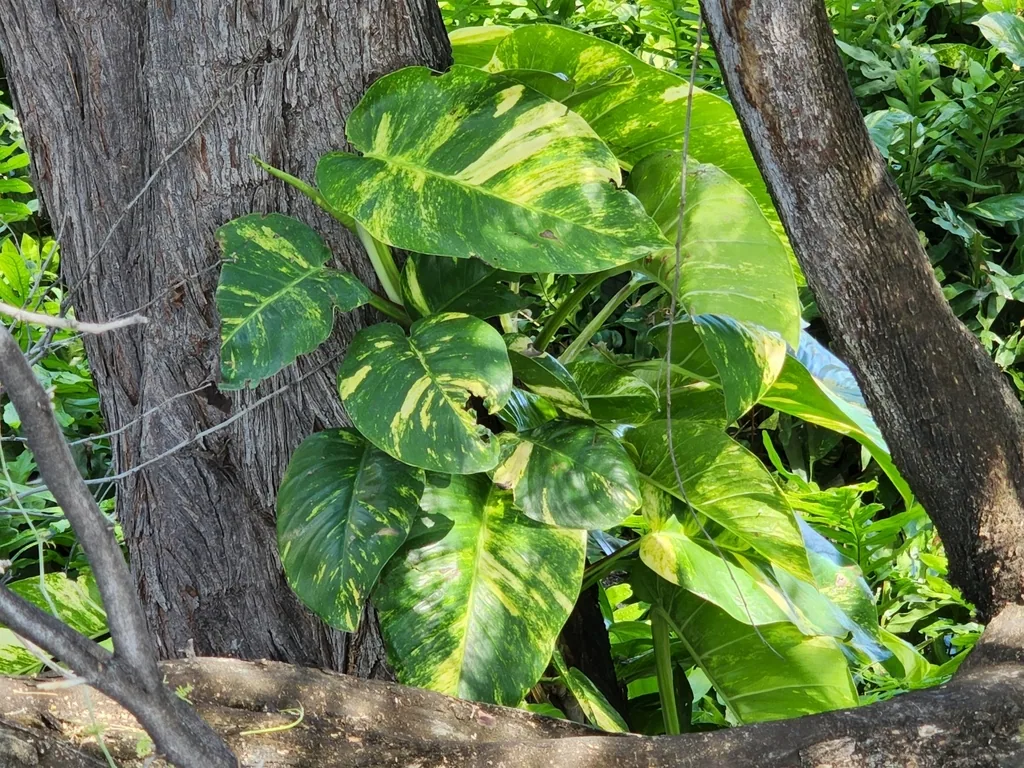

How to Grow and Care for Pothos
Epipremnum aureum
Written by Emilio Marruso · last checked
Toxic to: Cats, Dogs, People · Why
At a glance
Pothos is a forgiving houseplant that grows happily indoors and in pots. Give it bright, indirect light, though it also survives in low light, and go easy on the watering: it would rather be too dry than too wet. Making new plants is simple too, since stem cuttings with one node root in water or soil in 3 to 4 weeks.
- Sun
Bright, indirect light, no direct sun; it survives low light but the leaves lose their color
What the sources say (3)
Light: Bright, indirect light; survives in low light; avoid direct sun
It prefers bright, indirect light and survives for long periods in low light.
— Epipremnum aureum (Devil's Ivy, Devil's Vine, Golden Pothos, Ivy Arum, Marble Queen, Pothos, Taro Vine) | North Carolina Extension Gardener Plant Toolbox [1] Pothos prefer bright, indirect light but will tolerate lower lighting conditions.
— How to Grow Pothos Indoors (Epipremnum spp.): Care, Cultivars, and Common Problems | Home & Garden Information Center [5] Place pothos in an area with moderate to bright light and average room temperatures between 60° and 80° F. Avoid direct sun.
— Pothos as a Houseplant [4] - Water
Better too dry than too wet: too much water rots the roots
What the sources say (3)
Watering notes: Overwatering leads to root rot; it is better kept too dry than too wet; avoid excess water after repotting
Too much water will lead to root rot, one of only a few problems with this plant. Too little water may lead to leaves temporarily drooping.
— Pothos as a Houseplant [4] Pothos is better kept too dry than too wet - a valuable trait for busy offices, non-gardening friends, or just those busy times of the year.
— Pothos as a Houseplant [4] Provide some new soil, and don't overwater. Excess water upon repotting adds additional stress to this plant.
— Pothos as a Houseplant [4] - Cold
Survives winters down to 30 °F (−1.1 °C)
Half hardy: mild winters or an unheated greenhouse · USDA 10 · RHS H3 · Z10
What the sources say (2)
Hardiness, coldest zone: 10 [winter low −1.1 to 4.4 °C (30 to 40 °F)]
This species is only hardy in zones 10 to 12, so it is always grown as a houseplant or seasonal annual in the Midwest.
— Pothos, Epipremmum aureum – Wisconsin Horticulture [2] Hardiness, warmest zone: 12 [winter low 10 to 15.6 °C (50 to 60 °F)]
This species is only hardy in zones 10 to 12, so it is always grown as a houseplant or seasonal annual in the Midwest.
— Pothos, Epipremmum aureum – Wisconsin Horticulture [2] - Soil
A potting mix that drains well
- Feeding
Balanced houseplant food; too much builds up salts and blackens leaf tips
What the sources say (4)
Mineral fertilizers: Balanced houseplant fertilizer
For best growth, fertilize pothos with a balanced houseplant food monthly through the winter and every two weeks throughout the rest of the year.
— Pothos as a Houseplant [4] Correct by fertilizing with a houseplant fertilizer every other month during the spring and summer.
— How to Grow Pothos Indoors (Epipremnum spp.): Care, Cultivars, and Common Problems | Home & Garden Information Center [5] Avoid: Excess fertilizer, which builds up salts in the soil
Blackening of the leaf margins or tips can be caused by overwatering, inadequate watering, or excess fertilizer (because of buildup of salts in the soil).
— Pothos, Epipremmum aureum – Wisconsin Horticulture [2] Signs of excess: Blackened leaf margins or tips from salt buildup in the soil, often with yellowing leaves
Blackening of the leaf margins or tips can be caused by overwatering, inadequate watering, or excess fertilizer (because of buildup of salts in the soil). Discoloration is often accompanied by leaves becoming yellow.
— Pothos, Epipremmum aureum – Wisconsin Horticulture [2] - Pests
Mealybugs, scale insects and spider mites; overwatering causes root rot
What the sources say (5)
Pests: mealybugs, scale insects, spider mites
The most common insect pests infesting pothos in homes are mealybugs and scale .
— Pothos, Epipremmum aureum – Wisconsin Horticulture [2] Spider mites occasionally infest pothos and can easily be controlled with thorough cleaning and frequent applications of insecticidal soap.
— Pothos, Epipremmum aureum – Wisconsin Horticulture [2] Pothos are generally pest-free when kept indoors, but may be affected by common houseplant pests such as spider mites and mealybugs.
— How to Grow Pothos Indoors (Epipremnum spp.): Care, Cultivars, and Common Problems | Home & Garden Information Center [5] Diseases: root rot
Root rots , with symptoms of brown or nonexistent roots, are most often due to overwatering.
— Pothos, Epipremmum aureum – Wisconsin Horticulture [2] Root rot: Common houseplant issue caused by overwatering or poorly draining soil. Using a well-draining soil mix and proper watering practices will help prevent root rot.
— How to Grow Pothos Indoors (Epipremnum spp.): Care, Cultivars, and Common Problems | Home & Garden Information Center [5] - Watch out
A sudden drop from very hot to mild temperatures can leave brown patches on the leaves
What the sources say (1)
Heat: An abrupt change from very high to moderate temperatures can cause scattered brown patches in the centre of the leaves, especially on soft, vigorously growing plants.
Low temperatures or abrupt change from very high temperatures to moderate temperatures can cause scattered brown patches, usually located in the center of the leaf, especially if plants are succulent and growing vigorously.
— Pothos, Epipremmum aureum – Wisconsin Horticulture [2] - Propagation
Stem cuttings with one node root in water or soil in 3–4 weeks; best in spring and summer
What the sources say (8)
Propagation: Stem cuttings (rooted in water, soil or vermiculite), air-layering, and root division at repotting
Pothos is easily propagated from cuttings or by air-layering. The vines root in water or vermiculite within 3 to 4 weeks
— Pothos, Epipremmum aureum – Wisconsin Horticulture [2] Propagate through root division during its annual repotting.
— Pothos as a Houseplant [4] Stem cuttings can be easily rooted when placed in soil or water, but they should have at least one node to root properly.
— How to Grow Pothos Indoors (Epipremnum spp.): Care, Cultivars, and Common Problems | Home & Garden Information Center [5] Cuttings: Stem cuttings with at least one node, rooted in soil, water or vermiculite; they root in 3 to 4 weeks and buds start growing in 1 to 2 weeks in warm conditions; most successful from spring through summer. Also air layering and division at repotting.
Stem cuttings can be easily rooted when placed in soil or water, but they should have at least one node to root properly.
— How to Grow Pothos Indoors (Epipremnum spp.): Care, Cultivars, and Common Problems | Home & Garden Information Center [5] The vines root in water or vermiculite within 3 to 4 weeks and buds can start to grow in 1 to 2 weeks under warm temperatures.
— Pothos, Epipremmum aureum – Wisconsin Horticulture [2] Propagation through stem cuttings is more successful during the growing season from spring through summer.
— Pothos as a Houseplant [4] Pothos is easily propagated from cuttings or by air-layering.
— Pothos, Epipremmum aureum – Wisconsin Horticulture [2] Propagate through root division during its annual repotting.
— Pothos as a Houseplant [4] - Containers
Grows well in pots and indoors
What the sources say (2)
In containers: Yes
Epipremnum does well in a hanging basket to show off its graceful vines, or in a regular pot centered on a plant stand.
— Keep it in the pot – control your pothos - UF/IFAS Extension Charlotte County [6] Indoors: Yes
In our area it can be planted as an annual outdoors, such as in hanging baskets, but is most widely grown indoors as a potted plant with trailing vines
— Pothos, Epipremmum aureum – Wisconsin Horticulture [2] - Safety
All parts are poisonous to people, dogs and cats; the sap can irritate skin
Overview
Pothos is a trailing or climbing foliage houseplant that prefers bright, indirect light and tolerates low light. [5] It is watered when the soil has dried, since overwatering causes root rot. [4] Pothos is easily propagated from stem cuttings. [2]
Pothos care
How to water Pothos
Watering
The sources give different values depending on region, zone or growing conditions.
What each source says
According to NC State Extension: Let the well-drained potting medium dry out between waterings
According to Clemson HGIC: Allow the soil to dry completely before watering
According to UW-Madison Extension: Allow plants to dry out slightly; water only when the soil surface is dry
According to Penn State Extension: Water when the soil is dry
What the sources say (7)
According to NC State Extension: let the well-drained potting medium dry out between watering.According to Clemson HGIC: Allow the soil to dry completely before wateringAccording to UW-Madison Extension: allow plants to dry out slightly and be watered only when the soil surface is dry.According to Penn State Extension: Water when the soil is dry. Too much water will lead to root rotlet the well-drained potting medium dry out between watering.Soil should be allowed to dry between each watering. Make sure to thoroughly water the plant so that water will reach all the roots.Water when the soil is dry. Too much water will lead to root rot, one of only a few problems with this plant.Watering notes
Overwatering leads to root rot; it is better kept too dry than too wet; avoid excess water after repotting
What the sources say (3)
Too much water will lead to root rot, one of only a few problems with this plant. Too little water may lead to leaves temporarily drooping.Pothos is better kept too dry than too wet - a valuable trait for busy offices, non-gardening friends, or just those busy times of the year.Provide some new soil, and don't overwater. Excess water upon repotting adds additional stress to this plant.How much light Pothos needs
Bright, indirect light; survives in low light; avoid direct sun
What the sources say (3)
It prefers bright, indirect light and survives for long periods in low light.Pothos prefer bright, indirect light but will tolerate lower lighting conditions.Place pothos in an area with moderate to bright light and average room temperatures between 60° and 80° F. Avoid direct sun.How much cold Pothos can take
Hardiness, coldest zone
10 [winter low −1.1 to 4.4 °C (30 to 40 °F)]
What the sources say (1)
This species is only hardy in zones 10 to 12, so it is always grown as a houseplant or seasonal annual in the Midwest.Hardiness, warmest zone
12 [winter low 10 to 15.6 °C (50 to 60 °F)]
What the sources say (1)
This species is only hardy in zones 10 to 12, so it is always grown as a houseplant or seasonal annual in the Midwest.Where to grow Pothos
Indoors
Yes
What the sources say (1)
In our area it can be planted as an annual outdoors, such as in hanging baskets, but is most widely grown indoors as a potted plant with trailing vinesIn containers
Yes
What the sources say (1)
Epipremnum does well in a hanging basket to show off its graceful vines, or in a regular pot centered on a plant stand.How to propagate Pothos
Stem cuttings (rooted in water, soil or vermiculite), air-layering, and root division at repotting
What the sources say (3)
Pothos is easily propagated from cuttings or by air-layering. The vines root in water or vermiculite within 3 to 4 weeksPropagate through root division during its annual repotting.Stem cuttings can be easily rooted when placed in soil or water, but they should have at least one node to root properly.How to grow Pothos
The plant
Life cycle
perennial
What the sources say (1)
Pothos is a low-maintenance, herbaceous perennial, broadleaf evergreen houseplant in the arum family (Araceae) grown for its glossy, green or variegated leaves on cascading stems.Family
Araceae
What the sources say (1)
Pothos is a low-maintenance, herbaceous perennial, broadleaf evergreen houseplant in the arum family (Araceae) grown for its glossy, green or variegated leaves on cascading stems.Mature height
The sources disagree:
Pests and diseases
Pests
mealybugs, scale insects, spider mites
What the sources say (3)
The most common insect pests infesting pothos in homes are mealybugs and scale .Spider mites occasionally infest pothos and can easily be controlled with thorough cleaning and frequent applications of insecticidal soap.Pothos are generally pest-free when kept indoors, but may be affected by common houseplant pests such as spider mites and mealybugs.Diseases
root rot
What the sources say (2)
Root rots , with symptoms of brown or nonexistent roots, are most often due to overwatering.Root rot: Common houseplant issue caused by overwatering or poorly draining soil. Using a well-draining soil mix and proper watering practices will help prevent root rot.Fertilizing
When
The sources disagree:
Fertilize every other month except when the plant is dormant in the winter.
[1]Correct by fertilizing with a houseplant fertilizer every other month during the spring and summer.
[5]For best growth, fertilize pothos with a balanced houseplant food monthly through the winter and every two weeks throughout the rest of the year.
[4]
How often
The sources disagree:
Fertilize every other month, except during the winter when the plant is not actively growing.
[2]Fertilize every other month except when the plant is dormant in the winter.
[1]For best growth, fertilize pothos with a balanced houseplant food monthly through the winter and every two weeks throughout the rest of the year.
[4]
Mineral fertilizers
Balanced houseplant fertilizer
What the sources say (2)
For best growth, fertilize pothos with a balanced houseplant food monthly through the winter and every two weeks throughout the rest of the year.Correct by fertilizing with a houseplant fertilizer every other month during the spring and summer.Avoid
Excess fertilizer, which builds up salts in the soil
What the sources say (1)
Blackening of the leaf margins or tips can be caused by overwatering, inadequate watering, or excess fertilizer (because of buildup of salts in the soil).Signs of deficiency
Yellow leaves (also caused by overwatering)
What the sources say (1)
Yellow leaves: Often caused by overwatering or low fertility. Correct by fertilizing with a houseplant fertilizer every other month during the spring and summer.Signs of excess
Blackened leaf margins or tips from salt buildup in the soil, often with yellowing leaves
What the sources say (1)
Blackening of the leaf margins or tips can be caused by overwatering, inadequate watering, or excess fertilizer (because of buildup of salts in the soil). Discoloration is often accompanied by leaves becoming yellow.Spacing
Between plants
The sources give different values depending on region, zone or growing conditions.
What each source says
in containers: Plant several rooted cuttings together in a single pot
What the sources say (1)
in containers: The vines root in water or vermiculite within 3 to 4 weeks and buds can start to grow in 1 to 2 weeks under warm temperatures. It is best to plant several rooted cuttings together in a single pot.Roots
Root system
Root climber: adhesive aerial roots form at each node of the stem and cling to supports, with clasping roots from nodes and internodes and prolific feeding roots.
What the sources say (2)
Plants also produce adhesive aerial roots as they climb into the canopy, with clasping roots arising from nodes and internodes, and prolific feeding roots.Create a moss-covered totem, and with gentle guidance, the pothos vine will attach to the totem using its adhesive aerial roots. These aerial roots develop at each node of the stem.Propagation
Cuttings
Stem cuttings with at least one node, rooted in soil, water or vermiculite; they root in 3 to 4 weeks and buds start growing in 1 to 2 weeks in warm conditions; most successful from spring through summer. Also air layering and division at repotting.
What the sources say (5)
Stem cuttings can be easily rooted when placed in soil or water, but they should have at least one node to root properly.The vines root in water or vermiculite within 3 to 4 weeks and buds can start to grow in 1 to 2 weeks under warm temperatures.Propagation through stem cuttings is more successful during the growing season from spring through summer.Pothos is easily propagated from cuttings or by air-layering.Propagate through root division during its annual repotting.Heat and drought
Heat
An abrupt change from very high to moderate temperatures can cause scattered brown patches in the centre of the leaves, especially on soft, vigorously growing plants.
What the sources say (1)
Low temperatures or abrupt change from very high temperatures to moderate temperatures can cause scattered brown patches, usually located in the center of the leaf, especially if plants are succulent and growing vigorously.Pothos pests and problems
Root rot and leaf margin blackening
Symptom: Brown or nonexistent roots; blackening of leaf margins or tips, often with yellowing.
What to do: Avoid overwatering and use a well-draining soil mix.
What the sources say (2)
Root rot and blackening of the leaf margins can occur with overwatering. Low light can cause loss of variegation. Monitor for mealybugs and scales.
— Epipremnum aureum (Devil's Ivy, Devil's Vine, Golden Pothos, Ivy Arum, Marble Queen, Pothos, Taro Vine) | North Carolina Extension Gardener Plant Toolbox [1] Root rots , with symptoms of brown or nonexistent roots, are most often due to overwatering.
— Pothos, Epipremmum aureum – Wisconsin Horticulture [2] Mealybugs and scale
Symptom: Mealybugs appear as white, cottony masses; scale looks like bark-colored bumps on stems and leaves; leaves may be sticky with honeydew.
What to do: Spider mites can be controlled with thorough cleaning and insecticidal soap; for severe infestations it is often better to discard the plant and start over with clean plants or cuttings.
What the sources say (2)
The most common insect pests infesting pothos in homes are mealybugs and scale .
— Pothos, Epipremmum aureum – Wisconsin Horticulture [2] Spider mites occasionally infest pothos and can easily be controlled with thorough cleaning and frequent applications of insecticidal soap.
— Pothos, Epipremmum aureum – Wisconsin Horticulture [2] Loss of variegation
Symptom: Variegated leaves lose some of their coloring in low light.
What to do: Provide bright, indirect light.
What the sources say (1)
However, lower light may cause variegated varieties to lose some of their coloring.
— How to Grow Pothos Indoors (Epipremnum spp.): Care, Cultivars, and Common Problems | Home & Garden Information Center [5]
Remedies
Each remedy shows what official sources say about it; traditional remedies without an official source are marked as such. Harmful ones are listed so you know to avoid them.
Treating the plant
aphids
homemade insecticidal soap spray Works
spraying home remedies that contain dish detergent on plants on a sunny day can injure the plant, essentially burning it.
— extension.psu.edu [9] How: Wash most of the bugs off with a strong blast of water first. Blend 1 tablespoon of non-detergent dish liquid or soap with 1 cup of oil (soybean, peanut, etc.), then mix 2 tablespoons of the soapy blend into the spray bottle with 1 cup of warm water.
Simply blend 1-tablespoon of non-detergent dish liquid or soap with 1 cup of oil (soybean, peanut, etc.)—mix 2-tablespoons of the soapy blend into the spray bottle with 1 cup of warm water.
— gardenforindoor.com [7] What the evidence says insecticidal soap is a safe, effective organic insecticide with minimal environmental impact.
— extension.psu.edu [8] neem oil spray Not verified
Traditional remedy, not verified by an official source.
Despite these being biological pesticides, it is important to read the directions on the label and wear safety equipment.
— extension.illinois.edu [10] How: Mix an ounce (about 2 tablespoons) of neem oil with a gallon of warm water. Spray generously over a month.
garlic and cayenne spray Not verified
Traditional remedy, not verified by an official source.
The pepper spray can be very potent if it gets on your skin or in your eyes. Exposure to boric acid can cause health effects, including death, in humans and animals.
— extension.psu.edu [9] spraying home remedies that contain dish detergent on plants on a sunny day can injure the plant, essentially burning it.
— extension.psu.edu [9] How: Blend 1 teaspoon of cayenne pepper, 1 small onion, 1 tablespoon of non-detergent dish soap, 1 quart of water, and 1 bulb of garlic.
spider mites
insecticidal soap spray Works
spraying home remedies that contain dish detergent on plants on a sunny day can injure the plant, essentially burning it.
— extension.psu.edu [9] How: Thorough cleaning of the plant and frequent applications of insecticidal soap.
Spider mites occasionally infest pothos and can easily be controlled with thorough cleaning and frequent applications of insecticidal soap.
— Pothos, Epipremmum aureum – Wisconsin Horticulture [2] What the evidence says Spider mites occasionally infest pothos and can easily be controlled with thorough cleaning and frequent applications of insecticidal soap.
— Pothos, Epipremmum aureum – Wisconsin Horticulture [2]
mealybugs
rubbing alcohol swab Not verified
Traditional remedy, not verified by an official source.
How: Wipe affected areas with a swab or cotton ball dipped in 70% rubbing alcohol.
strong water spray Not verified
Traditional remedy, not verified by an official source.
How: Hose the bugs down with a strong spray of water and repeat every couple of weeks until the mealybugs disappear.
scale insects
scrubbing off scale and rubbing alcohol Not verified
Traditional remedy, not verified by an official source.
How: Gently scrub scales off the stems and leaves, then use rubbing alcohol to treat affected areas. Isolate infested plants immediately.
Is Pothos toxic to pets?
Reported by the source, quoted verbatim. This is not medical or veterinary advice: if a person or an animal may have eaten this plant, contact a poison control centre or a veterinarian.
Animals
they also are toxic to both people and pets, so keep this in mind concerning children, dogs and cats.
[6]
People
Oral irritation, pain and swelling of mouth, tongue, and lips, excessive drooling, vomiting (not horses), difficulty swallowing, skin irritation, diarrhea
[1]- Poisonous parts
Poison Part: Flowers Fruits Leaves Roots Seeds Stems
[1]- Toxic principle
Poison Toxic Principle: Calcium oxalate crystals Causes Contact
[1]- Symptoms
Oral irritation, pain and swelling of mouth, tongue, and lips, excessive drooling, vomiting (not horses), difficulty swallowing, skin irritation, diarrhea
[1]- Severity
Poison Severity: Medium Poison Symptoms: Oral irritation, pain
[1]
Pothos is toxic if ingested in large quantities because it contains calcium oxalate. This will cause burning in the mouth and the sap may also be irritating to the skin.
[2]all parts of pothos are poisonous (yet non-lethal) to humans and their pets. The roots, stems, and leaves contain calcium oxalate crystals
[4]All parts of a pothos are mildly toxic if ingested.
[5]
Indicative values
Values from a secondary source, not checked word for word like the rest of this page. Use them as a starting point.
- Hours of sun
- 4-5 hoursIndicative value, adapt it to your climate · Secondary source
- Soil
- Well-drainedIndicative value, adapt it to your climate · Secondary source
- Soil pH
- 6-6.5Indicative value, adapt it to your climate · Secondary source
- Growth rate
- HighIndicative value, adapt it to your climate · Secondary source
- Pruning
- March, April, MayIndicative value, adapt it to your climate · Secondary source
Similar plants
- Dragon-Tail Plant Epipremnum pinnatum
- Anthurium Anthurium andraeanum
- Arrowhead Plant Syngonium podophyllum
- Arum Arum maculatum
- Black Calla Arum palaestinum
- Blushing Philodendron Philodendron erubescens
- Caladium Caladium bicolor
- Calla Lily Zantedeschia aethiopica
Sources
Every value above is quoted from these documents. Links lead to the original publisher.
- Epipremnum aureum (Devil's Ivy, Devil's Vine, Golden Pothos, Ivy Arum, Marble Queen, Pothos, Taro Vine) | North Carolina Extension Gardener Plant Toolbox · plants.ces.ncsu.edu, consulted
- Pothos, Epipremmum aureum – Wisconsin Horticulture · hort.extension.wisc.edu, consulted
- Golden Pothos - Epipremnum aureum | North Carolina Extension Gardener Plant Toolbox · plants.ces.ncsu.edu, consulted
- Pothos as a Houseplant · extension.psu.edu, consulted
- How to Grow Pothos Indoors (Epipremnum spp.): Care, Cultivars, and Common Problems | Home & Garden Information Center · hgic.clemson.edu, consulted
- Keep it in the pot – control your pothos - UF/IFAS Extension Charlotte County · blogs.ifas.ufl.edu, consulted
- gardenforindoor.com · gardenforindoor.com
- extension.psu.edu · extension.psu.edu
- extension.psu.edu · extension.psu.edu
- extension.illinois.edu · extension.illinois.edu
Written by Emilio Marruso · last checked