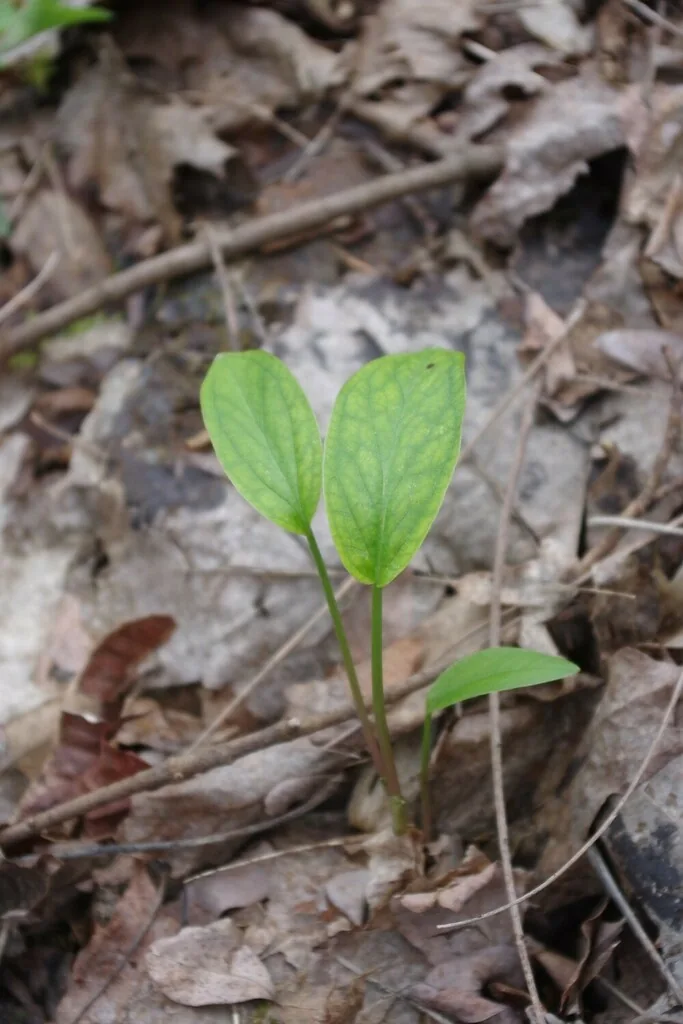
How to Grow and Care for Arum
Arum maculatum
Written by Emilio Marruso · last checked
Toxic to: Cats, Dogs, Horses, Birds, People · Why
At a glance
This perennial is happy in partial shade, with just 2–6 hours of direct sun, and asks only for moist, well-drained soil. It stays compact at 12–18 inches tall and can even grow indoors. Start it from seed or by dividing the tubers, and wear gloves when handling it, because every raw part is poisonous.
- Sun
Partial shade: 2–6 hours of direct sun a day
What the sources say (2)
Light: Partial shade (direct sunlight only part of the day, 2-6 hours)
Light: Partial Shade (Direct sunlight only part of the day, 2-6 hours)
— Arum maculatum (Adam and Eve, Arum, Arum Lily, Bobbins, Cuckoo-Pint, Cuckoo Plant, Lords-and-Ladies, Starch Root, Wake Robin, Wild Arum) | North Carolina Extension Gardener Plant Toolbox [1] The plant grows in the shade and prefers moist well-drained soils.
— Arum maculatum (Adam and Eve, Arum, Arum Lily, Bobbins, Cuckoo-Pint, Cuckoo Plant, Lords-and-Ladies, Starch Root, Wake Robin, Wild Arum) | North Carolina Extension Gardener Plant Toolbox [1] - Water
Keep the soil moist but well drained
What the sources say (1)
Watering: Prefers moist, well-drained soils
The plant grows in the shade and prefers moist well-drained soils.
— Arum maculatum (Adam and Eve, Arum, Arum Lily, Bobbins, Cuckoo-Pint, Cuckoo Plant, Lords-and-Ladies, Starch Root, Wake Robin, Wild Arum) | North Carolina Extension Gardener Plant Toolbox [1] - Harvest
Not one to taste: the root is edible only roasted and very toxic if prepared wrong
- Watch out
Spreads fast by seed and tubers; wear gloves and put removed plants in the trash, not compost
- Size
12–18 in tall and 6–9 in wide
What the sources say (2)
Mature height: 30.5-45.7 cm (12-18 in)
The plant's mature size is 12-18 inches tall and 6-9 inches wide.
— Arum maculatum (Adam and Eve, Arum, Arum Lily, Bobbins, Cuckoo-Pint, Cuckoo Plant, Lords-and-Ladies, Starch Root, Wake Robin, Wild Arum) | North Carolina Extension Gardener Plant Toolbox [1] Mature width: 15.2-22.9 cm (6-9 in)
The plant's mature size is 12-18 inches tall and 6-9 inches wide.
— Arum maculatum (Adam and Eve, Arum, Arum Lily, Bobbins, Cuckoo-Pint, Cuckoo Plant, Lords-and-Ladies, Starch Root, Wake Robin, Wild Arum) | North Carolina Extension Gardener Plant Toolbox [1] - Propagation
From seed or by dividing the tubers
What the sources say (1)
Propagation: Seed; division of the tubers
They are propagated by seeds and by the division of the tubers.
— Arum maculatum (Adam and Eve, Arum, Arum Lily, Bobbins, Cuckoo-Pint, Cuckoo Plant, Lords-and-Ladies, Starch Root, Wake Robin, Wild Arum) | North Carolina Extension Gardener Plant Toolbox [1] - Containers
Can be grown indoors
What the sources say (1)
Indoors: Yes
Plant Type: Herbaceous Perennial Houseplant Poisonous Habit/Form: Clumping
— Arum maculatum (Adam and Eve, Arum, Arum Lily, Bobbins, Cuckoo-Pint, Cuckoo Plant, Lords-and-Ladies, Starch Root, Wake Robin, Wild Arum) | North Carolina Extension Gardener Plant Toolbox [1] - Safety
Poisonous to people, cats, dogs and horses; it swells the throat and irritates the skin
Overview
Arum maculatum is a shade-loving herbaceous perennial of the Araceae family that spreads by self-seeding. [1] All parts of the plant are poisonous to humans and animals and can cause skin irritation. [1] It is propagated by seeds and by division of the tubers. [1]
This record is incomplete: the sources we read do not cover every field yet.
Not yet covered by our sources: Hardiness, coldest zone, Hardiness, warmest zone, Pruning
Arum care
How to water Arum
Prefers moist, well-drained soils
What the sources say (1)
The plant grows in the shade and prefers moist well-drained soils.How much light Arum needs
Partial shade (direct sunlight only part of the day, 2-6 hours)
What the sources say (2)
Light:
Partial Shade (Direct sunlight only part of the day, 2-6 hours)The plant grows in the shade and prefers moist well-drained soils.How much cold Arum can take
Hardiness, coldest zone
Not stated in the sources we read.
Hardiness, warmest zone
Not stated in the sources we read.
Where to grow Arum
Yes
What the sources say (1)
Plant Type:
Herbaceous Perennial
Houseplant
Poisonous
Habit/Form:
ClumpingHow to propagate Arum
Seed; division of the tubers
What the sources say (1)
They are propagated by seeds and by the division of the tubers.How to grow Arum
The plant
Life cycle
perennial
What the sources say (1)
Arum lily is a shade-loving herbaceous perennial and a member of the Araceae family.Family
Araceae
What the sources say (1)
Arum lily is a shade-loving herbaceous perennial and a member of the Araceae family.Mature height
30.5-45.7 cm (12-18 in)
What the sources say (1)
The plant's mature size is 12-18 inches tall and 6-9 inches wide.Mature width
15.2-22.9 cm (6-9 in)
What the sources say (1)
The plant's mature size is 12-18 inches tall and 6-9 inches wide.Arum pests and problems
Aggressive spreading
Symptom: Spreads quickly by self-seeding; deep-rooted tubers multiply each year and are difficult to remove.
What to do: When removed, all parts of the plant should be disposed of in the trash and not placed in the compost bin; wear protective clothing and gloves when handling.
What the sources say (2)
It has deep-rooted tubers that multiply each year and are difficult to remove.
— Arum maculatum (Adam and Eve, Arum, Arum Lily, Bobbins, Cuckoo-Pint, Cuckoo Plant, Lords-and-Ladies, Starch Root, Wake Robin, Wild Arum) | North Carolina Extension Gardener Plant Toolbox [1] Manual removal may be difficult. When removed, all parts of the plant should be disposed of in the trash. Avoid placing the plant in the compost bin. Wear protective clothing and gloves when handling this plant.
— Arum maculatum (Adam and Eve, Arum, Arum Lily, Bobbins, Cuckoo-Pint, Cuckoo Plant, Lords-and-Ladies, Starch Root, Wake Robin, Wild Arum) | North Carolina Extension Gardener Plant Toolbox [1]
Remedies
Each remedy shows what official sources say about it; traditional remedies without an official source are marked as such. Harmful ones are listed so you know to avoid them.
Getting rid of it
unwanted arum spread
manual removal of tubers Partly works
Wear protective clothing and gloves when handling this plant.
— Arum maculatum (Adam and Eve, Arum, Arum Lily, Bobbins, Cuckoo-Pint, Cuckoo Plant, Lords-and-Ladies, Starch Root, Wake Robin, Wild Arum) | North Carolina Extension Gardener Plant Toolbox [1] Wear gloves when handling any part of the plant as it can cause allergic reactions.
— theguardian.com [4] How: Get the fork in deeply before levering the plants out, otherwise the fleshy stalk snaps off the tuber and the tuber regrows.
I get out my fork and I dig, dig, dig: the trick is to get your fork in deeply, before you start to lever the plants out, otherwise that fleshy stalk just snaps off the tuber
— rachel-the-gardener.blogspot.com [3] What the evidence says Manual removal may be difficult. When removed, all parts of the plant should be disposed of in the trash. Avoid placing the plant in the compost bin.
— Arum maculatum (Adam and Eve, Arum, Arum Lily, Bobbins, Cuckoo-Pint, Cuckoo Plant, Lords-and-Ladies, Starch Root, Wake Robin, Wild Arum) | North Carolina Extension Gardener Plant Toolbox [1] pulling off the top growth every year Not verified
Traditional remedy, not verified by an official source.
Wear protective clothing and gloves when handling this plant.
— Arum maculatum (Adam and Eve, Arum, Arum Lily, Bobbins, Cuckoo-Pint, Cuckoo Plant, Lords-and-Ladies, Starch Root, Wake Robin, Wild Arum) | North Carolina Extension Gardener Plant Toolbox [1] Wear gloves when handling any part of the plant as it can cause allergic reactions.
— theguardian.com [4] How: If the tubers cannot be reached, pull up the top growth each year; the tubers run out of energy over time.
removing stems before seed set Not verified
Traditional remedy, not verified by an official source.
Wear protective clothing and gloves when handling this plant.
— Arum maculatum (Adam and Eve, Arum, Arum Lily, Bobbins, Cuckoo-Pint, Cuckoo Plant, Lords-and-Ladies, Starch Root, Wake Robin, Wild Arum) | North Carolina Extension Gardener Plant Toolbox [1] Wear gloves when handling any part of the plant as it can cause allergic reactions.
— theguardian.com [4] How: As soon as the first hint of orange appears, pull up the stems immediately and do not put them on the compost.
mulch over cardboard Not verified
Traditional remedy, not verified by an official source.
Wear protective clothing and gloves when handling this plant.
— Arum maculatum (Adam and Eve, Arum, Arum Lily, Bobbins, Cuckoo-Pint, Cuckoo Plant, Lords-and-Ladies, Starch Root, Wake Robin, Wild Arum) | North Carolina Extension Gardener Plant Toolbox [1] Wear gloves when handling any part of the plant as it can cause allergic reactions.
— theguardian.com [4] How: A thick layer of mulch on top of cardboard or landscaping fabric slows down resprouting.
deadheading and early seedling removal Not verified
Traditional remedy, not verified by an official source.
Wear protective clothing and gloves when handling this plant.
— Arum maculatum (Adam and Eve, Arum, Arum Lily, Bobbins, Cuckoo-Pint, Cuckoo Plant, Lords-and-Ladies, Starch Root, Wake Robin, Wild Arum) | North Carolina Extension Gardener Plant Toolbox [1] Wear gloves when handling any part of the plant as it can cause allergic reactions.
— theguardian.com [4] How: Deadhead, dig out some plants and remove seedlings early to stem the spread.
Is Arum toxic to pets?
Reported by the source, quoted verbatim. This is not medical or veterinary advice: if a person or an animal may have eaten this plant, contact a poison control centre or a veterinarian.
Animals
Problems: Contact Dermatitis Poisonous to Humans Problem for Cats Problem for Children Problem for Dogs Problem for Horses
[1]The source flags the risk for this animal but does not explain why.
The fruits are harmless to birds. They eat the berries and disperse the seeds.
[1]The source flags the risk for this animal but does not explain why.
People
All raw parts of this plant may cause mucous membrane irritation, burning, throat swelling, difficulty breathing, and possible death.
[1]- Poisonous parts
Causes Contact Dermatitis: Yes Poison Part: Bark Flowers Fruits Leaves Roots Seeds Stems
[1]- Toxic principle
Poison Toxic Principle: Calcium oxalate crystals and soluble oxalates Causes Contact Dermatitis: Yes
[1]- Symptoms
Other symptoms include nausea, diarrhea, cramping, excessive drooling, and vomiting.
[1]- Severity
Poisonous to Humans: Poison Severity: High Poison Symptoms: All raw parts of this plant may cause mucous membrane irritation
[1]
If ingested, it will cause throat and tongue swelling that results in difficulty breathing or possible death.
[1]- Toxic principle
The plant contains calcium oxalates. If ingested, it will cause throat and tongue swelling that results in difficulty breathing or possible death.
[1]- Symptoms
The plant contains calcium oxalates. If ingested, it will cause throat and tongue swelling that results in difficulty breathing or possible death.
[1]
Calendar
Pruning
Not stated in the sources we read.
Months as given by the sources, which are mostly from the United States (northern hemisphere). In the southern hemisphere they shift by about six months.
Edibility
Reported by the source, quoted verbatim. Do not eat a plant on the basis of this page alone: identification mistakes can be dangerous.
The root is edible when roasted. It is very toxic if not correctly prepared.
[1]
Similar plants
- Black Calla Arum palaestinum
- Italian Arum Arum italicum
- Arum pictum Arum pictum
- Anthurium Anthurium andraeanum
- Arrowhead Plant Syngonium podophyllum
- Blushing Philodendron Philodendron erubescens
- Calla Lily Zantedeschia aethiopica
- Chinese Evergreen Aglaonema commutatum
Sources
Every value above is quoted from these documents. Links lead to the original publisher.
- Arum maculatum (Adam and Eve, Arum, Arum Lily, Bobbins, Cuckoo-Pint, Cuckoo Plant, Lords-and-Ladies, Starch Root, Wake Robin, Wild Arum) | North Carolina Extension Gardener Plant Toolbox · plants.ces.ncsu.edu, consulted
- Arum (Arum Lilies, Lords and Ladies) | North Carolina Extension Gardener Plant Toolbox · plants.ces.ncsu.edu, consulted
- rachel-the-gardener.blogspot.com · rachel-the-gardener.blogspot.com
- theguardian.com · theguardian.com
Written by Emilio Marruso · last checked