

How to Grow and Care for Anthurium
Anthurium andraeanum
Written by Emilio Marruso · last checked
Toxic to: Cats, Dogs, People · Why
At a glance
Anthurium is a perennial that happily grows indoors and in containers, asking only for bright, indirect light and a drink when the top inch of soil feels dry. Feed it weekly with liquid fertilizer during the growing season, and plenty of light and nutrients will keep the flowers coming. Just keep it out of direct sun, which scorches the leaves.
- Sun
Bright, indirect light or partial shade; direct sun scorches the leaves
What the sources say (2)
Light: Bright, indirect sunlight; partial shade; direct sun can scorch the leaves
This plant prefers bright, indirect sunlight, moist, well-drained soil, and warm and humid conditions. Direct sun can scorch its leaves.
— Anthurium andraeanum (Anthurium, Flamingo Flower, Flamingo Lily, Laceleaf, Painter's Palette, Tail Flower) | North Carolina Extension Gardener Plant Toolbox [1] Light: Partial Shade (Direct sunlight only part of the day, 2-6 hours)
— Anthurium andraeanum (Anthurium, Flamingo Flower, Flamingo Lily, Laceleaf, Painter's Palette, Tail Flower) | North Carolina Extension Gardener Plant Toolbox [1] - Water
Water when the top inch of soil feels dry; too much water rots the roots
What the sources say (4)
Watering: Water when the top inch of the soil feels dry
It is best to water the plant when the top inch of the soil feels dry.
— Anthurium andraeanum (Anthurium, Flamingo Flower, Flamingo Lily, Laceleaf, Painter's Palette, Tail Flower) | North Carolina Extension Gardener Plant Toolbox [1] Watering notes: Prefers moist, well-drained soil; overwatering and poor drainage can cause root rot and yellowing leaves; wet foliage with poor air circulation can cause leaf spots
This plant prefers bright, indirect sunlight, moist, well-drained soil, and warm and humid conditions.
— Anthurium andraeanum (Anthurium, Flamingo Flower, Flamingo Lily, Laceleaf, Painter's Palette, Tail Flower) | North Carolina Extension Gardener Plant Toolbox [1] Yellowing leaves may occur from overwatering, poor drainage, or lack of nutrients.
— Anthurium andraeanum (Anthurium, Flamingo Flower, Flamingo Lily, Laceleaf, Painter's Palette, Tail Flower) | North Carolina Extension Gardener Plant Toolbox [1] Leaf spots can occur if there is poor air circulation or if the foliage gets wet.
— Anthurium andraeanum (Anthurium, Flamingo Flower, Flamingo Lily, Laceleaf, Painter's Palette, Tail Flower) | North Carolina Extension Gardener Plant Toolbox [1] - Cold
Survives winters down to 40 °F (4.4 °C)
Tender: needs a frost-free greenhouse · USDA 11a · RHS H2 · Z11
What the sources say (4)
Hardiness, coldest zone: 11a [winter low 4.4 to 7.2 °C (40 to 45 °F)]
They are winter hardy in USDA plant hardiness zones 11 to 12.
— Anthurium andraeanum (Anthurium, Flamingo Flower, Flamingo Lily, Laceleaf, Painter's Palette, Tail Flower) | North Carolina Extension Gardener Plant Toolbox [1] USDA Plant Hardiness Zone: 11a, 11b, 12a, 12b - Fruit:
— Anthurium andraeanum (Anthurium, Flamingo Flower, Flamingo Lily, Laceleaf, Painter's Palette, Tail Flower) | North Carolina Extension Gardener Plant Toolbox [1] Hardiness, warmest zone: 12b [winter low 12.8 to 15.6 °C (55 to 60 °F)]
They are winter hardy in USDA plant hardiness zones 11 to 12.
— Anthurium andraeanum (Anthurium, Flamingo Flower, Flamingo Lily, Laceleaf, Painter's Palette, Tail Flower) | North Carolina Extension Gardener Plant Toolbox [1] USDA Plant Hardiness Zone: 11a, 11b, 12a, 12b - Fruit:
— Anthurium andraeanum (Anthurium, Flamingo Flower, Flamingo Lily, Laceleaf, Painter's Palette, Tail Flower) | North Carolina Extension Gardener Plant Toolbox [1] - Soil
Moist soil that drains well
What the sources say (3)
Watering notes: Prefers moist, well-drained soil; overwatering and poor drainage can cause root rot and yellowing leaves; wet foliage with poor air circulation can cause leaf spots
This plant prefers bright, indirect sunlight, moist, well-drained soil, and warm and humid conditions.
— Anthurium andraeanum (Anthurium, Flamingo Flower, Flamingo Lily, Laceleaf, Painter's Palette, Tail Flower) | North Carolina Extension Gardener Plant Toolbox [1] Yellowing leaves may occur from overwatering, poor drainage, or lack of nutrients.
— Anthurium andraeanum (Anthurium, Flamingo Flower, Flamingo Lily, Laceleaf, Painter's Palette, Tail Flower) | North Carolina Extension Gardener Plant Toolbox [1] Leaf spots can occur if there is poor air circulation or if the foliage gets wet.
— Anthurium andraeanum (Anthurium, Flamingo Flower, Flamingo Lily, Laceleaf, Painter's Palette, Tail Flower) | North Carolina Extension Gardener Plant Toolbox [1] - Feeding
Liquid fertilizer every week in the growing season; high phosphorus means more blooms
What the sources say (4)
When: During the growing season
They are winter hardy in USDA plant hardiness zones 11 to 12. Liquid fertilizer is recommended weekly during the plant's growing season.
— Anthurium andraeanum (Anthurium, Flamingo Flower, Flamingo Lily, Laceleaf, Painter's Palette, Tail Flower) | North Carolina Extension Gardener Plant Toolbox [1] How often: Weekly during the growing season
They are winter hardy in USDA plant hardiness zones 11 to 12. Liquid fertilizer is recommended weekly during the plant's growing season.
— Anthurium andraeanum (Anthurium, Flamingo Flower, Flamingo Lily, Laceleaf, Painter's Palette, Tail Flower) | North Carolina Extension Gardener Plant Toolbox [1] Mineral fertilizers: Liquid fertilizer; high-phosphorus fertilizer encourages more blooms
They are winter hardy in USDA plant hardiness zones 11 to 12. Liquid fertilizer is recommended weekly during the plant's growing season.
— Anthurium andraeanum (Anthurium, Flamingo Flower, Flamingo Lily, Laceleaf, Painter's Palette, Tail Flower) | North Carolina Extension Gardener Plant Toolbox [1] High-phosphorus fertilizer will encourage more blooms as will pruning away old spent blooms.
— Anthurium (Anthurium, Flamingo Flower, Flamingo Lily, Laceleaf, Tailflower) | North Carolina Extension Gardener Plant Toolbox [3] - Pests
Aphids, spider mites, mealybugs and scales; also root rot and leaf spots
What the sources say (2)
Pests: aphids, spider mites, mealybugs, scales
Monitor for aphids, spider mites, mealybugs, and scales.
— Anthurium andraeanum (Anthurium, Flamingo Flower, Flamingo Lily, Laceleaf, Painter's Palette, Tail Flower) | North Carolina Extension Gardener Plant Toolbox [1] Diseases: root rot, leaf spots
Overwatering can cause root rot. Leaf spots can occur if there is poor air circulation or if the foliage gets wet.
— Anthurium andraeanum (Anthurium, Flamingo Flower, Flamingo Lily, Laceleaf, Painter's Palette, Tail Flower) | North Carolina Extension Gardener Plant Toolbox [1] - Watch out
Few flowers? Give it more light and food. Yellow leaves can mean too much water
What the sources say (1)
Signs of deficiency: Fewer flowers; yellowing leaves (also caused by overwatering or poor drainage)
Insufficient light or nutrient deficiencies can decrease flower production. Yellowing leaves may occur from overwatering, poor drainage, or lack of nutrients.
— Anthurium andraeanum (Anthurium, Flamingo Flower, Flamingo Lily, Laceleaf, Painter's Palette, Tail Flower) | North Carolina Extension Gardener Plant Toolbox [1] - Size
1 to 1.5 ft tall and 9 to 12 in wide
What the sources say (2)
Mature height: 30-46 cm (1 ft. 0 in. - 1 ft. 6 in.)
Height: 1 ft. 0 in. - 1 ft. 6 in.
— Anthurium andraeanum (Anthurium, Flamingo Flower, Flamingo Lily, Laceleaf, Painter's Palette, Tail Flower) | North Carolina Extension Gardener Plant Toolbox [1] Mature width: 23-30 cm (0 ft. 9 in. - 1 ft. 0 in.)
Width: 0 ft. 9 in. - 1 ft. 0 in.
— Anthurium andraeanum (Anthurium, Flamingo Flower, Flamingo Lily, Laceleaf, Painter's Palette, Tail Flower) | North Carolina Extension Gardener Plant Toolbox [1] - Propagation
Divide the plant or take stem cuttings
What the sources say (1)
Propagation: Division or stem cuttings
The Flamingo Flower can be propagated by division or stem cuttings.
— Anthurium andraeanum (Anthurium, Flamingo Flower, Flamingo Lily, Laceleaf, Painter's Palette, Tail Flower) | North Carolina Extension Gardener Plant Toolbox [1] - Containers
Grows well in pots and indoors
What the sources say (2)
In containers: Yes
Landscape Location: Container Hanging Baskets Houseplants Design Feature:
— Anthurium andraeanum (Anthurium, Flamingo Flower, Flamingo Lily, Laceleaf, Painter's Palette, Tail Flower) | North Carolina Extension Gardener Plant Toolbox [1] Indoors: Yes
The Flamingo Flower is a strikingly beautiful and popular perennial houseplant that is native to tropical Colombia and Ecuador.
— Anthurium andraeanum (Anthurium, Flamingo Flower, Flamingo Lily, Laceleaf, Painter's Palette, Tail Flower) | North Carolina Extension Gardener Plant Toolbox [1] - Safety
Toxic to children, cats and dogs: chewing it causes mouth pain, swelling and drooling
Overview
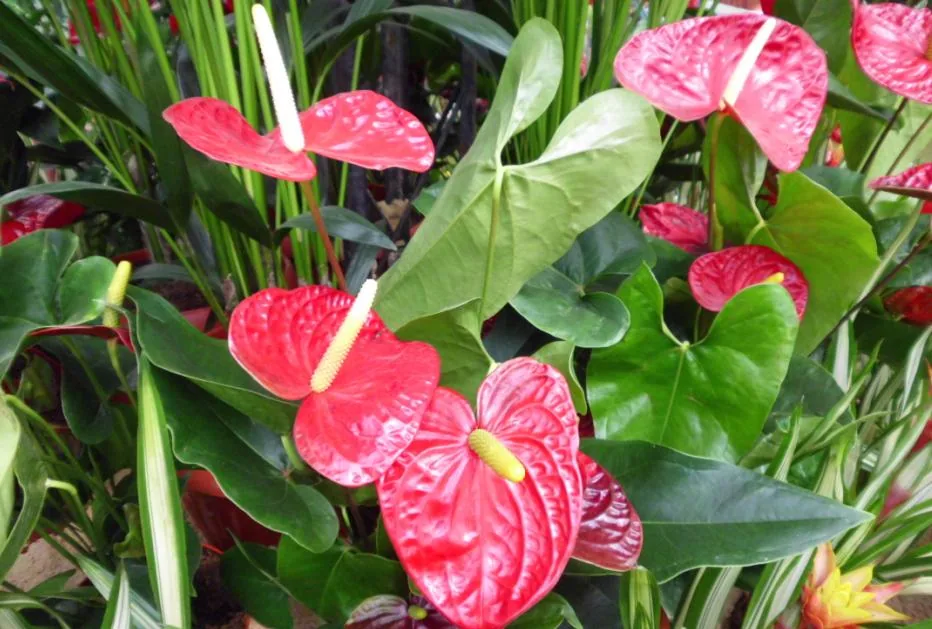
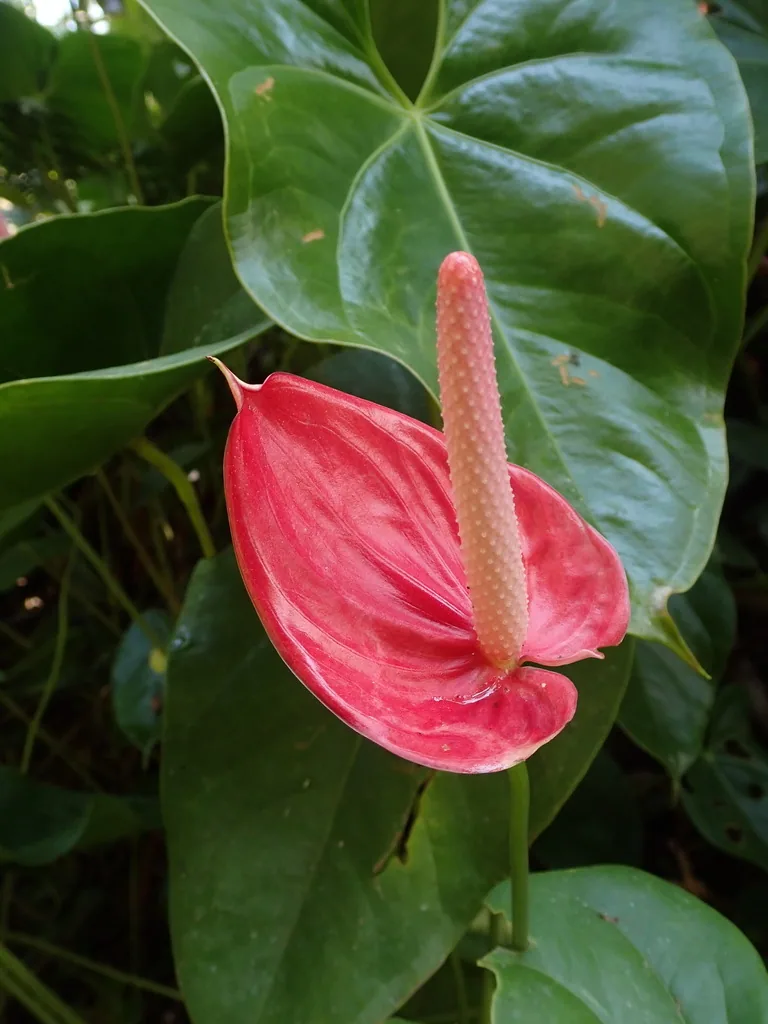
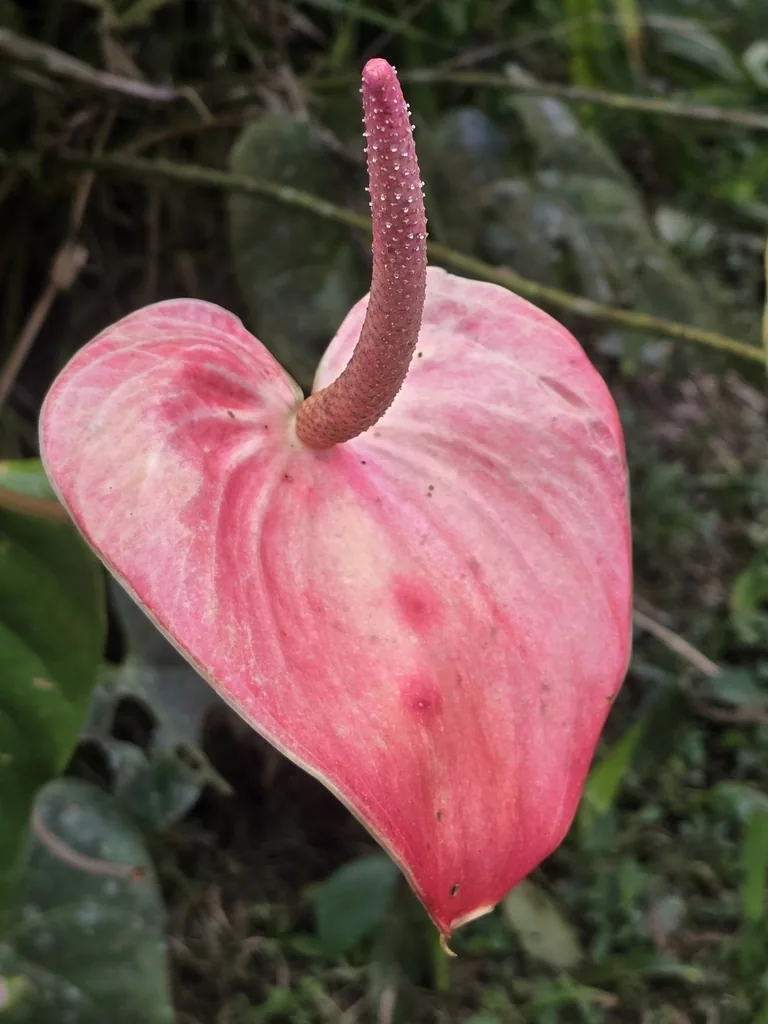
Anthurium andraeanum is a perennial houseplant native to Colombia and Ecuador that grows as an epiphyte in its native habitat. [1] It prefers bright, indirect sunlight, moist, well-drained soil and warm, humid conditions. [1] The plant is toxic if ingested by pets or humans. [1]
Anthurium care
How to water Anthurium
Watering
Water when the top inch of the soil feels dry
What the sources say (1)
It is best to water the plant when the top inch of the soil feels dry.Watering notes
Prefers moist, well-drained soil; overwatering and poor drainage can cause root rot and yellowing leaves; wet foliage with poor air circulation can cause leaf spots
What the sources say (3)
This plant prefers bright, indirect sunlight, moist, well-drained soil, and warm and humid conditions.Yellowing leaves may occur from overwatering, poor drainage, or lack of nutrients.Leaf spots can occur if there is poor air circulation or if the foliage gets wet.How much light Anthurium needs
Bright, indirect sunlight; partial shade; direct sun can scorch the leaves
What the sources say (2)
This plant prefers bright, indirect sunlight, moist, well-drained soil, and warm and humid conditions. Direct sun can scorch its leaves.Light:
Partial Shade (Direct sunlight only part of the day, 2-6 hours)How much cold Anthurium can take
Hardiness, coldest zone
11a [winter low 4.4 to 7.2 °C (40 to 45 °F)]
What the sources say (2)
They are winter hardy in USDA plant hardiness zones 11 to 12.USDA Plant Hardiness Zone:
11a, 11b, 12a, 12b
-
Fruit:Hardiness, warmest zone
12b [winter low 12.8 to 15.6 °C (55 to 60 °F)]
What the sources say (2)
They are winter hardy in USDA plant hardiness zones 11 to 12.USDA Plant Hardiness Zone:
11a, 11b, 12a, 12b
-
Fruit:Where to grow Anthurium
Indoors
Yes
What the sources say (1)
The Flamingo Flower is a strikingly beautiful and popular perennial houseplant that is native to tropical Colombia and Ecuador.In containers
Yes
What the sources say (1)
Landscape Location:
Container
Hanging Baskets
Houseplants
Design Feature:How to propagate Anthurium
Division or stem cuttings
What the sources say (1)
The Flamingo Flower can be propagated by division or stem cuttings.How to grow Anthurium
The plant
Life cycle
perennial
What the sources say (1)
Life Cycle: PerennialFamily
Araceae
What the sources say (1)
The Flamingo Flower is a member of the arum family (Araceae).Mature height
30-46 cm (1 ft. 0 in. - 1 ft. 6 in.)
What the sources say (1)
Height: 1 ft. 0 in. - 1 ft. 6 in.Mature width
23-30 cm (0 ft. 9 in. - 1 ft. 0 in.)
What the sources say (1)
Width: 0 ft. 9 in. - 1 ft. 0 in.Pests and diseases
Pests
aphids, spider mites, mealybugs, scales
What the sources say (1)
Monitor for aphids, spider mites, mealybugs, and scales.Diseases
root rot, leaf spots
What the sources say (1)
Overwatering can cause root rot. Leaf spots can occur if there is poor air circulation or if the foliage gets wet.Fertilizing
When
During the growing season
What the sources say (1)
They are winter hardy in USDA plant hardiness zones 11 to 12. Liquid fertilizer is recommended weekly during the plant's growing season.How often
Weekly during the growing season
What the sources say (1)
They are winter hardy in USDA plant hardiness zones 11 to 12. Liquid fertilizer is recommended weekly during the plant's growing season.Mineral fertilizers
Liquid fertilizer; high-phosphorus fertilizer encourages more blooms
What the sources say (2)
They are winter hardy in USDA plant hardiness zones 11 to 12. Liquid fertilizer is recommended weekly during the plant's growing season.High-phosphorus fertilizer will encourage more blooms as will pruning away old spent blooms.Signs of deficiency
Fewer flowers; yellowing leaves (also caused by overwatering or poor drainage)
What the sources say (1)
Insufficient light or nutrient deficiencies can decrease flower production. Yellowing leaves may occur from overwatering, poor drainage, or lack of nutrients.Anthurium pests and problems
Pests
Symptom: Aphids, spider mites, mealybugs and scales
What to do: Monitor the plant for these insects
What the sources say (1)
Monitor for aphids, spider mites, mealybugs, and scales.
— Anthurium andraeanum (Anthurium, Flamingo Flower, Flamingo Lily, Laceleaf, Painter's Palette, Tail Flower) | North Carolina Extension Gardener Plant Toolbox [1] Root rot
Symptom: Overwatering can cause root rot; yellowing leaves may occur from overwatering, poor drainage, or lack of nutrients
What to do: Water when the top inch of soil feels dry and use well-drained soil
What the sources say (2)
Overwatering can cause root rot. Leaf spots can occur if there is poor air circulation or if the foliage gets wet.
— Anthurium andraeanum (Anthurium, Flamingo Flower, Flamingo Lily, Laceleaf, Painter's Palette, Tail Flower) | North Carolina Extension Gardener Plant Toolbox [1] Yellowing leaves may occur from overwatering, poor drainage, or lack of nutrients.
— Anthurium andraeanum (Anthurium, Flamingo Flower, Flamingo Lily, Laceleaf, Painter's Palette, Tail Flower) | North Carolina Extension Gardener Plant Toolbox [1] Reduced flowering
Symptom: Decreased flower production
What to do: Provide sufficient light and nutrients
What the sources say (1)
Insufficient light or nutrient deficiencies can decrease flower production.
— Anthurium andraeanum (Anthurium, Flamingo Flower, Flamingo Lily, Laceleaf, Painter's Palette, Tail Flower) | North Carolina Extension Gardener Plant Toolbox [1]
Remedies
Each remedy shows what official sources say about it; traditional remedies without an official source are marked as such. Harmful ones are listed so you know to avoid them.
Treating the plant
aphids
strong water blast Not verified
Traditional remedy, not verified by an official source.
How: Short, sharp blasts of water dislodge and often drown the pests.
scale
hand wiping Not verified
Traditional remedy, not verified by an official source.
How: Wipe the scale off by hand.
mealybugs
damp cloth wiping Not verified
Traditional remedy, not verified by an official source.
How: Wipe the fluffy white insects off with a damp cloth.
Is Anthurium toxic to pets?
Reported by the source, quoted verbatim. This is not medical or veterinary advice: if a person or an animal may have eaten this plant, contact a poison control centre or a veterinarian.
Animals
Problem for Cats Problem for Children Problem for Dogs
[1]The source flags the risk for this animal but does not explain why.
People
If ingested, chewing and biting this plant will release toxins and cause symptoms that include drooling, oral pain, mouth, lip, and tongue swelling, difficulty swallowing, decreased appetite, and vomiting.
[1]- Poisonous parts
Poison Part: Flowers Fruits Leaves Roots Sap/Juice Seeds Stems
[1]- Toxic principle
Poison Toxic Principle: Calcium oxalate crystals
[1]- Symptoms
Poison Symptoms: If ingested, chewing and biting this plant will release toxins and cause symptoms that include drooling, oral pain, mouth, lip, and tongue swelling, difficulty swallowing, decreased appetite, and vomiting. Contac with the sap can cause irritation of the skin and eyes resulting in redness and stinging.
[1]- Severity
Poison Severity: Low
[1]
Indicative values
Values from a secondary source, not checked word for word like the rest of this page. Use them as a starting point.
- Hours of sun
- 6-8 hoursIndicative value, adapt it to your climate · Secondary source
- Soil pH
- 5.5-6.5Indicative value, adapt it to your climate · Secondary source
- Care level
- MediumIndicative value, adapt it to your climate · Secondary source
- Growth rate
- HighIndicative value, adapt it to your climate · Secondary source
- Pruning
- May, June, JulyIndicative value, adapt it to your climate · Secondary source
Similar plants
- Pigtail Plant Anthurium scherzerianum
- Arrowhead Plant Syngonium podophyllum
- Arum Arum maculatum
- Black Calla Arum palaestinum
- Blushing Philodendron Philodendron erubescens
- Calla Lily Zantedeschia aethiopica
- Chinese Evergreen Aglaonema commutatum
- Cobra Lily Arisaema ringens
Sources
Every value above is quoted from these documents. Links lead to the original publisher.
- Anthurium andraeanum (Anthurium, Flamingo Flower, Flamingo Lily, Laceleaf, Painter's Palette, Tail Flower) | North Carolina Extension Gardener Plant Toolbox · plants.ces.ncsu.edu, consulted
- Anthurium - Anthurium andraeanum | North Carolina Extension Gardener Plant Toolbox · plants.ces.ncsu.edu, consulted
- Anthurium (Anthurium, Flamingo Flower, Flamingo Lily, Laceleaf, Tailflower) | North Carolina Extension Gardener Plant Toolbox · plants.ces.ncsu.edu, consulted
- Flamingo Flower - Anthurium andraeanum | North Carolina Extension Gardener Plant Toolbox · plants.ces.ncsu.edu, consulted
- Anthurium - Anthurium | North Carolina Extension Gardener Plant Toolbox · plants.ces.ncsu.edu, consulted
Written by Emilio Marruso · last checked