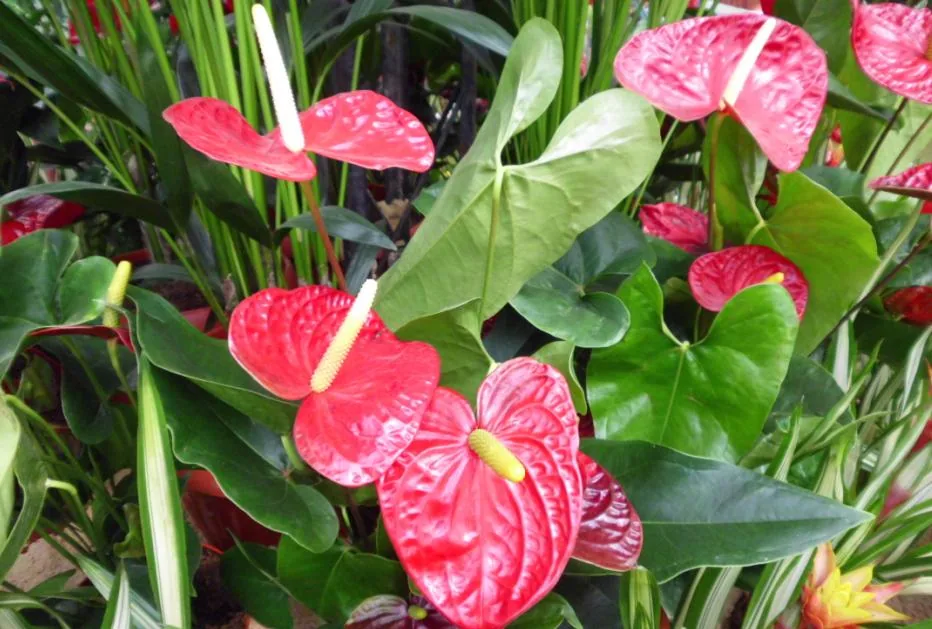

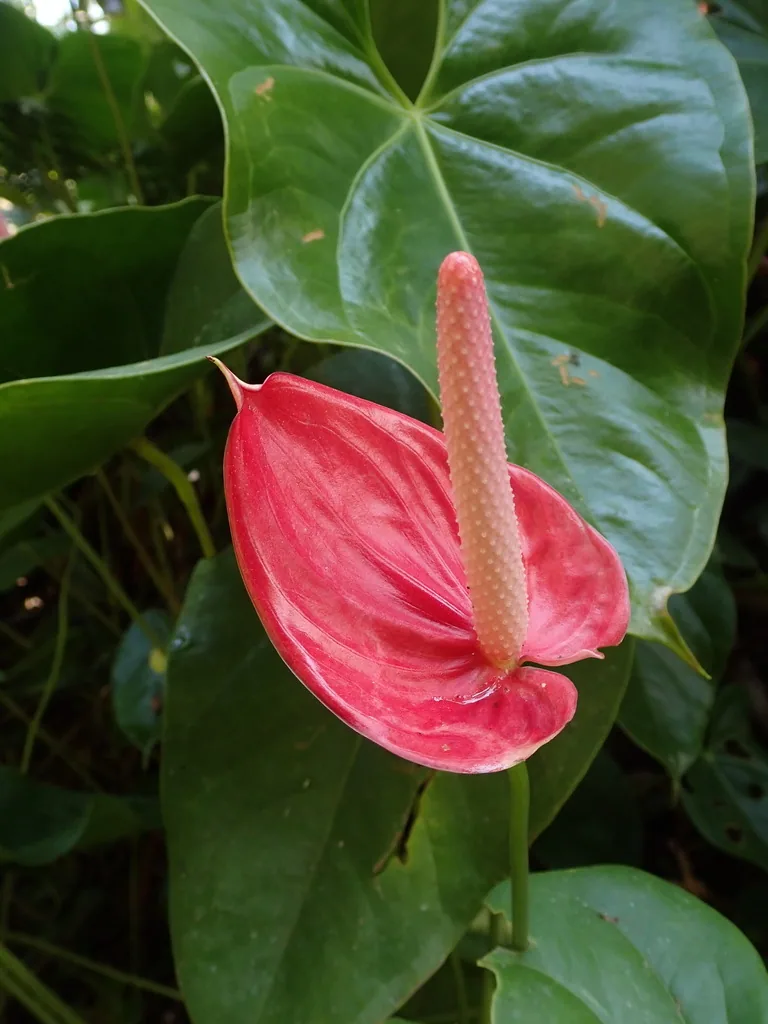
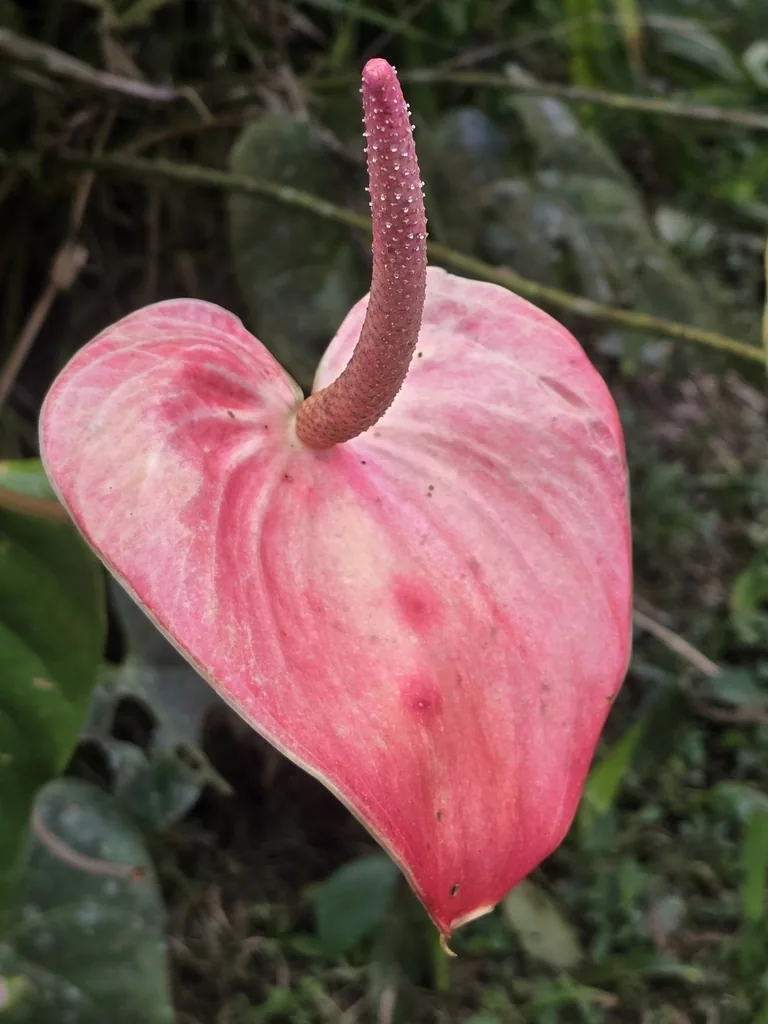

Cómo cultivar y cuidar Anthurium
Anthurium andraeanum
Escrito por Emilio Marruso · última revisión
Tóxica para: Gatos, Perros, Personas · Por qué
De un vistazo
El anturio es una perenne que crece feliz en interior y en maceta: solo pide luz intensa pero indirecta y un riego cuando los primeros 2,5 cm de tierra estén secos. Abónalo cada semana con fertilizante líquido durante la época de crecimiento, y con buena luz y nutrientes seguirá dándote flores. Eso sí, protégelo del sol directo, que quema las hojas.
- Sol
Luz intensa pero indirecta o semisombra; el sol directo quema las hojas
Qué dicen las fuentes (2)
Luz: Luz brillante e indirecta; semisombra; el sol directo puede quemar las hojas
This plant prefers bright, indirect sunlight, moist, well-drained soil, and warm and humid conditions. Direct sun can scorch its leaves.
— Anthurium andraeanum (Anthurium, Flamingo Flower, Flamingo Lily, Laceleaf, Painter's Palette, Tail Flower) | North Carolina Extension Gardener Plant Toolbox [1] Light: Partial Shade (Direct sunlight only part of the day, 2-6 hours)
— Anthurium andraeanum (Anthurium, Flamingo Flower, Flamingo Lily, Laceleaf, Painter's Palette, Tail Flower) | North Carolina Extension Gardener Plant Toolbox [1] - Riego
Riega cuando los primeros 2,5 cm de tierra estén secos; el exceso de agua pudre las raíces
Qué dicen las fuentes (4)
Riego: Riega cuando la pulgada superior del suelo se sienta seca
It is best to water the plant when the top inch of the soil feels dry.
— Anthurium andraeanum (Anthurium, Flamingo Flower, Flamingo Lily, Laceleaf, Painter's Palette, Tail Flower) | North Carolina Extension Gardener Plant Toolbox [1] Notas sobre el riego: Prefiere suelo húmedo y bien drenado; el riego excesivo y el mal drenaje pueden causar pudrición de la raíz y amarillamiento de las hojas; el follaje húmedo con mala circulación de aire puede causar manchas en las hojas
This plant prefers bright, indirect sunlight, moist, well-drained soil, and warm and humid conditions.
— Anthurium andraeanum (Anthurium, Flamingo Flower, Flamingo Lily, Laceleaf, Painter's Palette, Tail Flower) | North Carolina Extension Gardener Plant Toolbox [1] Yellowing leaves may occur from overwatering, poor drainage, or lack of nutrients.
— Anthurium andraeanum (Anthurium, Flamingo Flower, Flamingo Lily, Laceleaf, Painter's Palette, Tail Flower) | North Carolina Extension Gardener Plant Toolbox [1] Leaf spots can occur if there is poor air circulation or if the foliage gets wet.
— Anthurium andraeanum (Anthurium, Flamingo Flower, Flamingo Lily, Laceleaf, Painter's Palette, Tail Flower) | North Carolina Extension Gardener Plant Toolbox [1] - Frío
Aguanta inviernos de hasta 4,4 °C (40 °F)
Delicada: necesita invernadero sin heladas · USDA 11a · RHS H2 · Z11
Qué dicen las fuentes (4)
Rusticidad, zona más fría: 11a [mínima invernal de 4,4 a 7,2 °C (de 40 a 45 °F)]
They are winter hardy in USDA plant hardiness zones 11 to 12.
— Anthurium andraeanum (Anthurium, Flamingo Flower, Flamingo Lily, Laceleaf, Painter's Palette, Tail Flower) | North Carolina Extension Gardener Plant Toolbox [1] USDA Plant Hardiness Zone: 11a, 11b, 12a, 12b - Fruit:
— Anthurium andraeanum (Anthurium, Flamingo Flower, Flamingo Lily, Laceleaf, Painter's Palette, Tail Flower) | North Carolina Extension Gardener Plant Toolbox [1] Rusticidad, zona más cálida: 12b [mínima invernal de 12,8 a 15,6 °C (de 55 a 60 °F)]
They are winter hardy in USDA plant hardiness zones 11 to 12.
— Anthurium andraeanum (Anthurium, Flamingo Flower, Flamingo Lily, Laceleaf, Painter's Palette, Tail Flower) | North Carolina Extension Gardener Plant Toolbox [1] USDA Plant Hardiness Zone: 11a, 11b, 12a, 12b - Fruit:
— Anthurium andraeanum (Anthurium, Flamingo Flower, Flamingo Lily, Laceleaf, Painter's Palette, Tail Flower) | North Carolina Extension Gardener Plant Toolbox [1] - Suelo
Tierra húmeda y con buen drenaje
Qué dicen las fuentes (3)
Notas sobre el riego: Prefiere suelo húmedo y bien drenado; el riego excesivo y el mal drenaje pueden causar pudrición de la raíz y amarillamiento de las hojas; el follaje húmedo con mala circulación de aire puede causar manchas en las hojas
This plant prefers bright, indirect sunlight, moist, well-drained soil, and warm and humid conditions.
— Anthurium andraeanum (Anthurium, Flamingo Flower, Flamingo Lily, Laceleaf, Painter's Palette, Tail Flower) | North Carolina Extension Gardener Plant Toolbox [1] Yellowing leaves may occur from overwatering, poor drainage, or lack of nutrients.
— Anthurium andraeanum (Anthurium, Flamingo Flower, Flamingo Lily, Laceleaf, Painter's Palette, Tail Flower) | North Carolina Extension Gardener Plant Toolbox [1] Leaf spots can occur if there is poor air circulation or if the foliage gets wet.
— Anthurium andraeanum (Anthurium, Flamingo Flower, Flamingo Lily, Laceleaf, Painter's Palette, Tail Flower) | North Carolina Extension Gardener Plant Toolbox [1] - Abonado
Abono líquido cada semana en la época de crecimiento; con mucho fósforo da más flores
Qué dicen las fuentes (4)
Cuándo: Durante la temporada de crecimiento
They are winter hardy in USDA plant hardiness zones 11 to 12. Liquid fertilizer is recommended weekly during the plant's growing season.
— Anthurium andraeanum (Anthurium, Flamingo Flower, Flamingo Lily, Laceleaf, Painter's Palette, Tail Flower) | North Carolina Extension Gardener Plant Toolbox [1] Frecuencia: Semanalmente durante la temporada de crecimiento
They are winter hardy in USDA plant hardiness zones 11 to 12. Liquid fertilizer is recommended weekly during the plant's growing season.
— Anthurium andraeanum (Anthurium, Flamingo Flower, Flamingo Lily, Laceleaf, Painter's Palette, Tail Flower) | North Carolina Extension Gardener Plant Toolbox [1] Abonos minerales: Fertilizante líquido; un fertilizante con alto contenido de fósforo favorece más floración
They are winter hardy in USDA plant hardiness zones 11 to 12. Liquid fertilizer is recommended weekly during the plant's growing season.
— Anthurium andraeanum (Anthurium, Flamingo Flower, Flamingo Lily, Laceleaf, Painter's Palette, Tail Flower) | North Carolina Extension Gardener Plant Toolbox [1] High-phosphorus fertilizer will encourage more blooms as will pruning away old spent blooms.
— Anthurium (Anthurium, Flamingo Flower, Flamingo Lily, Laceleaf, Tailflower) | North Carolina Extension Gardener Plant Toolbox [3] - Plagas
Pulgón, araña roja, cochinilla algodonosa y cochinillas; también podredumbre de raíz y manchas en las hojas
Qué dicen las fuentes (2)
Plagas: pulgones, arañas rojas, cochinillas, escamas
Monitor for aphids, spider mites, mealybugs, and scales.
— Anthurium andraeanum (Anthurium, Flamingo Flower, Flamingo Lily, Laceleaf, Painter's Palette, Tail Flower) | North Carolina Extension Gardener Plant Toolbox [1] Enfermedades: podredumbre de raíces, manchas foliares
Overwatering can cause root rot. Leaf spots can occur if there is poor air circulation or if the foliage gets wet.
— Anthurium andraeanum (Anthurium, Flamingo Flower, Flamingo Lily, Laceleaf, Painter's Palette, Tail Flower) | North Carolina Extension Gardener Plant Toolbox [1] - Atención
¿Pocas flores? Dale más luz y abono. Las hojas amarillas pueden indicar exceso de riego
Qué dicen las fuentes (1)
Signos de carencia: Menos flores; hojas amarillentas (también causadas por riego excesivo o mal drenaje)
Insufficient light or nutrient deficiencies can decrease flower production. Yellowing leaves may occur from overwatering, poor drainage, or lack of nutrients.
— Anthurium andraeanum (Anthurium, Flamingo Flower, Flamingo Lily, Laceleaf, Painter's Palette, Tail Flower) | North Carolina Extension Gardener Plant Toolbox [1] - Tamaño
De 30 a 46 cm de alto y de 23 a 30 cm de ancho
Qué dicen las fuentes (2)
Altura adulta: 30-46 cm (1 pie 0 pulg. - 1 pie 6 pulg.)
Height: 1 ft. 0 in. - 1 ft. 6 in.
— Anthurium andraeanum (Anthurium, Flamingo Flower, Flamingo Lily, Laceleaf, Painter's Palette, Tail Flower) | North Carolina Extension Gardener Plant Toolbox [1] Anchura adulta: 23-30 cm (0 pies 9 pulg. - 1 pie 0 pulg.)
Width: 0 ft. 9 in. - 1 ft. 0 in.
— Anthurium andraeanum (Anthurium, Flamingo Flower, Flamingo Lily, Laceleaf, Painter's Palette, Tail Flower) | North Carolina Extension Gardener Plant Toolbox [1] - Multiplicación
Divide la planta o haz esquejes de tallo
Qué dicen las fuentes (1)
Propagación: División o esquejes de tallo
The Flamingo Flower can be propagated by division or stem cuttings.
— Anthurium andraeanum (Anthurium, Flamingo Flower, Flamingo Lily, Laceleaf, Painter's Palette, Tail Flower) | North Carolina Extension Gardener Plant Toolbox [1] - Maceta
Crece bien en maceta y en interior
Qué dicen las fuentes (2)
En maceta: Sí
Landscape Location: Container Hanging Baskets Houseplants Design Feature:
— Anthurium andraeanum (Anthurium, Flamingo Flower, Flamingo Lily, Laceleaf, Painter's Palette, Tail Flower) | North Carolina Extension Gardener Plant Toolbox [1] En interior: Sí
The Flamingo Flower is a strikingly beautiful and popular perennial houseplant that is native to tropical Colombia and Ecuador.
— Anthurium andraeanum (Anthurium, Flamingo Flower, Flamingo Lily, Laceleaf, Painter's Palette, Tail Flower) | North Carolina Extension Gardener Plant Toolbox [1] - Seguridad
Tóxica para niños, gatos y perros: masticarla provoca dolor e hinchazón en la boca y babeo
Resumen
El Anthurium andraeanum es una planta perenne de interior originaria de Colombia y Ecuador que crece como epífita en su hábitat natural. [1] Prefiere luz indirecta brillante, suelo húmedo y bien drenado, y condiciones cálidas y húmedas. [1] La planta es tóxica si la ingieren mascotas o personas. [1]
Citado en inglés, como en la fuente.
Cuidados
Riego
Riego
Riega cuando la pulgada superior del suelo se sienta seca
Qué dicen las fuentes (1)
It is best to water the plant when the top inch of the soil feels dry.Notas sobre el riego
Prefiere suelo húmedo y bien drenado; el riego excesivo y el mal drenaje pueden causar pudrición de la raíz y amarillamiento de las hojas; el follaje húmedo con mala circulación de aire puede causar manchas en las hojas
Qué dicen las fuentes (3)
This plant prefers bright, indirect sunlight, moist, well-drained soil, and warm and humid conditions.Yellowing leaves may occur from overwatering, poor drainage, or lack of nutrients.Leaf spots can occur if there is poor air circulation or if the foliage gets wet.Luz
Luz brillante e indirecta; semisombra; el sol directo puede quemar las hojas
Qué dicen las fuentes (2)
This plant prefers bright, indirect sunlight, moist, well-drained soil, and warm and humid conditions. Direct sun can scorch its leaves.Light:
Partial Shade (Direct sunlight only part of the day, 2-6 hours)Clima y frío
Rusticidad, zona más fría
11a [mínima invernal de 4,4 a 7,2 °C (de 40 a 45 °F)]
Qué dicen las fuentes (2)
They are winter hardy in USDA plant hardiness zones 11 to 12.USDA Plant Hardiness Zone:
11a, 11b, 12a, 12b
-
Fruit:Rusticidad, zona más cálida
12b [mínima invernal de 12,8 a 15,6 °C (de 55 a 60 °F)]
Qué dicen las fuentes (2)
They are winter hardy in USDA plant hardiness zones 11 to 12.USDA Plant Hardiness Zone:
11a, 11b, 12a, 12b
-
Fruit:Dónde cultivarla
En interior
Sí
Qué dicen las fuentes (1)
The Flamingo Flower is a strikingly beautiful and popular perennial houseplant that is native to tropical Colombia and Ecuador.En maceta
Sí
Qué dicen las fuentes (1)
Landscape Location:
Container
Hanging Baskets
Houseplants
Design Feature:Propagación
División o esquejes de tallo
Qué dicen las fuentes (1)
The Flamingo Flower can be propagated by division or stem cuttings.Cultivo
La planta
Ciclo de vida
perenne
Qué dicen las fuentes (1)
Life Cycle: PerennialFamilia
Araceae
Qué dicen las fuentes (1)
The Flamingo Flower is a member of the arum family (Araceae).Altura adulta
30-46 cm (1 pie 0 pulg. - 1 pie 6 pulg.)
Qué dicen las fuentes (1)
Height: 1 ft. 0 in. - 1 ft. 6 in.Anchura adulta
23-30 cm (0 pies 9 pulg. - 1 pie 0 pulg.)
Qué dicen las fuentes (1)
Width: 0 ft. 9 in. - 1 ft. 0 in.Plagas y enfermedades
Plagas
pulgones, arañas rojas, cochinillas, escamas
Qué dicen las fuentes (1)
Monitor for aphids, spider mites, mealybugs, and scales.Enfermedades
podredumbre de raíces, manchas foliares
Qué dicen las fuentes (1)
Overwatering can cause root rot. Leaf spots can occur if there is poor air circulation or if the foliage gets wet.Abonado
Cuándo
Durante la temporada de crecimiento
Qué dicen las fuentes (1)
They are winter hardy in USDA plant hardiness zones 11 to 12. Liquid fertilizer is recommended weekly during the plant's growing season.Frecuencia
Semanalmente durante la temporada de crecimiento
Qué dicen las fuentes (1)
They are winter hardy in USDA plant hardiness zones 11 to 12. Liquid fertilizer is recommended weekly during the plant's growing season.Abonos minerales
Fertilizante líquido; un fertilizante con alto contenido de fósforo favorece más floración
Qué dicen las fuentes (2)
They are winter hardy in USDA plant hardiness zones 11 to 12. Liquid fertilizer is recommended weekly during the plant's growing season.High-phosphorus fertilizer will encourage more blooms as will pruning away old spent blooms.Signos de carencia
Menos flores; hojas amarillentas (también causadas por riego excesivo o mal drenaje)
Qué dicen las fuentes (1)
Insufficient light or nutrient deficiencies can decrease flower production. Yellowing leaves may occur from overwatering, poor drainage, or lack of nutrients.Problemas
Plagas
Síntoma: Pulgones, arañitas rojas, cochinillas harinosas y cochinillas
Qué hacer: Supervisa la planta para detectar estos insectos
Qué dicen las fuentes (1)
Monitor for aphids, spider mites, mealybugs, and scales.
— Anthurium andraeanum (Anthurium, Flamingo Flower, Flamingo Lily, Laceleaf, Painter's Palette, Tail Flower) | North Carolina Extension Gardener Plant Toolbox [1] Podredumbre de la raíz
Síntoma: El riego excesivo puede causar pudrición de la raíz; las hojas amarillentas pueden aparecer por riego excesivo, mal drenaje o falta de nutrientes
Qué hacer: Riega cuando la pulgada superior del suelo se sienta seca y usa suelo con buen drenaje
Qué dicen las fuentes (2)
Overwatering can cause root rot. Leaf spots can occur if there is poor air circulation or if the foliage gets wet.
— Anthurium andraeanum (Anthurium, Flamingo Flower, Flamingo Lily, Laceleaf, Painter's Palette, Tail Flower) | North Carolina Extension Gardener Plant Toolbox [1] Yellowing leaves may occur from overwatering, poor drainage, or lack of nutrients.
— Anthurium andraeanum (Anthurium, Flamingo Flower, Flamingo Lily, Laceleaf, Painter's Palette, Tail Flower) | North Carolina Extension Gardener Plant Toolbox [1] Reducción de la floración
Síntoma: Disminución de la producción de flores
Qué hacer: Proporciona suficiente luz y nutrientes.
Qué dicen las fuentes (1)
Insufficient light or nutrient deficiencies can decrease flower production.
— Anthurium andraeanum (Anthurium, Flamingo Flower, Flamingo Lily, Laceleaf, Painter's Palette, Tail Flower) | North Carolina Extension Gardener Plant Toolbox [1]
Remedios
Cada remedio indica qué dicen las fuentes oficiales; los remedios tradicionales sin fuente oficial aparecen marcados. Los perjudiciales están para que sepas evitarlos.
Cuidar la planta
pulgones
chorro fuerte de agua No verificado
Remedio tradicional, no verificado por una fuente oficial.
Cómo: Ráfagas cortas y fuertes de agua desprenden y a menudo ahogan las plagas.
cochinilla
limpieza manual No verificado
Remedio tradicional, no verificado por una fuente oficial.
Cómo: Retira la escama con la mano.
cochinillas harinosas
limpieza con paño húmedo No verificado
Remedio tradicional, no verificado por una fuente oficial.
Cómo: Retira los insectos blancos y esponjosos con un paño húmedo.
Venenosa para los animales
Según la fuente, citada textualmente. No es un consejo médico ni veterinario: si una persona o un animal pudo haber ingerido esta planta, contacta con un centro de toxicología o con un veterinario.
Animales
Problem for Cats Problem for Children Problem for Dogs
[1]La fuente señala el riesgo para este animal pero no explica por qué.
Personas
If ingested, chewing and biting this plant will release toxins and cause symptoms that include drooling, oral pain, mouth, lip, and tongue swelling, difficulty swallowing, decreased appetite, and vomiting.
[1]- Partes venenosas
Poison Part: Flowers Fruits Leaves Roots Sap/Juice Seeds Stems
[1]- Principio tóxico
Poison Toxic Principle: Calcium oxalate crystals
[1]- Síntomas
Poison Symptoms: If ingested, chewing and biting this plant will release toxins and cause symptoms that include drooling, oral pain, mouth, lip, and tongue swelling, difficulty swallowing, decreased appetite, and vomiting. Contac with the sap can cause irritation of the skin and eyes resulting in redness and stinging.
[1]- Gravedad
Poison Severity: Low
[1]
Valores orientativos
Valores de una fuente secundaria, no comprobados palabra por palabra como el resto de esta página. Úselos como punto de partida.
- Horas de sol
- 6-8 horasValor orientativo, adáptalo a tu clima · Fuente secundaria
- pH del suelo
- 5.5-6.5Valor orientativo, adáptalo a tu clima · Fuente secundaria
- Nivel de cuidado
- MedioValor orientativo, adáptalo a tu clima · Fuente secundaria
- Crecimiento
- AltaValor orientativo, adáptalo a tu clima · Fuente secundaria
- Poda
- Mayo, junio, julioValor orientativo, adáptalo a tu clima · Fuente secundaria
Plantas similares
- Pigtail Plant Anthurium scherzerianum
- Arrowhead Plant Syngonium podophyllum
- Aro Arum maculatum
- Black Calla Arum palaestinum
- Blushing Philodendron Philodendron erubescens
- Cala Zantedeschia aethiopica
- Chinese Evergreen Aglaonema commutatum
- Cobra Lily Arisaema ringens
Fuentes
Cada valor anterior se cita de estos documentos. Los enlaces llevan al editor original.
- Anthurium andraeanum (Anthurium, Flamingo Flower, Flamingo Lily, Laceleaf, Painter's Palette, Tail Flower) | North Carolina Extension Gardener Plant Toolbox · plants.ces.ncsu.edu, consultado
- Anthurium - Anthurium andraeanum | North Carolina Extension Gardener Plant Toolbox · plants.ces.ncsu.edu, consultado
- Anthurium (Anthurium, Flamingo Flower, Flamingo Lily, Laceleaf, Tailflower) | North Carolina Extension Gardener Plant Toolbox · plants.ces.ncsu.edu, consultado
- Flamingo Flower - Anthurium andraeanum | North Carolina Extension Gardener Plant Toolbox · plants.ces.ncsu.edu, consultado
- Anthurium - Anthurium | North Carolina Extension Gardener Plant Toolbox · plants.ces.ncsu.edu, consultado
Escrito por Emilio Marruso · última revisión