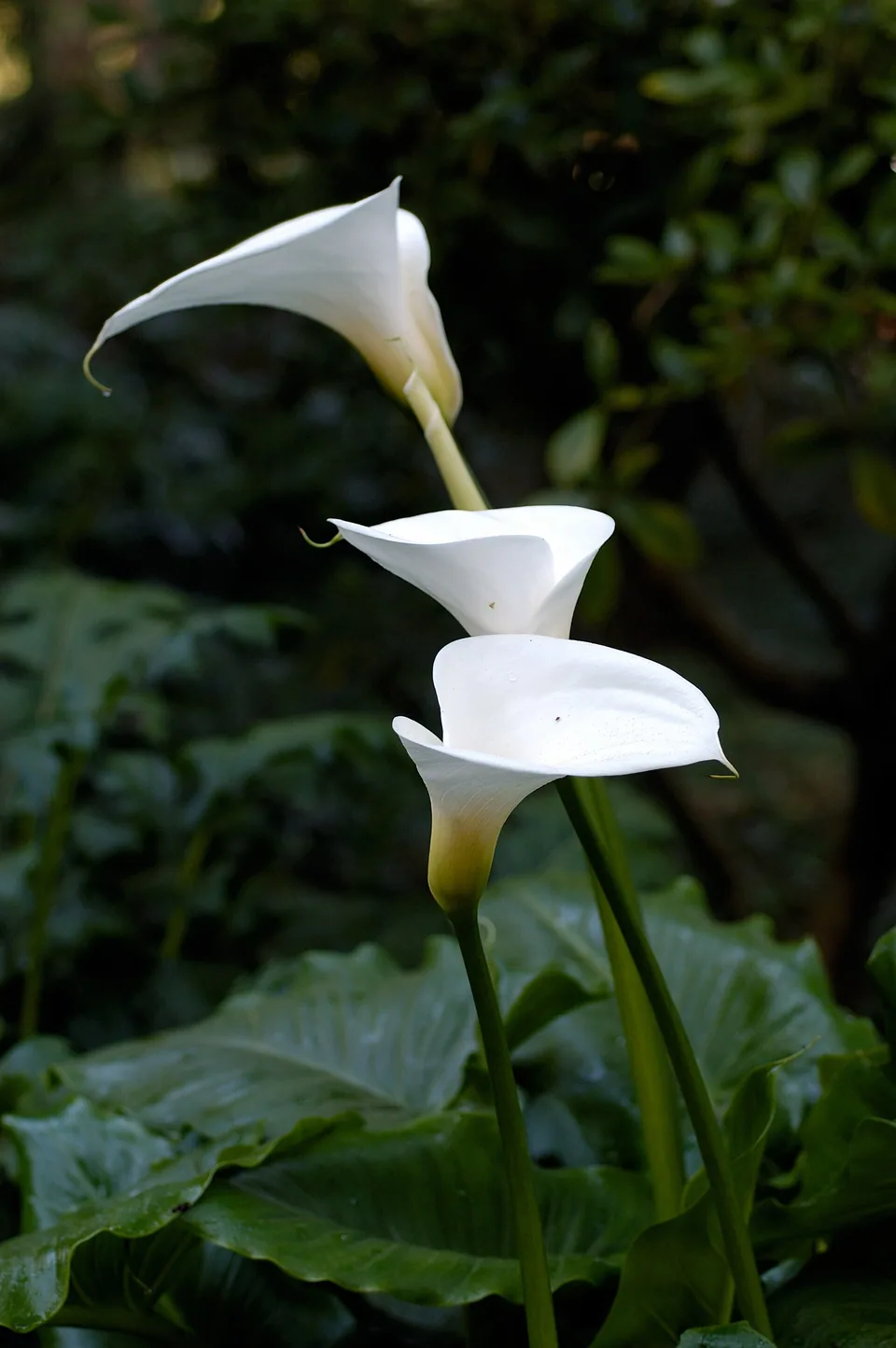


Cómo cultivar y cuidar Cala
Zantedeschia aethiopica
Escrito por Emilio Marruso · última revisión
Tóxica para: Gatos, Perros, Caballos, Personas · Por qué
De un vistazo
Esta cala es una vivaz generosa: le encanta la tierra húmeda y rica, e incluso crece con hasta 30 cm de agua. Dale sol pleno, o semisombra donde los veranos son calurosos, y alcanzará de 60 cm a 1 m de alto. También crece en maceta y en interior, y puedes dividirla para tener más plantas.
- Sol
Sol pleno o semisombra; semisombra en climas calurosos
Qué dicen las fuentes (4)
Luz: Pleno sol a semisombra; se prefiere semisombra en climas más cálidos
climas más cálidos: In hotter climates, partial shade is preferred to avoid leaf and flower scorch
— Zantedeschia aethiopica (African Lily, Altar Lily, Arum Lily, Brosimun aethiopica, Calla aethiopica, Calla Lily, Egyptian Lily, Florist's Calla, Garden Calla, Lily Of The Nile, Pig Lily, Trumpet Lily, White Arum Lily) | North Carolina Extension Gardener Plant Toolbox [1] Según NC State Extension: Plant in the full sun to partial shade in moist, organically rich soil
— Zantedeschia aethiopica (African Lily, Altar Lily, Arum Lily, Brosimun aethiopica, Calla aethiopica, Calla Lily, Egyptian Lily, Florist's Calla, Garden Calla, Lily Of The Nile, Pig Lily, Trumpet Lily, White Arum Lily) | North Carolina Extension Gardener Plant Toolbox [1] Plant in the full sun to partial shade in moist, organically rich soil with plenty of leaf mold, rotted manure, and humus.
— Zantedeschia aethiopica (African Lily, Altar Lily, Arum Lily, Brosimun aethiopica, Calla aethiopica, Calla Lily, Egyptian Lily, Florist's Calla, Garden Calla, Lily Of The Nile, Pig Lily, Trumpet Lily, White Arum Lily) | North Carolina Extension Gardener Plant Toolbox [1] In hotter climates, partial shade is preferred to avoid leaf and flower scorch though flowering may suffer.
— Zantedeschia aethiopica (African Lily, Altar Lily, Arum Lily, Brosimun aethiopica, Calla aethiopica, Calla Lily, Egyptian Lily, Florist's Calla, Garden Calla, Lily Of The Nile, Pig Lily, Trumpet Lily, White Arum Lily) | North Carolina Extension Gardener Plant Toolbox [1] - Riego
Mantén la tierra húmeda; incluso crece con hasta 30 cm de agua
Qué dicen las fuentes (2)
Riego: Suelo húmedo y orgánicamente rico; sobrevive en hasta 12 pulgadas (30,5 cm) de agua
Plant in the full sun to partial shade in moist, organically rich soil with plenty of leaf mold, rotted manure, and humus.
— Zantedeschia aethiopica (African Lily, Altar Lily, Arum Lily, Brosimun aethiopica, Calla aethiopica, Calla Lily, Egyptian Lily, Florist's Calla, Garden Calla, Lily Of The Nile, Pig Lily, Trumpet Lily, White Arum Lily) | North Carolina Extension Gardener Plant Toolbox [1] They can survive in up to 12" of water, so they work well along pond margins or rain garden.
— Zantedeschia aethiopica (African Lily, Altar Lily, Arum Lily, Brosimun aethiopica, Calla aethiopica, Calla Lily, Egyptian Lily, Florist's Calla, Garden Calla, Lily Of The Nile, Pig Lily, Trumpet Lily, White Arum Lily) | North Carolina Extension Gardener Plant Toolbox [1] - Frío
Aguanta inviernos de hasta −12,2 °C (10 °F)
Rústica en inviernos fríos · USDA 8a · RHS H5 · Z8
Qué dicen las fuentes (3)
Rusticidad, zona más fría: 8a [mínima invernal de −12,2 a −9,4 °C (de 10 a 15 °F)]
si está protegido: They are hardy to zone 8 but can survive in zone 7 if protected
— Zantedeschia aethiopica (African Lily, Altar Lily, Arum Lily, Brosimun aethiopica, Calla aethiopica, Calla Lily, Egyptian Lily, Florist's Calla, Garden Calla, Lily Of The Nile, Pig Lily, Trumpet Lily, White Arum Lily) | North Carolina Extension Gardener Plant Toolbox [1] USDA Plant Hardiness Zone: 8a, 8b, 9a, 9b, 10a, 10b
— Zantedeschia aethiopica (African Lily, Altar Lily, Arum Lily, Brosimun aethiopica, Calla aethiopica, Calla Lily, Egyptian Lily, Florist's Calla, Garden Calla, Lily Of The Nile, Pig Lily, Trumpet Lily, White Arum Lily) | North Carolina Extension Gardener Plant Toolbox [1] Rusticidad, zona más cálida: 10b [mínima invernal de 1,7 a 4,4 °C (de 35 a 40 °F)]
USDA Plant Hardiness Zone: 8a, 8b, 9a, 9b, 10a, 10b
— Zantedeschia aethiopica (African Lily, Altar Lily, Arum Lily, Brosimun aethiopica, Calla aethiopica, Calla Lily, Egyptian Lily, Florist's Calla, Garden Calla, Lily Of The Nile, Pig Lily, Trumpet Lily, White Arum Lily) | North Carolina Extension Gardener Plant Toolbox [1] - Suelo
Tierra húmeda y rica en mantillo de hojas, estiércol maduro y compost
Qué dicen las fuentes (4)
Riego: Suelo húmedo y orgánicamente rico; sobrevive en hasta 12 pulgadas (30,5 cm) de agua
Plant in the full sun to partial shade in moist, organically rich soil with plenty of leaf mold, rotted manure, and humus.
— Zantedeschia aethiopica (African Lily, Altar Lily, Arum Lily, Brosimun aethiopica, Calla aethiopica, Calla Lily, Egyptian Lily, Florist's Calla, Garden Calla, Lily Of The Nile, Pig Lily, Trumpet Lily, White Arum Lily) | North Carolina Extension Gardener Plant Toolbox [1] They can survive in up to 12" of water, so they work well along pond margins or rain garden.
— Zantedeschia aethiopica (African Lily, Altar Lily, Arum Lily, Brosimun aethiopica, Calla aethiopica, Calla Lily, Egyptian Lily, Florist's Calla, Garden Calla, Lily Of The Nile, Pig Lily, Trumpet Lily, White Arum Lily) | North Carolina Extension Gardener Plant Toolbox [1] Abonos naturales: Suelo con abundante mantillo de hojas, estiércol bien descompuesto y humus; en el suelo, un acolchado generoso de materia orgánica como compost de jardín bien descompuesto sobre la zona de raíces en otoño
Plant in the full sun to partial shade in moist, organically rich soil with plenty of leaf mold, rotted manure, and humus.
— Zantedeschia aethiopica (African Lily, Altar Lily, Arum Lily, Brosimun aethiopica, Calla aethiopica, Calla Lily, Egyptian Lily, Florist's Calla, Garden Calla, Lily Of The Nile, Pig Lily, Trumpet Lily, White Arum Lily) | North Carolina Extension Gardener Plant Toolbox [1] With hardy arum lilies growing in the ground, apply a generous mulch of organic matter , such as well-rotted garden compost , over the root zone in autumn.
— [9] - Distancia
30–46 cm entre plantas
Qué dicen las fuentes (1)
Distancia de plantación: 30.5-45.7 cm (12-18 pulgadas)
If transplanting rhizomes dig a hole 4 inches deep and place them 12 to 18 inches apart when the weather has warmed up in the spring and the threat of frost has passed.
— Zantedeschia aethiopica (African Lily, Altar Lily, Arum Lily, Brosimun aethiopica, Calla aethiopica, Calla Lily, Egyptian Lily, Florist's Calla, Garden Calla, Lily Of The Nile, Pig Lily, Trumpet Lily, White Arum Lily) | North Carolina Extension Gardener Plant Toolbox [1] - Plantación
Planta en primavera, cuando haga calor y ya no haya riesgo de heladas
Qué dicen las fuentes (1)
Plantación: Primavera, cuando el clima se ha calentado y el peligro de las heladas ha pasado
If transplanting rhizomes dig a hole 4 inches deep and place them 12 to 18 inches apart when the weather has warmed up in the spring and the threat of frost has passed.
— Zantedeschia aethiopica (African Lily, Altar Lily, Arum Lily, Brosimun aethiopica, Calla aethiopica, Calla Lily, Egyptian Lily, Florist's Calla, Garden Calla, Lily Of The Nile, Pig Lily, Trumpet Lily, White Arum Lily) | North Carolina Extension Gardener Plant Toolbox [1] - Abonado
Nada en tierra rica; en tierra pobre, abono líquido cada dos semanas en floración; acolchado de compost en otoño
Qué dicen las fuentes (5)
Frecuencia: No es necesario en suelo fértil rico en materia orgánica; en suelos pobres o para estimular el crecimiento, cada dos semanas durante el período de floración
Hardy arum lilies should perform well without additional feeding, if grown in fertile soil that is rich in organic matter
— [9] On poorer soils, or to boost growth, you can feed with a balanced liquid fertiliser every fortnight through the flowering period.
— [9] Abonos minerales: Fertilizante líquido equilibrado, en suelos pobres o para estimular el crecimiento
On poorer soils, or to boost growth, you can feed with a balanced liquid fertiliser every fortnight through the flowering period.
— [9] Abonos naturales: Suelo con abundante mantillo de hojas, estiércol bien descompuesto y humus; en el suelo, un acolchado generoso de materia orgánica como compost de jardín bien descompuesto sobre la zona de raíces en otoño
Plant in the full sun to partial shade in moist, organically rich soil with plenty of leaf mold, rotted manure, and humus.
— Zantedeschia aethiopica (African Lily, Altar Lily, Arum Lily, Brosimun aethiopica, Calla aethiopica, Calla Lily, Egyptian Lily, Florist's Calla, Garden Calla, Lily Of The Nile, Pig Lily, Trumpet Lily, White Arum Lily) | North Carolina Extension Gardener Plant Toolbox [1] With hardy arum lilies growing in the ground, apply a generous mulch of organic matter , such as well-rotted garden compost , over the root zone in autumn.
— [9] - Plagas
El escarabajo japonés come hojas y flores; a veces aparece la podredumbre del rizoma
Qué dicen las fuentes (2)
Plagas: Escarabajos japoneses
Japanese beetles can feed on the leaves and flowers. Rhizome rot is an occasional disease problem.
— Zantedeschia aethiopica (African Lily, Altar Lily, Arum Lily, Brosimun aethiopica, Calla aethiopica, Calla Lily, Egyptian Lily, Florist's Calla, Garden Calla, Lily Of The Nile, Pig Lily, Trumpet Lily, White Arum Lily) | North Carolina Extension Gardener Plant Toolbox [1] Enfermedades: pudrición del rizoma
Japanese beetles can feed on the leaves and flowers. Rhizome rot is an occasional disease problem.
— Zantedeschia aethiopica (African Lily, Altar Lily, Arum Lily, Brosimun aethiopica, Calla aethiopica, Calla Lily, Egyptian Lily, Florist's Calla, Garden Calla, Lily Of The Nile, Pig Lily, Trumpet Lily, White Arum Lily) | North Carolina Extension Gardener Plant Toolbox [1] - Atención
El sol fuerte puede quemar hojas y flores: dale semisombra en climas calurosos
- Tamaño
De 60 cm a 1 m de alto y 30–60 cm de ancho
Qué dicen las fuentes (2)
Altura adulta: 61-99 cm (2 pies 0 pulg - 3 pies 3 pulg)
Dimensions: Height: 2 ft. 0 in. - 3 ft. 3 in. Width: 1 ft. 0 in. - 2 ft. 0 in.
— Zantedeschia aethiopica (African Lily, Altar Lily, Arum Lily, Brosimun aethiopica, Calla aethiopica, Calla Lily, Egyptian Lily, Florist's Calla, Garden Calla, Lily Of The Nile, Pig Lily, Trumpet Lily, White Arum Lily) | North Carolina Extension Gardener Plant Toolbox [1] Anchura adulta: 30-61 cm (1-2 pies)
Dimensions: Height: 2 ft. 0 in. - 3 ft. 3 in. Width: 1 ft. 0 in. - 2 ft. 0 in.
— Zantedeschia aethiopica (African Lily, Altar Lily, Arum Lily, Brosimun aethiopica, Calla aethiopica, Calla Lily, Egyptian Lily, Florist's Calla, Garden Calla, Lily Of The Nile, Pig Lily, Trumpet Lily, White Arum Lily) | North Carolina Extension Gardener Plant Toolbox [1] - Multiplicación
Divide a principios de primavera tras las heladas, o a finales de verano o principios de otoño tras florecer; o siembra
Qué dicen las fuentes (2)
Propagación: División a principios de primavera después del peligro de las heladas, o a fines del verano o principios del otoño después de la floración; semilla
they can be propagated easily by division in the early spring after the danger of frost has pasts or in the late summer or early fall after flowering.
— Zantedeschia aethiopica (African Lily, Altar Lily, Arum Lily, Brosimun aethiopica, Calla aethiopica, Calla Lily, Egyptian Lily, Florist's Calla, Garden Calla, Lily Of The Nile, Pig Lily, Trumpet Lily, White Arum Lily) | North Carolina Extension Gardener Plant Toolbox [1] They can also be grown from seed planted sparsely to accommodate the future fleshy root growth.
— Zantedeschia aethiopica (African Lily, Altar Lily, Arum Lily, Brosimun aethiopica, Calla aethiopica, Calla Lily, Egyptian Lily, Florist's Calla, Garden Calla, Lily Of The Nile, Pig Lily, Trumpet Lily, White Arum Lily) | North Carolina Extension Gardener Plant Toolbox [1] - Maceta
Crece también en maceta y en interior
Qué dicen las fuentes (2)
En maceta: Sí
Landscape Location: Container Houseplants Pond Riparian Landscape Theme
— Zantedeschia aethiopica (African Lily, Altar Lily, Arum Lily, Brosimun aethiopica, Calla aethiopica, Calla Lily, Egyptian Lily, Florist's Calla, Garden Calla, Lily Of The Nile, Pig Lily, Trumpet Lily, White Arum Lily) | North Carolina Extension Gardener Plant Toolbox [1] En interior: Sí
Plant Type: Bulb Herbaceous Perennial Houseplant Poisonous Water Plant
— Zantedeschia aethiopica (African Lily, Altar Lily, Arum Lily, Brosimun aethiopica, Calla aethiopica, Calla Lily, Egyptian Lily, Florist's Calla, Garden Calla, Lily Of The Nile, Pig Lily, Trumpet Lily, White Arum Lily) | North Carolina Extension Gardener Plant Toolbox [1] - Seguridad
Tóxica para personas, gatos, perros y caballos: irrita e hincha la boca
Resumen
Zantedeschia aethiopica es una herbácea perenne rizomatosa conocida por sus flores blancas muy grandes y vistosas. [1] Crece a pleno sol o semisombra en suelo húmedo y rico en materia orgánica y tolera hasta 12 pulgadas [30 cm] de agua. [1] Tiene características de veneno de severidad media y está catalogada como un problema para gatos, perros y caballos. [1]
Citado en inglés, como en la fuente.
Esta ficha está incompleta: las fuentes consultadas aún no cubren todos los campos.
Aún no cubierto por nuestras fuentes: Poda
Cuidados
Las medidas entre corchetes son nuestra conversión al otro sistema de unidades; el texto citado no cambia.
Riego
Riego
Suelo húmedo y orgánicamente rico; sobrevive en hasta 12 pulgadas (30,5 cm) de agua
Qué dicen las fuentes (2)
Plant in the full sun to partial shade in moist, organically rich soil with plenty of leaf mold, rotted manure, and humus.They can survive in up to 12" of water, so they work well along pond margins or rain garden.Notas sobre el riego
Suelo húmedo y rico en materia orgánica, con mantillo de hojas, estiércol descompuesto y humus
Qué dicen las fuentes (1)
moist, organically rich soil with plenty of leaf mold, rotted manure, and humusLuz
Pleno sol a semisombra; se prefiere semisombra en climas más cálidos
Lo que dice cada fuente
climas más cálidos: Semisombra
Según NC State Extension: Pleno sol a semisombra
Qué dicen las fuentes (4)
climas más cálidos: In hotter climates, partial shade is preferred to avoid leaf and flower scorchSegún NC State Extension: Plant in the full sun to partial shade in moist, organically rich soilPlant in the full sun to partial shade in moist, organically rich soil with plenty of leaf mold, rotted manure, and humus.In hotter climates, partial shade is preferred to avoid leaf and flower scorch though flowering may suffer.Clima y frío
Rusticidad, zona más fría
8a [mínima invernal de −12,2 a −9,4 °C (de 10 a 15 °F)]
Lo que dice cada fuente
si está protegido: 7 [mínima invernal de −17,8 a −12,2 °C (de 0 a 10 °F)]
Qué dicen las fuentes (2)
si está protegido: They are hardy to zone 8 but can survive in zone 7 if protectedUSDA Plant Hardiness Zone: 8a, 8b, 9a, 9b, 10a, 10bRusticidad, zona más cálida
10b [mínima invernal de 1,7 a 4,4 °C (de 35 a 40 °F)]
Qué dicen las fuentes (1)
USDA Plant Hardiness Zone: 8a, 8b, 9a, 9b, 10a, 10bDónde cultivarla
En interior
Sí
Qué dicen las fuentes (1)
Plant Type: Bulb Herbaceous Perennial Houseplant Poisonous Water PlantEn maceta
Sí
Qué dicen las fuentes (1)
Landscape Location: Container Houseplants Pond Riparian Landscape ThemeDistancia de plantación
30.5-45.7 cm (12-18 pulgadas)
Qué dicen las fuentes (1)
If transplanting rhizomes dig a hole 4 inches deep and place them 12 to 18 inches apart when the weather has warmed up in the spring and the threat of frost has passed.Propagación
División a principios de primavera después del peligro de las heladas, o a fines del verano o principios del otoño después de la floración; semilla
Qué dicen las fuentes (2)
they can be propagated easily by division in the early spring after the danger of frost has pasts or in the late summer or early fall after flowering.They can also be grown from seed planted sparsely to accommodate the future fleshy root growth.Cultivo
La planta
Ciclo de vida
perenne
Qué dicen las fuentes (1)
Calla lilies are a rhizomatous herbaceous perennial plant in the Araceae (Jack-in-the-pulpit) family native to Africa.Familia
Araceae
Qué dicen las fuentes (1)
Calla lilies are a rhizomatous herbaceous perennial plant in the Araceae (Jack-in-the-pulpit) family native to Africa.Altura adulta
61-99 cm (2 pies 0 pulg - 3 pies 3 pulg)
Qué dicen las fuentes (1)
Dimensions:
Height: 2 ft. 0 in. - 3 ft. 3 in.
Width: 1 ft. 0 in. - 2 ft. 0 in.Anchura adulta
30-61 cm (1-2 pies)
Qué dicen las fuentes (1)
Dimensions:
Height: 2 ft. 0 in. - 3 ft. 3 in.
Width: 1 ft. 0 in. - 2 ft. 0 in.Plagas y enfermedades
Plagas
Escarabajos japoneses
Qué dicen las fuentes (1)
Japanese beetles can feed on the leaves and flowers. Rhizome rot is an occasional disease problem.Enfermedades
pudrición del rizoma
Qué dicen las fuentes (1)
Japanese beetles can feed on the leaves and flowers. Rhizome rot is an occasional disease problem.Abonado
Cuándo
Durante el período de floración, solo en suelos pobres o para estimular el crecimiento
Qué dicen las fuentes (2)
On poorer soils, or to boost growth, you can feed with a balanced liquid fertiliser every fortnight through the flowering period.Hardy arum lilies should perform well without additional feeding, if grown in fertile soil that is rich in organic matterFrecuencia
No es necesario en suelo fértil rico en materia orgánica; en suelos pobres o para estimular el crecimiento, cada dos semanas durante el período de floración
Qué dicen las fuentes (2)
Hardy arum lilies should perform well without additional feeding, if grown in fertile soil that is rich in organic matterOn poorer soils, or to boost growth, you can feed with a balanced liquid fertiliser every fortnight through the flowering period.Abonos naturales
Suelo con abundante mantillo de hojas, estiércol bien descompuesto y humus; en el suelo, un acolchado generoso de materia orgánica como compost de jardín bien descompuesto sobre la zona de raíces en otoño
Qué dicen las fuentes (2)
Plant in the full sun to partial shade in moist, organically rich soil with plenty of leaf mold, rotted manure, and humus.With hardy arum lilies growing in the ground, apply a generous mulch of organic matter , such as well-rotted garden compost , over the root zone in autumn.Abonos minerales
Fertilizante líquido equilibrado, en suelos pobres o para estimular el crecimiento
Qué dicen las fuentes (1)
On poorer soils, or to boost growth, you can feed with a balanced liquid fertiliser every fortnight through the flowering period.Problemas
Escarabajos japoneses
Síntoma: Los escarabajos se alimentan de las hojas y las flores
Qué dicen las fuentes (1)
Japanese beetles can feed on the leaves and flowers. Rhizome rot is an occasional disease problem.
— Zantedeschia aethiopica (African Lily, Altar Lily, Arum Lily, Brosimun aethiopica, Calla aethiopica, Calla Lily, Egyptian Lily, Florist's Calla, Garden Calla, Lily Of The Nile, Pig Lily, Trumpet Lily, White Arum Lily) | North Carolina Extension Gardener Plant Toolbox [1] Podredumbre de rizomas
Síntoma: Problema ocasional de enfermedad de los rizomas
Qué dicen las fuentes (1)
Japanese beetles can feed on the leaves and flowers. Rhizome rot is an occasional disease problem.
— Zantedeschia aethiopica (African Lily, Altar Lily, Arum Lily, Brosimun aethiopica, Calla aethiopica, Calla Lily, Egyptian Lily, Florist's Calla, Garden Calla, Lily Of The Nile, Pig Lily, Trumpet Lily, White Arum Lily) | North Carolina Extension Gardener Plant Toolbox [1] Quemadura de hojas y flores
Síntoma: Quemadura en climas más cálidos
Qué hacer: Prefiere semisombra en climas más cálidos, aunque la floración puede verse afectada
Qué dicen las fuentes (1)
In hotter climates, partial shade is preferred to avoid leaf and flower scorch though flowering may suffer.
— Zantedeschia aethiopica (African Lily, Altar Lily, Arum Lily, Brosimun aethiopica, Calla aethiopica, Calla Lily, Egyptian Lily, Florist's Calla, Garden Calla, Lily Of The Nile, Pig Lily, Trumpet Lily, White Arum Lily) | North Carolina Extension Gardener Plant Toolbox [1]
Remedios
Cada remedio indica qué dicen las fuentes oficiales; los remedios tradicionales sin fuente oficial aparecen marcados. Los perjudiciales están para que sepas evitarlos.
Primeros auxilios
Primeros auxilios: no sustituyen al médico
ardor en la boca después de masticar o ingerir
enjuagando la boca y limpiando la lengua Fuente oficial, sin prueba independiente
Do not attempt to induce vomiting. - Try to gently remove any plant parts remaining in the mouth and wipe the tongue with a wet cloth. Gently rinse lips with water.
— poison.org [10] Use the web POISON CONTROL online tool to get help, or call your poison center at 1-800-222-1222
— poison.org [10] This article is for information only. DO NOT use it to treat or manage an actual poison exposure.
— medlineplus.gov [11] Cómo: Retira suavemente cualquier parte de la planta que quede en la boca, limpia la lengua con un paño húmedo y enjuaga suavemente los labios con agua.
Try to gently remove any plant parts remaining in the mouth and wipe the tongue with a wet cloth. Gently rinse lips with water.
— poison.org [10] alimento cremoso frío o leche Fuente oficial, sin prueba independiente
Do not give anything to eat or drink if there is swelling of the tongue or throat or if the person is having difficulty breathing.
— poison.org [10] Use the web POISON CONTROL online tool to get help, or call your poison center at 1-800-222-1222
— poison.org [10] This article is for information only. DO NOT use it to treat or manage an actual poison exposure.
— medlineplus.gov [11] Cómo: Ofrece leche u otro refrigerio cremoso y fresco como yogur, helado o paleta para ayudar a aliviar los síntomas.
Giving milk or another cool and creamy snack like yogurt, ice cream, or popsicle can help relieve the symptoms.
— poison.org [10]
irritación de ojos o piel por la savia
Enjuaga ojos y piel con agua Fuente oficial, sin prueba independiente
Use the web POISON CONTROL online tool to get help, or call your poison center at 1-800-222-1222
— poison.org [10] This article is for information only. DO NOT use it to treat or manage an actual poison exposure.
— medlineplus.gov [11] Cómo: Enjuaga inmediatamente los ojos y la piel suavemente con agua a temperatura ambiente.
Immediately rinse the eyes and skin gently with room temperature water. Use the web POISON CONTROL
— poison.org [10]
Venenosa para los animales
Según la fuente, citada textualmente. No es un consejo médico ni veterinario: si una persona o un animal pudo haber ingerido esta planta, contacta con un centro de toxicología o con un veterinario.
Animales
Problems: Poisonous to Humans Problem for Cats Problem for Dogs Problem for Horses
[1]- Partes venenosas
Poison Part: Flowers Leaves Roots Sap/Juice Stems
[1]- Principio tóxico
Poison Toxic Principle: calcium oxalate
[1]- Síntomas
Poison Symptoms: Oral irritation, pain, and swelling of mouth, tongue, and lips, excessive drooling, stomach pain, vomiting (not horses), diarrhea, difficulty swallowing
[1]- Gravedad
Poison Severity: Medium
[1]
Personas
Poison Symptoms: Oral irritation, pain, and swelling of mouth, tongue, and lips, excessive drooling, stomach pain, vomiting (not horses), diarrhea, difficulty swallowing
[1]- Partes venenosas
Poison Part: Flowers Leaves Roots Sap/Juice Stems
[1]- Principio tóxico
Poison Toxic Principle: calcium oxalate
[1]- Síntomas
Poison Symptoms: Oral irritation, pain, and swelling of mouth, tongue, and lips, excessive drooling, stomach pain, vomiting (not horses), diarrhea, difficulty swallowing
[1]- Gravedad
Poison Severity: Medium
[1]
Calendario
Plantación
Primavera, cuando el clima se ha calentado y el peligro de las heladas ha pasado
Qué dicen las fuentes (1)
If transplanting rhizomes dig a hole 4 inches deep and place them 12 to 18 inches apart when the weather has warmed up in the spring and the threat of frost has passed.Poda
No figura en las fuentes consultadas.
Meses tal como los dan las fuentes, en su mayoría de Estados Unidos (hemisferio norte). En el hemisferio sur se desplazan unos seis meses.
Respecto a las heladas
Estimación menos precisa: no hay ninguna estación meteorológica a menos de 300 km.
Busca las fechas de heladas por código postal o ciudad
Trasplante: hacia la última helada
If transplanting rhizomes dig a hole 4 inches deep and place them 12 to 18 inches apart when the weather has warmed up in the spring and the threat of frost has passed.
— Zantedeschia aethiopica (African Lily, Altar Lily, Arum Lily, Brosimun aethiopica, Calla aethiopica, Calla Lily, Egyptian Lily, Florist's Calla, Garden Calla, Lily Of The Nile, Pig Lily, Trumpet Lily, White Arum Lily) | North Carolina Extension Gardener Plant Toolbox [1]
Cuenta desde las fechas medias de las heladas de tu zona.
Valores orientativos
Valores de una fuente secundaria, no comprobados palabra por palabra como el resto de esta página. Úselos como punto de partida.
- pH del suelo
- 6-6.5Valor orientativo, adáptalo a tu clima · Fuente secundaria
- Nivel de cuidado
- MedioValor orientativo, adáptalo a tu clima · Fuente secundaria
- Crecimiento
- AltaValor orientativo, adáptalo a tu clima · Fuente secundaria
- Poda
- Mayo, agosto, diciembre, enero, febreroValor orientativo, adáptalo a tu clima · Fuente secundaria
Plantas similares
- Mapoch Lily Zantedeschia pentlandii
- Pink Arum Zantedeschia rehmannii
- Alcatraz amarillo Zantedeschia elliottiana
- Anthurium Anthurium andraeanum
- Arrowhead Plant Syngonium podophyllum
- Aro Arum maculatum
- Black Calla Arum palaestinum
- Blushing Philodendron Philodendron erubescens
Fuentes
Cada valor anterior se cita de estos documentos. Los enlaces llevan al editor original.
- Zantedeschia aethiopica (African Lily, Altar Lily, Arum Lily, Brosimun aethiopica, Calla aethiopica, Calla Lily, Egyptian Lily, Florist's Calla, Garden Calla, Lily Of The Nile, Pig Lily, Trumpet Lily, White Arum Lily) | North Carolina Extension Gardener Plant Toolbox · plants.ces.ncsu.edu, consultado
- Zantedeschia (Calla Lily) | North Carolina Extension Gardener Plant Toolbox · plants.ces.ncsu.edu, consultado
- Calla aethiopica - Zantedeschia aethiopica | North Carolina Extension Gardener Plant Toolbox · plants.ces.ncsu.edu, consultado
- Altar Lily - Zantedeschia aethiopica | North Carolina Extension Gardener Plant Toolbox · plants.ces.ncsu.edu, consultado
- African Lily - Zantedeschia aethiopica | North Carolina Extension Gardener Plant Toolbox · plants.ces.ncsu.edu, consultado
- Egyptian Lily - Zantedeschia aethiopica | North Carolina Extension Gardener Plant Toolbox · plants.ces.ncsu.edu, consultado
- Lily Of The Nile - Zantedeschia aethiopica | North Carolina Extension Gardener Plant Toolbox · plants.ces.ncsu.edu, consultado
- Florist's Calla - Zantedeschia aethiopica | North Carolina Extension Gardener Plant Toolbox · plants.ces.ncsu.edu, consultado
- rhs.org.uk · rhs.org.uk
- poison.org · poison.org
- medlineplus.gov · medlineplus.gov
Escrito por Emilio Marruso · última revisión