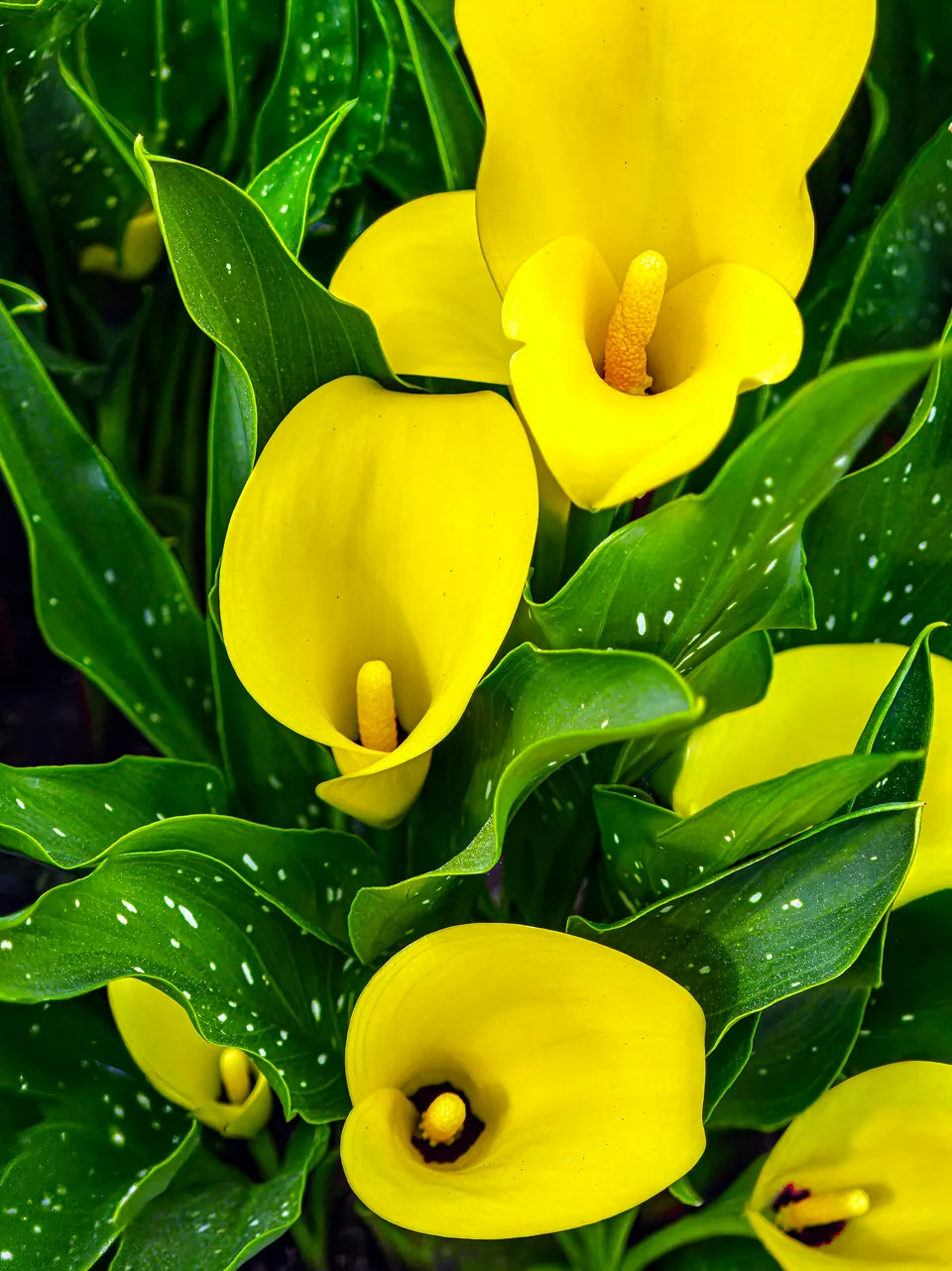

Cómo cultivar y cuidar Alcatraz amarillo
Zantedeschia elliottiana
Escrito por Emilio Marruso · última revisión
Tóxica para: Gatos, Perros, Personas · Por qué
De un vistazo
Esta planta perenne es fácil de contentar: dale sol pleno o semisombra y mantén la tierra húmeda. Plántala en primavera, cuando ya no haya riesgo de heladas, a 30 cm de distancia. Después de la floración, riega menos mientras descansa, y volverá año tras año. Incluso puedes recoger sus semillas en otoño y guardarlas durante el invierno.
- Sol
Sol pleno o semisombra
Qué dicen las fuentes (1)
Luz: Pleno sol a semisombra
They prefer to be located in full sun or partial shade in warmer climates.
— Zantedeschia elliottiana (Golden Calla Lily) - World of Flowering Plants [3] - Riego
Mantén la tierra húmeda; riega menos después de la floración, mientras la planta descansa
Qué dicen las fuentes (2)
Riego: Mantén húmedo.
Calla Lilies enjoy being kept moist and will also benefit from a monthly fertilizer dose throughout the growing season.
— Zantedeschia elliottiana (Golden Calla Lily) - World of Flowering Plants [3] Notas sobre el riego: Reduce el riego después de la floración durante el período de reposo
During this time, you should refrain from watering as much to allow the plant to die back.
— Zantedeschia elliottiana (Golden Calla Lily) - World of Flowering Plants [3] - Frío
Aguanta inviernos de hasta −6,7 °C (20 °F)
Rústica en inviernos normales · USDA 9a · RHS H4 · Z9
Qué dicen las fuentes (3)
Rusticidad, zona más fría: 9a [mínima invernal de −6,7 a −3,9 °C (de 20 a 25 °F)]
USDA hardiness zone 9a to 10b: from 20 °F (−6.7 °C) to 40 °F (+4.4 °C).
— Zantedeschia elliottiana (Golden Calla Lily) - World of Flowering Plants [3] Rusticidad, zona más cálida:
Según World of Flowering Plants: USDA hardiness zone 9a to 10b: from 20 °F (−6.7 °C) to 40 °F (+4.4 °C).
— Zantedeschia elliottiana (Golden Calla Lily) - World of Flowering Plants [3] Según Harvest to Table: grow outdoors in Zones 9-11.
— How to Grow Zantedeschia - Calla Lily [2] - Distancia
30 cm entre plantas
Qué dicen las fuentes (1)
Distancia de plantación: 30.5 cm (1 pie)
They should be planted rather deep, about 4 inches (10 cm) for greater results, and spaced approximately a foot apart.
— Zantedeschia elliottiana (Golden Calla Lily) - World of Flowering Plants [3] - Plantación
Planta en primavera, cuando ya no haya riesgo de heladas
Qué dicen las fuentes (1)
Plantación: En primavera, después de que haya pasado el riesgo de heladas
Plants are typically planted in the spring. However, wait until the threat of frost has passed and the soil has warmed sufficiently before planting.
— Zantedeschia elliottiana (Golden Calla Lily) - World of Flowering Plants [3] - Plagas
Pulgón, araña roja y mosca blanca; el rizoma puede pudrirse
Qué dicen las fuentes (2)
Plagas: pulgones, araña roja, mosca blanca
When grown indoors or in a greenhouse, they may attract common greenhouse pests, including: - Aphids - Red spider mites - Whitefly
— How to grow zantedeschia / RHS Growing Guide [1] Enfermedades: pudrición del rizoma
Too much water, especially when not in growth, can cause the rhizomes to rot.
— How to grow zantedeschia / RHS Growing Guide [1] - Multiplicación
Recoge las semillas en otoño y guárdalas durante el invierno
Qué dicen las fuentes (1)
Guardar semillas: recolecta las semillas en otoño y guárdalas durante el invierno
By seed – collect seeds in autumn and store over winter. Sow in spring, one seed per 7.5cm (3in) pot filled with peat-free seed compost
— How to grow zantedeschia / RHS Growing Guide [1] - Seguridad
Muy tóxica si se ingiere, puede ser mortal; también es dañina para gatos y perros
Resumen
Zantedeschia elliottiana es una herbácea perenne sin tallo con una espata amarilla, que crece a partir de rizomas tuberosos. [3] Se informa que es nativa de Sudáfrica. [3]
Citado en inglés, como en la fuente.
Esta ficha está incompleta: las fuentes consultadas aún no cubren todos los campos.
Aún no cubierto por nuestras fuentes: Poda, Propagación
Cuidados
Riego
Riego
Mantén húmedo.
Qué dicen las fuentes (1)
Calla Lilies enjoy being kept moist and will also benefit from a monthly fertilizer dose throughout the growing season.Notas sobre el riego
Reduce el riego después de la floración durante el período de reposo
Qué dicen las fuentes (1)
During this time, you should refrain from watering as much to allow the plant to die back.Luz
Pleno sol a semisombra
Qué dicen las fuentes (1)
They prefer to be located in full sun or partial shade in warmer climates.Clima y frío
Rusticidad, zona más fría
9a [mínima invernal de −6,7 a −3,9 °C (de 20 a 25 °F)]
Qué dicen las fuentes (1)
USDA hardiness zone 9a to 10b: from 20 °F (−6.7 °C) to 40 °F (+4.4 °C).Rusticidad, zona más cálida
Las fuentes dan valores distintos según la región, la zona o las condiciones de cultivo.
Lo que dice cada fuente
Según World of Flowering Plants: 10b [mínima invernal de 1,7 a 4,4 °C (de 35 a 40 °F)]
Según Harvest to Table: 11 [mínima invernal de 4,4 a 10 °C (de 40 a 50 °F)]
Qué dicen las fuentes (2)
Según World of Flowering Plants: USDA hardiness zone 9a to 10b: from 20 °F (−6.7 °C) to 40 °F (+4.4 °C).Según Harvest to Table: grow outdoors in Zones 9-11.Dónde cultivarla
30.5 cm (1 pie)
Qué dicen las fuentes (1)
They should be planted rather deep, about 4 inches (10 cm) for greater results, and spaced approximately a foot apart.Propagación
No figura en las fuentes consultadas.
Cultivo
La planta
Ciclo de vida
perenne
Qué dicen las fuentes (1)
They are perennials , so will last for many years, most going dormant in autumn then resprouting in spring.Cosecha y conservación
Guardar semillas
recolecta las semillas en otoño y guárdalas durante el invierno
Qué dicen las fuentes (1)
By seed – collect seeds in autumn and store over winter. Sow in spring, one seed per 7.5cm (3in) pot filled with peat-free seed compostPlagas y enfermedades
Plagas
pulgones, araña roja, mosca blanca
Qué dicen las fuentes (1)
When grown indoors or in a greenhouse, they may attract common greenhouse pests, including:
- Aphids
- Red spider mites
- WhiteflyEnfermedades
pudrición del rizoma
Qué dicen las fuentes (1)
Too much water, especially when not in growth, can cause the rhizomes to rot.Remedios
Cada remedio indica qué dicen las fuentes oficiales; los remedios tradicionales sin fuente oficial aparecen marcados. Los perjudiciales están para que sepas evitarlos.
Primeros auxilios
Primeros auxilios: no sustituyen al médico
ingestión
Retira las partes de la planta y enjuágate la boca. Fuente oficial, sin prueba independiente
Do not give anything to eat or drink if there is swelling of the tongue or throat or if the person is having difficulty breathing.
— poison.org [6] Use the web POISON CONTROL online tool to get help, or call your poison center at 1-800-222-1222
— poison.org [6] Cómo: Retira suavemente cualquier parte de la planta que quede en la boca, limpia la lengua con un paño húmedo y enjuaga suavemente los labios con agua.
Try to gently remove any plant parts remaining in the mouth and wipe the tongue with a wet cloth. Gently rinse lips with water.
— poison.org [6] refrigerio cremoso y frío Fuente oficial, sin prueba independiente
Do not give anything to eat or drink if there is swelling of the tongue or throat or if the person is having difficulty breathing.
— poison.org [6] Cómo: Da leche u otro refrigerio cremoso y frío como yogur, helado o paleta para aliviar los síntomas.
Giving milk or another cool and creamy snack like yogurt, ice cream, or popsicle can help relieve the symptoms.
— poison.org [6]
contacto con los ojos y la piel
Enjuaga con agua a temperatura ambiente. Fuente oficial, sin prueba independiente
Use the web POISON CONTROL online tool to get help, or call your poison center at 1-800-222-1222
— poison.org [6] Cómo: Enjuaga inmediatamente los ojos y la piel suavemente con agua a temperatura ambiente.
Immediately rinse the eyes and skin gently with room temperature water.
— poison.org [6]
Venenosa para los animales
Según la fuente, citada textualmente. No es un consejo médico ni veterinario: si una persona o un animal pudo haber ingerido esta planta, contacta con un centro de toxicología o con un veterinario.
Animales
Problems: Poisonous to Humans Problem for Cats Problem for Dogs
[5]Aviso de género: dato referido a todo el género, no documentado para esta especie
- Gravedad
This plant has high severity poison characteristics.
[5]
Personas
Poisonous to Humans: Poison Severity: High Poison Symptoms: HIGHLY TOXIC, MAY BE FATAL IF EATEN! Severe burning sensation and swelling of lips, tongue, and throat; stomach pain and diarrhea possible.
[5]Aviso de género: dato referido a todo el género, no documentado para esta especie
Calendario
Plantación
En primavera, después de que haya pasado el riesgo de heladas
Qué dicen las fuentes (1)
Plants are typically planted in the spring. However, wait until the threat of frost has passed and the soil has warmed sufficiently before planting.Poda
No figura en las fuentes consultadas.
Meses tal como los dan las fuentes, en su mayoría de Estados Unidos (hemisferio norte). En el hemisferio sur se desplazan unos seis meses.
Respecto a las heladas
Estimación menos precisa: no hay ninguna estación meteorológica a menos de 300 km.
Busca las fechas de heladas por código postal o ciudad
Trasplante: hacia la última helada
Plants bought in containers can be planted outside after the last frost.
— How to grow zantedeschia / RHS Growing Guide [1]
Cuenta desde las fechas medias de las heladas de tu zona.
Valores orientativos
Valores de una fuente secundaria, no comprobados palabra por palabra como el resto de esta página. Úselos como punto de partida.
- Altura adulta
- 61-91.4 cm (2-3 pies)Valor orientativo, adáptalo a tu clima · Fuente secundaria
- Horas de sol
- 4-6 horasValor orientativo, adáptalo a tu clima · Fuente secundaria
- Resiste la sequía
- SíValor orientativo, adáptalo a tu clima · Fuente secundaria
- pH del suelo
- 6-6.5Valor orientativo, adáptalo a tu clima · Fuente secundaria
- Nivel de cuidado
- MedioValor orientativo, adáptalo a tu clima · Fuente secundaria
- Crecimiento
- BajoValor orientativo, adáptalo a tu clima · Fuente secundaria
- Poda
- marzo, abril, mayo, marzo, abril, febrero, marzo, abrilValor orientativo, adáptalo a tu clima · Fuente secundaria
- Propagación
- División, propagación por bulbillos, propagación por semillas, cultivo de tejidosValor orientativo, adáptalo a tu clima · Fuente secundaria
Plantas similares
- Cala Zantedeschia aethiopica
- Mapoch Lily Zantedeschia pentlandii
- Pink Arum Zantedeschia rehmannii
- Abeto de Vancuver Abies grandis
- Abraham Trachystemon orientalis
- Bananero de Etiopía Ensete ventricosum
- Acacia longifolia Acacia longifolia
- Acanthus hungaricus Acanthus hungaricus
Fuentes
Cada valor anterior se cita de estos documentos. Los enlaces llevan al editor original.
- How to grow zantedeschia / RHS Growing Guide · rhs.org.uk, consultado
- How to Grow Zantedeschia - Calla Lily · harvesttotable.com, consultado
- Zantedeschia elliottiana (Golden Calla Lily) - World of Flowering Plants · worldoffloweringplants.com, consultado
- Plants of Hawai'i | Bishop Museum · plantsofhawaii.org, consultado
- Zantedeschia (Calla Lily) | North Carolina Extension Gardener Plant Toolbox · plants.ces.ncsu.edu, consultado
- poison.org · poison.org
Escrito por Emilio Marruso · última revisión