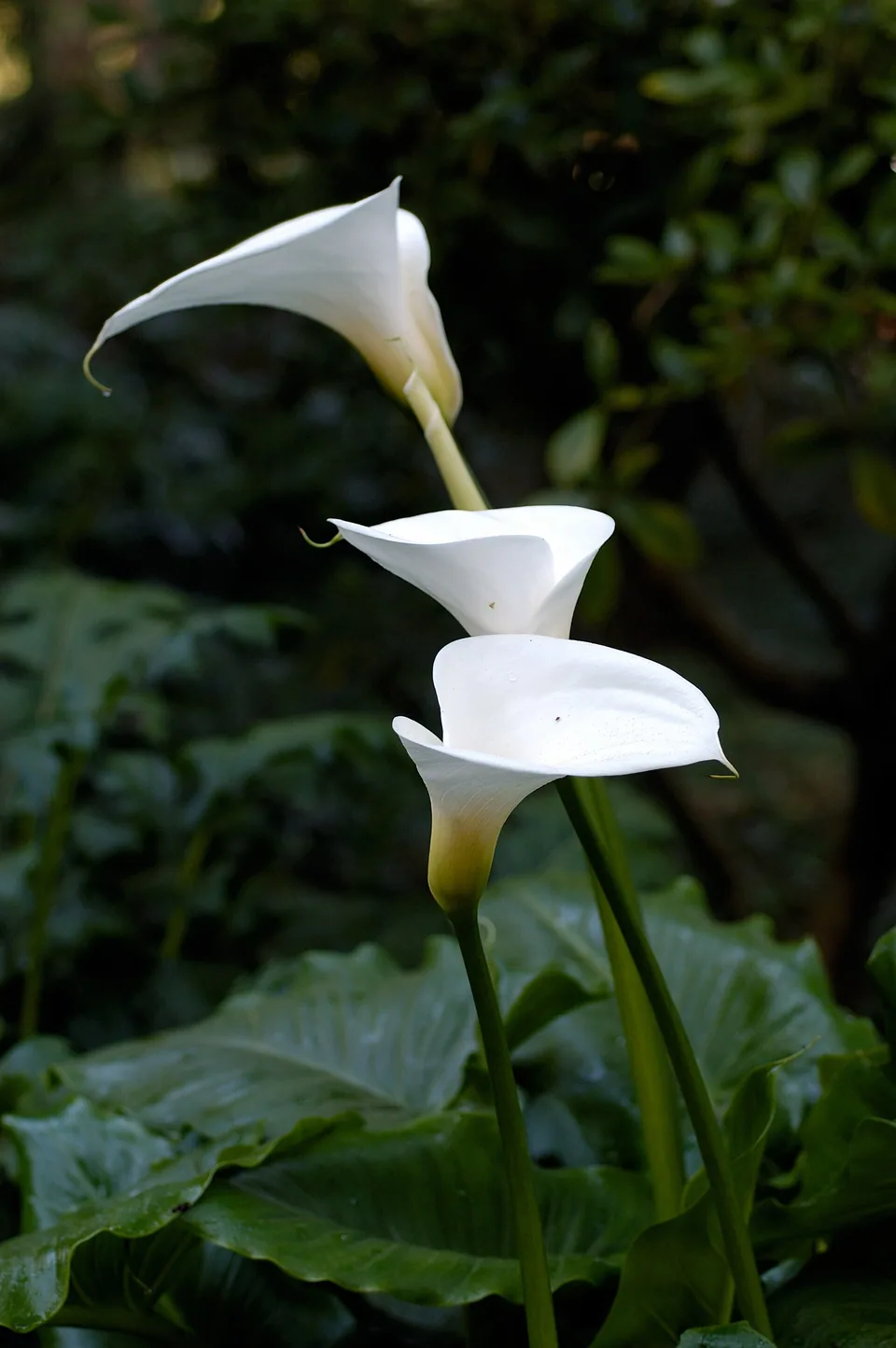


How to Grow and Care for Calla Lily
Zantedeschia aethiopica
Written by Emilio Marruso · last checked
Toxic to: Cats, Dogs, Horses, People · Why
At a glance
This calla lily is a generous perennial: it loves moist, rich soil and even grows in up to 12 inches of standing water. Give it full sun, or partial shade where summers are hot, and it reaches 2 to 3 feet tall. It also grows happily in containers and indoors, and you can divide it to get more plants.
- Sun
Full sun to partial shade; partial shade in hot climates
What the sources say (4)
Light: Full sun to partial shade; partial shade preferred in hotter climates
hotter climates: In hotter climates, partial shade is preferred to avoid leaf and flower scorch
— Zantedeschia aethiopica (African Lily, Altar Lily, Arum Lily, Brosimun aethiopica, Calla aethiopica, Calla Lily, Egyptian Lily, Florist's Calla, Garden Calla, Lily Of The Nile, Pig Lily, Trumpet Lily, White Arum Lily) | North Carolina Extension Gardener Plant Toolbox [1] According to NC State Extension: Plant in the full sun to partial shade in moist, organically rich soil
— Zantedeschia aethiopica (African Lily, Altar Lily, Arum Lily, Brosimun aethiopica, Calla aethiopica, Calla Lily, Egyptian Lily, Florist's Calla, Garden Calla, Lily Of The Nile, Pig Lily, Trumpet Lily, White Arum Lily) | North Carolina Extension Gardener Plant Toolbox [1] Plant in the full sun to partial shade in moist, organically rich soil with plenty of leaf mold, rotted manure, and humus.
— Zantedeschia aethiopica (African Lily, Altar Lily, Arum Lily, Brosimun aethiopica, Calla aethiopica, Calla Lily, Egyptian Lily, Florist's Calla, Garden Calla, Lily Of The Nile, Pig Lily, Trumpet Lily, White Arum Lily) | North Carolina Extension Gardener Plant Toolbox [1] In hotter climates, partial shade is preferred to avoid leaf and flower scorch though flowering may suffer.
— Zantedeschia aethiopica (African Lily, Altar Lily, Arum Lily, Brosimun aethiopica, Calla aethiopica, Calla Lily, Egyptian Lily, Florist's Calla, Garden Calla, Lily Of The Nile, Pig Lily, Trumpet Lily, White Arum Lily) | North Carolina Extension Gardener Plant Toolbox [1] - Water
Keep the soil moist; it even grows in up to 12 in of water
What the sources say (2)
Watering: Moist, organically rich soil; survives in up to 12 in (30.5 cm) of water
Plant in the full sun to partial shade in moist, organically rich soil with plenty of leaf mold, rotted manure, and humus.
— Zantedeschia aethiopica (African Lily, Altar Lily, Arum Lily, Brosimun aethiopica, Calla aethiopica, Calla Lily, Egyptian Lily, Florist's Calla, Garden Calla, Lily Of The Nile, Pig Lily, Trumpet Lily, White Arum Lily) | North Carolina Extension Gardener Plant Toolbox [1] They can survive in up to 12" of water, so they work well along pond margins or rain garden.
— Zantedeschia aethiopica (African Lily, Altar Lily, Arum Lily, Brosimun aethiopica, Calla aethiopica, Calla Lily, Egyptian Lily, Florist's Calla, Garden Calla, Lily Of The Nile, Pig Lily, Trumpet Lily, White Arum Lily) | North Carolina Extension Gardener Plant Toolbox [1] - Cold
Survives winters down to 10 °F (−12.2 °C)
Hardy in cold winters · USDA 8a · RHS H5 · Z8
What the sources say (3)
Hardiness, coldest zone: 8a [winter low −12.2 to −9.4 °C (10 to 15 °F)]
if protected: They are hardy to zone 8 but can survive in zone 7 if protected
— Zantedeschia aethiopica (African Lily, Altar Lily, Arum Lily, Brosimun aethiopica, Calla aethiopica, Calla Lily, Egyptian Lily, Florist's Calla, Garden Calla, Lily Of The Nile, Pig Lily, Trumpet Lily, White Arum Lily) | North Carolina Extension Gardener Plant Toolbox [1] USDA Plant Hardiness Zone: 8a, 8b, 9a, 9b, 10a, 10b
— Zantedeschia aethiopica (African Lily, Altar Lily, Arum Lily, Brosimun aethiopica, Calla aethiopica, Calla Lily, Egyptian Lily, Florist's Calla, Garden Calla, Lily Of The Nile, Pig Lily, Trumpet Lily, White Arum Lily) | North Carolina Extension Gardener Plant Toolbox [1] Hardiness, warmest zone: 10b [winter low 1.7 to 4.4 °C (35 to 40 °F)]
USDA Plant Hardiness Zone: 8a, 8b, 9a, 9b, 10a, 10b
— Zantedeschia aethiopica (African Lily, Altar Lily, Arum Lily, Brosimun aethiopica, Calla aethiopica, Calla Lily, Egyptian Lily, Florist's Calla, Garden Calla, Lily Of The Nile, Pig Lily, Trumpet Lily, White Arum Lily) | North Carolina Extension Gardener Plant Toolbox [1] - Soil
Moist soil rich in leaf mold, rotted manure and compost
What the sources say (4)
Watering: Moist, organically rich soil; survives in up to 12 in (30.5 cm) of water
Plant in the full sun to partial shade in moist, organically rich soil with plenty of leaf mold, rotted manure, and humus.
— Zantedeschia aethiopica (African Lily, Altar Lily, Arum Lily, Brosimun aethiopica, Calla aethiopica, Calla Lily, Egyptian Lily, Florist's Calla, Garden Calla, Lily Of The Nile, Pig Lily, Trumpet Lily, White Arum Lily) | North Carolina Extension Gardener Plant Toolbox [1] They can survive in up to 12" of water, so they work well along pond margins or rain garden.
— Zantedeschia aethiopica (African Lily, Altar Lily, Arum Lily, Brosimun aethiopica, Calla aethiopica, Calla Lily, Egyptian Lily, Florist's Calla, Garden Calla, Lily Of The Nile, Pig Lily, Trumpet Lily, White Arum Lily) | North Carolina Extension Gardener Plant Toolbox [1] Natural fertilizers: Soil with plenty of leaf mold, rotted manure and humus; in the ground, a generous mulch of organic matter such as well-rotted garden compost over the root zone in autumn
Plant in the full sun to partial shade in moist, organically rich soil with plenty of leaf mold, rotted manure, and humus.
— Zantedeschia aethiopica (African Lily, Altar Lily, Arum Lily, Brosimun aethiopica, Calla aethiopica, Calla Lily, Egyptian Lily, Florist's Calla, Garden Calla, Lily Of The Nile, Pig Lily, Trumpet Lily, White Arum Lily) | North Carolina Extension Gardener Plant Toolbox [1] With hardy arum lilies growing in the ground, apply a generous mulch of organic matter , such as well-rotted garden compost , over the root zone in autumn.
— [9] - Spacing
12–18 in between plants
What the sources say (1)
Spacing: 30.5-45.7 cm (12-18 in)
If transplanting rhizomes dig a hole 4 inches deep and place them 12 to 18 inches apart when the weather has warmed up in the spring and the threat of frost has passed.
— Zantedeschia aethiopica (African Lily, Altar Lily, Arum Lily, Brosimun aethiopica, Calla aethiopica, Calla Lily, Egyptian Lily, Florist's Calla, Garden Calla, Lily Of The Nile, Pig Lily, Trumpet Lily, White Arum Lily) | North Carolina Extension Gardener Plant Toolbox [1] - Planting
Plant in spring, once it is warm and the danger of frost has passed
What the sources say (1)
Planting: Spring, when the weather has warmed up and the threat of frost has passed
If transplanting rhizomes dig a hole 4 inches deep and place them 12 to 18 inches apart when the weather has warmed up in the spring and the threat of frost has passed.
— Zantedeschia aethiopica (African Lily, Altar Lily, Arum Lily, Brosimun aethiopica, Calla aethiopica, Calla Lily, Egyptian Lily, Florist's Calla, Garden Calla, Lily Of The Nile, Pig Lily, Trumpet Lily, White Arum Lily) | North Carolina Extension Gardener Plant Toolbox [1] - Feeding
None in rich soil; in poor soil, liquid feed every two weeks while it flowers; compost mulch in fall
What the sources say (5)
How often: None needed in fertile soil rich in organic matter; on poorer soils or to boost growth, every two weeks through the flowering period
Hardy arum lilies should perform well without additional feeding, if grown in fertile soil that is rich in organic matter
— [9] On poorer soils, or to boost growth, you can feed with a balanced liquid fertiliser every fortnight through the flowering period.
— [9] Mineral fertilizers: Balanced liquid fertilizer, on poorer soils or to boost growth
On poorer soils, or to boost growth, you can feed with a balanced liquid fertiliser every fortnight through the flowering period.
— [9] Natural fertilizers: Soil with plenty of leaf mold, rotted manure and humus; in the ground, a generous mulch of organic matter such as well-rotted garden compost over the root zone in autumn
Plant in the full sun to partial shade in moist, organically rich soil with plenty of leaf mold, rotted manure, and humus.
— Zantedeschia aethiopica (African Lily, Altar Lily, Arum Lily, Brosimun aethiopica, Calla aethiopica, Calla Lily, Egyptian Lily, Florist's Calla, Garden Calla, Lily Of The Nile, Pig Lily, Trumpet Lily, White Arum Lily) | North Carolina Extension Gardener Plant Toolbox [1] With hardy arum lilies growing in the ground, apply a generous mulch of organic matter , such as well-rotted garden compost , over the root zone in autumn.
— [9] - Pests
Japanese beetles eat leaves and flowers; the roots can sometimes rot
What the sources say (2)
Pests: Japanese beetles
Japanese beetles can feed on the leaves and flowers. Rhizome rot is an occasional disease problem.
— Zantedeschia aethiopica (African Lily, Altar Lily, Arum Lily, Brosimun aethiopica, Calla aethiopica, Calla Lily, Egyptian Lily, Florist's Calla, Garden Calla, Lily Of The Nile, Pig Lily, Trumpet Lily, White Arum Lily) | North Carolina Extension Gardener Plant Toolbox [1] Diseases: rhizome rot
Japanese beetles can feed on the leaves and flowers. Rhizome rot is an occasional disease problem.
— Zantedeschia aethiopica (African Lily, Altar Lily, Arum Lily, Brosimun aethiopica, Calla aethiopica, Calla Lily, Egyptian Lily, Florist's Calla, Garden Calla, Lily Of The Nile, Pig Lily, Trumpet Lily, White Arum Lily) | North Carolina Extension Gardener Plant Toolbox [1] - Watch out
Hot sun can scorch leaves and flowers: give it partial shade in hot climates
- Size
2–3 ft tall and 1–2 ft wide
What the sources say (2)
Mature height: 61-99 cm (2 ft 0 in - 3 ft 3 in)
Dimensions: Height: 2 ft. 0 in. - 3 ft. 3 in. Width: 1 ft. 0 in. - 2 ft. 0 in.
— Zantedeschia aethiopica (African Lily, Altar Lily, Arum Lily, Brosimun aethiopica, Calla aethiopica, Calla Lily, Egyptian Lily, Florist's Calla, Garden Calla, Lily Of The Nile, Pig Lily, Trumpet Lily, White Arum Lily) | North Carolina Extension Gardener Plant Toolbox [1] Mature width: 30-61 cm (1-2 ft)
Dimensions: Height: 2 ft. 0 in. - 3 ft. 3 in. Width: 1 ft. 0 in. - 2 ft. 0 in.
— Zantedeschia aethiopica (African Lily, Altar Lily, Arum Lily, Brosimun aethiopica, Calla aethiopica, Calla Lily, Egyptian Lily, Florist's Calla, Garden Calla, Lily Of The Nile, Pig Lily, Trumpet Lily, White Arum Lily) | North Carolina Extension Gardener Plant Toolbox [1] - Propagation
Divide in early spring after frost, or in late summer or early fall after flowering; or sow seed
What the sources say (2)
Propagation: Division in early spring after the danger of frost, or in late summer or early fall after flowering; seed
they can be propagated easily by division in the early spring after the danger of frost has pasts or in the late summer or early fall after flowering.
— Zantedeschia aethiopica (African Lily, Altar Lily, Arum Lily, Brosimun aethiopica, Calla aethiopica, Calla Lily, Egyptian Lily, Florist's Calla, Garden Calla, Lily Of The Nile, Pig Lily, Trumpet Lily, White Arum Lily) | North Carolina Extension Gardener Plant Toolbox [1] They can also be grown from seed planted sparsely to accommodate the future fleshy root growth.
— Zantedeschia aethiopica (African Lily, Altar Lily, Arum Lily, Brosimun aethiopica, Calla aethiopica, Calla Lily, Egyptian Lily, Florist's Calla, Garden Calla, Lily Of The Nile, Pig Lily, Trumpet Lily, White Arum Lily) | North Carolina Extension Gardener Plant Toolbox [1] - Containers
Grows in containers and indoors too
What the sources say (2)
In containers: Yes
Landscape Location: Container Houseplants Pond Riparian Landscape Theme
— Zantedeschia aethiopica (African Lily, Altar Lily, Arum Lily, Brosimun aethiopica, Calla aethiopica, Calla Lily, Egyptian Lily, Florist's Calla, Garden Calla, Lily Of The Nile, Pig Lily, Trumpet Lily, White Arum Lily) | North Carolina Extension Gardener Plant Toolbox [1] Indoors: Yes
Plant Type: Bulb Herbaceous Perennial Houseplant Poisonous Water Plant
— Zantedeschia aethiopica (African Lily, Altar Lily, Arum Lily, Brosimun aethiopica, Calla aethiopica, Calla Lily, Egyptian Lily, Florist's Calla, Garden Calla, Lily Of The Nile, Pig Lily, Trumpet Lily, White Arum Lily) | North Carolina Extension Gardener Plant Toolbox [1] - Safety
Poisonous to people, cats, dogs and horses: it burns and swells the mouth
Overview
Zantedeschia aethiopica is a rhizomatous herbaceous perennial known for very large showy white flowers. [1] It grows in full sun to partial shade in moist, organically rich soil and tolerates up to 12 inches [30 cm] of water. [1] It has medium severity poison characteristics and is listed as a problem for cats, dogs and horses. [1]
This record is incomplete: the sources we read do not cover every field yet.
Not yet covered by our sources: Pruning
Calla Lily care
Measurements in square brackets are our conversion into the other unit system; the quoted text is unchanged.
How to water Calla Lily
Watering
Moist, organically rich soil; survives in up to 12 in (30.5 cm) of water
What the sources say (2)
Plant in the full sun to partial shade in moist, organically rich soil with plenty of leaf mold, rotted manure, and humus.They can survive in up to 12" of water, so they work well along pond margins or rain garden.Watering notes
moist, organically rich soil with plenty of leaf mold, rotted manure, and humus
What the sources say (1)
moist, organically rich soil with plenty of leaf mold, rotted manure, and humusHow much light Calla Lily needs
Full sun to partial shade; partial shade preferred in hotter climates
What each source says
hotter climates: Partial shade
According to NC State Extension: Full sun to partial shade
What the sources say (4)
hotter climates: In hotter climates, partial shade is preferred to avoid leaf and flower scorchAccording to NC State Extension: Plant in the full sun to partial shade in moist, organically rich soilPlant in the full sun to partial shade in moist, organically rich soil with plenty of leaf mold, rotted manure, and humus.In hotter climates, partial shade is preferred to avoid leaf and flower scorch though flowering may suffer.How much cold Calla Lily can take
Hardiness, coldest zone
8a [winter low −12.2 to −9.4 °C (10 to 15 °F)]
What each source says
if protected: 7 [winter low −17.8 to −12.2 °C (0 to 10 °F)]
What the sources say (2)
if protected: They are hardy to zone 8 but can survive in zone 7 if protectedUSDA Plant Hardiness Zone: 8a, 8b, 9a, 9b, 10a, 10bHardiness, warmest zone
10b [winter low 1.7 to 4.4 °C (35 to 40 °F)]
What the sources say (1)
USDA Plant Hardiness Zone: 8a, 8b, 9a, 9b, 10a, 10bWhere to grow Calla Lily
Indoors
Yes
What the sources say (1)
Plant Type: Bulb Herbaceous Perennial Houseplant Poisonous Water PlantIn containers
Yes
What the sources say (1)
Landscape Location: Container Houseplants Pond Riparian Landscape ThemeSpacing
30.5-45.7 cm (12-18 in)
What the sources say (1)
If transplanting rhizomes dig a hole 4 inches deep and place them 12 to 18 inches apart when the weather has warmed up in the spring and the threat of frost has passed.How to propagate Calla Lily
Division in early spring after the danger of frost, or in late summer or early fall after flowering; seed
What the sources say (2)
they can be propagated easily by division in the early spring after the danger of frost has pasts or in the late summer or early fall after flowering.They can also be grown from seed planted sparsely to accommodate the future fleshy root growth.How to grow Calla Lily
The plant
Life cycle
perennial
What the sources say (1)
Calla lilies are a rhizomatous herbaceous perennial plant in the Araceae (Jack-in-the-pulpit) family native to Africa.Family
Araceae
What the sources say (1)
Calla lilies are a rhizomatous herbaceous perennial plant in the Araceae (Jack-in-the-pulpit) family native to Africa.Mature height
61-99 cm (2 ft 0 in - 3 ft 3 in)
What the sources say (1)
Dimensions:
Height: 2 ft. 0 in. - 3 ft. 3 in.
Width: 1 ft. 0 in. - 2 ft. 0 in.Mature width
30-61 cm (1-2 ft)
What the sources say (1)
Dimensions:
Height: 2 ft. 0 in. - 3 ft. 3 in.
Width: 1 ft. 0 in. - 2 ft. 0 in.Pests and diseases
Pests
Japanese beetles
What the sources say (1)
Japanese beetles can feed on the leaves and flowers. Rhizome rot is an occasional disease problem.Diseases
rhizome rot
What the sources say (1)
Japanese beetles can feed on the leaves and flowers. Rhizome rot is an occasional disease problem.Fertilizing
When
Through the flowering period, only on poorer soils or to boost growth
What the sources say (2)
On poorer soils, or to boost growth, you can feed with a balanced liquid fertiliser every fortnight through the flowering period.Hardy arum lilies should perform well without additional feeding, if grown in fertile soil that is rich in organic matterHow often
None needed in fertile soil rich in organic matter; on poorer soils or to boost growth, every two weeks through the flowering period
What the sources say (2)
Hardy arum lilies should perform well without additional feeding, if grown in fertile soil that is rich in organic matterOn poorer soils, or to boost growth, you can feed with a balanced liquid fertiliser every fortnight through the flowering period.Natural fertilizers
Soil with plenty of leaf mold, rotted manure and humus; in the ground, a generous mulch of organic matter such as well-rotted garden compost over the root zone in autumn
What the sources say (2)
Plant in the full sun to partial shade in moist, organically rich soil with plenty of leaf mold, rotted manure, and humus.With hardy arum lilies growing in the ground, apply a generous mulch of organic matter , such as well-rotted garden compost , over the root zone in autumn.Mineral fertilizers
Balanced liquid fertilizer, on poorer soils or to boost growth
What the sources say (1)
On poorer soils, or to boost growth, you can feed with a balanced liquid fertiliser every fortnight through the flowering period.Calla Lily pests and problems
Japanese beetles
Symptom: Beetles feed on the leaves and flowers
What the sources say (1)
Japanese beetles can feed on the leaves and flowers. Rhizome rot is an occasional disease problem.
— Zantedeschia aethiopica (African Lily, Altar Lily, Arum Lily, Brosimun aethiopica, Calla aethiopica, Calla Lily, Egyptian Lily, Florist's Calla, Garden Calla, Lily Of The Nile, Pig Lily, Trumpet Lily, White Arum Lily) | North Carolina Extension Gardener Plant Toolbox [1] Rhizome rot
Symptom: Occasional disease problem of the rhizomes
What the sources say (1)
Japanese beetles can feed on the leaves and flowers. Rhizome rot is an occasional disease problem.
— Zantedeschia aethiopica (African Lily, Altar Lily, Arum Lily, Brosimun aethiopica, Calla aethiopica, Calla Lily, Egyptian Lily, Florist's Calla, Garden Calla, Lily Of The Nile, Pig Lily, Trumpet Lily, White Arum Lily) | North Carolina Extension Gardener Plant Toolbox [1] Leaf and flower scorch
Symptom: Scorch in hotter climates
What to do: Prefer partial shade in hotter climates, though flowering may suffer
What the sources say (1)
In hotter climates, partial shade is preferred to avoid leaf and flower scorch though flowering may suffer.
— Zantedeschia aethiopica (African Lily, Altar Lily, Arum Lily, Brosimun aethiopica, Calla aethiopica, Calla Lily, Egyptian Lily, Florist's Calla, Garden Calla, Lily Of The Nile, Pig Lily, Trumpet Lily, White Arum Lily) | North Carolina Extension Gardener Plant Toolbox [1]
Remedies
Each remedy shows what official sources say about it; traditional remedies without an official source are marked as such. Harmful ones are listed so you know to avoid them.
First aid
First aid: not a substitute for a doctor
mouth burning after chewing or ingesting
rinsing the mouth and wiping the tongue Official source, not independently tested
Do not attempt to induce vomiting. - Try to gently remove any plant parts remaining in the mouth and wipe the tongue with a wet cloth. Gently rinse lips with water.
— poison.org [10] Use the web POISON CONTROL online tool to get help, or call your poison center at 1-800-222-1222
— poison.org [10] This article is for information only. DO NOT use it to treat or manage an actual poison exposure.
— medlineplus.gov [11] How: Gently remove any plant parts remaining in the mouth, wipe the tongue with a wet cloth and gently rinse the lips with water.
Try to gently remove any plant parts remaining in the mouth and wipe the tongue with a wet cloth. Gently rinse lips with water.
— poison.org [10] cool creamy food or milk Official source, not independently tested
Do not give anything to eat or drink if there is swelling of the tongue or throat or if the person is having difficulty breathing.
— poison.org [10] Use the web POISON CONTROL online tool to get help, or call your poison center at 1-800-222-1222
— poison.org [10] This article is for information only. DO NOT use it to treat or manage an actual poison exposure.
— medlineplus.gov [11] How: Give milk or another cool and creamy snack like yogurt, ice cream or popsicle to help relieve the symptoms.
Giving milk or another cool and creamy snack like yogurt, ice cream, or popsicle can help relieve the symptoms.
— poison.org [10]
eye or skin irritation from sap
rinsing eyes and skin with water Official source, not independently tested
Use the web POISON CONTROL online tool to get help, or call your poison center at 1-800-222-1222
— poison.org [10] This article is for information only. DO NOT use it to treat or manage an actual poison exposure.
— medlineplus.gov [11] How: Immediately rinse the eyes and skin gently with room temperature water.
Immediately rinse the eyes and skin gently with room temperature water. Use the web POISON CONTROL
— poison.org [10]
Is Calla Lily toxic to pets?
Reported by the source, quoted verbatim. This is not medical or veterinary advice: if a person or an animal may have eaten this plant, contact a poison control centre or a veterinarian.
Animals
Problems: Poisonous to Humans Problem for Cats Problem for Dogs Problem for Horses
[1]- Poisonous parts
Poison Part: Flowers Leaves Roots Sap/Juice Stems
[1]- Toxic principle
Poison Toxic Principle: calcium oxalate
[1]- Symptoms
Poison Symptoms: Oral irritation, pain, and swelling of mouth, tongue, and lips, excessive drooling, stomach pain, vomiting (not horses), diarrhea, difficulty swallowing
[1]- Severity
Poison Severity: Medium
[1]
People
Poison Symptoms: Oral irritation, pain, and swelling of mouth, tongue, and lips, excessive drooling, stomach pain, vomiting (not horses), diarrhea, difficulty swallowing
[1]- Poisonous parts
Poison Part: Flowers Leaves Roots Sap/Juice Stems
[1]- Toxic principle
Poison Toxic Principle: calcium oxalate
[1]- Symptoms
Poison Symptoms: Oral irritation, pain, and swelling of mouth, tongue, and lips, excessive drooling, stomach pain, vomiting (not horses), diarrhea, difficulty swallowing
[1]- Severity
Poison Severity: Medium
[1]
Calendar
Planting
Spring, when the weather has warmed up and the threat of frost has passed
What the sources say (1)
If transplanting rhizomes dig a hole 4 inches deep and place them 12 to 18 inches apart when the weather has warmed up in the spring and the threat of frost has passed.Pruning
Not stated in the sources we read.
Months as given by the sources, which are mostly from the United States (northern hemisphere). In the southern hemisphere they shift by about six months.
Relative to frost
Less precise estimate: there is no weather station within 300 km.
Find frost dates by ZIP code or city
Transplant: around the last frost
If transplanting rhizomes dig a hole 4 inches deep and place them 12 to 18 inches apart when the weather has warmed up in the spring and the threat of frost has passed.
— Zantedeschia aethiopica (African Lily, Altar Lily, Arum Lily, Brosimun aethiopica, Calla aethiopica, Calla Lily, Egyptian Lily, Florist's Calla, Garden Calla, Lily Of The Nile, Pig Lily, Trumpet Lily, White Arum Lily) | North Carolina Extension Gardener Plant Toolbox [1]
Count from the average frost dates where you live.
Indicative values
Values from a secondary source, not checked word for word like the rest of this page. Use them as a starting point.
- Soil pH
- 6-6.5Indicative value, adapt it to your climate · Secondary source
- Care level
- MediumIndicative value, adapt it to your climate · Secondary source
- Growth rate
- HighIndicative value, adapt it to your climate · Secondary source
- Pruning
- May, August, December, January, FebruaryIndicative value, adapt it to your climate · Secondary source
Similar plants
- Mapoch Lily Zantedeschia pentlandii
- Pink Arum Zantedeschia rehmannii
- Zantedeschia elliottiana Zantedeschia elliottiana
- Anthurium Anthurium andraeanum
- Arrowhead Plant Syngonium podophyllum
- Arum Arum maculatum
- Black Calla Arum palaestinum
- Blushing Philodendron Philodendron erubescens
Sources
Every value above is quoted from these documents. Links lead to the original publisher.
- Zantedeschia aethiopica (African Lily, Altar Lily, Arum Lily, Brosimun aethiopica, Calla aethiopica, Calla Lily, Egyptian Lily, Florist's Calla, Garden Calla, Lily Of The Nile, Pig Lily, Trumpet Lily, White Arum Lily) | North Carolina Extension Gardener Plant Toolbox · plants.ces.ncsu.edu, consulted
- Zantedeschia (Calla Lily) | North Carolina Extension Gardener Plant Toolbox · plants.ces.ncsu.edu, consulted
- Calla aethiopica - Zantedeschia aethiopica | North Carolina Extension Gardener Plant Toolbox · plants.ces.ncsu.edu, consulted
- Altar Lily - Zantedeschia aethiopica | North Carolina Extension Gardener Plant Toolbox · plants.ces.ncsu.edu, consulted
- African Lily - Zantedeschia aethiopica | North Carolina Extension Gardener Plant Toolbox · plants.ces.ncsu.edu, consulted
- Egyptian Lily - Zantedeschia aethiopica | North Carolina Extension Gardener Plant Toolbox · plants.ces.ncsu.edu, consulted
- Lily Of The Nile - Zantedeschia aethiopica | North Carolina Extension Gardener Plant Toolbox · plants.ces.ncsu.edu, consulted
- Florist's Calla - Zantedeschia aethiopica | North Carolina Extension Gardener Plant Toolbox · plants.ces.ncsu.edu, consulted
- rhs.org.uk · rhs.org.uk
- poison.org · poison.org
- medlineplus.gov · medlineplus.gov
Written by Emilio Marruso · last checked